

Kirjahaku
Etsi kirjoja tekijän nimen, kirjan nimen tai ISBN:n perusteella.
1000 tulosta hakusanalla Shiro Tosaki
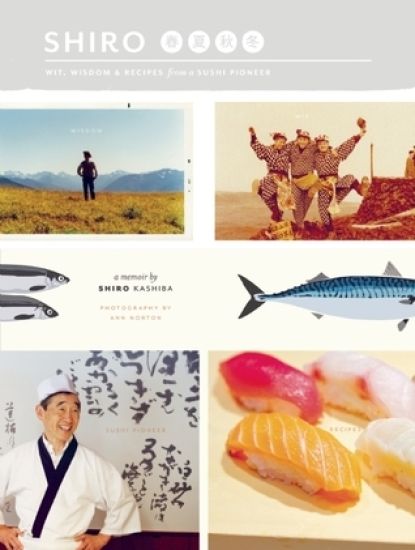
"Shiro Kashiba stands atop any list defining Japanese food in Seattle. He's been called many things--culinary master, fisherman, mushroom forager and nature lover--but first and foremost he's the "Sushi King." His eponymous debut cookbook is no chef-vanity affair, though, but a riveting and imaginative blending of East and West in the quest for high gastronomic art." --Shelf Awareness "A fabulous read for sushi lovers or anyone who enjoys a simple memoir filled with both inspiration and perseverance." -Library Journal Shiro Kashiba used to walk to the fishing piers of Seattle in the 1960s to retrieve buckets of unwanted salmon roe and pesky Puget Sound octopus from the fishermen. He'd hike the beaches of the Pacific Northwest to gather geoduck before there was a market for the shellfish. Chef Shiro saw treasure where others saw trash. And through this sushi chef's eyes, readers discover the amazing bounty of the Pacific Northwest. In this revealing cookbook/memoir, Chef Shiro recounts his early days in Tokyo washing dishes and sleeping in the backroom of a prestigious Ginza sushi shop, his decision to come to the United States with little more than an introductory letter, and his ultimate success in Seattle. But the story doesn't stop there. While Shiro settles into his role as Seattle's premier sushi chef, he develops a deep appreciation for the local delicacies of his new home. Soon he begins to replace expensive Japanese imports with cheaper and more delicious local delicacies. Goodbye bluefin, hello albacore. Shiro tells fascinating and often humorous stories about the region's offerings: his first encounters with geoduck (some say he was the first to serve it raw), the world's tastiest sea urchin, hunting for matsutake mushrooms in the Cascades, a twelve-course meal of silvery ocean smelt, and much more. Ann Norton provides mouthwatering photographs of Shiro's seasonal recipes.
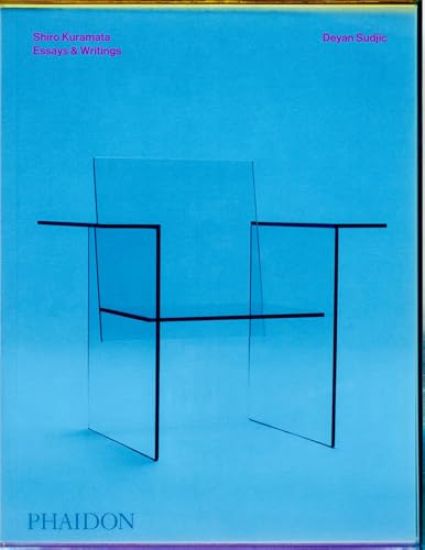
A new edition of the definitive monograph on Japanese designer Shiro Kuramata, featuring a new introduction from author Deyan Sudjic This highly acclaimed, first ever monograph on the highly influential Japanese designer Shiro Kuramata (1934–1991) is a two-volume title presenting all his compelling and idiosyncratic work in a stunning, specially designed acrylic slipcase. Designers and design enthusiasts who love Kuramata will be astonished by the breadth and depth of Kuramata’s remarkable body of work, from the iconic Miss Blanche chair, made from artificial flowers and resin, to his idiocyncratic umbrella stand that incorporates a walking stick into its design, and the armchair How High the Moon, which is made from metal mesh, many of which are still in production today.
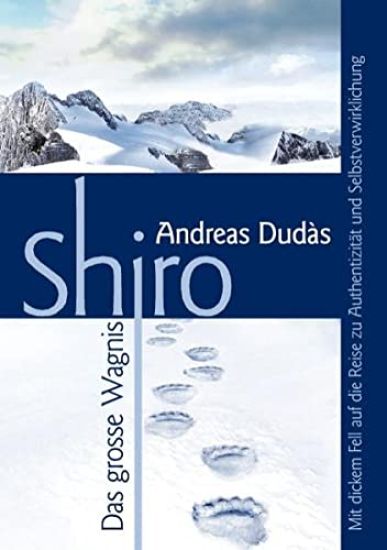
Ein Eisbär auf dem Weg zu seinem wahren Selbst. Mit uner-schütterlichem Mut trotz zahlloser Krisen. Mit einem dicken, glänzenden Fell trotz vieler Durststrecken und Entbehrungen. Mit dem festen Glauben an seine Intuition trotz vieler Irrwege. Was Andreas Dud?s hier in Form einer spannenden Fabel beschreibt, ist das Muster des Lebensweges eines jeden authentischen Suchers. Und es ist die Entwicklungsgeschichte einer wahren Führungspersönlichkeit. Denn Robin, der Eisbär, kann zu seiner Meinung stehen, er kann Schwächen zugeben und zum Wohle aller an einem Projekt Beteiligten handeln. So ist sein Weg zu sich selbst - wie nebenbei - zugleich auch ein Weg zu mehr Einfluss auf die Geschicke anderer Wesen. Shiro ist die äußerst geglückte Verbindung von faszinierender Unterhaltung und spiritueller Lehre. Es beschreibt irdische Kämpfe ebenso wie meditative Ruhe, den euphorischen Jubel des Siegens ebenso wie die Niedergeschlagenheit des Verlierens. Es verbindet unterschiedlichste Fäden an einem Punkt: dem authentischen Lebensweg, wie ihn die vom Aussterben bedrohten Eisbären gehen.

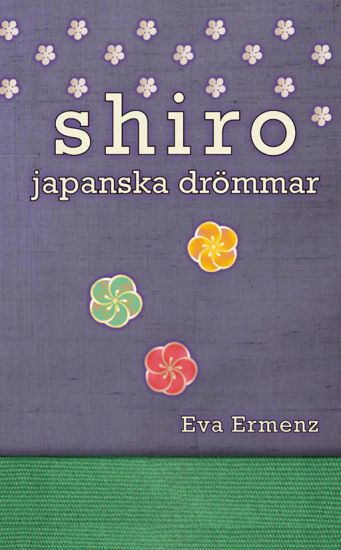
Detta är Eva Ermenz andra haibun. Åter tar hon oss med till Japan och vi får följa henne från vinter till höst. “Shiro” betyder vitt och för betydelse i en snöflinga, en blixt över himlen eller en kvinnas vita armar. Ermenz rör sig så försiktigt hon kan bland människorna även om hon sticker ut med sitt västerländska utseende och ovanan med hur man ska föra sig. Traditionen bjuder att man ska lägga band på sig, men det är ärliga människor hon möter, och där uppstår en slags omtanke. Besöket i det lokala badhuset, “onsen”, blir lika lärorik som det hos skolklassen. mellan tvagningarna nakna kroppar rör sig i ultrarapid
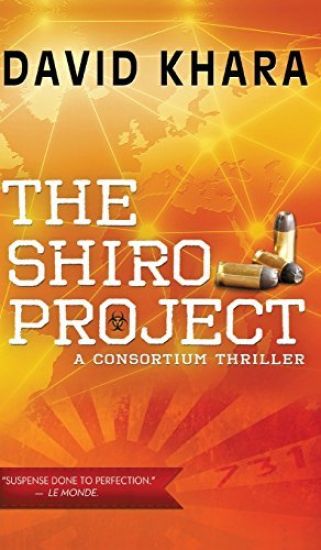
Reporter Branislav Poborsky is running away from a bad marriage, when he witnesses the Czech army covering up the extermination of an entire village. Saved in extremis by the gentle-giant Mossad agent Eytan Morgenstern, he is thrown into a troubling race to defuse a larger-than-life conspiracy. After Eytan's mentor is kidnapped, he must join forces with his arch-rival to put an end to a mysterious group that has weapons of mass destruction. Once again, the atrocities of World War II come back to haunt the modern world. What links exist between Japanese camps in China in the 1940s, a US Army research center in the 1950s, and the deadly threat Eytan faces today? From Prague to Tokyo, with stops in Ireland, yesterday's enemies become today's best allies and mankind seems on the verge of repeating the errors of the past. What can a lone man do against the madness that is bound to follow?
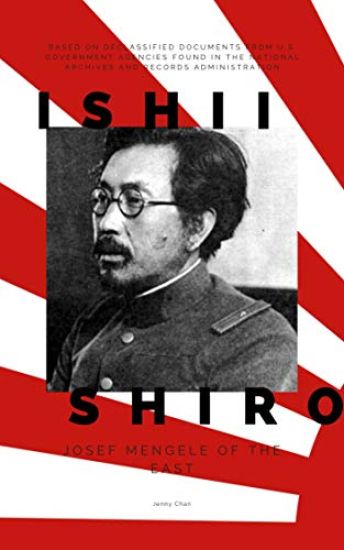
The Japanese occupation of Manchuria promised many opportunities for young scientists who wanted to utilize their training and curiosity to advance Japanese military capabilities. Recently graduated medical student Ishii Shiro seized this occasion, and with funding from the War Ministry of Imperial Japan, founded Unit 731, a biological and chemical warfare research and development arm of the IJA. With consent and funding from the military and government, he recruited the brightest minds from Japan to conduct fatal human experimentation, develop bubonic plague bombs to unleash on nearby villages, and test biological and chemical weapons. Within a few years, he rapidly climbed the ranks, going from Captain to General for the Imperial Japanese Army. His impact and power overshadowed his European counterpart, Josef Mengele. After the war, he faked his death, but the CIA was able to locate him. However, he negotiated immunity and was never brought to justice in what came to be known as the elaborate American coverup of Japanese war crimes.

Mobuyama “Eiji” A-Ji and Mobuyama “Shiro” C-ro have lived their entire lives as nothing more than “extras” to other people’s stories. It can’t end like this, right? There must be a way out! Both sharing a common goal will try anything that allows them to change their destiny, ANYTHING.

Sun and his dog Shiro with the white tail love to conquer nature and spend their days outdoors. They also really like the shiny red apples that grow on trees in the Fall. On their latest adventure, they meet a curious little creature named Polka Dot Snake, who loves apples even more than they do But it seems it's eating too many a bit too fast... Sun & Shiro is a book about friendship, and it also nudges its young readers at healthy eating without points a moral finger. This story might be the start of many more encounters with strange creatures to come.

Governance and The World Bank - a critical and comparative analysis of Mike Stevens and Shiro Gnanaselvam (1995)
Anna Christina Nascimento
Grin Publishing
2007
pokkari

Metal Forming and the Finite-Element Method
Shiro Kobayashi; Soo-Ik Oh; Taylan Altan
Oxford University Press Inc
1989
sidottu
The application of computer-aided design and manufacturing techniques is becoming essential in modern metal-forming technology. Thus process modelling for the determination of deformation mechanics has been a major concern in research. In light of these developments, the finite element method - a technique by which an object is decomposed into pieces and treated as isolated, interacting sections - has steadily assumed increased importance. This volume addresses advances in modern metal-forming technology, computer-aided design and engineering, and the finite element method.

Product information not available.

Siblings! Brainwashing! True love?! It's Christmas Eve, but Lapan has nothing saintly in mind for Alice and company! When back-to-back battles cut his pervy party short and members of Tsurukame descend upon the scene, will Lapan finally repent his skirt-chasing ways? And as Alice tries to come to grips with a revelation about Lapan's past, will she be able to break out of her shell (with the help of Lapan's groping hands)? Find out in the exciting conclusion of Alice on Deadlines 4
The Cohen-Macaulay and Gorenstein Rees Algebras Associated to Filtrations
Shiro Goto; Koji Nishida
Amer Mathematical Society
1994
pokkari
Coherent lightwave communications systems incorporate the major advantages of both lightwave and radio communications, providing more powerful system capabilities such as higher receiver sensitivity and larger transmission capacity. This resource describes in detail the engineering aspects of coherent lightwave communications systems, from fundamental principles through to future prospects. It presents recent research and development data, and gives a detailed look at the devices, problems, applications, and field trials of this rapidly advancing technology. "Coherent Lightwave Communications Systems" includes systematic coverage of all the key research and applications issues, including: modulation/demodulation schemes and bit-error-rate expressions in coherent systems; lasers and receivers for coherent systems; application of optical amplifiers to coherent systems; the effects of optical nonlinearities on coherent systems; comparisons between coherent and intensity-modulation/direct-detection (IM-DD) systems; and historical progress and future prospects of coherent systems. The book also includes a complete list of coherent field trials to date and describes the latest application of the technology to optical measurement systems. More than 235 equations are presented, along with 132 informative figures and over 300 references to the literature.
Coming from the country where short, concise poetry is celebrated, Hara Shiro's Ode to Stone is an unusually lengthy contribution to modern Japanese poetry. A recent winner of the Gendai Shijin Sho, this poem is regarded by some as having an epic quality that rivals some the great poetry of the twentieth-century West. The "narrator," stone, takes us to locations as diverse as Nagasaki, Paris, and Cairo, and to various times in history. It also directs us through a world of language, where style need not be that which is fashionable, unusual, or abstruse, but can be as ordinary and inconspicuous as the astonishing underside of the Nagasaki Eyeglasses Bridge.