

Kirjahaku
Etsi kirjoja tekijän nimen, kirjan nimen tai ISBN:n perusteella.
989 tulosta hakusanalla Shoko Kojima

Shoko-Ken: A Late Medieval Daime Sukiya Style Japanese Tea-House
Robin Noel Walker
Routledge
2002
sidottu
First published in 2003. Built in 1628 at the Koto-in temple in the precincts of Daitoku-ji monastery in Kyoto, the Shoko-ken is a late medieval daime sukiya Japanese tea-house. It is attributed to Hosokawa Tadaoki, also known as Hosokawa Sansai, an aristocrat and daimyo military leader, and a disciple and friend of Sen no Riky?. This work is an extremely thorough look at one of the few remaining tea-houses of the Momoyama era tea-masters who studied with Sen no Rikyu. The English language sources on Hosokawa Sansai and his tea-houses have been exhaustively researched. Many facts and minute observations have been brought together to give even the reader unfamiliar with Tea a sense of the presence which the tea-house still manifests.
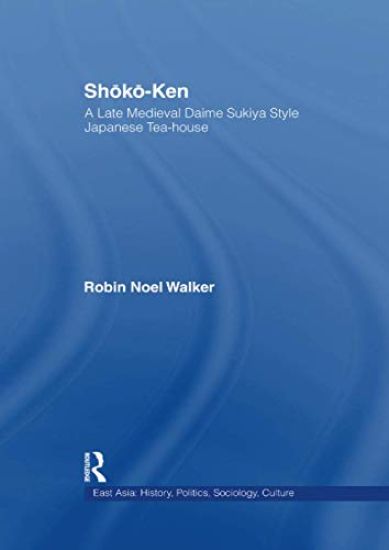
Shoko-Ken: A Late Medieval Daime Sukiya Style Japanese Tea-House
Robin Noel Walker
Routledge
2017
nidottu
First published in 2003. Built in 1628 at the Koto-in temple in the precincts of Daitoku-ji monastery in Kyoto, the Shoko-ken is a late medieval daime sukiya Japanese tea-house. It is attributed to Hosokawa Tadaoki, also known as Hosokawa Sansai, an aristocrat and daimyo military leader, and a disciple and friend of Sen no Riky?. This work is an extremely thorough look at one of the few remaining tea-houses of the Momoyama era tea-masters who studied with Sen no Rikyu. The English language sources on Hosokawa Sansai and his tea-houses have been exhaustively researched. Many facts and minute observations have been brought together to give even the reader unfamiliar with Tea a sense of the presence which the tea-house still manifests.

In crisp, unembellished prose, Choi Eunyoung paints intimate portraits of the lives of young women in South Korea, balancing the personal with the political. In the title story, a fraught friendship between an exchange student and her host sister follows them from adolescence to adulthood. In 'A Song from Afar', a young woman grapples with the death of her lover, travelling to Russia to search for information about the deceased. In 'Secret', the parents of a teacher killed in the Sewol ferry sinking hide the news of her death from her grandmother. In the tradition of Sally Rooney, Banana Yoshimoto, and Marilynne Robinson - writers from different cultures who all take an unvarnished look at human relationships and the female experience - Choi Eunyoung is a writer to watch.

Something follows Shōko Kawasaki home from her solitary walk on the levee path. She knows he is trailing behind her. Ignoring all reason, she even beckons the forlorn creature inside. Utterly bereft, he crawls under her bed and hides. Caring for him in the secret closeness of her room transforms them both. As she draws him back from the brink, deep feelings awaken, forgotten and heartbreakingly perilous-for there is another, the woman he believes has abandoned him. She is devastated by his disappearance and is pushing the police to search for him. If Shōko and her hidden visitor are found out, the tender bond between them, a thread they desperately hope fate has woven, could be ripped apart.

Something follows Shōko Kawasaki home from her solitary walk on the levee path. She knows he is trailing behind her. Ignoring all reason, she even beckons the forlorn creature inside. Utterly bereft, he crawls under her bed and hides. Caring for him in the secret closeness of her room transforms them both. As she draws him back from the brink, deep feelings awaken, forgotten and heartbreakingly perilous-for there is another, the woman he believes has abandoned him. She is devastated by his disappearance and is pushing the police to search for him. If Shōko and her hidden visitor are found out, the tender bond between them, a thread they desperately hope fate has woven, could be ripped apart.

‘Postmodern animism’ first emerged in grassroots Japan in the aftermath of mercury poisoning in Minamata and the nuclear meltdown in Fukushima. Fusing critiques of modernity with intangible cultural heritages, it represents a philosophy of the life-world, where nature is a manifestation of a dynamic life force where all life is interconnected. This new animism, it is argued, could inspire a fundamental rethink of the human-nature relationship. The book explores this notion of animism through the lens of four prominent figures in Japan: animation film director Miyazaki Hayao, sociologist Tsurumi Kazuko, writer Ishimure Michiko, and Minamata fisherman-philosopher Ogata Masato. Taking a biographical approach, it illustrates how these individuals moved towards the conclusion that animism can help humanity survive modernity. It contributes to the Anthropocene discourse from a transcultural and transdisciplinary perspective, thus addressing themes of nature and spirituality, whilst also engaging with arguments from mainstream social sciences. Presenting a new perspective for a post-anthropocentric paradigm, Animism in Contemporary Japan will be useful to students and scholars of sociology, anthropology, philosophy and Japanese Studies.
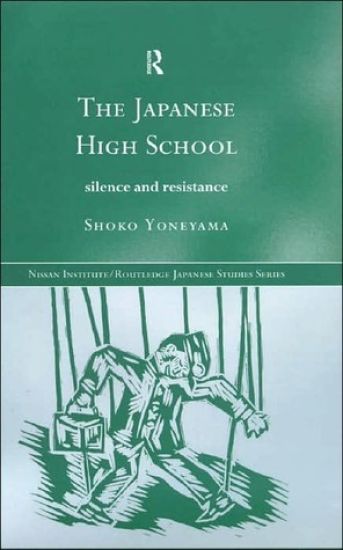
For large numbers of school students in Japan school has become a battle field. Recent violent events in schools, together with increasing drop-out rates and bullying are undermining stereotypes about the effectiveness of the Japanese education system. This incisive and original book looks at Japanese high school from a student perspective and contextualises this educational turmoil within the broader picture of Japans troubled economic and political life.
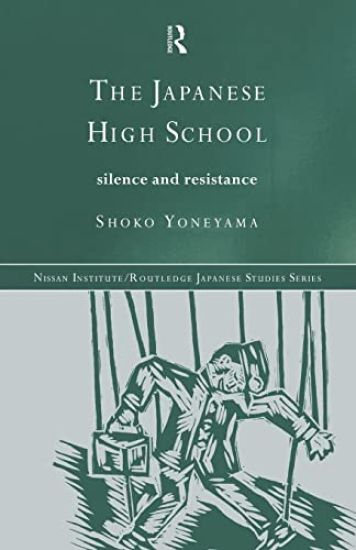
For large numbers of school students in Japan school has become a battle field. Recent violent events in schools, together with increasing drop-out rates and bullying are undermining stereotypes about the effectiveness of the Japanese education system. This incisive and original book looks at Japanese high school from a student perspective and contextualises this educational turmoil within the broader picture of Japans troubled economic and political life.
Basic Japanese: A Grammar and Workbook comprises an accessible reference grammar and related exercises in a single volume.This book presents 25 individual grammar points, covering the core material which students would expect to encounter in their first year of learning Japanese. Divided into two parts, the first part outlines fundamental components of Japanese including the writing system, pronunciation, word order, particles and conjugation patterns, while the second part builds on this foundation by introducing basic grammatical patterns organised by the task they achieve. Grammar points are followed by contextualised examples and exercises which allow students to reinforce and consolidate their learning.Key features include: clear, accessible format many useful language examples transliteration of all examples jargon-free explanations of grammar abundant exercises with full answer key subject index.Basic Japanese is suitable both for class use and independent study making it an ideal grammar reference and practice resource for both beginners and students with some knowledge of the language.
Basic Japanese: A Grammar and Workbook comprises an accessible reference grammar and related exercises in a single volume.This book presents 25 individual grammar points, covering the core material which students would expect to encounter in their first year of learning Japanese. Divided into two parts, the first part outlines fundamental components of Japanese including the writing system, pronunciation, word order, particles and conjugation patterns, while the second part builds on this foundation by introducing basic grammatical patterns organised by the task they achieve. Grammar points are followed by contextualised examples and exercises which allow students to reinforce and consolidate their learning.Key features include: clear, accessible format many useful language examples transliteration of all examples jargon-free explanations of grammar abundant exercises with full answer key subject index.Basic Japanese is suitable both for class use and independent study making it an ideal grammar reference and practice resource for both beginners and students with some knowledge of the language.
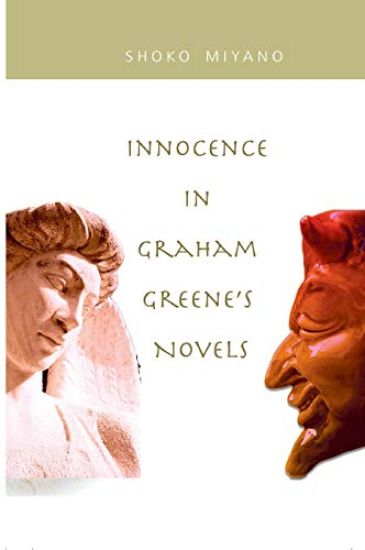
Graham Greene once wrote that -Innocence is a kind of insanity.- This book examines the many shades of innocence in Greene's characters: the -blank innocence, - -depraved innocence, - and -absurd innocence- of Anthony Farrant; the piteous innocence of Pinkie; the simple innocence of Raven; the pure innocence of Father Quixote; the paradoxical innocence of the Whisky Priest; the inverted innocence of Sarah Miles; the faithful innocence of Father Rivas, the Dog-Ears Priest; the intrusive innocence of Doctor Fischer; and the playful innocence of Harry Lime. The complex concept of innocence is found to be a prevailing theme in Greene's novels."

‘Postmodern animism’ first emerged in grassroots Japan in the aftermath of mercury poisoning in Minamata and the nuclear meltdown in Fukushima. Fusing critiques of modernity with intangible cultural heritages, it represents a philosophy of the life-world, where nature is a manifestation of a dynamic life force where all life is interconnected. This new animism, it is argued, could inspire a fundamental rethink of the human-nature relationship. The book explores this notion of animism through the lens of four prominent figures in Japan: animation film director Miyazaki Hayao, sociologist Tsurumi Kazuko, writer Ishimure Michiko, and Minamata fisherman-philosopher Ogata Masato. Taking a biographical approach, it illustrates how these individuals moved towards the conclusion that animism can help humanity survive modernity. It contributes to the Anthropocene discourse from a transcultural and transdisciplinary perspective, thus addressing themes of nature and spirituality, whilst also engaging with arguments from mainstream social sciences. Presenting a new perspective for a post-anthropocentric paradigm, Animism in Contemporary Japan will be useful to students and scholars of sociology, anthropology, philosophy and Japanese Studies.
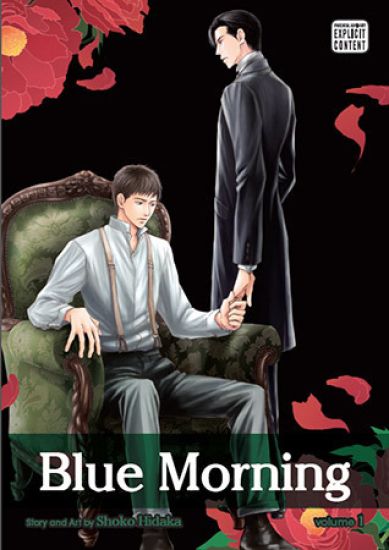
At only ten years of age, Akihito Kuze suddenly inherits the Kuze viscountship after his father's death. The family's capable butler, Tomoyuki Katsuragi, takes over the task of raising the boy, serving as his tutor. However, the handsome and intelligent Katsuragi, well respected even among the aristocracy, remains cool towards his charge. Akihito finds himself relentlessly drawn to Katsuragi, frustrated by the distance between them and driven to discover the reasons why.

'I will serve you my entire life. In exchange, you bring the Kuze family the rank of count or higher.' The young viscount Akihito agrees to this condition laid out by his butler Katsuragi, who is thus forced into his arms. But no matter how deep their affair goes, Katsuragi's attitude towards him remains cold. Akihito is plunged into a turmoil of fierce emotions, as frustrated by this unyielding distance as he is driven to violent passion by his butler's cleverness and beauty. The situation reaches a breaking point when master and servant are invited to a party at the Marquise Moriyama's.

Clinging to his fierce, unwavering love for Katsuragi, Akihito moves ever closer to an engagement to the daughter of Duke Sajo. Firmly focused on his future, Akihito asks his friend Ishizaki's father to be his go-between in the marriage talks, but Ishizaki insists that in exchange he wants Tomoyuki Katsuragi! Around the same time, former houseboy Amamiya discovers mysterious documents relating to Katsuragi's lineage.

Still reeling from Katsuragi's confession, Akihito attends Marquise Moriyama's evening ball. There he comes face-to-face with his late father's half brother, Naotsugu. Though Katsuragi arranged the meeting with the intention of helping both Akihito and the Kuze family name, Akihito decides against giving the family over to Naotsugu, bringing Akihito to the unsettling realization that he may not fully trust Katsuragi. Meanwhile, Katsuragi meets with Marquise Moriyama and boldly demands recompense for all that he has done.

At the Marquise Moriyama’s evening party, there is a gamble for the succession of the Kuse house, and at the end of a night full of deals and strategizing, the situation changes completely! After Akihito ruins Katsuragi’s plan, it is suddenly announced that Akihito will leave to obtain treatment for his lung ailment. But while things proceed exactly as Akihito had anticipated, Katsuragi’s continued silence perplexes him. Meanwhile, Katsuragi reflects upon his solitude and feelings for Akihito as he throws himself into his new duties—that is, until he learns in a letter from Kayoko that there is talk of Akihito leaving to study abroad! Will this force Katsuragi into Akihito’s arms, or will he remain his stoic, stubborn self?