

Kirjahaku
Etsi kirjoja tekijän nimen, kirjan nimen tai ISBN:n perusteella.
1000 tulosta hakusanalla Sidney L. Gulick

Two Burlesques of Lord Chesterfield's Letters: The Graces, 1774, the Fine Gentleman's Etiquette, 1776
Sidney L. Gulick
Literary Licensing, LLC
2011
nidottu


Anti-Japanese War-Scare Stories
Sidney L. Gulick
Createspace Independent Publishing Platform
2012
nidottu

Evolution of the Japanese Social and Psychic
Sidney L. Gulick
Createspace Independent Publishing Platform
2014
nidottu


Asia's Appeal to AmericaBy Sidney L. Gulick ------------------------------------------------------------------------------------------------------------------------------------------ Windham Press is committed to bringing the lost cultural heritage of ages past into the 21st century through high-quality reproductions of original, classic printed works at affordable prices. This book has been carefully crafted to utilize the original images of antique books rather than error-prone OCR text. This also preserves the work of the original typesetters of these classics, unknown craftsmen who laid out the text, often by hand, of each and every page you will read. Their subtle art involving judgment and interaction with the text is in many ways superior and more human than the mechanical methods utilized today, and gave each book a unique, hand-crafted feel in its text that connected the reader organically to the art of bindery and book-making. We think these benefits are worth the occasional imperfection resulting from the age of these books at the time of scanning, and their vintage feel provides a connection to the past that goes beyond the mere words of the text.

A Chesterfield Bibliography to 1800
Sidney L. (Sidney Lewis) 1902- Gulick
Hassell Street Press
2021
sidottu

A Chesterfield Bibliography to 1800
Sidney L. (Sidney Lewis) 1902- Gulick
Hassell Street Press
2021
nidottu

Volume II; The Church and International Relations; Report of the Commission on Peace and Arbitration, Parts I and II
Sidney L Gulick
Trieste Publishing
2018
nidottu

The Fight for Peace. an Aggressive Campaign for American Churches
Sidney L Gulick
Trieste Publishing
2018
nidottu

Two Burlesques of Lord Chesterfield's Letters.
Sidney L (Sidney Lewis) Gulick; William Woty
Anson Street Press
2025
pokkari


Reproduction of the original: Evolution of the Japanese Social and Psychic by Sidney L. Gulick


Japanese Women in the Meiji Era - CEFR C2 Reader
Alice M Bacon and Sidney L Gulick
Matatabi Press
2025
pokkari
On October 23, 1868, Japan's military rule under the shogunate was overthrown, restoring power to the 14-year-old Emperor Meiji in an event known as the Meiji Restoration. This period lasted until July 30, 1912, and marked the start of major changes as Japan moved from a feudal society to a modern nation-state. Faced with threats of colonization from Western countries, Japan saw the urgent need to adopt new ideas in science, technology, and governance. The new government aimed to centralize power and introduce reforms through the Five Charter Oath, which promoted unity and encouraged global knowledge. As a result, Japan began its journey towards modernization while trying to balance cultural traditions with the principles of Enlightened Rule.Japanese Women in the Meiji Era - CEFR C2 Reader explores the status and experiences of Japanese women during this transformative time, drawing on the writings of two educators-Alice Mabel Bacon and Sidney Lewis Gulick-who lived and worked in Japan during the Meiji era and whose insights provide valuable perspectives on women's roles. While traditional roles remained, the influence of Western ideas led to a re-evaluation of women's education and their contributions to society. Understanding the complexities of this era, including social class structures and family dynamics, is important for appreciating the changing roles of women in Japan.Each section of this book is organized around key themes that highlight women's experiences in different contexts. The first part looks at childhood and education, examining early responsibilities and learning opportunities for girls. The second part focuses on marriage and family life, emphasizing traditional customs and women's roles in managing households. The third part discusses women's professional lives and their contributions to industries like silk production and craftsmanship, showing their resilience in tough economic conditions.In the fourth part, the book investigates the lives of women in domestic service, detailing their experiences and how society viewed these roles. The fifth part shifts to urban life and work, showcasing how women found opportunities in growing cities while facing societal expectations. The sixth part examines women in the entertainment and service industries, highlighting the complexities of roles such as geisha and shogi (licensed prostitutes), where personal freedom often conflicted with societal stigma.Finally, the concluding chapter reflects on the advancements in women's empowerment during this time, highlighting improvements in education, marriage laws, and the establishment of women's universities. This chapter illustrates the gradual yet significant changes in women's roles in society. Through this collection of writings, the book offers insight into the challenges faced by Japanese women and their contributions to shaping modern Japan. Each chapter includes a vocabulary list with context-specific definitions, comprehension questions, and answers to enhance understanding and engagement with the material.


Evolution of the Japanese Social and Physchic
Sidney L. Gullick
Createspace Independent Publishing Platform
2015
nidottu
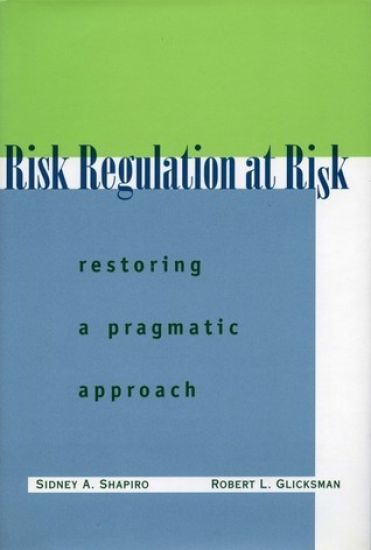
Risk Regulation at Risk
Sidney A. Shapiro; Robert L. Glicksman
Stanford University Press
2002
sidottu
In the 1960s and 1970s, Congress enacted a vast body of legislation to protect the environment and individual health and safety. Collectively, this legislation is known as "risk regulation" because it addresses the risk of harm that technology creates for individuals and the environment. In the last two decades, this legislation has come under increasing attack by critics who employ utilitarian philosophy and cost-benefit analysis. The defenders of this body of risk regulation, by contrast, have lacked a similar unifying theory. In this book, the authors propose that the American tradition of philosophical pragmatism fills this vacuum. They argue that pragmatism offers a better method for conceiving of and implementing risk regulation than the economic paradigm favored by its critics. While pragmatism offers a methodology in support of risk regulation as it was originally conceived, it also offers a perspective from which this legislation can be held up to critical appraisal. The authors employ pragmatism to support risk regulation, but pragmatism also leads them to agree with some of the criticisms against it, and even to level new criticisms of their own. In the end, the authors reject the picture—painted by risk regulation's critics—of widely excessive and irrational regulation, but the pragmatic perspective also leads them to propose a number of recommendations for useful reforms to risk regulation.
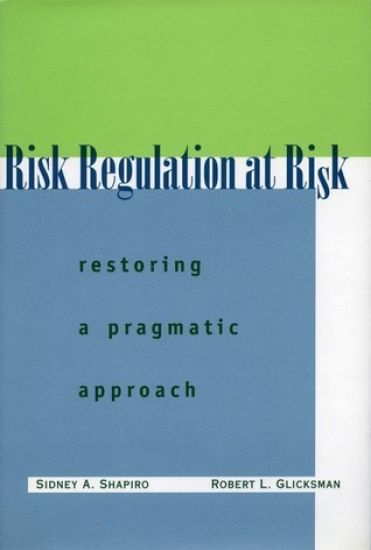
Risk Regulation at Risk
Sidney A. Shapiro; Robert L. Glicksman
Stanford University Press
2004
pokkari
In the 1960s and 1970s, Congress enacted a vast body of legislation to protect the environment and individual health and safety. Collectively, this legislation is known as "risk regulation" because it addresses the risk of harm that technology creates for individuals and the environment. In the last two decades, this legislation has come under increasing attack by critics who employ utilitarian philosophy and cost-benefit analysis. The defenders of this body of risk regulation, by contrast, have lacked a similar unifying theory. In this book, the authors propose that the American tradition of philosophical pragmatism fills this vacuum. They argue that pragmatism offers a better method for conceiving of and implementing risk regulation than the economic paradigm favored by its critics. While pragmatism offers a methodology in support of risk regulation as it was originally conceived, it also offers a perspective from which this legislation can be held up to critical appraisal. The authors employ pragmatism to support risk regulation, but pragmatism also leads them to agree with some of the criticisms against it, and even to level new criticisms of their own. In the end, the authors reject the picture—painted by risk regulation's critics—of widely excessive and irrational regulation, but the pragmatic perspective also leads them to propose a number of recommendations for useful reforms to risk regulation.