Kirjojen hintavertailu. Mukana 11 342 296 kirjaa ja 12 kauppaa.

Kirjahaku

Etsi kirjoja tekijän nimen, kirjan nimen tai ISBN:n perusteella.

1000 tulosta hakusanalla Siegfried Kracauer

Siegfried Kracauer

Siegfried Kracauer

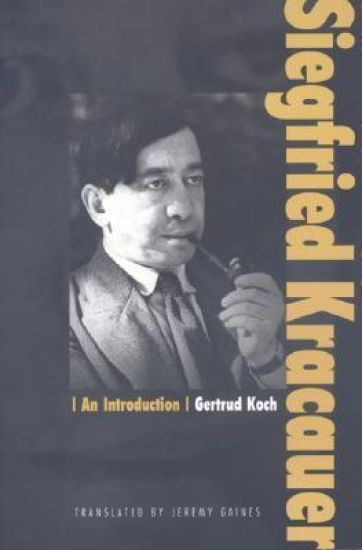
Gertrud Koch

Princeton University Press
2000
pokkari
Siegfried Kracauer has been misunderstood as a naive realist, appreciated as an astute critic of early German film, and noticed as the interesting exile who exchanged letters with Erwin Panofsky. But he is most widely thought of as the odd uncle of famed Frankfurt School critical theorists Jurgen Habermas, Theodor Adorno, Walter Benjamin, and Max Horkheimer. Recently, however, scholars have rediscovered in Kracauer's writings a philosopher, sociologist, and film theorist important beyond his associations--and perhaps one of the most significant cultural critics of the twentieth century. Gertrud Koch advances this Kracauer renaissance with the first-ever critical assessment of his entire body of work. Koch's analysis, which is concise without sacrificing thoroughness or sophistication, covers both Kracauer's best-known publications (e.g., From Caligari to Hitler, in which he gleans the roots of National Socialism in the films of the Weimar Republic) and previously underexamined texts, including two newly discovered autobiographical novels. Because Kracauer's wide-ranging works emerge from no rigidly unified approach, instead always remaining open to unusual and highly individual perspectives, Koch resists the temptation to force generalization. She does, however, identify recurring tropes in Kracauer's lifetime effort to perceive the basic posture and composition of particular cultures through their visual surfaces. Koch also finds in Kracauer a surprisingly contemporary cultural commentator, whose ideas speak directly to current discussions on film, urban modernity, feminism, cultural representation, violence, and other themes. This book was long-awaited in Germany, as well as widely and well reviewed. Now translated into English for the first time, it will fuel already growing interest in the United States, where Kracauer lived and wrote from 1941 until his death in 1966. It will attract the attention of students and scholars working in Film Studies, German Studies, Comparative Literature, Critical Theory, Cultural Studies, Philosophy, and History.
Siegfried Kracauer

Siegfried Kracauer

Graeme Gilloch

Polity Press
2015
sidottu
This major new book offers a much-needed introduction to the work of Siegfried Kracauer, one of the main intellectual figures in the orbit of the Frankfurt School of Critical Theory. It is part of a timely revival and reappraisal of his unique contribution to our critical understanding of modernity, the interrogation of mass culture, and the recognition of both the dynamism and diminution of human experience in the hustle and bustle of the contemporary metropolis. In stressing the extraordinary variety of Kracauer’s writings (from scholarly philosophical treatises to journalistic fragments, from comic novels to classified reports) and the dazzling diversity of his themes (from science and urban architectural visions to slapstick and dancing girls), this insightful book reveals his fundamental and formative influence upon Critical Theory and argues for his vital relevance for cultural analysis today.Kracauer’s work is distinguished by an acute sensitivity to the ‘surface manifestations’ of popular culture and a witty, eminently readable literary style. In exploring and making accessible the work of this remarkable thinker, this book will be indispensable for scholars and students working in many disciplines and interdisciplinary fields: sociology and social theory; film, media and cultural studies; urban studies, cultural geography and architectural theory; philosophy and Critical Theory.
Siegfried Kracauer

Siegfried Kracauer

Graeme Gilloch

Polity Press
2015
nidottu
This major new book offers a much-needed introduction to the work of Siegfried Kracauer, one of the main intellectual figures in the orbit of the Frankfurt School of Critical Theory. It is part of a timely revival and reappraisal of his unique contribution to our critical understanding of modernity, the interrogation of mass culture, and the recognition of both the dynamism and diminution of human experience in the hustle and bustle of the contemporary metropolis. In stressing the extraordinary variety of Kracauer’s writings (from scholarly philosophical treatises to journalistic fragments, from comic novels to classified reports) and the dazzling diversity of his themes (from science and urban architectural visions to slapstick and dancing girls), this insightful book reveals his fundamental and formative influence upon Critical Theory and argues for his vital relevance for cultural analysis today.Kracauer’s work is distinguished by an acute sensitivity to the ‘surface manifestations’ of popular culture and a witty, eminently readable literary style. In exploring and making accessible the work of this remarkable thinker, this book will be indispensable for scholars and students working in many disciplines and interdisciplinary fields: sociology and social theory; film, media and cultural studies; urban studies, cultural geography and architectural theory; philosophy and Critical Theory.
Siegfried Kracauer's American Writings

Siegfried Kracauer's American Writings

Siegfried Kracauer; Martin Jay

University of California Press
2012
sidottu
Siegfried Kracauer (1889-1966), friend and colleague of Walter Benjamin and Theodor Adorno, was one of the most influential film critics of the mid-twentieth century. In this book, Johannes von Moltke and Kristy Rawson have, for the first time assembled essays in cultural criticism, film, literature, and media theory that Kracauer wrote during the quarter century he spent in America after fleeing Nazi-occupied Europe. In the decades following his arrival in the United States, Kracauer commented on developments in American and European cinema, wrote on film noir and neorealism, examined unsettling political trends in mainstream cinema, and reviewed the contemporary experiments of avant-garde filmmakers. As a cultural critic, he also ranged far beyond cinema, intervening in debates regarding Jewish culture, unraveling national and racial stereotypes, and reflecting on the state of arts and humanities in the 1950s. These essays, together with the editors' introductions and an afterward by Martin Jay offer illuminating insights into the films and culture of the postwar years and provide a unique perspective on this eminent emigre intellectual.
Siegfried Kracauer's American Writings

Siegfried Kracauer's American Writings

Siegfried Kracauer; Martin Jay

University of California Press
2012
pokkari
Siegfried Kracauer (1889-1966), friend and colleague of Walter Benjamin and Theodor Adorno, was one of the most influential film critics of the mid-twentieth century. In this book, Johannes von Moltke and Kristy Rawson have, for the first time assembled essays in cultural criticism, film, literature, and media theory that Kracauer wrote during the quarter century he spent in America after fleeing Nazi-occupied Europe. In the decades following his arrival in the United States, Kracauer commented on developments in American and European cinema, wrote on film noir and neorealism, examined unsettling political trends in mainstream cinema, and reviewed the contemporary experiments of avant-garde filmmakers. As a cultural critic, he also ranged far beyond cinema, intervening in debates regarding Jewish culture, unraveling national and racial stereotypes, and reflecting on the state of arts and humanities in the 1950s. These essays, together with the editors' introductions and an afterward by Martin Jay offer illuminating insights into the films and culture of the postwar years and provide a unique perspective on this eminent emigre intellectual.
Siegfried Kracauer, or, The Allegories of Improvisation

Siegfried Kracauer, or, The Allegories of Improvisation

Miguel Vedda

Springer Nature Switzerland AG
2021
sidottu
This book analyses multiple facets of Kracauer’s work, comprehending the essayistic, narrative, philosophical, theoretical and critical writings, and putting special emphasis on some aspects: the phenomenology of metropolis, the theory of historiographic method, the reflections on the crisis of the subject and the emergence of a new subjectivity, the new forms of perception and aesthetic behaviour in late capitalism, the function of critic-intellectuals, the sociology of the middle classes, the theory of fascism, the aesthetical and sociological reflections on literary genres, the politicization of melancholy. An original feature of this book is the attention it pays to the links between Kracauer’s theoretical and critical writings and the traditions of heterodox Marxism, against a habitual tendency to obliterate the political (and emancipatory) dimension in the German author.
Siegfried Kracauer, or, The Allegories of Improvisation

Siegfried Kracauer, or, The Allegories of Improvisation

Miguel Vedda

Springer Nature Switzerland AG
2022
nidottu
This book analyses multiple facets of Kracauer’s work, comprehending the essayistic, narrative, philosophical, theoretical and critical writings, and putting special emphasis on some aspects: the phenomenology of metropolis, the theory of historiographic method, the reflections on the crisis of the subject and the emergence of a new subjectivity, the new forms of perception and aesthetic behaviour in late capitalism, the function of critic-intellectuals, the sociology of the middle classes, the theory of fascism, the aesthetical and sociological reflections on literary genres, the politicization of melancholy. An original feature of this book is the attention it pays to the links between Kracauer’s theoretical and critical writings and the traditions of heterodox Marxism, against a habitual tendency to obliterate the political (and emancipatory) dimension in the German author.
Siegfried Kracauer, sein Leben und sein Werk
Studienarbeit aus dem Jahr 2007 im Fachbereich Medien / Kommunikation - Theorien, Modelle, Begriffe, Note: 1,0, Universit t Osnabr ck, Veranstaltung: Medien und Gesellschaft II, 21 Quellen im Literaturverzeichnis, Sprache: Deutsch, Abstract: In dieser Arbeit geht es um den vielbezeichneten Medientheoretiker, Essayisten, Filmwissenschaftler, Feuilletonisten, Philosophen und Soziologen Siegfried Kracauer. Kracauers Pers nlichkeit wird besonders unter der Ber cksichtigung seines vielschichtigen Werkes betrachtet. Im ersten Teil geht es um das Leben Siegfried Kracauers, das vorwiegend von Exilerfahrungen und finanziellen Engp ssen, aber auch der Schaffung gro artiger Arbeiten gepr gt ist. Auf diese wird im zweiten Teil dieser Ausarbeitung n her eingegangen. Dargestellt werden neben seiner Philosophie auch Kracauers Untersuchungen von Massenrevuen, Fotografie und Film. Dar ber hinaus werden einzelne Werke Kracauers, wie "Das Ornament der Masse," die Romane "Ginster" und "Georg," "Die Angestellten," Jacques Offenbach und das Paris seiner Zeit" und die "Theorie des Films" vorgestellt. Abschlie end wird gesondert auf eines der kontroversesten Werke Kracauers, "Von Caligari zu Hitler," eingegangen und dessen erkenntnistheoretische berlegungen am Beispiel des Filmes "Das Cabinet des Dr. Caligari" erl utert.
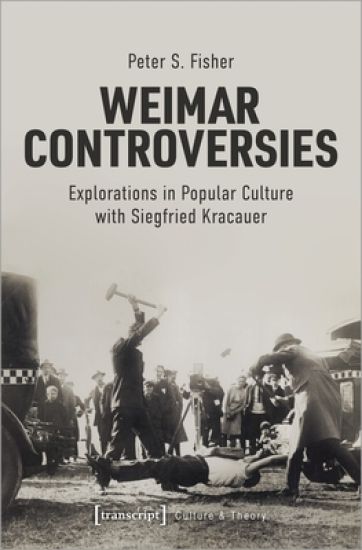
Weimar Controversies – Explorations in Popular Culture with Siegfried Kracauer
In the Weimar Republic, popular culture was the scene of heated controversies that tested the limits of national cohesion. How could marginal figures like a stigmatized villager, a grub street writer, or an advocate for nudism become flashpoints of political conflict?Peter S. Fisher draws on Siegfried Kracauer's trenchant observations on Weimar's contradictions to knit these exemplary stories together. Following his methodology, society's underdogs take center stage, pushing the headline makers into the background.
Zur "Ichlosigkeit" des Protagonisten "Ginster" in Siegfried Kracauers gleichnamigem Roman
Studienarbeit aus dem Jahr 2012 im Fachbereich Germanistik - Neuere Deutsche Literatur, Note: 1,3, Johannes Gutenberg-Universit t Mainz, Sprache: Deutsch, Abstract: Der Titelfigur "Ginster" in Kracauers gleichnamigen Roman wurde in der zeitgen ssischen und in der neueren Forschung enorme Beachtung geschenkt und insbesondere Ginsters Wesen wurde h ufig thematisiert. In zahlreichen Rezensionen und Interpretationen wird der Titelfigur Ginster nachgesagt, er habe kein "Ich" und besitze keine Individualit t. Daneben werden ihm immer wieder "Ichlosigkeit," fehlende Identit t oder auch Willenslosigkeit attestiert. Bei Thomas Hecken und ebenso bei Hildegart Hogen finden sich jedoch Anhaltspunkte, diese "Ichlosigkeit" kritisch zu hinterfragen. Hecken f hrt bspw. an, dass die bisherige Forschung Ginsters u ere Ungeschicklichkeit und Wehrlosigkeit auf dessen gesamtes Wesen bertr gt, um ihn somit relativ schnell auf den Begriff der Ichlosigkeit zu bringen. Heckens Ansicht nach wurde in der Forschung aber bislang " bersehen," dass nicht nur eine beruflich und weltanschaulich gefestigte Existenz ber ein Ichbewusstsein verf gen kann, sondern dass auch Ginster ber wesentliche Aspekte der Selbstgewissheit verf gt, die bislang ausgeblendet wurden. Eine systematische Untersuchung dieser Aspekte findet sich bei Hecken jedoch noch nicht. Es bleibt bei einer knappen Argumentation, mit dem Hinweis darauf, dass bei Ginster durchaus "durchgehaltene Schematisierungs-und Klassifizierungsakte" zu finden sind, die auf ein vorhandenes Ichbewusstsein schlie en lassen. Ziel der folgenden Arbeit ist es daher einerseits zu untersuchen, welche Aspekte f r Ginsters "Ichlosigkeit" sprechen und andererseits aber auch gezielt zu er rtern, welche Argumente f r eine ausgebildete Identit t des Protagonisten stehen.