Kirjojen hintavertailu. Mukana 11 244 527 kirjaa ja 12 kauppaa.

Kirjahaku

Etsi kirjoja tekijän nimen, kirjan nimen tai ISBN:n perusteella.

1000 tulosta hakusanalla Simon Evnine

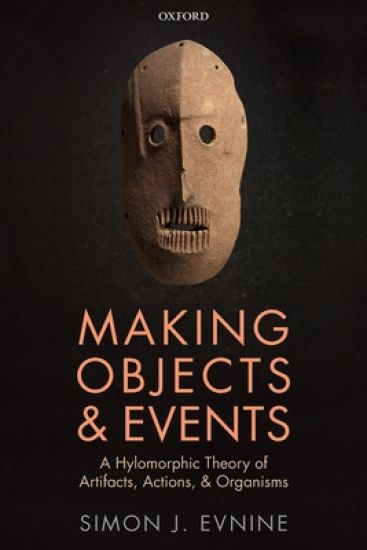
Making Objects and Events

Making Objects and Events

Simon J. Evnine

Oxford University Press
2016
sidottu
Simon J. Evnine explores the view (which he calls amorphic hylomorphism) that some objects have matter from which they are distinct but that this distinctness is not due to the existence of anything like a form. He draws on Aristotle's insight that such objects must be understood in terms of an account that links what they are essentially with how they come to exist and what their functions are (the coincidence of formal, final, and efficient causes). Artifacts are the most prominent kind of objects where these three features coincide, and Evnine develops a detailed account of the existence and identity conditions of artifacts, and the origins of their functions, in terms of how they come into existence. This process is, in general terms, that they are made out of their initial matter by an agent acting with the intention to make an object of the given kind. Evnine extends the account to organisms, where evolution accomplishes what is effected by intentional making in the case of artifacts, and to actions, which are seen as artifactual events.
Making Objects and Events

Making Objects and Events

Simon J. Evnine

Oxford University Press
2020
nidottu
Simon J. Evnine explores the view (which he calls amorphic hylomorphism) that some objects have matter from which they are distinct but that this distinctness is not due to the existence of anything like a form. He draws on Aristotle's insight that such objects must be understood in terms of an account that links what they are essentially with how they come to exist and what their functions are (the coincidence of formal, final, and efficient causes). Artifacts are the most prominent kind of objects where these three features coincide, and Evnine develops a detailed account of the existence and identity conditions of artifacts, and the origins of their functions, in terms of how they come into existence. This process is, in general terms, that they are made out of their initial matter by an agent acting with the intention to make an object of the given kind. Evnine extends the account to organisms, where evolution accomplishes what is effected by intentional making in the case of artifacts, and to actions, which are seen as artifactual events.
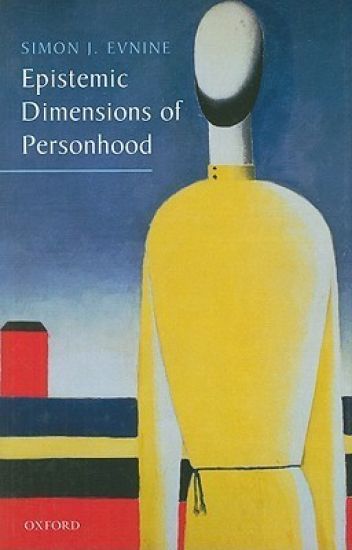
Epistemic Dimensions of Personhood

Epistemic Dimensions of Personhood

Simon J. Evnine

Oxford University Press
2008
sidottu
Simon Evnine examines various epistemic aspects of what it is to be a person. Persons are defined as finite beings that have beliefs, including second-order beliefs about their own and others' beliefs, and are agents, capable of making long-term plans. It is argued that for any being meeting these conditions, a number of epistemic consequences obtain. First, all such beings must have certain logical concepts and be able to use them in certain ways. Secondly, there are at least two principles governing belief that it is rational for persons to satisfy and are such that nothing can be a person at all unless it satisfies them to a large extent. These principles are that one believe the conjunction of one's beliefs and that one treat one's future beliefs as, by and large, better than one's current beliefs. Thirdly, persons both occupy epistemic points of view on the world and show up within those views. This makes it impossible for them to be completely objective about their own beliefs. Ideals of rationality that require such objectivity, while not necessarily wrong, are intrinsically problematic for persons. This 'aspectual dualism' is characteristic of treatments of persons in the Kantian tradition. In sum, these epistemic consequences support a traditional view of the nature of persons, one in opposition to much recent theorizing.
Epistemic Dimensions of Personhood

Epistemic Dimensions of Personhood

Simon J. Evnine

Oxford University Press
2011
nidottu
Simon Evnine examines various epistemic aspects of what it is to be a person. Persons are defined as finite beings that have beliefs, including second-order beliefs about their own and others' beliefs, and engage in agency, including the making of long-term plans. It is argued that for any being meeting these conditions, a number of epistemic consequences obtain. First, all such beings must have certain logical concepts and be able to use them in certain ways. Secondly, there are at least two principles governing belief that it is rational for persons to satisfy and are such that nothing can be a person at all unless it satisfies them to a large extent. These principles are that one believe the conjunction of one's beliefs and that one treat one's future beliefs as, by and large, better than one's current beliefs. Thirdly, persons both occupy epistemic points of view on the world and show up within those views. This makes it impossible for them to be completely objective about their own beliefs. Ideals of rationality that require such objectivity, while not necessarily wrong, are intrinsically problematic for persons. This 'aspectual dualism' is characteristic of treatments of persons in the Kantian tradition. In sum, these epistemic consequences support a traditional view of the nature of persons, one in opposition to much recent theorizing.

Simon

Simon

Margaret Ann Dahl

Blurb
2021
pokkari
A fictional story about a young South African boy who tries to fulfill his Father's dream of overcoming the problem of poaching of Wild Animals. It is a story of determination and dedication with a happy ending
Simon

Simon

Richard Kennedy

Lulu.com
2014
pokkari
The shock of being diagnosed with a terminal disease- one of the cruelest in medical annals, is made even more confusing and ironic by a fantastic gift that accompanies it...You will laugh. You will cry. And you will enjoy one of the most moving love stories ever written...You will never forget the "man-child", Simon, with his unparalleled joys and his unimaginable sorrows. And you are sure to be exhilarated by its gripping and astonishing conclusion.