Kirjojen hintavertailu. Mukana 11 244 527 kirjaa ja 12 kauppaa.

Kirjahaku

Etsi kirjoja tekijän nimen, kirjan nimen tai ISBN:n perusteella.

1000 tulosta hakusanalla Simon Oliver; Robbi Rodriguez

FBP: Federal Bureau of Physics Vol. 1: The Paradigm Shift (2026)
Wormholes in your kitchen. Gravity failures at school. Quantum tornadoes tearing through the midwest. As with all natural disasters, people do what they always do: They adapt and survive. And if things get really bad, the Federal Bureau of Physics (FBP) is only a call away. FBP: Federal Bureau of Physics is the story of Adam Hardy: Young, brash and smart, he's a rising star at the FBP, but when a gravity failure leads to the creation of an alternate dimension known as a 'BubbleVerse,' Adam is sent on a rescue mission and finds his skills and abilities pushed to their limits when he discovers his partner has a different agenda... Collects issues #1-7.
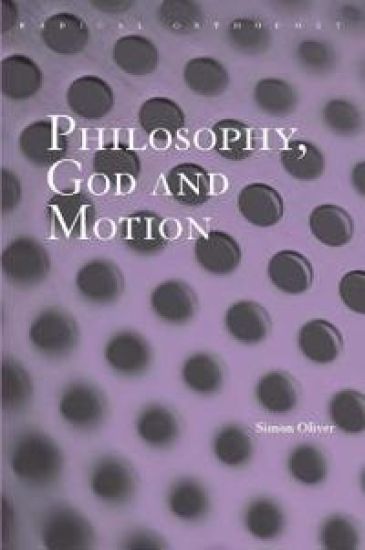
Philosophy, God and Motion

Philosophy, God and Motion

Simon Oliver

Routledge
2005
sidottu
In the post-Newtonian world motion is assumed to be a simple category which relates to the locomotion of bodies in space, and is usually associated only with physics. This book shows this to be a relatively recent understanding of motion and that prior to the scientific revolution motion was a broader and more mysterious category, applying to moral as well as physical movements.Simon Oliver presents fresh interpretations of key figures in the history of western thought including Plato, Aristotle, Aquinas and Newton, examining the thinkers’ handling of the concept of motion. Through close readings of seminal texts in ancient and medieval cosmology and early modern natural philosophy, the books moves from antique to modern times investigating how motion has been of great significance within theology, philosophy and science. Particularly important is the relation between motion and God, following Aristotle traditional doctrines of God have understood the divine as the ‘unmoved mover’ while post-Holocaust theologians have suggested that in order to be compassionate God must undergo the motion of suffering. The text argues that there may be an authentically theological, as well as a natural scientific understanding of motion.This volume will prove a major contribution to theology, the history of Christian thought and to the growing field of science and religion.
Philosophy, God and Motion

Philosophy, God and Motion

Simon Oliver

Routledge
2013
nidottu
In the post-Newtonian world motion is assumed to be a simple category which relates to the locomotion of bodies in space, and is usually associated only with physics. This book shows this to be a relatively recent understanding of motion and that prior to the scientific revolution motion was a broader and more mysterious category, applying to moral as well as physical movements.Simon Oliver presents fresh interpretations of key figures in the history of western thought including Plato, Aristotle, Aquinas and Newton, examining the thinkers’ handling of the concept of motion. Through close readings of seminal texts in ancient and medieval cosmology and early modern natural philosophy, the books moves from antique to modern times investigating how motion has been of great significance within theology, philosophy and science. Particularly important is the relation between motion and God, following Aristotle traditional doctrines of God have understood the divine as the ‘unmoved mover’ while post-Holocaust theologians have suggested that in order to be compassionate God must undergo the motion of suffering. The text argues that there may be an authentically theological, as well as a natural scientific understanding of motion.This volume will prove a major contribution to theology, the history of Christian thought and to the growing field of science and religion.
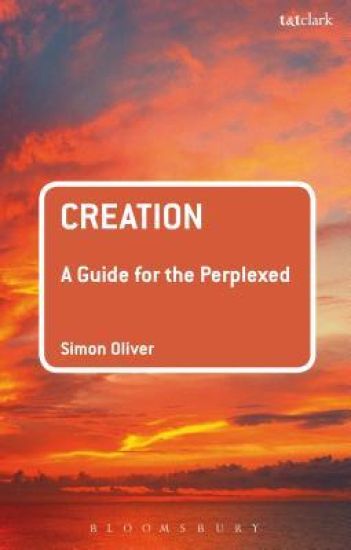
Creation: A Guide for the Perplexed

Creation: A Guide for the Perplexed

Simon Oliver

T. T.Clark Ltd
2017
nidottu
This addition to our popular Guides for the Perplexed series tackles a subject that is enjoying renewed debate: Christianity, along with Judaism and Islam, claims that the universe is not a brute fact. It is 'created'. But what do we mean by 'creation'? Do we mean that the universe is 'designed'? Is it the product of an evolutionary process? How are creatures related to God, and does God act within creation? Simon Oliver begins with the background to the Christian theology of creation in Greek philosophy and the Old Testament. This provides a route into understanding the claim that we are part of a created order that is also the theatre of God's providential action. He examines different understandings of creation, including creation out of nothing and the analogy of being, with close reference to the work of patristic and medieval theologians such as Augustine and Thomas Aquinas. This leads to an historical overview of the relationship between theological, philosophical and scientific approaches to creation in the modern period. Some of the ethical issues concerning humanity's place within, and treatment of, creation and our environment are also examined. A distinctive yet traditional theology of creation is proposed focused on the concepts of gift and participation as ways of understanding more fully the meaning and implications of the claim that the universe is created.
Creation: A Guide for the Perplexed

Creation: A Guide for the Perplexed

Simon Oliver

T. T.Clark Ltd
2017
sidottu
This addition to our popular Guides for the Perplexed series tackles a subject that is enjoying renewed debate: Christianity, along with Judaism and Islam, claims that the universe is not a brute fact. It is 'created'. But what do we mean by 'creation'? Do we mean that the universe is 'designed'? Is it the product of an evolutionary process? How are creatures related to God, and does God act within creation? Simon Oliver begins with the background to the Christian theology of creation in Greek philosophy and the Old Testament. This provides a route into understanding the claim that we are part of a created order that is also the theatre of God's providential action. He examines different understandings of creation, including creation out of nothing and the analogy of being, with close reference to the work of patristic and medieval theologians such as Augustine and Thomas Aquinas. This leads to an historical overview of the relationship between theological, philosophical and scientific approaches to creation in the modern period. Some of the ethical issues concerning humanity's place within, and treatment of, creation and our environment are also examined. A distinctive yet traditional theology of creation is proposed focused on the concepts of gift and participation as ways of understanding more fully the meaning and implications of the claim that the universe is created.
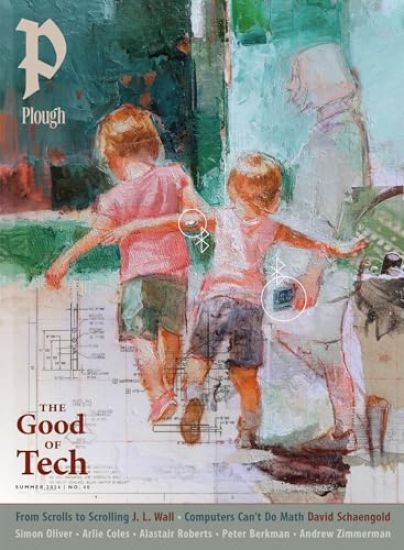
Plough Quarterly No. 40 – The Good of Tech

Plough Quarterly No. 40 – The Good of Tech

Simon Oliver; Sara Novic; Matthew Loftus; Arlie Coles; David Schaengold; Hannah Arendt; J. L. Wall; Alastair Roberts; Julian Peters; Robert Lee Williams

PLOUGH PUBLISHING HOUSE
2024
nidottu
How can we live well with tech, without it becoming our master? These days, the heady promises of Silicon Valley seem suspect: the internet didn’t bring all of humanity together; neither did smartphones or social media. We have long since stopped associating tech with utopian visions of global harmony, instead blaming it for distraction, polarization, addictions to porn and gambling, the trivialization of culture, loss of privacy and work-life balance, and fears that automation may push millions out of a job. Advances in artificial intelligence seem poised to bring us to the next technological watershed. It’s a good time to ask how we can learn to live well with tech, and how we might push back against technologies that shape humans in anti-human ways. On this theme: Find out why computers can’t do math and humans can.When parenting from prison, a little tech can make a big difference.Glucose monitoring systems transform life for children with diabetes.Should ChatGPT write sermons and prayers?From scrolls to scrolling, tech has changed the way Jewish people read scriptureWill AI bring the end of the world, or is it already here?An intentional community tries to be intentional about personal technology.Our struggle with technology goes back to the Tower of Babel in Genesis.A farmer praises a simple piece of technology – the rock bar. Also in this issue: A photo essay about children on the frontlines in UkraineA philosopher’s proposal for a gift economyThe winners of the 2024 Rhina Espaillat Poetry AwardInsights from Gerard Manley Hopkins, E. F. Schumacher, Antoine de Saint-Exupéry, Jean-Pierre Dupuy, and Hannah ArendtReviews of Birding to Change the World, The Heaven & Earth Grocery Store, and All Things Are Too Small Plough Quarterly features stories, ideas, and culture for people eager to apply their faith to the challenges we face. Each issue includes in-depth articles, interviews, poetry, book reviews, and art.
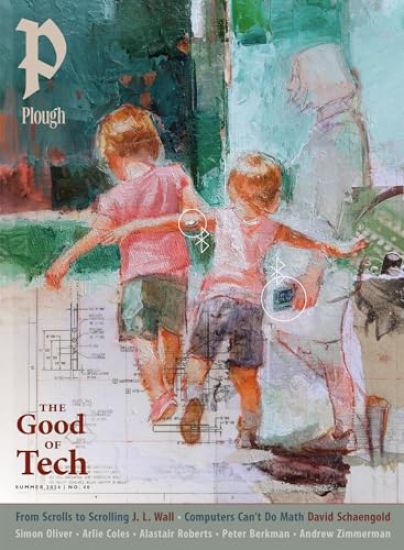
Plough Quarterly No. 40 - The Good of Tech

Plough Quarterly No. 40 - The Good of Tech

Simon Oliver; Sara Novic

PLOUGH PUBLISHING HOUSE
2024
nidottu
How can we live well with tech, without it becoming our master?These days, the heady promises of Silicon Valley seem suspect: the internet didn't bring all of humanity together; neither did smartphones or social media. We have long since stopped associating tech with utopian visions of global harmony, instead blaming it for distraction, polarization, addictions to porn and gambling, the trivialization of culture, loss of privacy and work-life balance, and fears that automation may push millions out of a job. Advances in artificial intelligence seem poised to bring us to the next technological watershed. It's a good time to ask how we can learn to live well with tech, and how we might push back against technologies that shape humans in anti-human ways.On this theme: Find out why computers can't do math and humans can.When parenting from prison, a little tech can make a big difference.Glucose monitoring systems transform life for children with diabetes.Should ChatGPT write sermons and prayers?From scrolls to scrolling, tech has changed the way Jewish people read scriptureWill AI bring the end of the world, or is it already here?An intentional community tries to be intentional about personal technology.Our struggle with technology goes back to the Tower of Babel in Genesis.A farmer praises a simple piece of technology - the rock bar.Also in this issue: A photo essay about children on the frontlines in UkraineA philosopher's proposal for a gift economyThe winners of the 2024 Rhina Espaillat Poetry AwardInsights from Gerard Manley Hopkins, E. F. Schumacher, Antoine de Saint-Exup ry, Jean-Pierre Dupuy, and Hannah ArendtReviews of Birding to Change the World, The Heaven & Earth Grocery Store, and All Things Are Too SmallPlough Quarterly features stories, ideas, and culture for people eager to apply their faith to the challenges we face. Each issue includes in-depth articles, interviews, poetry, book reviews, and art.
Sensing the Sacred

Sensing the Sacred

Hanna J Lucas; Simon Oliver

Cascade Books
2023
pokkari
This book offers a theological vision of learning informed by the mystagogical homilies of Ambrose of Milan, Cyril of Jerusalem, John Chrysostom, and Theodore of Mopsuestia. In dialogue with these four mystagogues, Hanna Lucas walks through the rites and liturgy surrounding baptism and the eucharist in order to establish a theological epistemology that sees knowledge as part of the "capacitation" of our nature for heavenly mysteries and union with God. The sacraments of initiation teach us that even the mundane aspects of knowledge, including the rudiments of matter and sensation, fit into a larger divine gift of capacitation. This book offers a holistic and integrated theory of knowledge that envisions one all-encompassing divine pedagogy that orients toward union with God. This union is experienced fully in the eschaton, but it breaks into time through the sacraments of the church, and it echoes down through the ordinary modes of knowing we encounter in daily life. Mundane knowledge beckons the knower to become capable of a sublime intelligence: to become capable of union with the divine. This integrative, unitive, and eschatologically oriented vision of knowledge stands in stark contrast to modern and postmodern epistemologies. Sensing the Sacred positions mystagogy as a timely remedy for the "incapacitations" that modernity offers us.
Sensing the Sacred

Sensing the Sacred

Hanna J Lucas; Simon Oliver

Cascade Books
2023
sidottu
This book offers a theological vision of learning informed by the mystagogical homilies of Ambrose of Milan, Cyril of Jerusalem, John Chrysostom, and Theodore of Mopsuestia. In dialogue with these four mystagogues, Hanna Lucas walks through the rites and liturgy surrounding baptism and the eucharist in order to establish a theological epistemology that sees knowledge as part of the "capacitation" of our nature for heavenly mysteries and union with God. The sacraments of initiation teach us that even the mundane aspects of knowledge, including the rudiments of matter and sensation, fit into a larger divine gift of capacitation. This book offers a holistic and integrated theory of knowledge that envisions one all-encompassing divine pedagogy that orients toward union with God. This union is experienced fully in the eschaton, but it breaks into time through the sacraments of the church, and it echoes down through the ordinary modes of knowing we encounter in daily life. Mundane knowledge beckons the knower to become capable of a sublime intelligence: to become capable of union with the divine. This integrative, unitive, and eschatologically oriented vision of knowledge stands in stark contrast to modern and postmodern epistemologies. Sensing the Sacred positions mystagogy as a timely remedy for the "incapacitations" that modernity offers us.
Harold Curwen and Oliver Simon Curwen Press

Harold Curwen and Oliver Simon Curwen Press

Brian Webb; Peyton Skipwith

ACC Art Books
2009
sidottu
The finest books produced during the quarter century prior to the outbreak of the Great War were almost invariably printed by the private presses, but post-war, with the development of new technology, the accolade of excellence passed into the hands of a small number of commercial firms, with the Curwen Press very much to the fore. Like those earlier printers, Harold Curwen was inspired by the Morrisian ideal, but he did not adhere to the tenet that 'hand made' was necessarily better than 'machine made', which led him to become one of the pioneering figures in the technical revolution that transformed the printing industry. Harold Curwen joined the family firm in 1908 and by 1916 had instigated a general replanning of the works and, aided by the wartime staff shortage, felt able to push ahead with the installation of modern machinery. He was in the forefront of the development of offset lithography, which ensured that the Curwen Press would be in the vanguard of fine colour printing throughout the next decade. Harold also pioneered, as far as England was concerned, the pochoir technique of hand-stencilling. 1922 was the beginning of the Curwen Press's golden decade, during which it produced The Woodcutter's Dog, the English language edition of Julius Meier-Graefe's two volume biography of Van Gogh for the Medici Society, the exhibition catalogue of books and manuscripts for The First Edition Club, Goldoni's Four Comedies and the delightful little pocket engagement book, The Four Seasons, illustrated by Albert Rutherston. Rutherston was later to illustrate Thomas Hardy's Yuletide in a Younger World, the first of the Ariel Poems for Faber & Gwyer which were to become a feature of the collaboration between the two firms. In addition there was the 'Safety First' Calendar, adorned with Lovat Fraser's cautionary illustrations. Following restructuring in 1933 the Curwen Press had a further forty years of distinguished work ahead both in the printing of books, particularly those illustrated by Barnett Freedman, as well as jobbing work, including some of the finest posters for the London Underground by Bawden, Wadsworth, John Banting, Betty Swanwick, Barnett Freedman and others. The Design series is the winner of the Brand/Series Identity Category at the British Book Design and Production Awards 2009, judges said: "A series of books about design, they had to be good and these are. The branding is consistent, there is a good use of typography and the covers are superb." Also available: Claud Lovat Fraser ISBN: 9781851496631 GPO ISBN: 9781851495962 Peter Blake ISBN: 9781851496181 FHK Henrion ISBN: 9781851496327 David Gentleman ISBN: 9781851495955 David Mellor ISBN: 9781851496037 E.McKnight Kauffer ISBN: 9781851495207 Edward Bawden and Eric Ravilious ISBN: 9781851495009 El Lissitzky ISBN: 9781851496198 Festival of Britain 1951 ISBN: 9781851495337 Jan Le Witt and George Him ISBN: 9781851495665 Paul Nash and John Nash ISBN: 9781851495191 Rodchenko ISBN: 9781851495917 Abram Games ISBN: 9781851496778