Kirjahaku
Etsi kirjoja tekijän nimen, kirjan nimen tai ISBN:n perusteella.
1000 tulosta hakusanalla Sir Hugh Walpole
The Duchess of Wrexe, Her Decline and Death; A Romantic Commentary
Sir Hugh Walpole
Createspace Independent Publishing Platform
2016
nidottu


Chance: a tale in two parts, By Joseph Conrad A NOVEL: To Sir.Hugh Charles Clifford(5 March 1866 - 18 December 1941) was a Bri
Sir Hugh Clifford; Joseph Conrad
Createspace Independent Publishing Platform
2016
nidottu
The scientific and proto-scientific community of Elizabethan and Jacobean London has lately attracted much scholarly attention. This book advances the subject by means of an investigation of the life and work of Sir Hugh Plat (1552-1611), an author, alchemist, speculator and inventor whose career touched on the fields of alchemy, general scientific curiosity, cookery and sugar work, cosmetics, gardening and agriculture, food manufacture, victualling, supplies and marketing. Unlike many of his colleagues and correspondents, much manuscript material, in the form of notebooks and workings, has survived. Not much, however, is known of his personal life and among his manuscripts there are few letters, diaries or other private materials. What can be learnt about him is summarised by Malcolm Thick in the first chapter, before he proceeds to analyse various aspects of his public output. Plat has such a wide range of interests that modern scholars have tended to concentrate on that aspect of his work which most affects their own research.Most recently he has fallen amongst historians of science and whilst they have carefully examined his written and published works they have, in some cases, interpreted almost all that he wrote as a quest for scientific knowledge, in the same way that the gardening writers thought him primarily a gardener or the cookery writers treated his cookery book as his most important work. By devoting a whole book to his multifarious interests that Thick can show him in the round, as a gentlemen of varied interests, a Londoner trying to make his way in the world. He also shows Plat as a man of his time and place. The chapter on military inventions, for instance, reveals Plat as an inventor who talked to military commanders and bent his mind to their most pressing military needs. His work on famine relief was an immediate response to a run of bad harvests which threatened the food supply of by far the largest city in the country. The medicines he developed aimed to cure the diseases most feared by his friends and neighbours. Even something as frivolous as his work on cosmetics was of great value to those at court, where appearance might dictate fortune.Two important aspects of his research, alchemy and enquiries about the current technology of various trades, were not so immediately dictated by the needs of the time. Whilst his alchemical writings are the most esoteric and complex of his surviving manuscripts, much had a practical end in view - to develop powerful, effective medicines. His work on the technology of trades was by no means disinterested - in more than one instance he developed better ways of carrying out industrial processes than was then practised and tried, by patents or other means, to make money thereby.
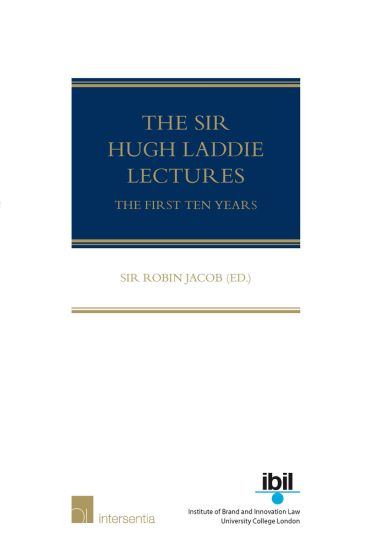
The Sir Hugh Laddie Lectures
Intersentia Ltd
2019
sidottu
This volume is a compendium of the Sir Hugh Laddie Lectures delivered at University College London (UCL) in the period between 2009 and 2018. This is a public lecture series organised by the Institute of Brand and Innovation Law (IBIL) at UCL Faculty of Laws in honour of IBIL's founder Professor Sir Hugh Laddie.Presented as a collection of verbatim lecture transcripts, rather than formal papers, the book brings the subjects to life by providing the reader with a 'fly on the wall' experience. As distinguished IP judges, academics and policy makers, the eminent men and women who gave these lectures have all played a prominent role in shaping the recent development of intellectual property law. The lecture forum affords them the opportunity to speak in a personal capacity, often with surprising candour, which casts what may seem well-worn subject matter in a new and interesting light.The book, as a whole, highlights controversial legislative policies and decisions, tracks legal shifts and affords extra-judicial perspectives, providing an enlightening and historically relevant snapshot of intellectual property over the last decade. In doing so, it not only provides a valuable reference source for the UK and international IP community but also provides anyone with a true interest in intellectual property law a set of eminently readable essays.
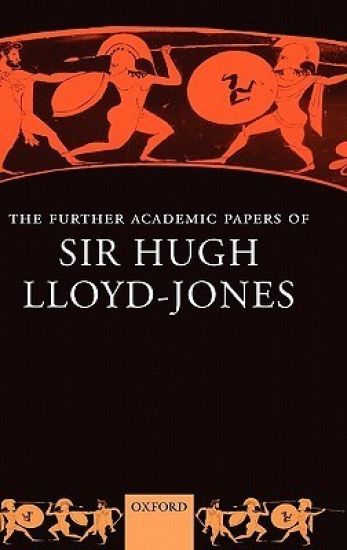
The Further Academic Papers of Sir Hugh Lloyd-Jones
Hugh Lloyd-Jones
Oxford University Press
2005
sidottu
Sir Hugh Lloyd-Jones has a worldwide reputation as one of the foremost classical scholars of his generation. This collection of papers, which follows on from the two volumes published in 1990, reflects his exceptionally wide interests in the fields of Greek epic, lyric, tragedy, comedy, Hellenistic literature, religion, and intellectual history.
The Defence of Vice-Admiral Sir Hugh Palliser, Bart. at the Court-Martial Lately Held Upon Him, with the Court's Sentence.
Hugh Palliser
Gale Ecco, Print Editions
2010
pokkari
The Defence of Vice-Admiral Sir Hugh Palliser, Bart. At the Court-Martial Lately Held Upon him, With the Court's Sentence
Hugh Palliser
Gale Ecco, Print Editions
2018
sidottu
The 18th century was a wealth of knowledge, exploration and rapidly growing technology and expanding record-keeping made possible by advances in the printing press. In its determination to preserve the century of revolution, Gale initiated a revolution of its own: digitization of epic proportions to preserve these invaluable works in the largest archive of its kind. Now for the first time these high-quality digital copies of original 18th century manuscripts are available in print, making them highly accessible to libraries, undergraduate students, and independent scholars.Delve into what it was like to live during the eighteenth century by reading the first-hand accounts of everyday people, including city dwellers and farmers, businessmen and bankers, artisans and merchants, artists and their patrons, politicians and their constituents. Original texts make the American, French, and Industrial revolutions vividly contemporary.++++The below data was compiled from various identification fields in the bibliographic record of this title. This data is provided as an additional tool in helping to insure edition identification: ++++British LibraryT004239London: printed for T. Cadell, 1779. 4],71, 1]p.; 8