Kirjojen hintavertailu. Mukana 11 699 587 kirjaa ja 12 kauppaa.

Kirjahaku

Etsi kirjoja tekijän nimen, kirjan nimen tai ISBN:n perusteella.

42 tulosta hakusanalla Skidelsky Robert

John Maynard Keynes

John Maynard Keynes

Skidelsky Robert

Penguin Books Ltd
2013
nidottu
THE DEFINITIVE SINGLE-VOLUME BIOGRAPHYRobert Skidelsky's three-volume biography of John Maynard Keynes has been acclaimed as the authoritative account of the great economist-statesman's life. Here, Skidelsky has revised and abridged his magnum opus into one definitive book, which examines in its entirety the intellectual and ideological journey that led an extraordinarily gifted young man to concern himself with the practical problems of an age overshadowed by war. John Maynard Keynes offers a sympathetic account of the life of a passionate visionary and an invaluable insight into the economic philosophy that still remains at the centre of political and economic thought.ROBERT SKIDELSKY is Emeritus Professor of Political Economy at the University of Warwick. His three volume biography of John Maynard Keynes (1983, 1992, 2000) received numerous prizes, including the Lionel Gelber Prize for International Relations and the Council on Foreign Relations Prize for International Relations. ('This three-volume life of the British economist should be given a Nobel Prize for History if there was such a thing' - Norman Stone.) He was made a life peer in 1991, and a Fellow of the British Academy in 1994.'A masterpiece of biographical and historical analysis' - New York Times

Britain Since 1900 - A Success Story?
Starting with an assessment of the material, political, cultural and moral resources Britain brought to the twentieth century, the author turns to how events and the actions of Lloyd George, Churchill, Thatcher and Blair had an impact upon them, debating the nature of success, and what the future might hold for the country.
Keynes

Keynes

Robert Skidelsky

Penguin Books Ltd
2010
pokkari
Robert Skidelsky's Keynes: The Return of the Master shows how the great economist's ideas not only explain why the current financial crisis occurred - but are our best way out. 'One would expect brokers to be wrong. If, in addition to their other inside advantages, they were capable of good advice, clearly they would have retired long ago with a large fortune' John Maynard Keynes When unbridled capitalism falters, is there an alternative? The twentieth century's most influential economist tells us that there is. John Maynard Keynes argued that an unmanaged market system is inherently unstable because of irreduceable uncertainty; that fiscal and monetary ammunition is needed to counter economic shocks; and that governments need to maintain enough total spending power in the economy to minimize the chance of serious recessions happening. 'The great economist's theories have never been more relevant ... and Robert Skidelsky is the guide of choice ... A must read' Paul Krugman, Observer 'Keynes's economic policies helped lift Britain from its 1930s slump. This accessible, timely study argues he could do the same again' Dominic Lawson, Sunday Times 'Masterly ... conveys complex ideas with clarity and controlled anger' Oliver Kamm, The Times 'Skidelsky knows more about Keynes than anyone alive ... he is righteous in his thunder ... provocative ... refreshing' Dwight Gardner, The New York Times 'Thought-provoking ... the best account I have read of the development of the credit crunch' Samuel Brittan, Financial Times Robert Skidelsky is Emeritus Professor of Political Economy at the University of Warwick. His three volume biography of the economist John Maynard Keynes (1983, 1992, 2000) received numerous prizes, including the Lionel Gelber Prize for International Relations and the Council on Foreign Relations Prize for International Relations. He is also the author of the The World After Communism (1995).
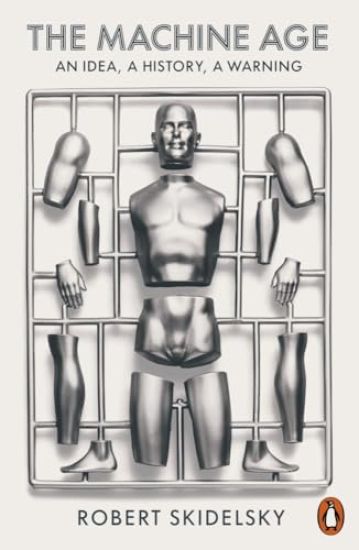
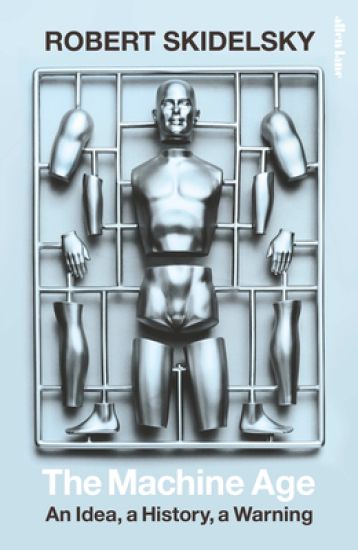
The Machine Age

The Machine Age

Robert Skidelsky

PENGUIN BOOKS LTD
2024
pokkari
A sweeping history of and meditation on humanity's relationship with machines, showing how we got here and what happens nextFaith in technological fixes for our problems is waning. Automation, which promised relief from toil, has reactivated the long-standing fear of job redundancy. Information technology, meant to liberate us from traditional authority, is placing unprecedented powers of surveillance and control in the hands of a purely secular Big Brother. And for the first time, artificial intelligence threatens anthropogenic disaster – disaster caused by our own activities. Scientists join imaginative writers in warning us of the fate of Icarus, whose wings melted because he flew too close to the sun.This book tells the story of our fractured relationship with machines from humanity’s first tools down to the present and into the future. It raises the crucial question of why some parts of the world developed a ‘machine civilisation’ and not others, and traces the interactions between capitalism and technology, and between science and religion, in the making of the modern world.Taking in the peaks of philosophy and triumphs of science, the foundation of economics and speculations of fiction, Robert Skidelsky embarks on a bold intellectual journey through the evolution of our understanding of technology and what this means for our lives and politics. ‘Unless we understand technology as a system of ideas rather than as a necessity,’ he writes, ‘we will be powerless to choose which technology is best suited to our needs and purposes.’
Money and Government

Money and Government

Robert Skidelsky

Penguin Books Ltd
2019
pokkari
'In this remarkable work, Robert Skidelsky unites his experience, knowledge and talents in a sweeping account of money and power' James K. GalbraithThe dominant view in economics is that money and government should play only a minor role in economic life. Money, it is claimed, is nothing more than a medium of exchange; and economic outcomes are best left to the 'invisible hand' of the market. The view taken in this important new book is that the omnipresence of uncertainty make money and government essential features of any market economy. One reason we need money is because we don't know what the future will bring. Government - good government - makes the future more predictable and therefore reduces this kind of demand for money.After Adam Smith orthodoxy persistently espoused non-intervention, but the Great Depression of 1929-32 stopped the artificers of orthodox economics in their tracks. A precarious balance of forces between government, employers, and trade unions enabled Keynesian economics to emerge as the new policy paradigm of the Western world. However, the stagflation of the 1970s led to the rejection of Keynesian policy and a return to small-state neoclassical orthodoxy. Thirty years later, the 2008 global financial crash was severe enough to have shaken the re-vamped classical orthodoxy, but, curiously, this did not happen. Once the crisis had been overcome - by Keynesian measures taken in desperation - the pre-crash orthodoxy was reinstated, undermined but unbowed. Since 2008, no new 'big idea' has emerged, and orthodoxy has maintained its sway, enacting punishing austerity agendas that leave us with a still-anaemic global economy.This book aims to familiarise the reader with essential elements of Keynes's 'big idea'. By showing that much of economic orthodoxy is far from being the hard science it claims to be, it aims to embolden the next generation of economists to break free from their conceptual prisons and afford money and government the starring roles in the economic drama that they deserve.
Keynes

Keynes

Robert Skidelsky

Oxford University Press
2010
nidottu
John Maynard Keynes (1883-1946) is a central thinker of the twentieth century, not just an economic theorist and statesman, but also in economics, philosophy, politics, and culture. In this Very Short Introduction Lord Skidelsky, a renowned biographer of Keynes, explores his ethical and practical philosophy, his monetary thought, and provides an insight into his life and works. In the recent financial crisis Keynes's theories have become more timely than ever, and remain at the centre of political and economic discussion. With a look at his major works and his contribution to twentieth-century economic thought, Skidelsky considers Keynes's legacy on today's society. ABOUT THE SERIES: The Very Short Introductions series from Oxford University Press contains hundreds of titles in almost every subject area. These pocket-sized books are the perfect way to get ahead in a new subject quickly. Our expert authors combine facts, analysis, perspective, new ideas, and enthusiasm to make interesting and challenging topics highly readable.
Money and Government: The Past and Future of Economics

Money and Government: The Past and Future of Economics

Robert Skidelsky

YALE UNIVERSITY PRESS
2019
nidottu
A critical examination of economics's past and future, and how it needs to change, by one of the most eminent political economists of our time The dominant view in economics is that money and government should play only a minor role in economic life. Economic outcomes, it is claimed, are best left to the "invisible hand" of the market. Yet these claims remain staunchly unsettled. The view taken in this important new book is that the omnipresence of uncertainty makes money and government essential features of any market economy. Since Adam Smith, classical economics has espoused nonintervention in markets. The Great Depression brought Keynesian economics to the fore, but stagflation in the 1970s brought a return to small-state orthodoxy. The 2008 global financial crash should have brought a reevaluation of that stance; instead the response has been punishing austerity and anemic recovery. This book aims to reintroduce Keynes's central insights to a new generation of economists, and embolden them to return money and government to the starring roles in the economic drama that they deserve.
What’s Wrong with Economics?

What’s Wrong with Economics?

Robert Skidelsky

Yale University Press
2021
pokkari
A passionate and informed critique of mainstream economics from one of the leading economic thinkers of our time This insightful book looks at how mainstream economics’ quest for scientific certainty has led to a narrowing of vision and a convergence on an orthodoxy that is unhealthy for the field, not to mention the societies which base policy decisions on the advice of flawed economic models. Noted economic thinker Robert Skidelsky explains the circumstances that have brought about this constriction and proposes an approach to economics which includes philosophy, history, sociology, and politics. Skidelsky’s clearly written and compelling critique takes aim at the way that economics is taught in today’s universities, where a focus on modelling leaves students ill-equipped to grapple with what is important and true about human life. He argues for a return to the ideal set out by John Maynard Keynes that the economist must be a “mathematician, historian, statesman, [and] philosopher” in equal measure.
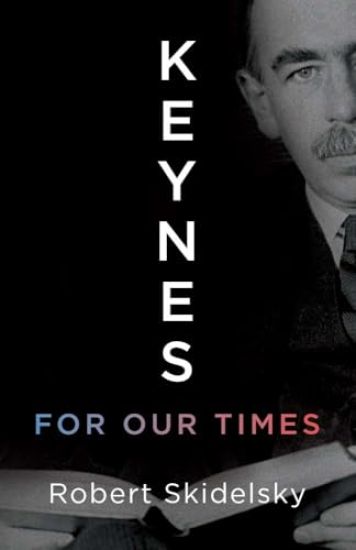
Keynes for Our Times

Keynes for Our Times

Robert Skidelsky

YALE UNIVERSITY PRESS
2026
sidottu
From John Maynard Keynes’s foremost biographer, an illuminating look at how the economist’s ethical approach can be used to address today’s pressing problems John Maynard Keynes (1883–1946) was arguably the most important economist of the twentieth century; his ideas have fundamentally altered the way governments approach economic policy. Exploring the enduring relevance of his ideas, Robert Skidelsky emphasizes Keynes’s conception of economics as a moral science. Keynes was deeply invested in the broader societal implications of economic policies, and this book highlights his belief in economics as a tool for achieving the good life. Skidelsky sheds new light on Keynes’s views on capitalism, discusses his advocacy of low interest rates, and delves into his thoughts on economic instability. He also offers fresh insight into Keynes’s ideas about money, his philosophical foundations, and his unique approach to uncertainty and probability. Ultimately, Skidelsky shows how Keynes’s vision of an economic policy that prioritizes the common good can be adapted to help solve our current economic and political challenges.
Keynes

Keynes

Robert Skidelsky

PublicAffairs,U.S.
2010
pokkari
In the debris of the financial crash of 2008, the principles of John Maynard Keynes,that economic storms are a normal part of the market system, that governments need to step in and use fiscal ammunition to prevent these storms from becoming depressions, and that societies that value the pursuit of money should reprioritize,are more pertinent and applicable than ever. In Keynes: The Return of the Master , Robert Skidelsky brilliantly synthesizes Keynes career and life, and offers nervous capitalists a positive answer to the question we now face: When unbridled capitalism falters, is there an alternative?
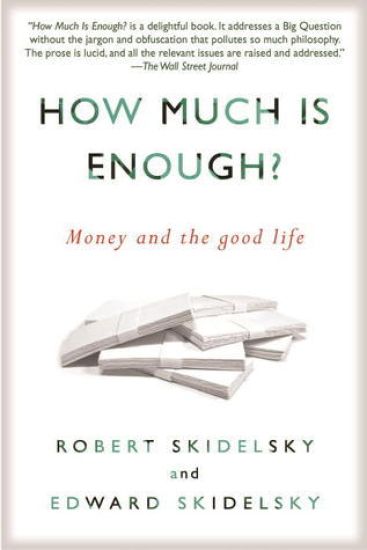
How Much Is Enough?: Money and the Good Life

How Much Is Enough?: Money and the Good Life

Robert Skidelsky; Edward Skidelsky

Other Press (NY)
2013
nidottu
A provocative and timely call for a moral approach to economics, drawing on philosophers, political theorists, writers, and economists from Aristotle to Marx to Keynes What constitutes the good life? What is the true value of money? Whydo we work such long hours merely to acquire greater wealth? Theseare some of the questions that many asked themselves when thefinancial system crashed in 2008. This book tackles such questionshead-on. The authors begin with the great economist John Maynard Keynes.In 1930 Keynes predicted that, within a century, per capita incomewould steadily rise, people's basic needs would be met, and no onewould have to work more than fifteen hours a week. Clearly, he waswrong: though income has increased as he envisioned, our wantshave seemingly gone unsatisfied, and we continue to work long hours. The Skidelskys explain why Keynes was mistaken. Then, arguingfrom the premise that economics is a moral science, they trace theconcept of the good life from Aristotle to the present and show howour lives over the last half century have strayed from that ideal. Finally, they issue a call to think anew about what really matters in our livesand how to attain it. How Much Is Enough? is a work of deep intelligenceand ethical commitment accessible to all readers.
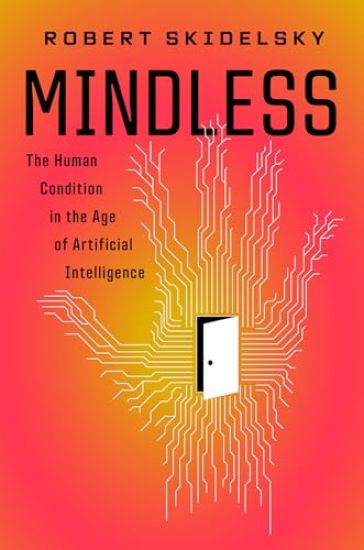
Mindless: The Human Condition in the Age of Artificial Intelligence
This sweeping history of humanity's relationship with machines illuminates how we got here and what happens next, with AI, climate change, and beyond. Faith in technological fixes for our problems is waning. Automation, which promised relief from toil, has reactivated the long-standing fear of job redundancy. Information technology, meant to liberate us from traditional authority, is placing unprecedented powers of surveillance and control in the hands of a purely secular Big Brother. And for the first time, artificial intelligence threatens anthropogenic disaster--disaster caused by our own activities. Scientists join imaginative writers in warning us of the fate of Icarus, whose wings melted because he flew too close to the sun. This book tells the story of our fractured relationship with machines from humanity's first tools down to the present and into the future. It raises the crucial question of why some parts of the world developed a "machine civilization" and not others, and traces the interactions between capitalism and technology, and between science and religion, in the making of the modern world. Taking in the peaks of philosophy and triumphs of science, the foundation of economics and speculations of fiction, Robert Skidelsky embarks on a bold intellectual journey through the evolution of our understanding of technology and what this means for our lives and politics.
Austerity vs Stimulus

Austerity vs Stimulus

Robert Skidelsky; Nicolo Fraccaroli

Springer International Publishing AG
2017
nidottu
This timely book debates the economic and political logic of the austerity policies that have been implemented in the UK and in the Eurozone since 2010 and asks whether there is any alternative for these countries in the years ahead. The work reconsiders the austerity versus stimulus debate through the voices of those who proposed the successful idea of expansionary austerity and those who opposed it. The editors have brought together a collection of articles written by some of the most notable figures in the discipline, including the likes of Alberto Alesina, Ken Rogoff, Tim Besley, David Graeber, Vince Cable, and Paul Krugman. The book also features the debate between Niall Ferguson and Robert Skidelsky. These leading thinkers unveil a world where economists are far from agreeing on economic policy, and where politics often dominates the discussion. The question of whether the British government should have opted for austerity runs through the book, as well as how sustained economicrecovery should be encouraged in the future. Scholars, students and members of the general public with an interest in the financial crisis and its lingering aftermath will find this work invaluable.
How Much is Enough?

How Much is Enough?

Edward Skidelsky; Robert Skidelsky

Penguin Books Ltd
2013
pokkari
In 1930 the great economist Keynes predicted that, over the next century, income would rise steadily, people's basic needs would be met and no one would have to work more than fifteen hours a week. Why was he wrong?Robert and Edward Skidelsky argue that wealth is not - or should not be - an end in itself, but a means to 'the good life'. Tracing the concept from Aristotle to the present, they show how far modern life has strayed from that ideal. They reject the idea that there is any single measure of human progress, whether GDP or 'happiness', and instead describe the seven elements which, they argue, make up the good life, and the policies that could realize them.ROBERT SKIDELSKY is Emeritus Professor of Political Economy at the University of Warwick. His biography of Keynes received numerous prizes, including the Lionel Gelber Prize and the Council on Foreign Relations Prize for International Relations. He was made a life peer in 1991, and a Fellow of the British Academy in 1994.EDWARD SKIDELSKY is a lecturer in the Philosophy Department of the University of Exeter. He contributes regularly to the New Statesman, Spectator and Prospect. His previous books include The Conditions of Goodness and Ernst Cassirer: The Last Philosopher of Culture.
Om kapitalismen : perspektiv från Engelsbergsseminariet 2010

Om kapitalismen : perspektiv från Engelsbergsseminariet 2010

Gerard Baker; Erik Berglöf; Edward Chancellor; Rolf Ekéus; Kevin Hassett; Oliver Kamm; John Kay; Deidre McCloskey; Philip Mirowski; Joel Mokyr; Geoff Mulgan; Wolfgang Münchau; Johan Norberg; Avner Offer; Minxin Pei; Carlota Perez; Emma Rotschild; Donald Sassoon; Nathan Shachar; Robert Skidelsky; David Ståhl; Donald Winch

Bokförlaget Atlantis
2011
sidottu
Hur ser kapitalismens framtid ut? Kommer den framgångsrika variant av kapitalism från de senaste decennierna som vi kallar globalisering att fortsätta, eller kommer regionala och kanske till och med starka nationella krafter att vinna mark i ekonomiska frågor? Medverkande: Gerard Baker, Erik Berglöf, Edward Chancellor, Rolf Ekéus, Kevin Hassett, Oliver Kamm, John Kay, Deirdre McCloskey, Philip Mirowski, Joel Mokyr, Geoff Mulgan, Wolfgang Münchau, Johan Norberg, Avner Offer, Minxin Pei, Carlota Perez, Emma Rotschild, Donald Sassoon, Nathan Shachar, Robert Skidelsky, David Ståhl, Donald Winch.