Kirjojen hintavertailu. Mukana 11 244 527 kirjaa ja 12 kauppaa.

Kirjahaku

Etsi kirjoja tekijän nimen, kirjan nimen tai ISBN:n perusteella.

1000 tulosta hakusanalla Smita A. Rahman

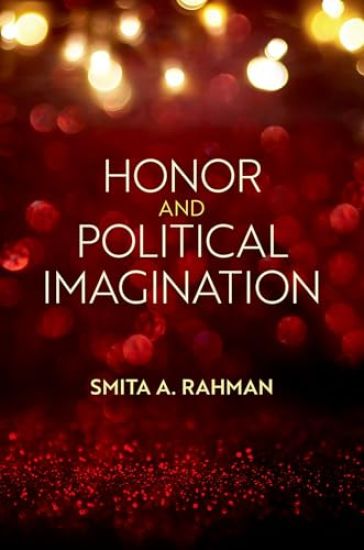
Honor and Political Imagination

Honor and Political Imagination

Smita A. Rahman

OXFORD UNIVERSITY PRESS INC
2025
sidottu
Honor is often considered to be obsolete--tethered to a distant past of jousting knights and profound inequality. Yet the idea of honor remains a fixture in both political discourse and popular culture, generating an almost mythic source of meaning for those who draw inspiration from it for heroic (and often reckless) acts. Honor can inspire one to act with courage and conviction, but at the same time, it is profoundly destructive and anesthetizes one to the terrible consequences of its pursuit. What accounts for the enduring appeal of honor today? In Honor and Political Imagination, Smita A. Rahman reckons with the power of honor in contemporary political and popular culture and the desire for heroism that accompanies it, while still being attentive to the dangers that such a desire brings. Rahman argues that while there may be a place for honor in the political imagination, it remains a contested and complicated one. Throughout the book, Rahman includes close readings of several visual and literary texts in popular culture--including Game of Thrones, Wolf Hall, and the Marvel Cinematic Universe's Captain America, among others--and puts them in conversation with a range of texts on honor in political theory, including Aristotle, Machiavelli, Hegel, Nietzsche, Appiah, and more. Drawing on the way honor is used in political and popular culture, Honor and Political Imagination shows not only its follies, but also its appeal and ability to inspire heroic political action that embraces life and seeks to overcome resentment.
Time, Memory, and the Politics of Contingency
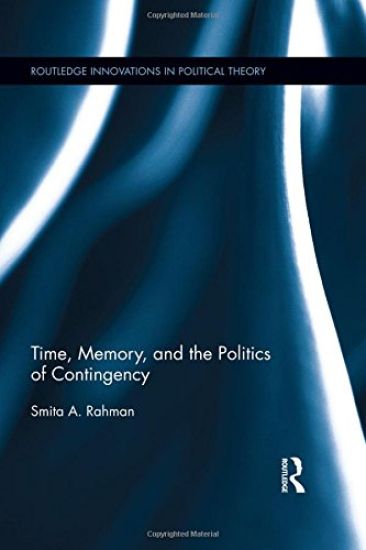
In recent years, there has been an increased attention to temporality in political theory, and such attention is sorely needed. For too long political theory, with the exception of occasional phenomenological forays, has remained grounded in a particular experience of time as linear and sequential. This book aims to unsettle the dominant framework by putting time itself, and the experience of time in everyday life, at the center of its critical analysis. Smita Rahman focuses on the experience of time as one where past, present, and future intermingle with each other and refuse to adhere to a sequential structure. Rather than trying to tame the flux of time, this book places this "out of joint" experience of time at the center of its analysis of global politics. Rahman takes the highly abstract concept of time and decenters it to speak to a wide range of political issues across disciplines. She does so by exposing the cultural construction of the foundational concept of time in political theory and attending closely to the challenges of cultural incommensurability that it encounters in a globalized world of difference. Specifically, the book looks at interrogation practices in Afghanistan, the challenges of coping with the burdens of collective memory in Algeria, South Africa, and Rwanda, the difficulty of uncritically applying such a framework to the Muslim world through the language of secularism, and finally at the beginnings of democratic emergence in Bangladesh to explore a politics of contingency.By focusing on issues of contemporary global politics through the lens of political theory, this book draws on literature across disciplines and explores the complex image of time by engaging the work of thinkers for whom time and memory have emerged as a critical issue of analysis, and unpacking the politics of contingency that emerge from such a reading. The book’s new insights on political temporality will interest scholars of contemporary political theory, comparative political theory, critical theory, human rights, conflict studies, and religion and politics.
Time, Memory, and the Politics of Contingency
In recent years, there has been an increased attention to temporality in political theory, and such attention is sorely needed. For too long political theory, with the exception of occasional phenomenological forays, has remained grounded in a particular experience of time as linear and sequential. This book aims to unsettle the dominant framework by putting time itself, and the experience of time in everyday life, at the center of its critical analysis. Smita Rahman focuses on the experience of time as one where past, present, and future intermingle with each other and refuse to adhere to a sequential structure. Rather than trying to tame the flux of time, this book places this "out of joint" experience of time at the center of its analysis of global politics. Rahman takes the highly abstract concept of time and decenters it to speak to a wide range of political issues across disciplines. She does so by exposing the cultural construction of the foundational concept of time in political theory and attending closely to the challenges of cultural incommensurability that it encounters in a globalized world of difference. Specifically, the book looks at interrogation practices in Afghanistan, the challenges of coping with the burdens of collective memory in Algeria, South Africa, and Rwanda, the difficulty of uncritically applying such a framework to the Muslim world through the language of secularism, and finally at the beginnings of democratic emergence in Bangladesh to explore a politics of contingency.By focusing on issues of contemporary global politics through the lens of political theory, this book draws on literature across disciplines and explores the complex image of time by engaging the work of thinkers for whom time and memory have emerged as a critical issue of analysis, and unpacking the politics of contingency that emerge from such a reading. The book’s new insights on political temporality will interest scholars of contemporary political theory, comparative political theory, critical theory, human rights, conflict studies, and religion and politics.
Vzgljad na razvitie uchenija o naloge u ekonomistov A. Smita, Zh. -B. Seja, D. Rikardo, Zh. Sismondi i Dzh. St. Millja
V knige otechestvennogo jurista i obschestvennogo dejatelja M.M.Alekseenko proslezhivaetsja razvitie vzgljadov na problemu nalogooblozhenija v uchenijakh krupnejshikh predstavitelej ekonomicheskoj mysli XVIII-XIX vekov - A.Smita, Zh.-B.Seja, D.Rikardo, Zh.Sismondi i Dzh.St.Millja. Avtor podrobno rassmatrivaet teoriju o naloge kazhdogo iz ekonomistov, provodit sravnitelnyj analiz razlichnykh vozzrenij, osveschaet vlijanie togo ili inogo uchenogo na obschee razvitie ekonomicheskoj mysli.Kniga rekomenduetsja istorikam ekonomicheskoj mysli, politologam, obschestvovedam, a takzhe vsem zainteresovannym chitateljam.
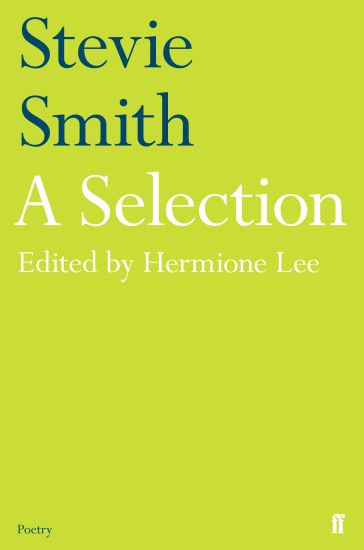
Stevie Smith: A Selection

Stevie Smith: A Selection

Stevie Smith

Faber Faber
2019
nidottu
This comprehensive and welcoming edition draws on the whole of Stevie Smith's output in poetry, prose and drawings from Novel on Yellow Paper (1936) to Scorpion and Other Poems (1972). Hermione Lee's introduction and arrangement bring out the connections between Stevie Smith's different writings, and show us what an extraordinary and original writer she was. The selection is complemented by biographical and textual notes, and forms an attractive introduction to the work of an idiosyncratic English genius.