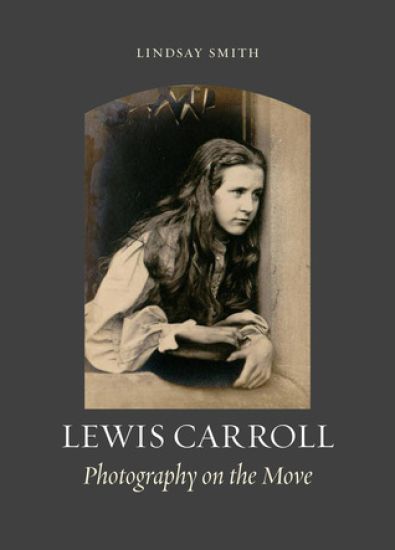
As Alice's Adventures in Wonderland celebrates its 150th birthday, Lewis Carroll remains one of Victorian culture's most prominent and compelling figures. Few readers, however, have had the chance to explore the extent of Carroll's passion for photography, a new technology that was gaining popularity during his lifetime. Lewis Carroll: Photography on the Move follows the journey of Carroll's photography in tandem with his writing.Beginning in the glass studio Carroll had built above his college rooms at Christ Church, Oxford, this book traces his fascination for photographs through his visits to London theatres, his annual trips to the seaside town of Eastbourne and hisextraordinary excursion to Russia in 1867. Many of the preoccupations that make Carroll's writing so remarkable are alsopresent in his photography, particularly his interest in the boundless imaginations of children. Carroll was also an avid collector of photographs and, on occasion, commissioned professional photographers to set up studio sittings. Photography, a medium for which Carroll is not primarily known, remained a lifelong attachment for him.This engaging and beautifully illustrated book reveals an unseen side of the renowned writer. It examines nineteenth-century visual and literary culture in accessible prose, giving a valuable and cogent account of Carroll's visual and literary career.
THE writer would bring before the public the narrative of his life while in bondage, which is substantially true in all its details. The painful wrongs inflicted then and now have caused the writer, though many years have passed, to take up the publication of this narrative of himself. There are many incidents and characters described in this narrative personally known to the writer, which make him anxious to put forth some effort, however humble it may be, to ameliorate the condition of his now suffering people, in order that the facts may confirm the truthful saying: "My people will be styled a nation yet, and also claim their nationality." For this they have fought and suffered hundreds of years in servitude and bondage. It is a fact which ought to thrill the heart of every American citizen to see the interest they take in learning; the untiring exertions they make to overcome every obstacle, even death itself to acquire it. It is what God has promised: "To be a God to the faithful and to their seed after them." The writer hopes not to weary your patience in reviewing his narrative, which is fraught with so many exciting scenes. It is the duty of men to occupy places of power and trust, therefore our rulers, above all others, ought to be holy and devoted men .] There are, however, some found in every age of the world who believe in freedom of thought and speech; and many who are untiring in their efforts to secure the future well-being of those entrusted to their care; it affords the most powerful argument to influence the minds of some. It is believed that no one who reads attentively, and reflects seriously, will doubt that the time is near at hand, which is spoken of by God: "Ye shall let my people go free." Now the great revolution seems to me to have come; now is the time for us to act in trying to save that which was lost; in stimulating them to education; and in building homes and schoolhouses for their children, that they may become honorable and respectable citizens of the States to which they have acceded. We want earnest laborers amongst us, for those who are instructing my people are few and far between; and we have been deprived of education by the hand of slavery and servitude, which has been brought upon us by the slave-holder. I feel it is the duty of the people to take up our cause, and instruct wherever they can. Our ignorance, which is often spoken of, and for which we are not to blame, is caused by this ill, slavery; and the whipping post was resorted to if any attempt was made to learn the alphabet. I can say in the fullness of my heart that there is no darkness equal to this, not even the Egyptian darkness which is spoken of by missionaries now laboring in foreign lands. I only pray to hope on, and on, that God may appear in our behalf, and let the sun of civilization and education be extended among my people until it shall reach from sea to sea, and from land to land. Then shall Ethiopia stretch forth her hand unto God and call you blessed. I thank God for what I have seen and experienced so far in regard to the amelioration of our condition as a people. I hardly expect to see the completion of the act of liberty which was commenced by our most earnest friend, Senator Sumner. "See to the Civil Rights Bill; don't let it fail," were among his last words to his associate who stood beside the dying senator. This volume speaks of our earnest desire for more liberty and rights as a free people, and that our children may enjoy that of which we have been deprived. Never was the effectiveness of our Christian instrumentalities in other lands more dependent than now upon the vigorous and progressive development of Christian principles at home. As we are entering upon a new decade our thoughts go back to 1861; and what a period is this to review
This book explores the intersections between Victorian literature, painting and photography. Taking as a starting point mid-nineteenth-century developments in the understanding of visual perception, Lindsay Smith examines the representation of a pervasive desire for a literal understanding of the process of seeing and perceiving. This is played out in the aesthetic theory of John Ruskin, the early poetry of William Morris, paintings of the Pre-Raphaelites, and in the photographic technique of combination printing. She demonstrates how the novel presence of the camera in nineteenth-century culture not only transforms acts of looking, but also affects major social, aesthetic and philosophical categories. By exploring the intricacies of photographic discourse she shows how Ruskin and Morris produce a critique of the earlier Cartesian perspectival model of vision.
This book re-assesses the significance to Pre-Raphaelitism of the fundamental relationship of poem to painting, of the visual to the verbal, to examine those aspects of the movement that account for its enduring legacy. Beginning with the profound and somewhat neglected influence of Ruskin’s work upon the poets and painters, Smith focuses in particular upon the Pre-Raphaelite rehabilitation of the sister arts analogy, and an aesthetic of ekphrasis as played out in the short-lived periodical The Germ and in D.G. Rossetti’s sonnets for pictures. At the heart of the project is a new reading of the notorious circumstances of Rossetti’s ‘coffined book’ - those manuscript poems Rossetti disinterred from his wife Elizabeth Siddal’s grave – that brings to the fore the all-pervasive significance to the Pre-Raphaelites of a complex aesthetic of resurrection. With this and other examples, Smith redefines for us those categories of the corporeal and spiritual, the material and immaterial, the verbal and visual that the Pre-Raphaelites aspired to re-conceptualise.
"An empty mind is a safe mind. "Yulia's father always taught her to hide her thoughts and control her emotions to survive the harsh realities of Soviet Russia. But when she's captured by the KGB and forced to work as a psychic spy with a mission to undermine the U.S. space program, she's thrust into a world of suspicion, deceit, and horrifying power. Yulia quickly realizes she can trust no one not her KGB superiors or the other operatives vying for her attention and must rely on her own wits and skills to survive in this world where no SEKRET can stay hidden for long."
My mind is mine alone. Life in Washington, D.C., is not the safe haven Yulia hoped for when she risked everything to flee Communist Russia. Her father is reckless and aloof, and Valentin is distant and haunted by his past. Her mother is being targeted by the CIA and the US government is suspicious of Yulia's allegiance. And when super-psychics start turning up in the US capitol, it seems that even Rostov is still a threat. Ultimately, Yulia must keep control of her own mind to save the people she loves and avoid an international Skandal. Lindsay Smith does not disappoint in this second book in the thrilling Sekret series, with just as much political intrigue, espionage, and mind control as the first.
I Love You ... An epic journey of love... a dance with the DivineA poetic vision of the creation of the Universe to the birth of Man and paradise; culminating with the tumultuous world we live in today and the amazing journey into a world of hope and love.How it began? - How will it end?Scientists explore, calculate and theorize.Christianity, psychic phenomena, reincarnation, beings from other planets in galaxies beyond time and distance.What is beyond the end?There are no endings, there is no beginning.It simply has and always will be Infinite Divinity.Super Intelligent Beings from outer space, reincarnation, evolution, God of All Gods, call it what you choose.I choose Infinite Divinity. It is the source, the energy, the light that is our home.We choose to live life on earth to enjoy physical form, to learn and most importantly, to Love.We are simply not aware of our home, because we do not realize we come from Infinite Divinity until the moment we re-enter its' womb of Life. The womb of Life that continuously flows.Infinite Divinity knows why as ordinary man we will never know why.We cannot challenge Infinite Divinity.Infinite Divinity is the wisdom of all knowledge of all times, that has been and will be.Only Infinite Divinity has the answer.To swim in ocean's life with Love in your Heart, with Love all around we will celebrate the re-birth of the century and re-enter the womb of Infinite Divinity.That is our survival.Life evermore will be yours and more.Eternity in the fountain of Life, you will bathe in its' waters forever.
A troubled girl confronts her personal demons in this time-travel thriller alternating between present day and 19th century Japan. No one knows how to handle Reiko. She is full of hatred; all she can think about is how to best hurt herself and those people closest to her. After a failed suicide attempt at her home in Seattle, Reiko's parents send her to spend the summer with family in Japan, hoping she will learn to control her emotions. But while visiting Kuramagi, a historic village preserved to reflect the nineteenth-century Edo period, Reiko finds herself slipping backward in time into the nineteenth-century life of Miyu, a young woman even more vengeful than Reiko herself. Reiko loves escaping into Miyu's life . . . until she discovers Kuramagi's dark secret and must face down Miyu's demons as well as her own.
Autobiography - Including Also Reminiscences of Slave Life, etc. is an unchanged, high-quality reprint of the original edition of 1881. Hansebooks is editor of the literature on different topic areas such as research and science, travel and expeditions, cooking and nutrition, medicine, and other genres. As a publisher we focus on the preservation of historical literature. Many works of historical writers and scientists are available today as antiques only. Hansebooks newly publishes these books and contributes to the preservation of literature which has become rare and historical knowledge for the future.
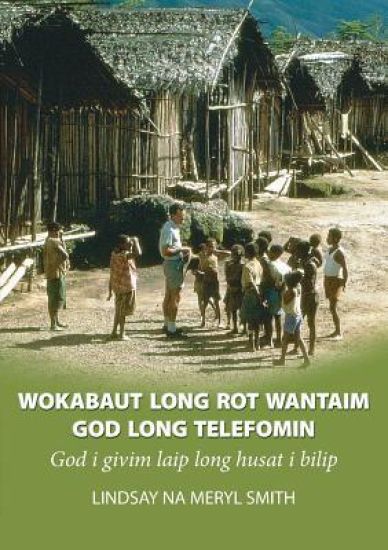
Long 1964, Lindsay na Meryl Smith i lusim Australia long taim em i nupela long marit. Tupela i laik autim Gutnius long Telefomin long Sepik Maunten aria. Em i stap 15 yia olgeta na em skulim manmeri long Papa God, kirapim Baibel Skul na helpim ol long painim gutpela pasin long laip na bel esi wantaim God.
Between May and May 22, 8 3, Union soldiers marched nearly 2 miles through the hot, humid countryside to assault and capture the fortified city of Vicksburg, Mississippi. Upon its arrival, the army laid siege to the city for a grueling forty-seven days. Disease and combat casualties threatened to undermine the army's fighting strength, leaving medical officers to grapple with the battlefield conditions necessary to sustain soldiers' bodies. Medical innovations were vital to the Union victory. When Vicksburg fell on July 4, triumph would have been fleeting if not for the US Army Medical Department and its personnel.By centering soldiers' health and medical care in the Union army's fight to take Vicksburg, Lindsay Rae Smith Privette offers a fresh perspective on the environmental threats, logistical challenges, and interpersonal conflicts that shaped the campaign and siege. In doing so, Privette shines new light on the development of the army's medical systems as officers learned to adapt to their circumstances and prove themselves responsible stewards of soldiers' bodies.
Between May and May 22, 8 3, Union soldiers marched nearly 2 miles through the hot, humid countryside to assault and capture the fortified city of Vicksburg, Mississippi. Upon its arrival, the army laid siege to the city for a grueling forty-seven days. Disease and combat casualties threatened to undermine the army's fighting strength, leaving medical officers to grapple with the battlefield conditions necessary to sustain soldiers' bodies. Medical innovations were vital to the Union victory. When Vicksburg fell on July 4, triumph would have been fleeting if not for the US Army Medical Department and its personnel.By centering soldiers' health and medical care in the Union army's fight to take Vicksburg, Lindsay Rae Smith Privette offers a fresh perspective on the environmental threats, logistical challenges, and interpersonal conflicts that shaped the campaign and siege. In doing so, Privette shines new light on the development of the army's medical systems as officers learned to adapt to their circumstances and prove themselves responsible stewards of soldiers' bodies.
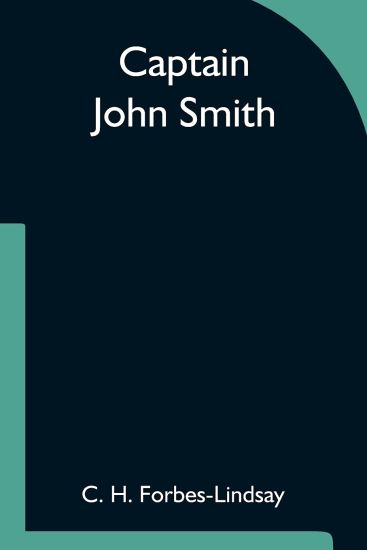
The book, Captain John Smith, has been considered important throughout the human history, and so that this work is never forgotten we have made efforts in its preservation by republishing this book in a modern format for present and future generations. This whole book has been reformatted, retyped and designed. These books are not made of scanned copies of their original work and hence the text is clear and readable.