
Kirjahaku
Etsi kirjoja tekijän nimen, kirjan nimen tai ISBN:n perusteella.
1000 tulosta hakusanalla Sonia Harrison Jones
When linguist Lisa Maxwell goes to the Basque Country to seek the unknown origins of the language, she meets some enigmatic characters in a lost village in the Pyrenees Mountains. Who is stealing relics from major cathedrals in Spain, and why? Who are the Illuminati? Who is the physician that flies in by helicopter to examine two little boys, and what does he want from them? What is going on in the state-of-the-art biotechnology laboratory? Soon more questions begin to emerge. Who are the Basques, and why is their language unique? Are they a race apart? What happened to humans after the Fall? What role does Rh-negative blood play here? How do genetics and linguistics combine to unlock the mystery of the origin of humankind? Can creation be reconciled with evolution in a brand new way? Is it possible to clone Jesus? If not, why not? If so, what are the consequences? Sonia Harrison Jones, a PhD from Harvard University in Romance Languages, presents some creative, intelligent answers to these questions and many others in this fascinating first novel. DATOS SOBRE LA AUTORA Sonia Harrison Jones naci en Inglaterra, se doctor en Lenguas Rom nicas en la Universidad de Harvard, y fue catedr tica de lengua y literatura espa ola en la Universidad de Dalhousie en Halifax, Nueva Escocia. Su lista de publicaciones incluye un texto de gram tica espa ola para estudiantes universitarios de primer a o (SPANISH ONE, Van Nostrand, NY), una biograf a de la escritora argentina (ALFONSINA STORNI, G.K. Hall, Boston), dos autobiograf as (IT ALL BEGAN WITH DAISY, Penguin/Dutton, NY, y DAISY AND GOLIATH, Erser and Pond, Halifax), una memoria (THE PRIMROSE PATH, Erser), una colecci n de cuentos humor sticos (OF MICE AND MOOSE CALLS, Erser), y la presente novela escrita originalmente en ingl s (CLONING JESUS, Erser). Han aparecido sus publicaciones tambi n en The Reader's Digest, The Catholic Digest, The Banner, y la serie Chicken Soup for the Soul. Aparece en Who's Who in the East, International Authors and Writers Who's Who, The World Who's Who of Women, and Who's Who in Canada.

ALFONSINA STORNI was an important poet and writer in Latin America during the 20th century. Born in Switzerland and raised in Argentina, she was a major force in the Modernist and feminist movements there. Sonia Harrison Jones was awarded a Canada Council grant to research Storni's publications in Buenos Aires, where she combed through libraries and archives, and also interviewed most of the writers, poets, and critics who had known her. Dr Jones presents her life and works in a lively, pleasing style, and provides thoughtful, valuable new insights into Storni's turbulent life and expressive poems, plays, and short novels. WHAT READERS ARE SAYING: "It is remarkable that this book, written in 1979, was still a best seller on Amazon in 2003." -Claudia Edith Mendez, PhD thesis, University of Maryland "Sonia Jones is one of the pioneering scholars in bringing attention to the importance of Storni's contribution to the feminist movement." -Celia Garz n-Arrabal, "The Theater of Alfonsina Storni: Feminism and Innovation" ProQuest, 2008 (PhD thesis, University of North Carolina, Chapel Hill) This is one of four books on the reading list for Latin American Women's Poetry at Cambridge, Dept of Spanish and Portuguese, Faculty of Modern & Medieval Languages. ABOUT THE AUTHOR: Sonia Harrison Jones earned her PhD from Harvard. She has written a dozen other books in many different genres, all available from Amazon or ErserandPond.com.
This incredible success story tells in accurate, humorous detail how two sophisticated New Yorkers left the rat race and bought a farm in Nova Scotia. When their cow, Daisy, gave them too much milk for their little family, Sonia Jones started making dairy products for the local health food stores. Her recipes for yogurt, ice-cream, cheese spreads and cheesecakes took the province by storm, and soon the company began to grow like Topsy. The Jones's enterprise was so successful that they ended up becoming the proud owners of a multi-million dollar corporation. WHAT THE PRESS IS SAYING: The author relates the story in an engaging fashion, even describing setbacks cheerfully. There is added charm in accounts of veteran farmers whose advice was invaluable to the couple, to whom rural life at first was utterly alien. -Jim Morrison, Publishers Weekly The most appealing idea in this book is the notion that small-scale capitalism can help preserve both ecological balance and individual freedom. Especially when applied to farming, the vision brings out the Jeffersonian in us all; and the author is always cheerily optimistic about its prospects. "The chickens fattened themselves on maggots; the pigs took care of the wastage emanating from the kitchen or the dairy-case shelves; and the tourists liquidated the farm-related food products so the cash could then be used to keep the business growing." This is a striking passage-a sort of yuppie version of Virgil's "Georgics," with a notable element of truth. -Bob Coleman, New York Times A colorful parade of well-drawn characters and tragicomical events, from a leaky filling machine to two years of production built on a kitchen stove and Styrofoam boxes. This all but ensures the Jones's life will soon be the subject of a made-for-TV movie. Would Jane Fonda care to play the confident, unstoppable Sonia? -Jennifer Henderson, Toronto Financial Post What's especially interesting about Jones' story is that her company was a success in spite of itself. It was in business before it even had a name; it had no plan and no start-up money. That's nothing short of amazing when you consider that everything written or said about entrepreneurship stresses developing a solid business proposal, having a sound marketing plan, and spending a fortune to launch the enterprise. -Marilyn Linton, Lifestyle Editor, Toronto Sunday Sun
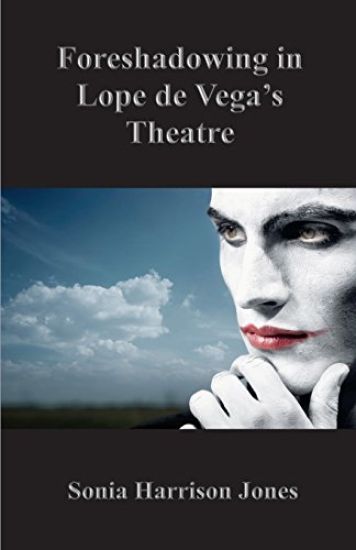
Foreshadowing in Lope de Vega's Theatre
Sonia Harrison Jones
Erser and Pond Publishers Ltd.
2014
nidottu

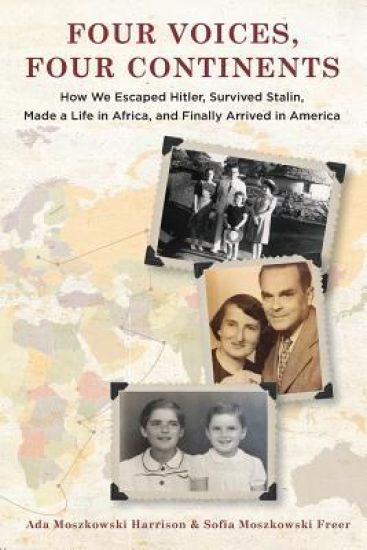
Four Voices, Four Continents: How we Escaped Hitler, Survived Stalin, Made a Life in Africa, and Finally Arrived in America
Sofia Moszkowski Freer; Ada Moszkowski Harrison
Bebo Press
2017
nidottu
The Moszkowski family was one of the fortunate ones.The family's journey during and after World War II began when they fled Poland in 1939, under Hitler's Luftwaffe aerial assault. Theirs is not a typical Holocaust escape story. Father Arthur Moszkowski's position as an engineer afforded the family a path that was not possible for many Jews.Although they endured life-threatening hardships during a decade-long journey, they avoided the concentration camps where six million Jews perished. A combination of courage, coincidence, and chutzpah allowed the family to survive the war and eventually immigrate to the United States in 1950.Authors Ada and Sofia tell riveting stories from their childhood and youth in pre-war Poland, in a Siberian labor camp, and then as the only Jewish family in a Polish refugee camp in Tanzania. Sofia was just a toddler when the family was deported to Siberia in 1940, but Ada, seven years older, acutely remembers the day Russian soldiers knocked at the door of their temporary home in Czortk w, Poland.Two other voices are vital to the story. Translations of audio tapes Arthur recorded in Polish describe parts of the family's journey through Poland, Russia, and into Iran. The rediscovery of these tapes, decades after their father's death, were the impetus that spurred Ada and Sofia to write their family history. Father, an engineer who knew eight languages, appears as a heroic figure throughout the book, though his risk-taking sometimes endangered the very lives he tried to save. Quoted excerpts from their mother Dora Moszkowski's memoirs, published in 1987, fill in gaps in her daughters' childhood memories and explain some of the difficult choices the family had to make.One more character in this story is silent but important. It is that of J zia Laszczyk, the devoted housekeeper and nanny, a Polish Catholic woman who remarkably stayed with the family and proved to be a pillar of strength throughout the most arduous parts of their journey. Ada and Sofia make it clear that J zia strongly influenced their early lives, at times playing the role of mother when they most needed a loving word or touch. It was not unusual for Jewish middle-class families in 1930s Poland to hire Catholic nannies and housekeepers. But to have one support a family throughout a perilous, three-continent journey while leaving her own relatives behind in Poland is definitely out of the ordinary.The book is adorned with family photos from Poland in the 1930s and Africa in the 1940s. Ada and Sofia's writing preserves not only a family history, but a journey that deserves to be remembered in the annals of their generation's history.
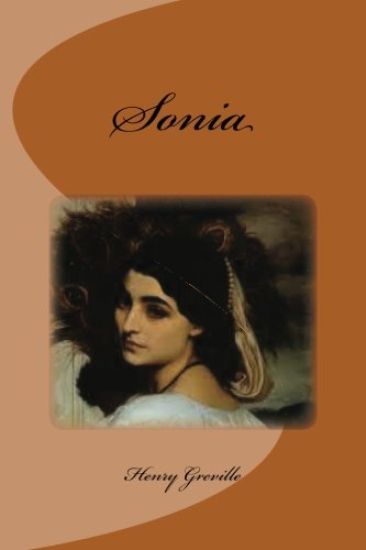
I On demande un tudiant pour passer l' t dans une famille, la campagne. Pour les conditions, s'adresser madame la g n rale Gor line, la Tverska a, maison Mialof, Moscou. - Pourquoi pas ? se dit Boris Gr bof en repliant le journal o il venait de lire cette annonce. Pourquoi pas l aussi bien qu'ailleurs ? Il faudra toujours commencer par un bout, autant vaut aujourd'hui que demain. Il se leva, passa son l ger paletot de printemps, et sortit pour tenter la fortune. On n'aurait pu l'accuser de mettre trop d'empressement cette d marche: il s'en allait d'un air nonchalant en regardant droite et gauche. La Tverska a tait loin de chez lui; pour s'y rendre, il avait traverser toute la ville chinoise, ce bazar pittoresque de Moscou, plus semblable une ville byzantine du moyen ge qu' un quartier de capitale au dix-neuvi me si cle. Il s'arr tait partout, pr t rebrousser chemin sous le plus l ger pr texte. La destin e ne fournit pas l'ombre d'une excuse son ind cision, et il arriva devant la porte de la g n rale Gor line sans avoir trouv moyen de reculer. Il entra. Au bruit que fit, en retombant, la double porte vitr e, un suisse v tu d'un uniforme vert tr s r p , orn de galons jaunes tr s graisseux, mergea d'une petite niche plac e en sous-sol. Une forte odeur de soupe maigre, aux choux aigris et aux champignons secs, accompagna cette apparition.
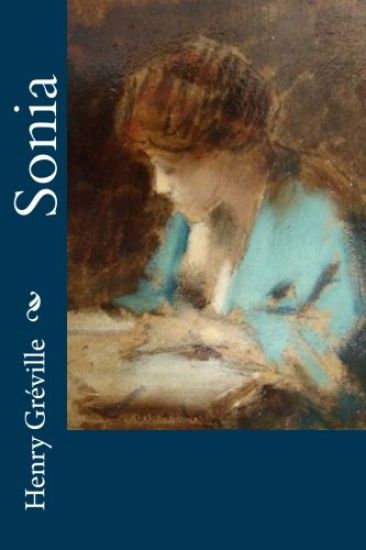
Henry Gr ville, de son vrai nom Alice Marie C leste Durand n e Fleury, n e le 12 octobre 1842, Paris, et morte le 26 mai 1902, Boulogne-Billancourt1, est une femme de lettres fran aise.
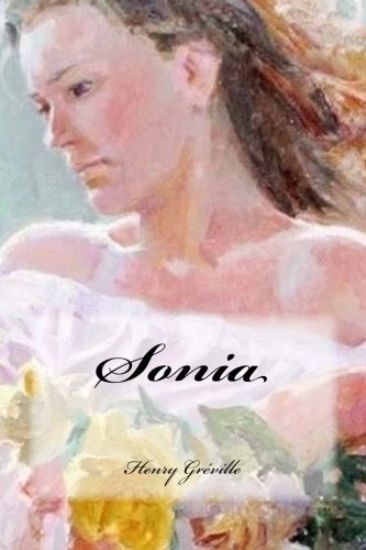
Sonia, par Henry Gr ville (1878). C'est une histoire puissante et impressionnante, et en m me temps charmante et raffin e, de la vie russe. Sonia est une pauvre petite esclave, frapp e et maltrait e par les aristocrates brutaux, portant le nom de Gor line, qu'elle sert. Le traitement cruel se poursuit jusqu' ce qu'un jeune pr cepteur, nomm Boris Gr bof, arrive au ch teau pour donner des le ons Eug ne et Lydie, fils et fille de la maison. Il a piti de Sonia et est gentil avec elle; Et elle lui rend en retour l'affection la plus profonde. Boris tombe amoureux de Lydie, qui est une tr s jolie fille, et lui remporte une promesse de mariage; Mais aussit t que madame Gor line d couvre l'attachement, elle est remplie de rage et rejette aussit t le tuteur. Il prend Sonia, qui a galement t chass de la maison, sa maison, o elle reste l'emploi de sa m re g e et g e pendant plusieurs ann es. Boris continue ch rir son affection pour Lydie tout ce temps, et elle lui permet de se consid rer engag elle; Bien que, tant faible et volage, est constamment l'aff t d'une chance de faire un match plus brillant. Finalement, elle arrache Boris; Et lui, d couvrant la fausset de sa nature, est consol , et avec le temps pouse sa servante fid le, Sonia, qui est devenue une fille belle et capable, et a acquis sous son enseignement une ducation consid rable. Cette histoire donne une image distincte de la vie familiale en Russie, o Madame Gr ville a r sid pendant de nombreuses ann es, et o elle a t capable de ma triser toutes les phases de caract re russe. Il y a beaucoup dans le livre qui est lumineux et remarquable, et le caract re de Sonia est d velopp avec beaucoup de d licatesse et d'originalit .

After Sonia Cornwall's father died in 1939, her mother inherited the Onward Ranch and a huge debt. To make the ranch viable, a twenty-year-old Sonia traded paintbrush for pitchfork, labouring alongside the male ranch hands. But after marrying Hugh Cornwall in 1947, Sonia had time for painting once again. She learned techniques from some of Canada's most celebrated artists who came to visit the Onward Ranch, and later her home at the Jones Ranch, from Peter Aspell, Mollly Bobak and Jack Hardman to Group of Seven painters A.Y. Jackson and Joe Plaskett, Cliff Robinson and Zeljko Kujundic. Tales from renowned Cariboo Chilcotin personalities bring Sonia's story to life: old-timer Willie Crosina recalls pitchforking hay to seven hundred head of cattle in sixty below Fahrenheit, and filmmaker Peter Elkington describes the now-defunct home veterinary procedures practised by Sonia's husband, Hugh. Independent and driven, Sonia developed a distinct style that captured the nuances of the rugged interior in oils, mixed media, pastels and watercolours, doing for British Columbia's Central Interior what Emily Carr did for the Coast. The Honourable Judith Guichon, lieutenant governor of BC, describes Sonia's paintings as "very real, warm, alive." Sonia Cornwall died in 2006, but her paintings continue her important legacy of connecting us to rural life and the beauty of simple and unexpected places.