When Raven DeLuca escapes with her infant daughter to the quiet mountain town of Brooks Falls, she restarts with a fresh chance at life and a new identity. Everything is going according to plan until the sexy cop she had one very unfortunate run-in with, constantly makes reappearances in her life. After everything Raven has been through, love is the very last thing she is looking for. But she can't stay away, even when he's in and out of her life, leaving her feeling confused and rejected. Cameron Jameson is dealing with his unwitting role in his wife's death. He has no space in his life for a relationship, not even with the dark-haired beauty that keeps him awake at night. He's drawn to her sensual mix of strength and vulnerability, but his complicated past keeps their relationship in limbo. Despite their best efforts to steer clear of each other, they repeatedly collide in situations that test their self-restraint. As Raven and Cameron get closer, their relationship is tested when her lies begin to unravel and he's forced to come clean about what happened that fateful night. When the lives they've so carefully built are threatened, they're forced into action. Raven will do anything to protect her daughter, and Cameron must fight for those he's grown to love, even if it means jumping headfirst into the fire.
Jade had nothing left to lose when she ran away from Brooks Falls nine years ago. She'd never planned to return until a sudden and suspicious death in the family brought her home. Bram had been living on autopilot, trying to forget his past. Everything was going as planned, until she showed up. Jade. She'd come back. With a kid. When their paths collide in the present, long-kept secrets force them to confront the past. Can they find a way to mend old wounds and build a future together, or will the past haunt them forever?
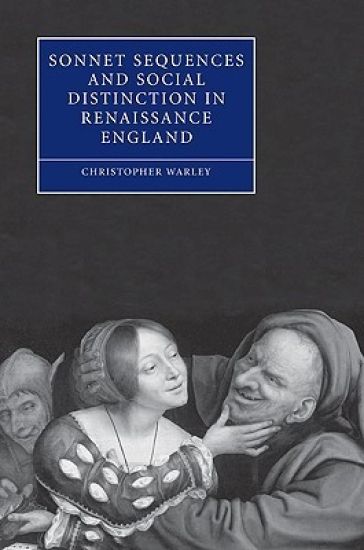
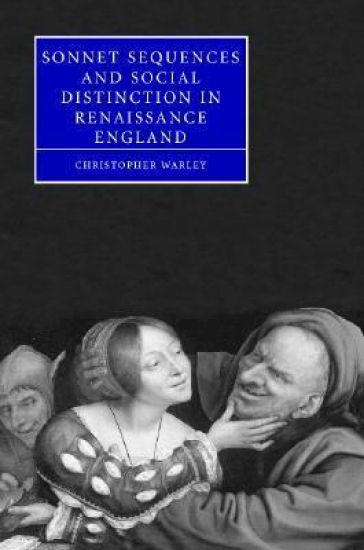
Why were sonnet sequences popular in Renaissance England? In this study, Christopher Warley suggests that sonneteers created a vocabulary to describe, and to invent, new forms of social distinction before an explicit language of social class existed. The tensions inherent in the genre - between lyric and narrative, between sonnet and sequence - offered writers a means of reconceptualizing the relation between individuals and society, a way to try to come to grips with the broad social transformations taking place at the end of the sixteenth century. By stressing the struggle over social classification, the book revises studies that have tied the influence of sonnet sequences to either courtly love or to Renaissance individualism. Drawing on Marxist aesthetic theory, it offers detailed examinations of sequences by Lok, Sidney, Spenser, Shakespeare and Milton. It will be valuable to readers interested in Renaissance and genre studies, and post-Marxist theories of class.
Why were sonnet sequences popular in Renaissance England? In this study, Christopher Warley suggests that sonneteers created a vocabulary to describe, and to invent, new forms of social distinction before an explicit language of social class existed. The tensions inherent in the genre - between lyric and narrative, between sonnet and sequence - offered writers a means of reconceptualizing the relation between individuals and society, a way to try to come to grips with the broad social transformations taking place at the end of the sixteenth century. By stressing the struggle over social classification, the book revises studies that have tied the influence of sonnet sequences to either courtly love or to Renaissance individualism. Drawing on Marxist aesthetic theory, it offers detailed examinations of sequences by Lok, Sidney, Spenser, Shakespeare and Milton. It will be valuable to readers interested in Renaissance and genre studies, and post-Marxist theories of class.
Love in its various forms, the flights of the spirit and base passions, philosophical reflection and ruthless self-analysis - all of this, as well as vivid images, cascades of brilliant metaphors and simply beautiful poetry we find in the sonnets of Shakespeare. It is no wonder that even now, more than 400 years after their first publication, they remain the favorite reading for millions of people. This publication is a translation of William Shakespeare's sonnet 66 almost all the languages of the world by ElliotT Beilin.
Sonnet Boom! is a collection of 88 contemporary sonnets, which are topical, personal, and philosophical. The poems address the author's identity, experiences, and concerns as an African-American woman who identifies as a lesbian living in the 21st Century.
It may look somewhat absurd to scoop out sonnet structures from an epic narrative, but perhaps in the bright amplitude of the epic itself are present innumerable sub-realms that have their own compelling individualities. These are like different rooms and chambers and halls and verandahs in a royal palace, in the White House, in the Palace of Versailles, or more appropriately the world of South Indian Temples or the famous set of Ajanta Caves. By the very definition of an epic we can say that it has a rich abounding multidimensionality representing re-creatively the thousand moods and manners one witnesses in vibrancy of the life of man, its setting having the theme of men and nations or the world or the universe, or the foundational issue of the creation. There are essences of aesthetic delight or rasas, there are evocations and moods and bhavas, there are echoes and reflections, persuasive sounds and soft winning music, there is the dhwani which only an occult ear can hear, the sound of the roots of the words, unheard melodies, anahat nad, there are orchestral grandeurs and there are quiet concerts in well-tapestried chambers. It is these individualities that we are trying to see in that greatness, an act which need not reduce the greatness of the great. In an attempt to preserve the epic grandeur of one's life at times one thinks of one's qualities in pieces, pieces which shine out, diamond-like, in their distinctive facets. Our affiliation with sonnets could be of that nature. A sonnet is essentially a lyrical composition in fourteen lines, these lines grouped in different ways but together describing a single theme in the terseness of thought and feeling. Although it started as a sonet or sonetto, a "little song" or "little sound", it has in it the strong presence of idea-force and idea-vision as much as idea-sound. It is at times said that a sonnet deals with thoughts or emotions sharply standing against each other, but also leads to an evocative resolution. This is done differently in the three types that are prevalent in the traditional genre of sonnet literature. The Italian or Petrarcan or later Miltonic sonnet is divided into two sections, octave and sestet, signifying two aspects of the theme being presented. There is a change also occurring in the rhyming scheme, though the metre throughout is mostly iambic pentameter. The transition where the change takes place is called the volta or the turn. This volta brings about a very suggestive if not a powerful dramatic effect, an unexpected well-defined thematic or imagistic slant, spin, revelation, even wonder and amazement. To quote a critic: "The octave bears the burden; a doubt, a problem, a reflection, a query, an historical statement, a cry of indignation or desire, a Vision of the ideal. The sestet eases the load, resolves the problem or doubt, answers the query, solaces the yearning, realizes the vision." In the Spenserian sonnet the pattern is of four-line groups or stanzas, each developing a specific idea, culminating with a couplet which forms a kind of commentary. Again, the volta occurs exactly as in the Italian sonnet, at line nine. In the third category, the English or Shakespearian sonnet there is a great degree of simplicity and flexibility, a naturalness which goes with the English language. The ideas developed in the three quatrains flow smoothly from one into the other, the volta if it can be called so, or culmination taking place in the last two lines, in the couplet, though it can be after the first two quatrains. A prosodist of yester-years says that the Shakespearean form is the best suited to English, one which is "absolutely genuine and orthodox", though the great Miltonic is "susceptible of great beauty, but has no prerogative, still less any primogeniture".