Kirjojen hintavertailu. Mukana 11 627 616 kirjaa ja 12 kauppaa.

Kirjahaku

Etsi kirjoja tekijän nimen, kirjan nimen tai ISBN:n perusteella.

1000 tulosta hakusanalla Sonya Huber; Martha Bayne

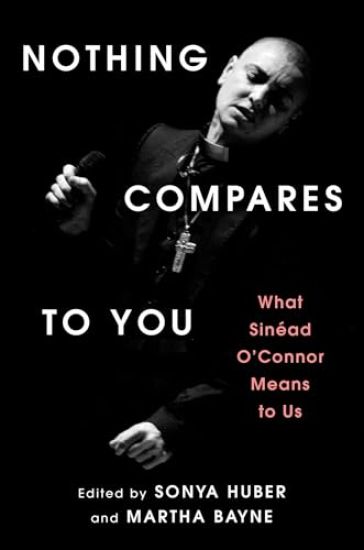
Nothing Compares to You

Nothing Compares to You

Sonya Huber; Martha Bayne

Atria Books
2025
sidottu
An intimate and evocative celebration of the life and legacy of music and political icon Sinéad O’Connor, featuring writers including Neko Case, Sinéad Gleeson, Rayne Fisher-Quann, Porochista Khakpour, and more.More than thirty years ago, Sinéad O’Connor shocked the world by tearing up a photo of Pope John Paul II in an act of protest against the violence perpetrated by the Catholic Church. This single act cemented O’Connor’s place as a fearless voice and activist that would later push even further as Sinead became an advocate for HIV/AIDS awareness, the LGBTQ+ community, and abortion rights. Here in Nothing Compares to You, a renowned and multi-generational group of women and non-binary authors come together to pay tribute to O’Connor’s impact on our world and in their own lives and development as humans and artists. Nothing Compares to You is a loving and accessible reconsideration and entry point for understanding the Irish icon. Exploring themes such as gender identity, spirituality, artistic expression, and personal transformation, this collection shows that Sinead’s voice continues to ring on even after her death and brilliantly illustrates the power of creative expression to inspire far beyond any presumed lines of age, culture, or class.
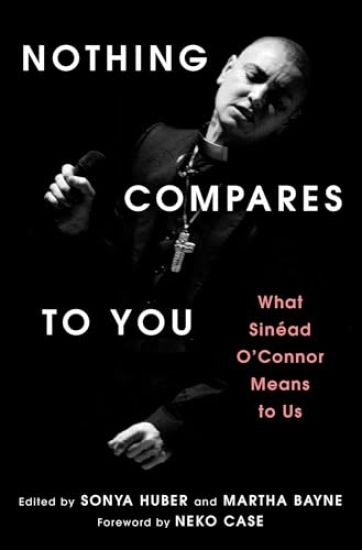
Nothing Compares to You

Nothing Compares to You

Sonya Huber; Martha Bayne

Atria Books
2026
pokkari
An intimate and evocative celebration of the life and legacy of music and political icon Sinéad O’Connor, featuring writers including Neko Case, Sinéad Gleeson, Rayne Fisher-Quann, Porochista Khakpour, and more. More than thirty years ago, Sinéad O’Connor shocked the world by tearing up a photo of Pope John Paul II in an act of protest against the violence perpetrated by the Catholic Church. This single act cemented O’Connor’s place as a fearless voice and activist that would later push even further as Sinead became an advocate for HIV/AIDS awareness, the LGBTQ+ community, and abortion rights. Here in Nothing Compares to You, a renowned and multi-generational group of women and non-binary authors come together to pay tribute to O’Connor’s impact on our world and in their own lives and development as humans and artists. It is a loving and accessible reconsideration and entry point for understanding the Irish icon. Exploring themes such as gender identity, spirituality, artistic expression, and personal transformation, this collection shows that Sinead’s voice continues to ring on even after her death and brilliantly illustrates the power of creative expression to inspire far beyond any presumed lines of age, culture, or class.
Opa Nobody

Opa Nobody

Sonya Huber

University of Nebraska Press
2008
sidottu
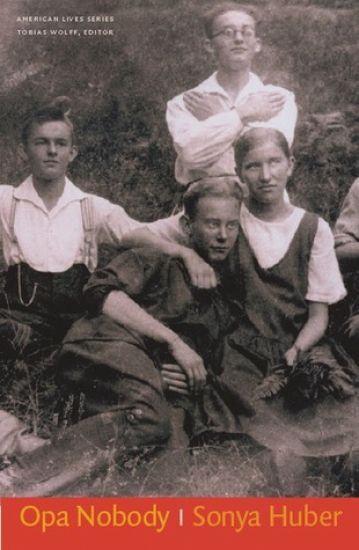
It had come to this: breast-feeding her screaming three-month-old while sitting on the cigarette-scarred floor of a union hall, lying to her husband so she could attend yet another activist meeting, and otherwise actively self-destructing. Then Sonya Huber turned to her long-dead grandfather, the family "nobody," for help.Huber's search for meaning and resonance in the life of her grandfather Heina Buschman was unusual insofar as she knew him only through dismissive family stories. He let his wife die of neglect . . . he used his infant son as a decoy when transporting anti-Nazi literature in a baby carriage . . . and so the stories went. What she actually discovered was that, like his granddaughter, Heina Buschman was a beleaguered but committed activist whose story echoed her own.Through her research, Huber not only conjured her grandfather's voice in answer to many of the questions that troubled her but also found in his story a source of personal sustenance. Based on extensive research and documentation, this story of Heina Buschman offers a rare look into the heart of the "average" socialist trying to survive the Nazis and rebuild a broken world. Alternating with his voice is Huber's own, providing a rich and moving counterpoint that makes this deeply personal exploration of family, politics, and individual responsibility a story for all of us and for all time.
Cover Me

Cover Me

Sonya Huber

University of Nebraska Press
2010
sidottu
Growing up in middle-class middle America, Sonya Huber viewed health care as did most of her peers: as an inconvenience or not at all. There were braces and cavities, medications and stitches, the family doctor and the local dentist. Finding herself without health insurance after college graduation, she didn't worry. It was a temporary problem. Thirteen years and twenty-three jobs later, her view of the matter was quite different. Huber's irreverent and affecting memoir of navigating the nation's health-care system brings an awful and necessary dose of reality to the political debates and propaganda surrounding health-care reform. "I look like any other upwardly mobile hipster," Huber says. "I carry a messenger bag, a few master's degrees, and a toddler raised on organic milk." What's not evident, however, is that she is a veteran of Medicaid and WIC, the federal government's supplemental nutrition program for women, infants, and children. In Cover Me, Huber tells a story that is at once all too familiar and rarely told: of being pushed to the edge by worry; of the adamant belief that better care was out there; of taking one mind-numbing job after another in pursuit of health insurance, only to find herself scrounging through the trash heap of our nation's health-care system for tips and tricks that might mean the difference between life and death.
Opa Nobody

Opa Nobody

Sonya Huber

University of Nebraska Press
2013
pokkari
It had come to this: breast-feeding her screaming three-month-old while sitting on the cigarette-scarred floor of a union hall, lying to her husband so she could attend yet another activist meeting, and otherwise actively self-destructing. Then Sonya Huber turned to her long-dead grandfather, the family "nobody," for help.Huber's search for meaning and resonance in the life of her grandfather Heina Buschman was unusual insofar as she knew him only through dismissive family stories. He let his wife die of neglect . . . he used his infant son as a decoy when transporting anti-Nazi literature in a baby carriage . . . and so the stories went. What she actually discovered was that, like his granddaughter, Heina Buschman was a beleaguered but committed activist whose story echoed her own.Through her research, Huber not only conjured her grandfather's voice in answer to many of the questions that troubled her but also found in his story a source of personal sustenance. Based on extensive research and documentation, this story of Heina Buschman offers a rare look into the heart of the "average" socialist trying to survive the Nazis and rebuild a broken world. Alternating with his voice is Huber's own, providing a rich and moving counterpoint that makes this deeply personal exploration of family, politics, and individual responsibility a story for all of us and for all time.
Pain Woman Takes Your Keys, and Other Essays from a Nervous System
Rate your pain on a scale of one to ten. What about on a scale of spicy to citrus? Is it more like a lava lamp or a mosaic? Pain, though a universal element of human experience, is dimly understood and sometimes barely managed. Pain Woman Takes Your Keys, and Other Essays from a Nervous System is a collection of literary and experimental essays about living with chronic pain. Sonya Huber moves away from a linear narrative to step through the doorway into pain itself, into that strange, unbounded reality. Although the essays are personal in nature, this collection is not a record of the author’s specific condition but an exploration that transcends pain’s airless and constraining world and focuses on its edges from wild and widely ranging angles. Huber addresses the nature and experience of invisible disability, including the challenges of gender bias in our health care system, the search for effective treatment options, and the difficulty of articulating chronic pain. She makes pain a lens of inquiry and lyricism, finds its humor and complexity, describes its irascible character, and explores its temperature, taste, and even its beauty.
Supremely Tiny Acts

Supremely Tiny Acts

Sonya Huber

OHIO STATE UNIVERSITY PRESS
2021
pokkari
"I think we have to get to the real, to catch the facts we have, to hold on to what we see. . . .in this time where lies are currency," Sonya Huber writes in her book-length essay Supremely Tiny Acts: A Memoir of a Day. On the theory that naming the truths of quotidian experience can counter the dangerous power of lies, she carefully recounts two anxiety-fueled days one fall. On the first, she is arrested as part of a climate protest in Times Square. On the other, she must make it to her court appearance while also finding time to take her son to get his learner's permit. Paying equal attention to minor details, passing thoughts, and larger political concerns around activism and parenting in the Trump-era United States, Huber asks: How can one simultaneously be a good mother, a good worker, and a good citizen? As she reflects on the meaning of protest and on whiteness and other forms of privilege within political activism, Huber offers a wry, self-aware, and stirring testament to the everyday as a seedbed for meaningful change.
Voice First

Voice First

Sonya Huber

University of Nebraska Press
2022
pokkari
Though it is foundational to the craft of writing, the concept of voice is a mystery to many authors, and teachers of writing do not have a good working definition of it for use in the classroom. Written to address the vague and problematic advice given to writers to “find their voice,” Voice First: A Writer’s Manifesto recasts the term in the plural to give writers options, movement, and a way to understand the development of voice over time. By redefining “voice,” Sonya Huber offers writers an opportunity not only to engage their voices but to understand and experience how developing their range of voices strengthens their writing. Weaving together in-depth discussions of various concepts of voice and stories from the author’s writing life, Voice First offers a personal view of struggles with voice as influenced and shaped by gender, place of origin, privilege, race, ethnicity, and other factors, reframing and updating the conversation for the twenty-first century. Each chapter includes writing prompts and explores a different element of voice, helping writers at all levels stretch their concept of voice and develop a repertoire of voices to summon.
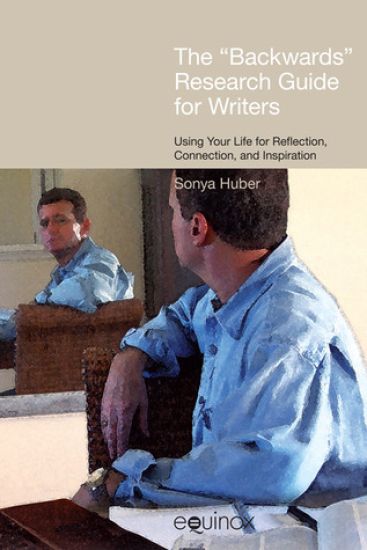
The 'Backwards' Research Guide for Writers

The 'Backwards' Research Guide for Writers

Sonya Huber

Equinox Publishing Ltd
2011
sidottu
"The 'Backwards' Research Guide for Writers: Using Your Life for Reflection, Connection and Inspiration" demystifies the writing process by inviting writers of all levels to focus on their passions, questions, and obsessions as the key to generating seeds for further exploration of the world around them. Writers then develop these questions into focused projects that explore the teller's central role in the open-ended quest of unfolding a research topic. The boom in narrative journalism, memoir, and creative nonfiction has generated wonderful writing, but no resource for writers exists to bridge the gap between passionate research and the page. This book addresses that gap by turning the task of research on its head and by speaking to students who resist the idea of research as an objective and dry assignment. Students are invited to experiment creatively with collecting observations and information and then to step beyond their subjective realities to interact with the world around them and ultimately become vulnerable authors willing to change their perspectives as they research and write. Developed with input from college student writers, "The 'Backwards' Research Guide for Writers" is relevant as a text for undergraduate and postgraduate courses in composition, creative nonfiction, literary journalism, and feature writing as well as for working journalists and other writers seeking a new way of approaching a writing project. It includes interviews with notable authors that focus not on the completed and intimidating project of a successful author, but on the project as it took shape and mystified a researcher. Another unique feature is a section in every chapter on ethics, as ethical questions are central to the writing process as well as a method for sparking interest in writing and learning. The guide includes extensive examples of research challenges and dilemmas, strategies for planning a research project, exercises for generating ideas, a guide for writing the research-based work, an appendix of on-line databases, a section in each chapter focused on ethics in research and writing called gray matter, a selection of recommended readings, and a bibliography of conventional research guides.
The 'Backwards' Research Guide for Writers

The 'Backwards' Research Guide for Writers

Sonya Huber

Equinox Publishing Ltd
2011
pokkari
"The 'Backwards' Research Guide for Writers: Using Your Life for Reflection, Connection and Inspiration" demystifies the writing process by inviting writers of all levels to focus on their passions, questions, and obsessions as the key to generating seeds for further exploration of the world around them. Writers then develop these questions into focused projects that explore the teller's central role in the open-ended quest of unfolding a research topic. The boom in narrative journalism, memoir, and creative nonfiction has generated wonderful writing, but no resource for writers exists to bridge the gap between passionate research and the page. This book addresses that gap by turning the task of research on its head and by speaking to students who resist the idea of research as an objective and dry assignment. Students are invited to experiment creatively with collecting observations and information and then to step beyond their subjective realities to interact with the world around them and ultimately become vulnerable authors willing to change their perspectives as they research and write. Developed with input from college student writers, "The 'Backwards' Research Guide for Writers" is relevant as a text for undergraduate and postgraduate courses in composition, creative nonfiction, literary journalism, and feature writing as well as for working journalists and other writers seeking a new way of approaching a writing project. It includes interviews with notable authors that focus not on the completed and intimidating project of a successful author, but on the project as it took shape and mystified a researcher. Another unique feature is a section in every chapter on ethics, as ethical questions are central to the writing process as well as a method for sparking interest in writing and learning. The guide includes extensive examples of research challenges and dilemmas, strategies for planning a research project, exercises for generating ideas, a guide for writing the research-based work, an appendix of on-line databases, a section in each chapter focused on ethics in research and writing called gray matter, a selection of recommended readings, and a bibliography of conventional research guides.
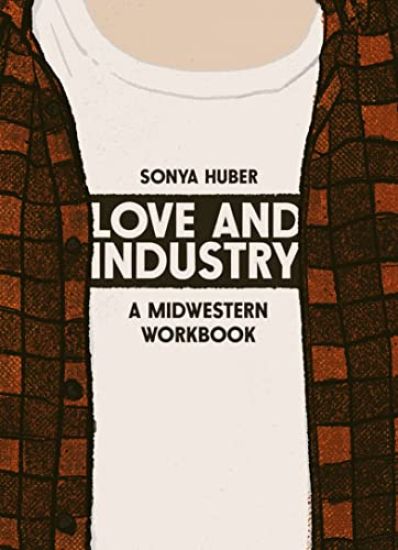
Love and Industry: A Midwestern Workbook

Love and Industry: A Midwestern Workbook

Sonya Huber

Belt Publishing
2023
nidottu
PEN/Diamonstein-Spielvogel Award for the Art of the Essay-FinalistSonya Huber, author of the award-winning Pain Woman Takes Your Keys, and Other Essays from a Nervous System, offers a candid, lyrical look inside the unsung world of exurban Illinois.New Lenox, Illinois, is a small town deep in the corn grid of the Midwest, where it runs up against the grid of south Chicagoland, a placeless location marked by geographical flatness and dwindling industry. It's also where Sonya Huber grew up, and in the twenty essays collected here, she lovingly explores the ways New Lenox--and the Midwest more generally--has come to define her life. Here, you'll find portraits of Huber's parents as they tirelessly run a small business, homages to the Gen-X joys of wearing flannel, secret insights about being a Pizza Hut waitress, and odes to the ecstasy of blasting classic rock as your car hurls along I-80. Whether she's writing about All in the Family, detailing the region's influence on David Foster Wallace, or exploring the poetry embedded in a can of Miller High Life, her vision is astute and her prose convincing. Sometimes experimental and always inventive, Love and Industry: A Midwestern Workbook takes seriously Chicagoland's farthest reaches--gritty, sweeping, a region full of its own distinct feelings of almostness--and transforms them into a map of the heart, a ramshackle territory marked by memory, family, regret, determination, and wonderment
Ey, Digga, dein Leben rockt!: Human-Design & mehr!

Ey, Digga, dein Leben rockt!: Human-Design & mehr!

Ki Künstliche Intelligen Kumpel Gemi; Coole Omi Sonja Hübner

BoD - Books on Demand
2025
nidottu
Dieses Buch im gro en Format richtet sich an Jugendliche, die ein authentisches und selbstbestimmtes Leben suchen. Mit provokantem Haupttitel wie "Ey, Digga, dein Leben rockt " werden komplexe Themen wie Human-Design, Bachbl ten und Violettes Feuer in ihrer Jugendsprache vermittelt. QR-Codes und KI ("Kumpel Gemi") machen die Inhalte leicht zug nglich und bieten interaktive Antworten f r ein tieferes Verst ndnis. Ein zukunftsorientierter Begleiter, der informiert und beim Rocken des Lebens hilft Und das Beste zum Schluss: es macht total Spa es zu lesen
Unkenrufe von hüben

Unkenrufe von hüben

Sonja Maria Rathjen

Books on Demand
2017
pokkari
"Unkenrufe von h ben" ist der dritte Band von Gedichten und Liedtexten, in dem Sonja Maria Rathjen auf ihre sp ttische, hochironische und hintergr ndige Art politische und gesellschaftliche Themen behandelt. Mit leichter Hand gie t sie Hochsprache, die nur im u ersten Notfall mit Gossendeutsch konterkariert wird, in klassische Versformen -- vom Zweizeiler bis zur Ballade. Der strikte Rhythmus, gepaart mit reinsten Endreimen, bietet das enge Korsett, aus dem der augenzwinkernd bissige Humor desto erfrischender spr ht. In den Liedtexten aber baut sie mit Bedacht Unreinheiten ein, die (nicht nur) dem deutschen Liedgut zukommen. Zu so manchem Text schwingt eine altbekannte Melodie mit und versetzt Leser und Leserin in eine andere, neu gef llte Zeit.
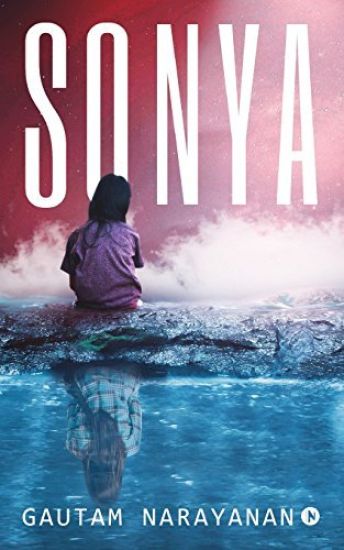
Sonya

Sonya

Gautam Narayanan

Notion Press, Inc
2018
nidottu
Sonya is born and raised under strange circumstances and in a world of darkness. But she thoroughly enjoys this world and her gloomy ambience, until one fateful night. That night literally transforms her whole life and destroys everything she possesses, leaving her with nothing but complexes, phobias and depression. Despite that, Sonya wants to lead a normal life like everyone else. A life comprising of a normal family, a few good friends and a good romantic relationship, but will her past allow her to have one? Sonya grows up in various different situations and meets many good people who seem better than the monsters of her past. But are they? This story is a coming of age drama that follows Sonya and her life which is coloured by deception, dilemma, seduction, tears, abuse and bloodshed.
Sonya Rapoport

Sonya Rapoport

Terri Cohn; Alla Efimova

Kala Art Institute
2022
pokkari
This is the first book to fully interpret Objects on My Dresser (1979-83) by the conceptual artist Sonya Rapoport. Objects on My Dresser is Rapoport's psychological self-portrait for the digital age. Motivated by the recent passing of her mother, she joined together with a psychologist in a project that was part therapy, part creative collaboration. During the psychoanalytic process, Rapoport selected 28 objects that had accumulated on her bedroom dresser, ranging from travel souvenirs to family photos, small curios, and other keepsakes, which became anchors for the analysis. Rapoport turned to a newly available tool-the computer- and used the data mined from psychoanalysis to code, plot, and graph her interior experience. With exclusive access to archival materials and interviews with the artist during her lifetime, Efimova and Cohn decode Objects on My Dresser and position it in the canons of Conceptual, Feminist, and early computer art.
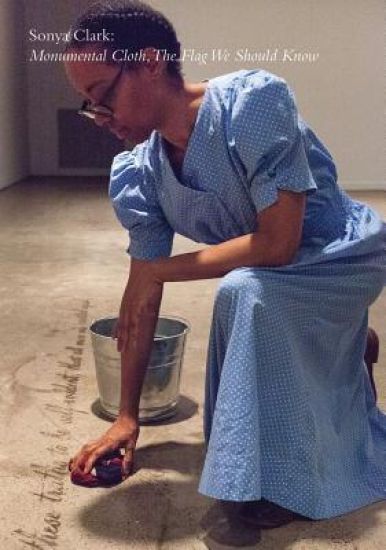
Sonya Clark

Sonya Clark

MW Editions
2020
sidottu
In the spring of 1865, a seemingly unremarkable dishcloth played a crucial role in ending the Civil War as the South's flag of surrender at Appomattox. A Confederate horseman carried a humble white linen towel into the lines of General George Custer, near the courthouse at Appomattox. The horseman was sent on behalf of General Robert E. Lee, who was requesting a suspension of hostilities while General Ulysses S. Grant proposed terms of surrender.Focusing on this Confederate Flag of Truce, Afro-Caribbean American artist (and professor at Amherst College) Sonya Clark (born 1967) explores the legacy of symbols and challenges the power of propaganda, erasures and omissions through her works. By making the Truce Flag a cloth that brokered peace and represented the promise of reconciliation into a monumental alternative to the infamous Confederate Battle Flag and its pervasive divisiveness, Clark instigates a role reversal and aims to correct a historical imbalance.