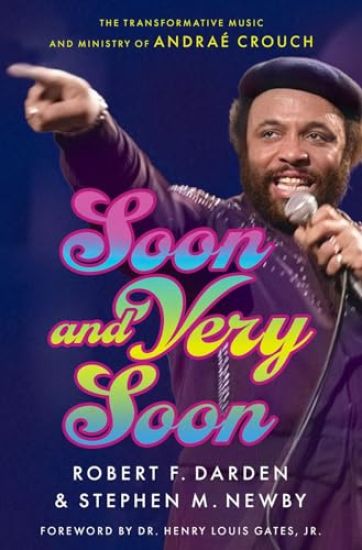
The first biography of arguably the most influential gospel artist of the 20th century, brought to life through interviews with his collaborators, friends, and family Gospel singer and seven-time Grammy winner Andraé Crouch (1942-2015) hardly needs introduction. His compositions—"The Blood Will Never Lose Its Power," "Through It All," "Jesus is the Answer," "Soon and Very Soon," and others—set the gold standard for gospel music and remain staples in modern hymnals today. He is often spoken of in the same "genius" pantheon as Mahalia Jackson, Thomas Dorsey, and the Rev. James Cleveland and was lauded as "the foremost gospel singer of his generation" by former President Barack and First Lady Michelle Obama upon his death in 2015. In Soon and Very Soon, authors Robert Darden and Stephen Newby celebrate the countless ways that Crouch indelibly changed the course of gospel and popular music. Not least among them was Crouch's progressive pursuit to address the sociopolitical issues of his time, including AIDS, prejudice, abuse, housing insecurity, and addiction. With his twin sister Sandra, Crouch served as minister of the church their father founded and ministered to individuals experiencing these issues despite ongoing criticism from some church members. Crouch's group "The Disciples" were the first bi-racial musical ensemble in gospel music and performed in a range of venues from mega-churches to Madison Square Garden and Carnegie Hall, in addition to network television programs ranging from Soul Train to The Tonight Show Starring Johnny Carson to Saturday Night Live. In doing so, Crouch and his Disciples introduced jazz, funk, classical, calypso, Latin and other musical elements into gospel. By the peak of his career, Crouch's influence was so pervasive that he recorded, performed with, and composed for some of the most powerful names in popular music, including Michael Jackson, Elvis Presley, Elton John, Bob Dylan, Paul Simon, Quincy Jones, Little Richard, Stevie Wonder, and Madonna. To illuminate the vivid world in which Crouch lived, Darden and Newby include interviews with surviving musicians, collaborators, friends, and family members, complete with musical analysis of Crouch's compositions and lyrics. As a major intervention in gospel and popular music studies, Soon and Very Soon tells the fascinating and dynamic story of one of the true giants in American popular music.
In the archetypal confrontation between the Athenian lawmaker Solon and the Greek poet Thespis, Solon confronts Thespis after seeing him act in a tragedy. He asks Thespis if he is not ashamed to tell so many lies before so many people. In response to Thespis's reply—that it was no harm to say or do so in a play—Solon vehemently blames Thespis for a professional deceit that threatens to pervade society. Solon's criticism of Thespis points to a fundamental motivation for Solon and Thespis: an exploration of the long-standing antagonism between law and theater, between drama's inconsequential fiction and the real world's socially consequential fact, at a crucial moment—the sixteenth century—in England's cultural and legal formation. The literary critics and historians in this volume examine that antagonism and find it revelatory of English Renaissance law and Renaissance theater's institutional connections and interdependences at a time when both were emerging as powerful forces in English society. Renaissance legal processes were subject to dramatic and public representation, appropriation, and evaluation. Renaissance commercial theater, often populated by law students and practitioners, was both subject to the law and subversive of it. The contributors demonstrate that theater and law were not simply relevant to each other in the early modern period; they explore the physical spaces in which early modern law and drama were performed, the social and imaginative practices that energized such spaces, and the rhetorical patterns that make the two institutions far less discrete and far more collaborative than has previously been recognized.
In the archetypal confrontation between the Athenian lawmaker Solon and the Greek poet Thespis, Solon confronts Thespis after seeing him act in a tragedy. He asks Thespis if he is not ashamed to tell so many lies before so many people. In response to Thespis's reply—that it was no harm to say or do so in a play—Solon vehemently blames Thespis for a professional deceit that threatens to pervade society. Solon's criticism of Thespis points to a fundamental motivation for Solon and Thespis: an exploration of the long-standing antagonism between law and theater, between drama's inconsequential fiction and the real world's socially consequential fact, at a crucial moment—the sixteenth century—in England's cultural and legal formation. The literary critics and historians in this volume examine that antagonism and find it revelatory of English Renaissance law and Renaissance theater's institutional connections and interdependences at a time when both were emerging as powerful forces in English society. Renaissance legal processes were subject to dramatic and public representation, appropriation, and evaluation. Renaissance commercial theater, often populated by law students and practitioners, was both subject to the law and subversive of it. The contributors demonstrate that theater and law were not simply relevant to each other in the early modern period; they explore the physical spaces in which early modern law and drama were performed, the social and imaginative practices that energized such spaces, and the rhetorical patterns that make the two institutions far less discrete and far more collaborative than has previously been recognized.
The poetry of archaic Greece gives voice to the history and politics of the culture of that age. This 2005 book explores the types of history that have been, and can be, written from archaic Greek poetry, and the role this poetry had in articulating the social and political realities and ideologies of that period. In doing so, it pays particular attention to the stance of exhortation adopted in early Greek elegy, and to the political poetry of Solon. Part I of this study argues that the singing of elegiac paraenesis in the elite symposium reflects the attempt of symposiasts to assert a heroic identity for themselves within this wider polis community. Part II demonstrates how the elegy of Solon both confirms the existence of this elite practice, and subverts it; Part III looks beyond Solon's appropriations of poetic traditions to argue for another influence on Solon's political poetry, that of tyranny.
The poetry of archaic Greece gives voice to the history and politics of the culture of that age. This 2005 book explores the types of history that have been, and can be, written from archaic Greek poetry, and the role this poetry had in articulating the social and political realities and ideologies of that period. In doing so, it pays particular attention to the stance of exhortation adopted in early Greek elegy, and to the political poetry of Solon. Part I of this study argues that the singing of elegiac paraenesis in the elite symposium reflects the attempt of symposiasts to assert a heroic identity for themselves within this wider polis community. Part II demonstrates how the elegy of Solon both confirms the existence of this elite practice, and subverts it; Part III looks beyond Solon's appropriations of poetic traditions to argue for another influence on Solon's political poetry, that of tyranny.
This book is about Heritage Day in school. It also about a young girl's identity who is of mixed-race. She gets her family involved to celebrate Heritage Day so she can introduce new cuisine to her classmates in school. This book celebrates the different cultures and cuisines around the world for young readers.
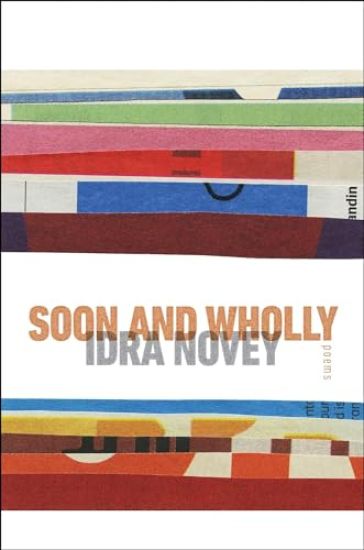
New poetry by the author of acclaimed 2023 novel Take What You Need faces the complexities of life on a swiftly heating earth. /> />Idra Novey's first collection in a decade, since Patricia Smith chose Exit, Civilian for the National Poetry Series, brings a lyric intimacy to the extremes of our era. The poems juxtapose sweltering days with children in a city with moments from a rural childhood roaming free in the woods, providing a bridge between those often polarized realities. Novey's spare, contemporary fables move across the Americas, from a woman housesitting in central Chile, surrounded by encroaching fires, to a man in New York about to give birth to a panda. /> />Other poems return to the Allegheny Highlands of Appalachia, where Novey revisits the roads and creeks of her childhood: "Maybe we knew we only appeared/to be floating, but soon and wholly/we'd go under" Like Lydia Davis and Anne Carson, Novey draws from the well of her work translating myriad authors, from Brazilian writer Clarice Lispector to Iranian poet Garous Abdolmalekian, and from her own award-winning novels. These are deeply lived poems, evoking both a singular life and the shared urgencies of our time, a collection of great inventiveness and wit, conjuring our "bit part in the history of the future." /> />[sample text] /> />The Duck Shit at Clarion Creek /> />We liked to stick it in a BB gun and shoot it. /> />We tattooed with it. /> />We said Hallelujah, the poor man's tanning lotion. /> />Then the frack wells began, something black capping the water and we got high watching a green-backed heron die. /> />We got funny at Clarion, flung each other's underwear into the trees. /> />Why was it we got naked there like nowhere else? /> />Maybe we knew we were getting rusted inside as the trucks we rode into the water. /> />Maybe we only appeared to be floating, but soon and wholly we'd go under, get sucked to the bottom. /> />We'd sink and become creek bed; its deep mud would claim us, hold us hard and close.
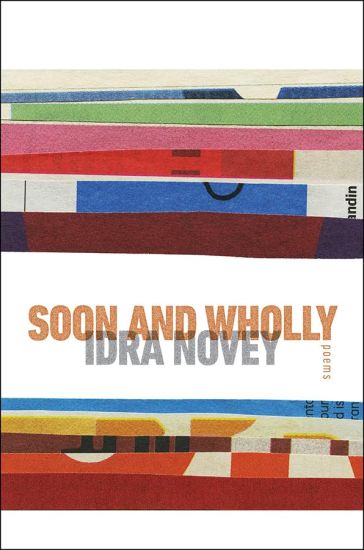
New poetry by the author of acclaimed 2023 novel Take What You Need faces the complexities of life on a swiftly heating earth.Idra Novey's first collection in a decade, since Patricia Smith chose Exit, Civilian for the National Poetry Series, brings a lyric intimacy to the extremes of our era. The poems juxtapose sweltering days raising children in a city with moments from a rural childhood roaming free in the woods, providing a bridge between those often polarized realities. Novey's spare, contemporary fables move across the Americas, from a woman housesitting in central Chile, surrounded by encroaching fires, to a man in New York about to give birth to a panda. Other poems return to the Allegheny Highlands of Appalachia, where Novey revisits the roads and creeks of her childhood: "Maybe we knew we only appeared/to be floating, but soon and wholly/we'd go under." Like Lydia Davis and Anne Carson, Novey draws from the well of her work translating myriad authors, from Brazilian writer Clarice Lispector to Iranian poet Garous Abdolmalekian, and from her own award-winning novels. These are deeply lived poems, evoking both a singular life and the shared urgencies of our time, a collection of great inventiveness and wit, conjuring our "bit part in the history of the future." sample text]The Duck Shit at Clarion Creek We liked to stick it in a BB gun and shoot it. We tattooed with it. We said Hallelujah, the poor man's tanning lotion. Then the frack wells began, something black capping the water and we got high watching a green-backed heron die. We got funny at Clarion, flung each other's underwear into the trees. Why was it we got naked there like nowhere else? Maybe we knew we were getting rusted inside as the trucks we rode into the water. Maybe we only appeared to be floating, but soon and wholly we'd go under, get sucked to the bottom. We'd sink and become creek bed; its deep mud would claim us, hold us hard and close.
When Pastors Willie Green and Vanessa Morton got married and moved to merge their churches, they never expected so much resistance. Now it seems someone is sending a strong message by setting fire to the Harvest Baptist Church building.The newly unified Pleasant Harvest Baptist Church is no more than four months into business as usual before Co-Pastor Willie Green is drawn into the middle of an arson investigation. Alexis Montgomery, an overzealous reporter, sees the experienced pastor as a great source to latch onto as she tries to unearth the stories that might solve the crime. Instead of being bothered by the presence of this woman, Co-Pastor Vanessa uses it as a distraction to help conceal her own secrets.Orchestrating the unification rift makes Deacon Charley Thompson a prime suspect. His unexpected silence only fuels the accusations of guilt, and his meek wife becomes his unlikely spokesperson. Meanwhile, his nephew, Abe Townsend, couldn't care less about family allegiances. Led by an anonymous publicist, Abe and the remaining displaced members of Harvest Baptist Church gain notoriety when news reports garner an outcry of sympathy and support. What should have been a simple unification of two churches has turned into something much more complicated, and it will take plenty of faith to hold it all together.
John Hedge was brought up, very largely, in a traditional English pub (the 'bright bar'). Less traditional were the bitter rows between his loving but troubled publican parents, who sent him away for a Masonic boarding school education in the misguided belief that he would be happier away from the booze and the brickbats. Though this was meant for the best, it left him scarred by the oppressive, secretive culture of 'Ston' to the extent that in his teens he endured a catastrophicbreakdown. In looking back from his peaceful later years to life with his loving, blundering and ill-fated parents, he has given us a moving and beautifully written memoir
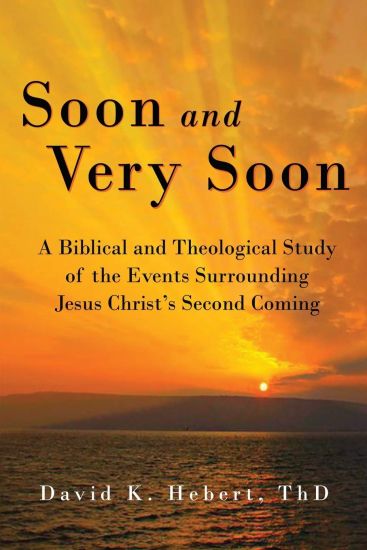
End Times . . . Last Days . . . Revelation . . . What do these mean to you?Soon and Very Soon serves you the wonderful truths of the Second Coming of Jesus Christ without confusion. Making simple what can seem complicated, Dr. David Hebert's exploration of Bible truths will lift your heart as you look forward to Jesus' return as a key dimension of the "perfect complete Gospel of both comings of Jesus Christ."The fruit of decades of prayerful study, Soon and Very Soon unfolds these truths in the Bible, through early church fathers, and down through Christian history to today's scholars. While advocating a premillennial-futurist view of eschatology, Hebert represents other views fairly and always points readers to the Scriptures as they form their views. More than thirty pages of notes invite you to extend your learning beyond these pages, going right to the best sources Dr. Hebert has consulted.Whether you're a Bible student, scholar, or layperson, let Soon and Very Soon deepen your faith and cause your heart to rejoice: "Maranatha Come quickly, Lord Jesus "