The 18th century was a wealth of knowledge, exploration and rapidly growing technology and expanding record-keeping made possible by advances in the printing press. In its determination to preserve the century of revolution, Gale initiated a revolution of its own: digitization of epic proportions to preserve these invaluable works in the largest archive of its kind. Now for the first time these high-quality digital copies of original 18th century manuscripts are available in print, making them highly accessible to libraries, undergraduate students, and independent scholars.The Age of Enlightenment profoundly enriched religious and philosophical understanding and continues to influence present-day thinking. Works collected here include masterpieces by David Hume, Immanuel Kant, and Jean-Jacques Rousseau, as well as religious sermons and moral debates on the issues of the day, such as the slave trade. The Age of Reason saw conflict between Protestantism and Catholicism transformed into one between faith and logic -- a debate that continues in the twenty-first century.++++The below data was compiled from various identification fields in the bibliographic record of this title. This data is provided as an additional tool in helping to insure edition identification: ++++British LibraryT068689London: printed by W. B for R. Wilkin, 1720. 39, 1]
This bundle includes ACHIEVING EXCELLENCE IN SCHOOL COUNSELING THROUGH MOTIVATION, SELF-DIRECTION, SELF-KNOWLEDGE AND RELATIONSHIPS and CBA TOOLKIT ON A FLASH DRIVE
In 1982 Fender revived an old guitar-string name for its new line of Japanese-made electric guitars. Millions of guitars later and celebrating its 30th anniversary Squier is almost as important to the company as the main Fender brand.ÞGuitar pundit Tony Bacon reveals the stories behind the original (and collectible) Japanese-made Squier Series models the way that Fender has often been more adventurous and experimental with Squier away from its protected main brand and the famous musicians who have chosen to play Squier instruments from Courtney Love and her Venus model to blink-182's Tom DeLonge and his one-pickup/one-control signature Stratocaster.ÞFull of the luscious pictures absorbing narrative and collector's data that characterize Bacon's best-selling instrument books ÊSquier ElectricsÊ is the only guide to one of the most popular guitar brands of recent times.
During the 1920s and '30s, Major General George Owen Squier was one of the most famous men in America and abroad, as a scientist, soldier, military strategist, electrical communications expert and inventor, aeronautical pioneer, diplomat, and philanthropist. He rose from humble beginnings in Michigan to the position of Chief Signal Officer of the United States Army. He led the effort in World War I to equip the United States and its allies with American-made airplanes and engines, an effort which started slowly but at the time of the Armistice was rapidly coming to fruition. He also equipped American forces with modern communications, the first belligerent in the war to do so. As an inventor he is not well known today compared to his contemporaries Alexander Graham Bell and the Wright Brothers, who respected his intellect and originality. Yet his inventions in communications technology are fundamental to today's telephone system and were the technical basis for the company he founded, Muzak. Despite his many achievements no biography of George Squier has, before now, been published.
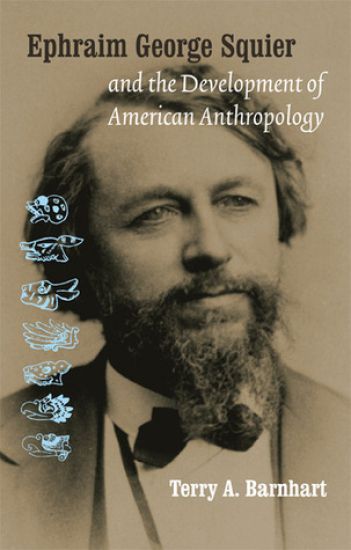
Ephraim George Squier and the Development of American Anthropology is an intellectual biography of Ephraim Squier (1821–88) and his contributions to the development of the nascent disciplines of archaeology and anthropology. During his career, which spanned the years 1845–77, Squier consistently articulated the need for a more holistic and integrated approach to the study of humankind. Although Squier is best known today for the classic book he coauthored with Edwin H. Davis, Ancient Monuments of the Mississippi Valley, Terry A. Barnhart shows that Squier's fieldwork and interpretive contributions to archaeology and anthropology continued over the next three decades. He turned his attention to comparative studies and to fieldwork in Central America and Peru. He became a diplomat and an entrepreneur yet still found time to conduct archaeological investigations in Nicaragua, Honduras, and Peru and to gather ethnographic information on contemporary indigenous peoples in those countries. He published an important and still not fully appreciated comparative study, The Serpent Symbol, and the Worship of the Reciprocal Principles of Nature in America, which attempted to systematically account for parallel cultural developments that he attributed to the psychic unity of humankind. A wealth of unpublished sources illuminate Squier's wide-ranging interests and controversial career, his intellectual circle, and the public interests of an energetic and expansive American nation. Terry A. Barnhart offers us the first intellectual biography that explores the personal and professional life of a remarkable and significant figure in the history of American anthropology.
To Virginia Woolf, London was a source of creative inspiration, a setting for many of her works, and a symbol of the culture in which she lived and wrote. In a 1928 diary entry, she observed, ""London itself perpetually attracts, stimulates, gives me a play & a story & a poem, without any trouble, save that of moving my legs through the streets."" The city fascinated Woolf, yet her relationship with it was problematic. In her attempts to resolve her developmental struggles as a woman write in a patriarchal society, Woolf shaped and reshaped the image and meaning of London.Using psychoanalytic, feminist, and social theories, Susan Squier explores the transformed meaning of the city in Woolf's essays, memoirs, and novels as it functions in the creation of a mature feminist vision. Squier shows that Woolf's earlier works depict London as a competitive patriarchal environment that excluded her, but her mature works portray the city as beginning to accept the force of female energy. Squier argues that this transformation was made possible by Woolf's creative ability to appropriate and revise the masculine literary and cultural forms of her society. The act of writing, or ""scene making,"" allowed Woolf to break from her familial and cultural heritage and recreate London in her own literary voice and vision.Virginia Woolf and London is based on analyses of Woolf's memoirs, her little-known early and mature London essays, Night and Day, Mrs. Dalloway, Flush, and The Years. By focusing on Woolf's changing attitudes about the city, Squier is able to define Woolf's evolving belief that women could ""reframe"" the city-scape and use it to imagine and create a more egalitarian world. Squier's study offers significant new insights into the interplay between self and society as it shapes the work of a woman writer.A UNC Press Enduring Edition -- UNC Press Enduring Editions use the latest in digital technology to make available again books from our distinguished backlist that were previously out of print. These editions are published unaltered from the original, and are presented in affordable paperback formats, bringing readers both historical and cultural value.
When Lieutenant Commander Heidi Kraft's twins were fifteen months old, she was deployed to Iraq. A clinical psychologist in the US Navy, Kraft had the job of uncovering the wounds of war that surgeons never see. She put away thoughts of her children and learned how to listen to the most traumatic stories a war zone has to offer.One of the toughest lessons was perfectly articulated by the TV show M*A*S*H: "There are two rules of war. Rule number one is that young men die. Rule number two is that doctors can't change rule number one." Some marines, Kraft realized, would be damaged by war in ways that she couldn't repair. And sometimes people were repaired in ways she never expected.RULE NUMBER TWO has steadily established itself as a powerful firsthand account of providing comfort amid the chaos of war, and of what it takes to endure. Now, at long last in paperback, it will reach an even wider audience.
Human Oral Mucosa: Development, Structure and Function is a new text that reflects the considerable increase in knowledge of oral mucosa that has occurred in recent years. Our understanding of the structure of oral mucosa is now established at a molecular rather than a tissue or cellular level. This in turn has revealed a level of function that was previously not suspected, including a sophisticated barrier to the penetration of exogenous materials, and the synthesis of specific antimicrobial compounds, representing components of the innate immune system. There is also a growing realization of commonality in structure and function between regions of oral mucosa and the mucosae of the esophagus and vagina. The aim of the present volume is to provide a more sophisticated text on human oral mucosa than presently exists in textbooks and to bring together information that is otherwise to be found in separate, specialist volumes into a comprehensive text. It relates structure at the molecular, cellular and tissue level to function and to clinical behavior. The volume is directed to advanced students and researchers in oral biology, as well as those in allied areas of investigation, such as dermatology, gynecology, internal medicine and pathology.