Kirjojen hintavertailu. Mukana 12 390 323 kirjaa ja 12 kauppaa.

Kirjahaku

Etsi kirjoja tekijän nimen, kirjan nimen tai ISBN:n perusteella.

325 tulosta hakusanalla Srikanth Machiraju; Ritesh Modi

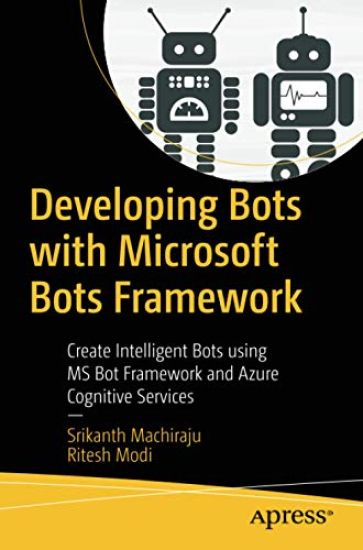
Developing Bots with Microsoft Bots Framework

Developing Bots with Microsoft Bots Framework

Srikanth Machiraju; Ritesh Modi

APress
2017
nidottu
Develop Intelligent Bots using Microsoft Bot framework (C# and Node.js), Visual Studio Enterprise & Code, MicrosoftAzure and Cognitive Services. This book shows you how to develop great Bots, publish to Azure and register with Bot portal so that customers canconnect and communicate using famous communication channels like Skype, Slack, Web and Facebook. You'll also learn how to build intelligence into Bots using Azure Cognitive Services like LUIS, OCR, Speech to Text and Web Search.Bots are the new face of user experience. Conversational User Interface provides many options to make userexperience richer, innovative and engaging with email, text, buttons or voice as the medium for communication.Modern line of business applications can be replaced or associated with Intelligent Bots that can use data/historycombined with Machine Intelligence to make user experience inclusive and exciting.With Developing Bots with Microsoft Bots Framework, you'll see just how simple Bot building can be.What You'll LearnBuild Bots using MS Bot framework on Windows and Non-Windows platformsPublish your Bot to the cloud in minutesCreate rich communication platforms between your application and users Apply Artificial Intelligence and Machine Learning to your applicationsWho This Book Is ForDevelopers and Architects who design and build modern applications or communication platforms using MS stack or open source technologies. Business Analysts and UX Specialists interested in designing and building trendy user interfaces/platforms using Bots and Azure ML
Learning Windows Server Containers

Learning Windows Server Containers

Srikanth Machiraju

Packt Publishing Limited
2017
nidottu
Build, package, and deploy applications as easily manageable and shippable containers. About This Book • Discover the secret to building highly portable apps that run on any machine with Windows Server 2016 anywhere, from laptops, desktop servers, and public or private clouds, without any changes to the code • Build your company cost-effective, container-based apps that support large-scale, virtual cloud environments • The most up-to-date help on the market, offering developers expert guidance in building and shipping high-quality apps, and also helping admins create infrastructure that's simple to maintain Who This Book Is For This book is for application developers with a basic programming knowledge of C#, ASP.NET, and PowerShell. IT Administrators or DevOps engineers with basic PowerShell experience can benefit by extending their learning to use PowerShell to manage containers on Windows environments and use additional management tools. What You Will Learn • Build and deploy ASP.NET web applications as Windows Containers on Windows 10 (Desktop) and Azure using Visual Studio 2015, Docker, and PowerShell • Build and manage custom images using Windows Server Core base OS image and Docker CLI, publish images to Docker, tag images, author Docker files, and so on • Create enterprise-scale, production-grade container environments using Redis Cache containers and SQL Server containers with storage volumes, set up custom container networks, continuous integration, and deployment pipelines using VSTS, Azure, and Git • Deploy a composite container environment using Docker Compose on Windows • Learn to build applications using Microsoft's thinnest server platform - Nano Servers. Build custom Nano Server images and Nano Containers using Windows PowerShell and configure using PowerShell Core, DSC In Detail Windows Server Containers are independent, isolated, manageable and portable application environments which are light weight and shippable. Decomposing your application into smaller manageable components or MicroServices helps in building scalable and distributed application environments. Windows Server Containers have a significant impact on application developers, development operations (DevOps) and infrastructure management teams. Applications can be built, shipped and deployed in a fast-paced manner on an easily manageable and updatable environment. Learning Windows Server Containers teaches you to build simple to advanced production grade container based application using Asp.Net Core, Visual Studio, Azure, Docker and PowerShell technologies. The book teaches you to build and deploy simple web applications as Windows and Hyper-V containers on Windows 10 and Windows Server 2016 on Azure. You will learn to build on top of Windows Container Base OS Images, integrate with existing images from Docker Hub, create custom images and publish to Hub. You will also learn to work with storage containers built using Volumes and SQL Server as container, create and configure custom networks, integrate with Redis Cache containers, configure continuous integration and deployment pipelines using VSTS and Git Repository. Further you can also learn to manage resources for a container, setting up monitoring and diagnostics, deploy composite container environments using Docker Compose on Windows and manage container clusters using Docker Swarm. The last chapter of the book focuses on building applications using Microsoft's new and thinnest server platform – Nano Servers. Style and approach This hands-on tutorial helps you get started with Windows Server containers, the new trend in the container market. This example-driven guide is packed with real-world scenarios of Windows Server containers in production environments.
Beginning Functional JavaScript

Beginning Functional JavaScript

Anto Aravinth; Srikanth Machiraju

APress
2018
nidottu
Understand functional programming concepts and the functional nature of the JavaScript language. Starting with an introduction to functional programming concepts, you will learn the key differences between imperative and functional programming. Diving straight into JavaScript functions, you will learn to write them with ES8. Followed by this you will move to higher order functions and learn how 'Function as Data' opens up a world of possibilities. You will then build higher order functions with closures. Arrays will then be introduced, followed by a set of APIs you can use with them. You will learn how to transform one function to another using currying and partial application. The compose function will be discussed in detail, followed by functors and monads. After having an in-depth look at applicative functors, you will learn the new features offered in ES8. The concluding chapters of Beginning Functional JavaScript will show you how to use a functional toolkit to build a small library that allows you to develop web applications, followed by tips on testing your functional code.What You Will Learn Discover functional programming concepts such as string padding and async functionsIdentify how functions are treated in JavaScriptCreate a functional library that mimics Underscore.JSDeep dive into ES8 functional features such as spread operators and generatorsCreate a library that works like the react-redux pattern by following the functional paradigmWho This Book Is ForNovice JavaScript developers.
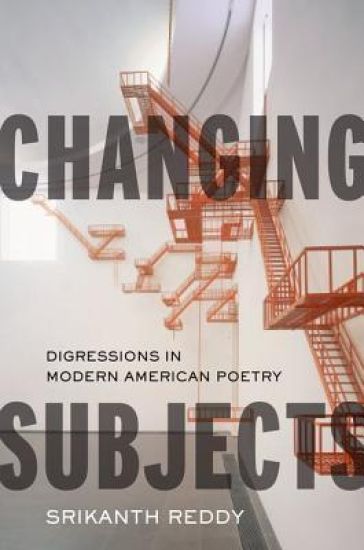
Changing Subjects

Changing Subjects

Srikanth Reddy

Oxford University Press Inc
2012
sidottu
Digression is widely considered a mark of disordered or evasive discourse. Modern legal, philosophical, and political writing largely disavows this trope, regarding it as a departure from the model of rational exposition institutionalized under the Enlightenment. And yet, as the rhetorical figure of digression has grown increasingly marginalized within the decorum of public discourse, it has come to occupy a central position in the private discursive world of poetry. Changing Subjects outlines an anatomy of 'the excursus' within twentieth-century American poetics; moving from aesthetics to the archive to narratology to theories of identity, this study considers the various spheres in which American writers of the period revise prior models of purposeful discourse by cultivating a poetics of digression in the modern poem. The opening section considers the manner in which Wallace Stevens employs digression within the ars poetica genre to deconstruct aesthetic theory under High Modernism; the second chapter examines Marianne Moore's use of the excursus to organize archival knowledge in the Progressive poetry of instruction; the third section turns to Lyn Hejinian's construction of a digressive narratology intended to unsettle master-narratives of the Cold War era; the fourth chapter treats digression as a strategy for fashioning the self in the poetry of Walt Whitman and Frank O'Hara; and the book concludes with a survey of "Elliptical" strategies employed by a new generation of poets, writing in the wake of John Ashbery's aleatory craft, who seek to extend the digressive project of American poetry into the 21st Century.
Phase Change Material-Based Heat Sinks

Phase Change Material-Based Heat Sinks

Srikanth Rangarajan; C. Balaji

CRC Press
2019
sidottu
Phase-change Material based heat sinks and associated optimization remains a topic of great interest, as evident from the increasing number of citations and new applications and miniaturization. Often the multi objective perspective of such heat sinks is ignored. This book introduces the readers to the PCM based heat sinks and Multi objective optimization. The authors have also included interesting in house experimental results on the "Rotating heat sinks" which is a first of a kind work. Useful to budding thermal researchers and practicing engineers in the field, this book is also a great start for students to understand the cooling applications in electronics and an asset to every library in a technical university. Since this book not only gives a critical review of the state of the art but also presents the authors' own results. The book will encourage, motivate and let the reader consider pursuing a research career in electronic cooling technologies.
A Practical Guide for SystemVerilog Assertions

A Practical Guide for SystemVerilog Assertions

Srikanth Vijayaraghavan; Meyyappan Ramanathan

Springer-Verlag New York Inc.
2005
sidottu
SystemVerilog language consists of three very specific areas of constructs -- design, assertions and testbench. Assertions add a whole new dimension to the ASIC verification process. Assertions provide a better way to do verification proactively. Traditionally, engineers are used to writing verilog test benches that help simulate their design. Verilog is a procedural language and is very limited in capabilities to handle the complex Asic's built today. SystemVerilog assertions (SVA) are a declarative and temporal language that provides excellent control over time and parallelism. This provides the designers a very strong tool to solve their verification problems. While the language is built solid, the thinking is very different from the user's perspective when compared to standard verilog language. The concept is still very new and there is not enough expertise in the field to adopt this methodology and be successful. While the language has been defined very well, there is no practical guide that shows how to use the language to solve real verification problems. This book will be the practical guide that will help people to understand this new methodology. "Today's SoC complexity coupled with time-to-market and first-silicon success pressures make assertion based verification a requirement and this book points the way to effective use of assertions." Satish S. Iyengar, Director, ASIC Engineering, Crimson Microsystems, Inc. "This book benefits both the beginner and the more advanced users of SystemVerilog Assertions (SVA). First by introducing the concept of Assertion Based Verification (ABV) in a simple to understand way, then by discussing the myriad of ideas in a broader scope that SVA can accommodate. The many real life examples, provided throughout the book, are especially useful." Irwan Sie, Director, IC Design, ESS Technology, Inc. "SystemVerilogAssertions is a new language that can find and isolate bugs early in the design cycle. This book shows how to verify complex protocols and memories using SVA with seeral examples. This book is a good reference guide for both design and verification engineers." Derick Lin, Senior Director, Engineering, Airgo Networks, Inc.
Facts for Visitors

Facts for Visitors

Srikanth Reddy

University of California Press
2004
pokkari
Speaking in the wake of empire, of terrestrial love and of the collapse of traditional literary forms, the protagonist of this collection of poetry reconstructs a world from the language of encyclopedias, instruction manuals, and the literary legacies of Wallace Stevens, W. G. Sebald, and Joseph Conrad. The prefatory lyric, "Burial Practice", imagines the posthumous narrative of 'then's' that follows an individual's extinction; in the poem "Aria," a stagehand steps onto the floorboards to wax poetic after the curtain has dropped on an opera; and the extended sequence of "Circle" poems obliquely revisits Dante's ethical landscape of the afterlife. Many of these poems were written while Srikanth Reddy worked for a rural literacy program in the south of India, a fact reflected in the imagined post colonial world of lyrics such as "Monsoon Eclogue" and "Thieves' Market". Yet the collection moves beyond the identity politics and resentment of post colonial and Asian-American writings by addressing the fugitive dreams of shared experience in poems such as "Fundamentals of Esperanto". Mobilizing traditional literary forms such as terza rima and the villanelle while simultaneously exploring the poetics of prose and other 'formless' modes, "Facts for Visitors" re-negotiates the impasse between traditional and experimental approaches to writing in contemporary American poetry.
Voyager

Voyager

Srikanth Reddy

University of California Press
2011
pokkari
Srikanth Reddy's second book of poetry probes this world's cosmological relation to the plurality of all possible worlds. Drawing its name from the spacecraft currently departing our solar system on an embassy to the beyond, "Voyager" unfolds as three books within a book and culminates in a chilling Dantean allegory of leadership and its failure in the cause of humanity. At the heart of this volume lies the historical figure of Kurt Waldheim - Secretary-General of the U.N. from 1972-81 and former intelligence officer in Hitler's Wehrmacht - who once served as a spokesman for humanity while remaining silent about his role in the collective atrocities of our era. Resurrecting this complex figure, Reddy's universal voyager explores the garden of forking paths hidden within every totalizing dream of identity.
Twenty-Four Hours of Local Cohomology

Twenty-Four Hours of Local Cohomology

Srikanth B. Iyengar; Graham J. Leuschke; Anton Leykin; Claudia Miller; Ezra Miller

AMERICAN MATHEMATICAL SOCIETY
2007
nidottu
This book is aimed to provide an introduction to local cohomology which takes cognizance of the breadth of its interactions with other areas of mathematics. It covers topics such as the number of defining equations of algebraic sets, connectedness properties of algebraic sets, connections to sheaf cohomology and to de Rham cohomology, Grobner bases in the commutative setting as well as for $D$-modules, the Frobenius morphism and characteristic $p$ methods, finiteness properties of local cohomology modules, semigroup rings and polyhedral geometry, and hypergeometric systems arising from semigroups.The book begins with basic notions in geometry, sheaf theory, and homological algebra leading to the definition and basic properties of local cohomology. Then it develops the theory in a number of different directions, and draws connections with topology, geometry, combinatorics, and algorithmic aspects of the subject.
A Practical Guide for SystemVerilog Assertions

A Practical Guide for SystemVerilog Assertions

Srikanth Vijayaraghavan; Meyyappan Ramanathan

Springer-Verlag New York Inc.
2014
nidottu
SystemVerilog language consists of three very specific areas of constructs -- design, assertions and testbench. Assertions add a whole new dimension to the ASIC verification process. Assertions provide a better way to do verification proactively. Traditionally, engineers are used to writing verilog test benches that help simulate their design. Verilog is a procedural language and is very limited in capabilities to handle the complex Asic's built today. SystemVerilog assertions (SVA) are a declarative and temporal language that provides excellent control over time and parallelism. This provides the designers a very strong tool to solve their verification problems. While the language is built solid, the thinking is very different from the user's perspective when compared to standard verilog language. The concept is still very new and there is not enough expertise in the field to adopt this methodology and be successful. While the language has been defined very well, there is no practical guide that shows how to use the language to solve real verification problems. This book will be the practical guide that will help people to understand this new methodology. "Today's SoC complexity coupled with time-to-market and first-silicon success pressures make assertion based verification a requirement and this book points the way to effective use of assertions." Satish S. Iyengar, Director, ASIC Engineering, Crimson Microsystems, Inc. "This book benefits both the beginner and the more advanced users of SystemVerilog Assertions (SVA). First by introducing the concept of Assertion Based Verification (ABV) in a simple to understand way, then by discussing the myriad of ideas in a broader scope that SVA can accommodate. The many real life examples, provided throughout the book, are especially useful." Irwan Sie, Director, IC Design, ESS Technology, Inc. "SystemVerilogAssertions is a new language that can find and isolate bugs early in the design cycle. This book shows how to verify complex protocols and memories using SVA with seeral examples. This book is a good reference guide for both design and verification engineers." Derick Lin, Senior Director, Engineering, Airgo Networks, Inc.
Shocking Velocity

Shocking Velocity

Srikanth Srinivas

Information Age Publishing
2005
nidottu
Srikanth Srinivas has helped companies like Del Monte, Disney, Dole, FritoLay, Microsoft and Target Rapidly Achieve More With Less - More Revenues, Margins and Cash Flow, With Less Costs, Assets and Inventory. In "Shocking Velocity!" he will show you how you can create similar results for your organization. It is like having the best consultants from McKinsey, Accenture and IBM guiding you towards success - at a fraction of the cost, and with your own people learning and applying the best methodologies for success.The central theme of the book is "Focused Changes to Critical Variables Create Superior Value". Small, focused changes to critical variables result in a big impact on bottom line results. The book describes what those critical variables are, and how to make focused changes to realize benefits systematically with minimum risk. It takes you step-bystep through everything you need to understand, change and strike the right balance between the critical variables: Variety, Velocity, Visibility and Variability; and how making focused changes to these variables will result in superior Value.It doesn’t stop there. It makes it all actionable by describing in detail an approach that maximizes benefits while minimizing risk: Diagnose & Baseline, Divide & Prioritize, Design & Align, Deliver & Learn. Making these focused changes will help you rapidly achieve more with less - more revenues, margins and cash flow with less costs, inventory and assets.It is filled with illustrations that distill the essence of complex ideas, and makes them actionable in your unique context. There are stories, quotes, case studies and examples - all meant to keep your attention, drive home the point and inspire you to take actions."Shocking Velocity!" is a practical book that explains breakthrough concepts, gives examples of how these innovative concepts can be applied, what performance measures can be used to monitor progress, and how to create a culture of continuous improvement. You will also find a detailed explanation of the approach you should take to make the changes entirely self-funding.It is written for these tough economic times. It doesn’t stop at explaining concepts. It brings them to life and helps you apply the ideas in your unique context; applying these ideas can make all the difference between struggling for survival and growing stronger through the tough times by creating superior value. The chart to the left illustrates the kind of benefits you can create for your organization by applying the ideas in the book. It is no "get-rich-quick" scheme, but there are ingenious ideas in the book to get you results fast; and more importantly, each little step will be aligned towards helping you create significant results over time. This will result in a culture of continuous improvement that will help you sustain operational excellence, and stay competitive and agile.Best of all, it is short, precise and to the point. You will finish reading it in less than 2 hours. Happy Reading! More importantly, Happy Implementing!
Shocking Velocity

Shocking Velocity

Srikanth Srinivas

Information Age Publishing
2005
sidottu
Srikanth Srinivas has helped companies like Del Monte, Disney, Dole, FritoLay, Microsoft and Target Rapidly Achieve More With Less - More Revenues, Margins and Cash Flow, With Less Costs, Assets and Inventory. In "Shocking Velocity!" he will show you how you can create similar results for your organization. It is like having the best consultants from McKinsey, Accenture and IBM guiding you towards success - at a fraction of the cost, and with your own people learning and applying the best methodologies for success.The central theme of the book is "Focused Changes to Critical Variables Create Superior Value". Small, focused changes to critical variables result in a big impact on bottom line results. The book describes what those critical variables are, and how to make focused changes to realize benefits systematically with minimum risk. It takes you step-bystep through everything you need to understand, change and strike the right balance between the critical variables: Variety, Velocity, Visibility and Variability; and how making focused changes to these variables will result in superior Value.It doesn’t stop there. It makes it all actionable by describing in detail an approach that maximizes benefits while minimizing risk: Diagnose & Baseline, Divide & Prioritize, Design & Align, Deliver & Learn. Making these focused changes will help you rapidly achieve more with less - more revenues, margins and cash flow with less costs, inventory and assets.It is filled with illustrations that distill the essence of complex ideas, and makes them actionable in your unique context. There are stories, quotes, case studies and examples - all meant to keep your attention, drive home the point and inspire you to take actions."Shocking Velocity!" is a practical book that explains breakthrough concepts, gives examples of how these innovative concepts can be applied, what performance measures can be used to monitor progress, and how to create a culture of continuous improvement. You will also find a detailed explanation of the approach you should take to make the changes entirely self-funding.It is written for these tough economic times. It doesn’t stop at explaining concepts. It brings them to life and helps you apply the ideas in your unique context; applying these ideas can make all the difference between struggling for survival and growing stronger through the tough times by creating superior value. The chart to the left illustrates the kind of benefits you can create for your organization by applying the ideas in the book. It is no "get-rich-quick" scheme, but there are ingenious ideas in the book to get you results fast; and more importantly, each little step will be aligned towards helping you create significant results over time. This will result in a culture of continuous improvement that will help you sustain operational excellence, and stay competitive and agile.Best of all, it is short, precise and to the point. You will finish reading it in less than 2 hours. Happy Reading! More importantly, Happy Implementing!
Blockchain Technology Basics: Blockchain cryptography and cybersecurity

Blockchain Technology Basics: Blockchain cryptography and cybersecurity

Srikanth Rc Cherukupalli M. Tech; Raghava Shankar

Independently Published
2020
nidottu
Do you want to get general idea of what block chain technology is? Do you want to now how blockchain increase your profit in banking? Is your business vulnerable to information and cyber security risks? Do you want to know how to make money from blockchain technology?Than you are at the right place The blockchain is a developing innovation so that, the vast majority of the general population don't know about this new headway. On the off chance that you are one of the individuals who wish to have significant learning of the innovation, bear on perusing the data gave underneath. Different organizations are looking for right open doors in the area of Blockchain Application Development.In this book the author analyzes the vulnerability of the blockchain technology and Smart Contracts, compares the features and shortcomings of Bitcoin, talks about the ICO, explains how the most promising platforms work based on Ethereum and shares some forecasts on cryptocurrency market development.This book covers the following concepts: -An Introduction To Blockchain-BLOCKCHAIN: The Next Level Of Security-Cryptography And Network Security-Common Techniques Used By Enterprises To Secure Data-5 Reasons You Need A Cybersecurity Plan-10 Cybersecurity Myths That Every Organization Should Know-How To Use The Risk Management Framework? -CYBER WAR: HERE NOW OR HYPE?So you can discover how you can make money from cryptocurrency, and blockchain technology - even if you're a complete novice. Everyone who wants to get a general idea of what blockchain technology should dive deeper into the blockchain technology that, indeed, has changed the world as we know it This book bridges the gap that exists between purely technical books about the blockchain and purely business-focused books. It do so by explaining both the technical concepts that make up the blockchain and their role in business-relevant applications.This Book Is Recommended For: Everyone who wants to get a general idea of what blockchain technology is? How it works, and how it will potentially change the financial system as we know it.For those who are completely novice of this technology and are beginners.For those who don't want to read completely technical book.So what are you waiting for Order your copy now