Kirjojen hintavertailu. Mukana 11 244 527 kirjaa ja 12 kauppaa.

Kirjahaku

Etsi kirjoja tekijän nimen, kirjan nimen tai ISBN:n perusteella.

1000 tulosta hakusanalla Stafford Poole

The Guadalupan Controversies in Mexico

The Guadalupan Controversies in Mexico

Stafford Poole

Stanford University Press
2006
sidottu
The tradition of Our Lady of Guadalupe of Mexico is one of history's greatest examples of the fusion of religious devotion and national identity. For more than three centuries it has united a people who have often been divided. Given the universality of the devotion, not just in Mexico but throughout the Catholic world, it is surprising to know that from the beginning the story of the Virgin Mary's appearances to the neophyte Indian Juan Diego has been the object of bitter controversy. In the late nineteenth century this centered on the authenticity of the tradition, sparked in part by the famous letter of the great Mexican historian Joaquín García Icazbalceta to the archbishop of Mexico, in which he listed his arguments against the tradition. From 1980 until 2002 the controversy centered on the canonization of Juan Diego and the doubts about his historical existence. The Guadalupan Controversies in Mexico is the first comprehensive history of this interesting yet relatively unknown facet of Mexican social and religious history.
Pedro Moya De Contreras

Pedro Moya De Contreras

Stafford Poole

University of Oklahoma Press
2011
nidottu
For a brief few years in the sixteenth century, Pedro Moya de Contreras was the most powerful man in the New World. A church official and loyal royalist, he came to Mexico in 1571 to establish the Inquisition and later became archbishop and viceroy for the region. This new edition of Stafford Poole's definitive portrait of Moya de Contreras, first published in 1971, now offers an expanded understanding of this enigmatic figure's influence on the development of New Spain.In tracing the career of a sixteenth-century church official and administrator who was more notable for what he did than for who he was, Poole offers a rich source of information about Spanish rule in colonial Mexico and the evolving relationship between the Spanish monarchy and the Catholic Church. For this second edition, Poole draws on newly available sources to fill in gaps regarding Moya de Contreras's shadowy early career and final years in Spain. He also explores in greater depth the churchman's influence as Grand Inquisitor in light of the plethora of new research and recent publications on the Spanish Inquisition.Poole shows that Moya de Contreras was as diligent at carrying out the tortures of the Inquisition as he was at exposing government and church corruption. His reforming zeal reached its culmination in his leadership of the Third Mexican Provincial Council of 1585, which enacted a legal code for the Mexican Church that lasted more than three hundred years.
Juan de Ovando

Juan de Ovando

Stafford Poole

University of Oklahoma Press
2011
nidottu
Philip II is a fascinating and enigmatic figure in Spanish history, but it was his letrados--professional bureaucrats and ministers trained in law--who made his vast castilian empire possible. In Juan de Ovando, Stafford Poole traces the life and career of a key minister in the king's government to explore the role that letrados played in Spanish society as they sought to displace the higher nobility in the administration through a system based upon merit.Juan de Ovando was an industrious, discerning, and loyal servant, yet, like all letrados, he owed his position to royal favor. Ovando began his career as an ecclesiastical judge and inquisitor in Seville. From there, at the king's order, he undertook the reform of the University of Alcalá de Henares, one of his most enduring achievements. Appointed then to the supreme council of the Spanish Inquisition, Ovando was commissioned to investigate the Council of the Indies, over which he eventually presided. In this role, Ovando began codifying laws and collecting information about Spain's overseas possessions through the famed Relaciones geográficas--wide-ranging surveys of daily life in the New World. He devised long-term and forward-looking colonial policies for New Spain while, also serving as president of the Council of Finance, he sought to bring order to Spain's chaotic financial situation.Poole's biography of Juan de Ovando provides an intimate view of the day-to-day influence letrados wielded over the Spanish colonial machine.
Our Lady of Guadalupe

Our Lady of Guadalupe

Stafford Poole

University of Arizona Press
2017
nidottu
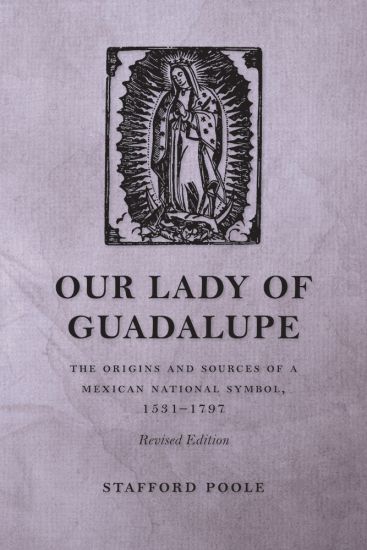
For decades, Stafford Poole has stood at the forefront of scholarship on the historicity of the Virgin of Guadalupe, an icon that serves as one of the most important formative religious and national symbols in the history of Mexico. Poole’s groundbreaking first edition of Our Lady of Guadalupe was the first ever to examine in depth every historical source of the Guadalupe apparitions. In this revised edition, Poole employs additional sources and commentary to further challenge common interpretations and assumptions about the Guadalupan tradition.
The Story of Guadalupe

The Story of Guadalupe

Lisa Sousa; Stafford Poole; James Lockhart

Stanford University Press
1998
sidottu
The devotion to Our Lady of Guadalupe is one of the most important elements in the development of a specifically Mexican tradition of religion and nationality over the centuries. The picture of the Virgen morena (Dark Virgin) is to be found everywhere throughout Mexico, and her iconography is varied almost beyond telling. Though innumerable books, both historical and devotional, have been published on the Guadalupan legend in this century alone, it is only recently that its textual sources have been closely studied. This volume makes available to the English-reading public an easily accessible translation from the original Nahuatl of the story itself and the entire book in which the story is embedded. The study also provides scholars with new perspectives on a text long at the center of Mexican intellectual currents. Through the use of technical philological methods, it indicates that the text may have been authored in the mid-seventeenth century by a Spanish-Mexican priest, based on an earlier text by a colleague of his, and that it was not the product of Nahuatl oral tradition. The story of the apparition of the Virgin of Guadalupe to a poor indigenous man less than fifteen years after the Spanish conquest of Mexico did not come into prominence until the mid-seventeeth century. The first known telling of the tale appeared in a book published in Spanish in 1648 by the priest Miguel Sánchez. On the heels of the Sánchez version, the story was included in the book Huei tlamahuiçoltica published in 1649 by Luis Laso de la Vega, the vicar of the Guadalupe chapel and a friend of Sánchez. It had little impact initially, but by the twentieth century, with indigenism triumphant, it had become the best known version. There have been a few translations of Laso de la Vega's apparition story into English but only on a popular or devotional level. The present edition offers a translation and transcription of the complete text of the 1649 edition, together with critical apparatus, including comparisons of the Sánchez and Laso de la Vega texts, and various linguistic, orthographic, and typographical matters that throw light on the date and manner of composition.
The Story of Guadalupe

The Story of Guadalupe

Lisa Sousa; Stafford Poole; James Lockhart

Stanford University Press
1998
pokkari
The devotion to Our Lady of Guadalupe is one of the most important elements in the development of a specifically Mexican tradition of religion and nationality over the centuries. The picture of the Virgen morena (Dark Virgin) is to be found everywhere throughout Mexico, and her iconography is varied almost beyond telling. Though innumerable books, both historical and devotional, have been published on the Guadalupan legend in this century alone, it is only recently that its textual sources have been closely studied. This volume makes available to the English-reading public an easily accessible translation from the original Nahuatl of the story itself and the entire book in which the story is embedded. The study also provides scholars with new perspectives on a text long at the center of Mexican intellectual currents. Through the use of technical philological methods, it indicates that the text may have been authored in the mid-seventeenth century by a Spanish-Mexican priest, based on an earlier text by a colleague of his, and that it was not the product of Nahuatl oral tradition. The story of the apparition of the Virgin of Guadalupe to a poor indigenous man less than fifteen years after the Spanish conquest of Mexico did not come into prominence until the mid-seventeeth century. The first known telling of the tale appeared in a book published in Spanish in 1648 by the priest Miguel Sánchez. On the heels of the Sánchez version, the story was included in the book Huei tlamahuiçoltica published in 1649 by Luis Laso de la Vega, the vicar of the Guadalupe chapel and a friend of Sánchez. It had little impact initially, but by the twentieth century, with indigenism triumphant, it had become the best known version. There have been a few translations of Laso de la Vega's apparition story into English but only on a popular or devotional level. The present edition offers a translation and transcription of the complete text of the 1649 edition, together with critical apparatus, including comparisons of the Sánchez and Laso de la Vega texts, and various linguistic, orthographic, and typographical matters that throw light on the date and manner of composition.
Stafford Cripps' Mission to Moscow, 1940–42

Stafford Cripps' Mission to Moscow, 1940–42

Gabriel Gorodetsky

Cambridge University Press
2002
pokkari
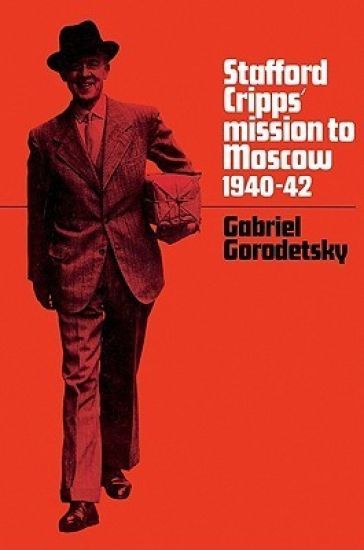
This book offers a lively revisionist account of a crucial phase in the life of Stafford Cripps: his meteoric rise from the radical fringe of Parliament on the eve of the war to membership of the War Cabinet in 1942. Cripps’ ambassadorship to Moscow was of prime importance in view of the dramatic events during this period - the German conquest of Europe, Britain’s struggle for survival and Russia’s transformation from neutral to belligerent. Dr Gorodetsky assesses how Britain adapted to react to the changing circumstances and examines the recurrent controversy between Cripps and Churchill over Anglo-Soviet relations. New perspectives are opened on related issues such as the role of the civil service in policymaking, the British and Soviet appreciations of and reactions to intelligence on the planned German invasion of the Soviet Union and the origins of the controversies over assistance to Russia, the launching of the Second Front and the frontier issues.
Stafford County, Virginia Land Tax Lists, 1782-1805
This book contains a reproduction of the land tax lists for Stafford County for the years 1782 through 1805. It has been created by use of online copies at Familysearch.org and microfilm and original copies at the Library of Virginia. Data are presented in sequence as found on the microfilm, including small numbers in pencil at the bottom of each pair of pages. After filming, these small numbers were changed from one continual sequence to pagination per individual list. From 1782, one will find two lists per year, which later typically represent two districts in the county. The earliest list in Stafford contains the name of the proprietors of the land (as the person taxed), the number of acres owned, the rate of value from which taxation was calculated, and the total tax assessed. For the years 1784 through 1786 only alterations were made to the 1783 and subsequent lists. The next list of alterations in Stafford is in 1792. A similar list of changes, called Alienations, is typically found for at least one of the districts up to 1805.Recordkeepers often made notations to distinguish multiple persons with the same name. Entries for the same owner through the years may shift to including "Estate" or "Est." to indicate a recent death of the owner, and remain on the list until the estate is settled. Many entries show the source of acquisition of the land, i.e., "Wm. Wright, for R.W. Carter," doesn't mean that Wright represents Carter, rather, Wright is now taxed in lieu of and acquired of Carter. Think of "for" being used as "from." For genealogical researchers, land tax records may help distinguish between individuals by the same name living in a locality at the same time. Land ownership may be tracked between family members. Some references, notations and estate divisions may be found here when not readily located in deed books.2020, 81/2x11, paper, index, 440 pp
Stafford Cripps in Moscow, 1940-1942

Stafford Cripps in Moscow, 1940-1942

Gabriel Gorodetsky

Vallentine Mitchell Co Ltd
2007
nidottu
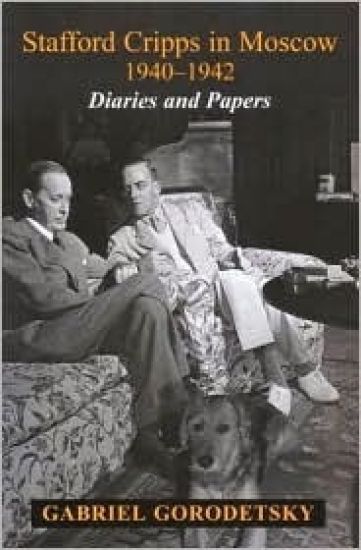
Sir Stafford Cripps, a country gentleman, ascetic, vegetarian and a devout Christian with a lucrative career at the bar, cut an incongruous figure in British politics of the 1930s. By the time war broke out, his position among Labour's most radical backbenchers had made him an outcast. It was his fortuitous appointment as ambassador to Moscow in 1940 which secured for him a prominent position in the War Cabinet and later on a key role in Attlee's Labour government. The diary, which he meticulously kept while in Moscow, describes the metamorphosis in his political fortune. As significant is the witness he bears to the dramatic turnabouts of the war: the German-Soviet collaboration following the Ribbentrop-Molotov Pact, the perfidious German invasion of Russia on 22 June 1941, and the emergence of the Grand Alliance. The diary offers candid glimpses of diplomatic life in Moscow and of the Kremlin on the eve of the war and reflects the sombre mood in the following months as the Wehrmacht reached the gates of Moscow.On the political front, Cripps' diary reveals the controversy surrounding the forging and nature of the Grand Alliance, which was deliberately glossed over in the memoirs of Winston Churchill. A sharp critic of Churchill's political vision, Cripps foresaw the emergence of a conflict between the Allies which he hoped to avert by devising a common strategy, and by formulating clear and perceptive guidelines for the post-war settlement.
Stafford Family.

Stafford Family.

Charles L. Stafford

Hassell Street Press
2023
sidottu
In this book, Charles L. Stafford provides a comprehensive history of the Stafford family, tracing its roots back to England in the 1600s and following its descendants as they settled in America and made their mark on the country's history. The book includes detailed genealogical information as well as stories of notable Stafford family members. The Stafford Family is an essential resource for anyone interested in genealogy or American history.This work has been selected by scholars as being culturally important, and is part of the knowledge base of civilization as we know it.This work is in the "public domain in the United States of America, and possibly other nations. Within the United States, you may freely copy and distribute this work, as no entity (individual or corporate) has a copyright on the body of the work.Scholars believe, and we concur, that this work is important enough to be preserved, reproduced, and made generally available to the public. We appreciate your support of the preservation process, and thank you for being an important part of keeping this knowledge alive and relevant.
Stafford in Olden Times

Stafford in Olden Times

John Law Cherry

British Library, Historical Print Editions
2011
pokkari
Title: Stafford in Olden Times: being a reprint of articles published in "The Staffordshire Advertiser," with illustrations, etc.Publisher: British Library, Historical Print EditionsThe British Library is the national library of the United Kingdom. It is one of the world's largest research libraries holding over 150 million items in all known languages and formats: books, journals, newspapers, sound recordings, patents, maps, stamps, prints and much more. Its collections include around 14 million books, along with substantial additional collections of manuscripts and historical items dating back as far as 300 BC.The GENERAL HISTORICAL collection includes books from the British Library digitised by Microsoft. This varied collection includes material that gives readers a 19th century view of the world. Topics include health, education, economics, agriculture, environment, technology, culture, politics, labour and industry, mining, penal policy, and social order. ++++The below data was compiled from various identification fields in the bibliographic record of this title. This data is provided as an additional tool in helping to insure edition identification: ++++ British Library Cherry, John Law; 1890. ix. 152 p.; 8 . 010358.1.40.