Kirjojen hintavertailu. Mukana 11 627 463 kirjaa ja 12 kauppaa.

Kirjahaku

Etsi kirjoja tekijän nimen, kirjan nimen tai ISBN:n perusteella.

1000 tulosta hakusanalla Stanley G. Robertson; Derrick B. Wells

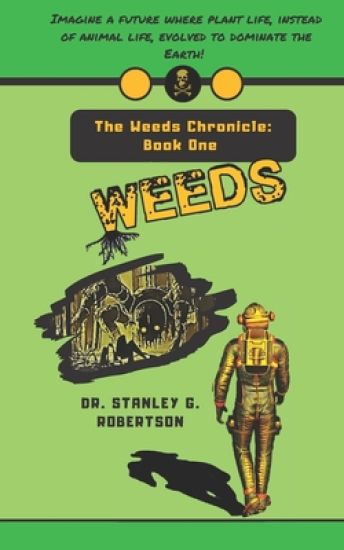
Weeds: The Novel

Weeds: The Novel

Stanley G. Robertson

Independently Published
2019
nidottu
Weeds were illegal They had evolved. Their genetic composition changed over generations and they mutated into a new, more complex species. Every plant was considered a weed including trees, shrubs, herbs, grasses, fruits, vegetables and any living organism that absorbed water through it roots. Weeds were barbaric and they ruled the Earth, relegating humans to small communities in domed colonies. Piper was a pruner and his job was to control the weeds. He was thrilled to eliminate any weeds and destroy the people who possessed them. The People App was used to collect information on colonists. Any person thought or known to have weeds received a NEGATIVE review on the People App. A NEGATIVE review was a violation of the law and Piper handled lawbreakers with maximum prejudice.But what happens when he, himself, is caught with a plant, society's most deadly threat? WEEDS is a science fiction novel set in a dystopian future, perfect for fans of Ray Bradbury, George Orwell, Philip K. Dick and John Collier.
Weeds: A Short Story

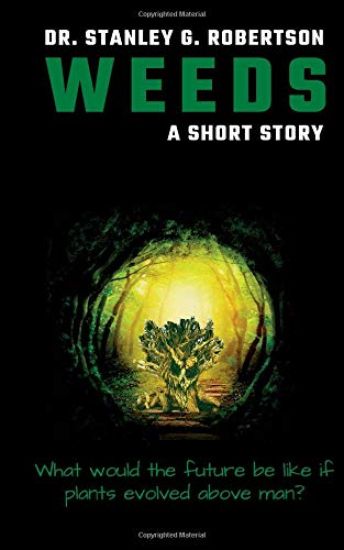
Weeds: A Short Story

Stanley G. Robertson

Createspace Independent Publishing Platform
2018
nidottu
Imagine a future where plant life, instead of animal life, evolved to dominate the Earth.Plants are illegal. Piper is a Pruner. His job is to destroy the plants and the people that harbor them. But what happens when he, himself, is caught with a plant, society's most deadly threat?
The Love Story of Mumal and Mahendra: A Short Story

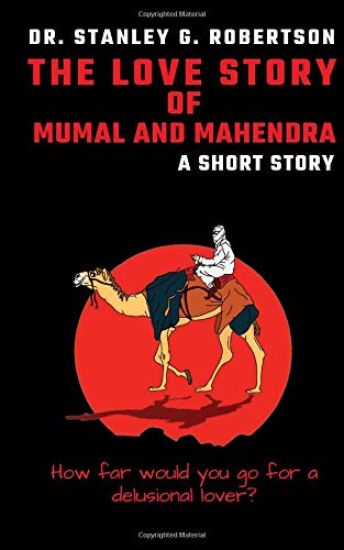
The Love Story of Mumal and Mahendra: A Short Story

Dr Stanley G. Robertson

Createspace Independent Publishing Platform
2018
nidottu
Mumal might be delusional. She is in love with Mahendra, but their love is doomed because she believes they are the reincarnation of two star-crossed lovers whose lives ended in tragedy. Will they find happiness together, or will they meet the same destiny as the ill-fated lovers from the past?
Skinflint's Last Stand: A Short Story

Skinflint's Last Stand: A Short Story

Dr Stanley G. Robertson

Createspace Independent Publishing Platform
2018
nidottu
Skinflint was so miserly that he would boil a neck bone to make stew and then boil it again so as not to waste the aroma. His miserly ways and unscrupulous business practices made him a very lonely man indeed; that is, until he learned a valuable lesson from the most unlikely of characters, a red squirrel.
The Moral Life of Baby: A Short Story

The Moral Life of Baby: A Short Story

Dr Stanley G. Robertson

Createspace Independent Publishing Platform
2018
nidottu
When it was time to be born, Baby refused; arguing that they were being born just to die, and that it makes no sense to come and to go. His twin argued that it is better to be born and die than to not be born at all. But what if humans had the best of both worlds; to be born and to live forever?
Biocatalysts for Fine Chemicals Synthesis

Biocatalysts for Fine Chemicals Synthesis

Stanley M. Roberts; G. Casy

John Wiley Sons
1999
sidottu
From 1992–1997 Preparative Biotransformations was published in loose-leaf format. During this time detailed protocols on the use and handling of cells and enzymes in organic synthesis were collected. Biocatalysts for Fine Chemicals Synthesis*A collection of procedures originally published in the looseleaf publication, Preparative Biotransformations*Includes a state-of-the-art review by Professor S. M. Roberts not previously published*Contains fully tested and validated protocols*Step-by-step instructions for the expert and the inexperienced chemistReplacing the very successful loose-leaf product, this invaluable set of protocols covers those areas where cells and enzymes have been proven to be useful catalysts. This volume is a key reference source for everybody starting in this area of synthesis.
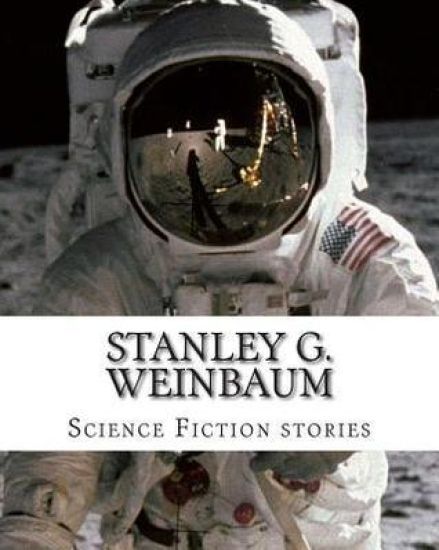
Stanley G. Weinbaum, Science Fiction stories

Stanley G. Weinbaum, Science Fiction stories

Stanley G. Weinbaum

Createspace Independent Publishing Platform
2014
nidottu
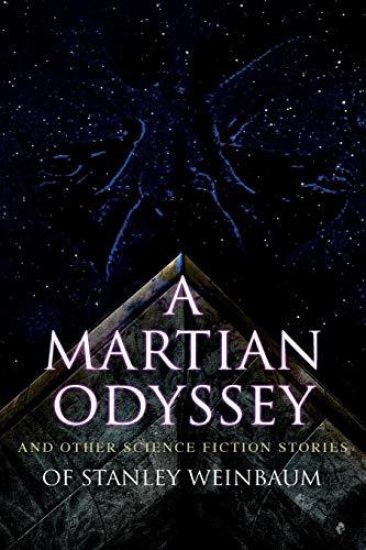
Stanley Grauman Weinbaum (April 4, 1902 - December 14, 1935) was an American science fiction author. His career in science fiction was short but influential. His first story, "A Martian Odyssey", was published to great (and enduring) acclaim in July 1934, but he would be dead from lung cancer within eighteen months. In this book: A Martian Odyssey Parasite Planet The Lotus Eaters The Circle of Zero Proteus Island The Adaptive Ultimate The Brink of Infinity The Mad Moon Tidal Moon Pygmalion's Spectacles The Ideal Valley of Dreams The Worlds of If The Point of View Shifting Seas Redemption Cairn Dawn of Flame
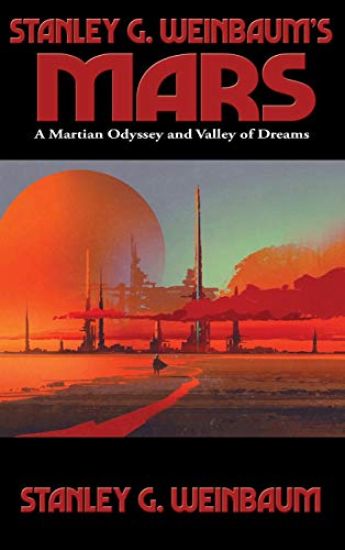
Stanley G. Weinbaum's Mars

Stanley G. Weinbaum's Mars

Stanley G Weinbaum

Positronic Publishing
2021
sidottu
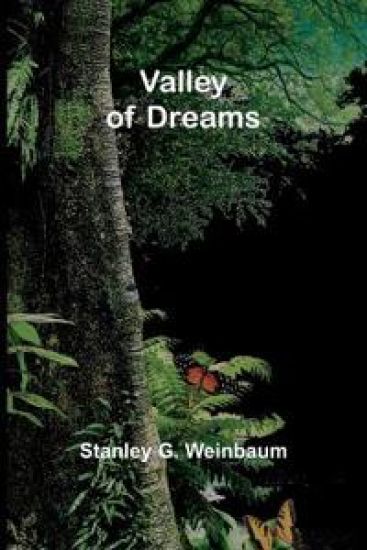
Collected in one binding are both of Stanley G. Weinbaum's Mars stories "A Martian Odyssey" and "Valley of Dreams." When "A Martian Odyssey" first appeared it took the science fiction world by storm. Four months later Weinbaum's virtuosity was once again on display with the sequel "Valley of Dreams" which picks up shortly after the events of the first story. Set on a Mars that never was. Dick Jarvis, one of the members of the first space ship to reach Mars sets out on a solo expedition to photograph the countryside. His Rocket's engine gives out 800 miles from the ship and he is forced to walk back. Accompanied by a Martian that he saved from certain death Jarvis must face one danger after another if he is to get back to his ship. "Valley of Dreams" is a hopeful story. Join Dick Jarvis and "Frenchy" Leroy as they explore an ancient Martian city and make unexpected discoveries.
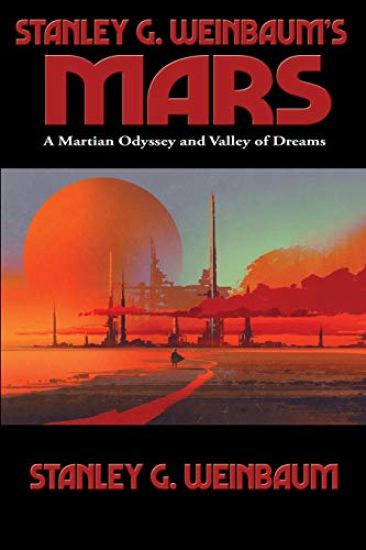
Stanley G. Weinbaum's Mars

Stanley G. Weinbaum's Mars

Stanley G Weinbaum

Positronic Publishing
2021
pokkari
Collected in one binding are both of Stanley G. Weinbaum's Mars stories "A Martian Odyssey" and "Valley of Dreams." When "A Martian Odyssey" first appeared it took the science fiction world by storm. Four months later Weinbaum's virtuosity was once again on display with the sequel "Valley of Dreams" which picks up shortly after the events of the first story. Set on a Mars that never was. Dick Jarvis, one of the members of the first space ship to reach Mars sets out on a solo expedition to photograph the countryside. His Rocket's engine gives out 800 miles from the ship and he is forced to walk back. Accompanied by a Martian that he saved from certain death Jarvis must face one danger after another if he is to get back to his ship. "Valley of Dreams" is a hopeful story. Join Dick Jarvis and "Frenchy" Leroy as they explore an ancient Martian city and make unexpected discoveries.
The Franco Regime, 1936-1975

The Franco Regime, 1936-1975

Stanley G. Payne

University of Wisconsin Press
2011
nidottu
The history of modern Spain is dominated by the figure of Francisco Franco, who presided over one of the longest authoritarian regimes of the twentieth century. Between 1936 and the end of the regime in 1975, Franco’s Spain passed through several distinct phases of political, institutional, and economic development, moving from the original semi-fascist regime of 1936–45 to become the Catholic corporatist “organic democracy” under the monarchy from 1945 to 1957. Distinguished historian Stanley G. Payne offers deep insight into the career of this complex and formidable figure and the enormous changes that shaped Spanish history during his regime.
Spain's First Democracy

Spain's First Democracy

Stanley G. Payne

University of Wisconsin Press
1993
nidottu
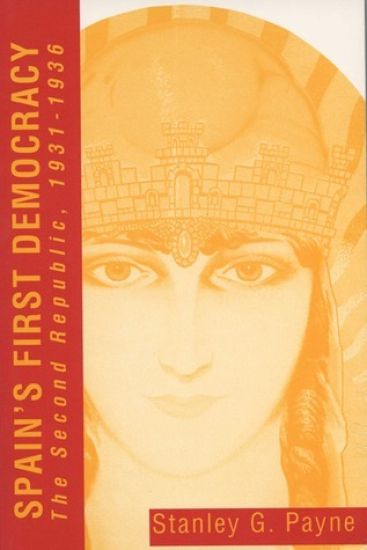
The significance of Spain's Second Republic has been largely overshadowed by the cataclysmic Civil War that immediately followed it. Stanley Payne brings his knowledge of Spanish history to bear on the five-year span of the Second Republic as an historic entity in its own right. In ""Spain's First Democracy"", he argues that the Republic was one of the major national attempts at political democratisation and reform in Europe between the World Wars and represented the most important effort to swim against the tide during Europe's era of fascism. Payne's study places the Republic within the historical framework of Spanish liberalism and the rapid modernisation of inter-war Europe, which was unlike any other period in Spain's history. Payne discusses the Republicans' efforts to establish Spain's first democratic political systems and to institute major reforms within the Republic. In highlighting reforms in politics and government, education and culture, public works, military affairs, and society as a whole, he assesses the successes and failures of these reforms as well as the reasons for their limitations. He also examines the economic and foreign policy issues of the period. Focusing particularly on political conflict and social cleavage, Payne explores the sources and character of the political polarisation that developed as a result of the assaults on the Republic from the Left and the Right. He identifies the main political actors in this schism and their role in the eventual breakdown of the Republic. Tracing the progressive collapse of the Republican polity in the first half of 1936, Payne stresses the importance of political violence in the democracy's downfall. In restoring perspectives that have been ignored or bypassed, Payne aims to present a consistent and detailed interpretation of Spain's Second Republic, demonstrating its striking parallels to the Weimar Republic in Germany.
A History of Fascism, 1914?1945

A History of Fascism, 1914?1945

Stanley G. Payne

University of Wisconsin Press
1996
nidottu
“A History of Fascism is an invaluable sourcebook, offering a rare combination of detailed information and thoughtful analysis. It is a masterpiece of comparative history, for the comparisons enhance our understanding of each part of the whole. The term ‘fascist,’ used so freely these days as a pejorative epithet that has nearly lost its meaning, is precisely defined, carefully applied and skillfully explained. The analysis effectively restores the dimension of evil.”—Susan Zuccotti, The Nation“A magisterial, wholly accessible, engaging study. . . . Payne defines fascism as a form of ultranationalism espousing a myth of national rebirth and marked by extreme elitism, mobilization of the masses, exaltation of hierarchy and subordination, oppression of women and an embrace of violence and war as virtues.”—Publishers Weekly
Fascism in Spain, 1923-77

Fascism in Spain, 1923-77

Stanley G. Payne

University of Wisconsin Press
2000
nidottu
This study offers treatment of all the major doctrines, personalities and defining features of the Spanish fascist movement, from its beginnings until the death of General Francisco Franco in 1977. The author describes and analyzes the development of the Falangist party both prior to and during the Spanish Civil War, presenting a detailed analysis of its transformation into the state party of the Franco regime - Falange Espanola Tradicionalista - as well as its ultimate conversion into the psuedofascist Movimiento Nacional. Particular attention is devoted to the crucial years 1939-1942, when the Falangists endeavoured to expand their influence and convert the Franco regime into a fully Fascist system.