Kirjojen hintavertailu. Mukana 11 244 527 kirjaa ja 12 kauppaa.

Kirjahaku

Etsi kirjoja tekijän nimen, kirjan nimen tai ISBN:n perusteella.

1000 tulosta hakusanalla Stanley M. Cox

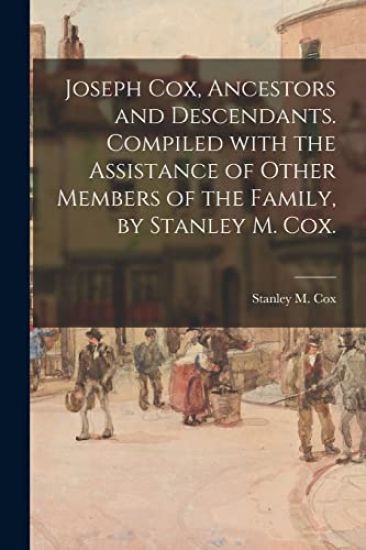
Joseph Cox, Ancestors and Descendants. Compiled With the Assistance of Other Members of the Family, by Stanley M. Cox.
Stanley M. Cox has compiled a comprehensive genealogy of the Cox family, tracing its roots and descendants across generations. This book is a must-read for anyone interested in genealogy or tracing their family history.This work has been selected by scholars as being culturally important, and is part of the knowledge base of civilization as we know it.This work is in the "public domain in the United States of America, and possibly other nations. Within the United States, you may freely copy and distribute this work, as no entity (individual or corporate) has a copyright on the body of the work.Scholars believe, and we concur, that this work is important enough to be preserved, reproduced, and made generally available to the public. We appreciate your support of the preservation process, and thank you for being an important part of keeping this knowledge alive and relevant.
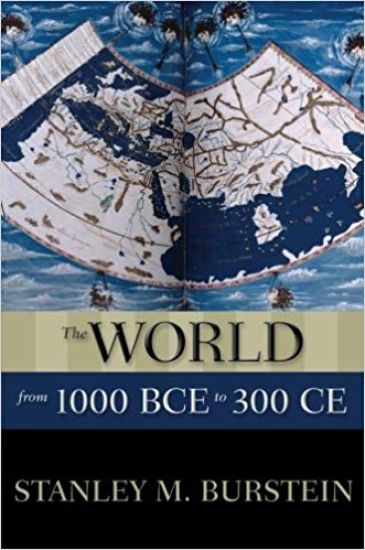
The World from 1000 BCE to 300 CE

The World from 1000 BCE to 300 CE

Stanley M. Burstein

Oxford University Press Inc
2017
nidottu
This book provides the first comprehensive history of Afro-Eurasia during the first millennium BCE and the beginning of the first millennium CE. The history of these 1300 plus years can be summed up in one word: connectivity. The growth in connectivity during this period was marked by increasing political, economic, and cultural interaction throughout the region, and the replacement of the numerous political and cultural entities by a handful of great empires at the end of the period. In the process, local cultural traditions were replaced by great traditions rooted in lingua francas and spread by formalized educational systems. This process began with the collapse of the Bronze Age empires in the east and west, widespread population movements, and almost chronic warfare throughout Afro-Eurasia, while the cavalry revolution transformed the nomads of the central Asian steppes into founders of tribal confederations assembled by charismatic leaders and covering huge territories. At the same time, new artistic and intellectual movements appeared, including the teachings of Socrates, Confucius, the Buddha, and Laozi. Increased literacy also allowed people from a wide range of social classes such as the Greek soldier Xenophon, the Indian Buddhist emperor Ashoka, the Roman emperor Marcus Aurelius, and elite women such as the poetess Sappho, the Christian martyr Perpetua, and the scholar Ban Zhao to create literary works. When the period ended in 300 CE, conditions had changed dramatically. Temperate Afro-Eurasia from the Atlantic to the Pacific was dominated by a handful of empires--Rome, Sassanid Persia, and Jin Empire-that ruled more than half the world's population, while an extensive network of trade routes bound them to Southeast and Central Asia and Sub-Saharan Africa and made possible the spread of new book based religions including Christianity, Manichaeism, Zoroastrianism, and Buddhism, thereby setting the stage for the next millennium of Afro-Eurasian history.
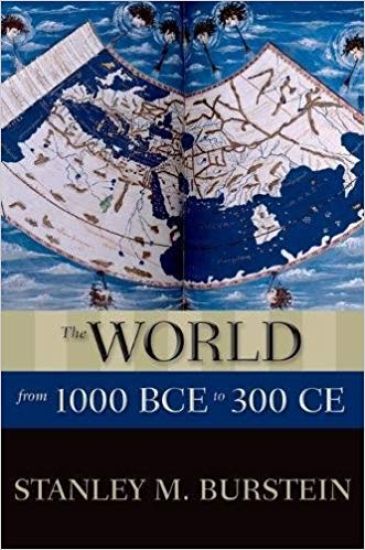
The World from 1000 BCE to 300 CE

The World from 1000 BCE to 300 CE

Stanley M. Burstein

Oxford University Press Inc
2017
sidottu
This book provides the first comprehensive history of Afro-Eurasia during the first millennium BCE and the beginning of the first millennium CE. The history of these 1300 plus years can be summed up in one word: connectivity. The growth in connectivity during this period was marked by increasing political, economic, and cultural interaction throughout the region, and the replacement of the numerous political and cultural entities by a handful of great empires at the end of the period. In the process, local cultural traditions were replaced by great traditions rooted in lingua francas and spread by formalized educational systems. This process began with the collapse of the Bronze Age empires in the east and west, widespread population movements, and almost chronic warfare throughout Afro-Eurasia, while the cavalry revolution transformed the nomads of the central Asian steppes into founders of tribal confederations assembled by charismatic leaders and covering huge territories. At the same time, new artistic and intellectual movements appeared, including the teachings of Socrates, Confucius, the Buddha, and Laozi. Increased literacy also allowed people from a wide range of social classes such as the Greek soldier Xenophon, the Indian Buddhist emperor Ashoka, the Roman emperor Marcus Aurelius, and elite women such as the poetess Sappho, the Christian martyr Perpetua, and the scholar Ban Zhao to create literary works. When the period ended in 300 CE, conditions had changed dramatically. Temperate Afro-Eurasia from the Atlantic to the Pacific was dominated by a handful of empires--Rome, Sassanid Persia, and Jin Empire-that ruled more than half the world's population, while an extensive network of trade routes bound them to Southeast and Central Asia and Sub-Saharan Africa and made possible the spread of new book based religions including Christianity, Manichaeism, Zoroastrianism, and Buddhism, thereby setting the stage for the next millennium of Afro-Eurasian history.
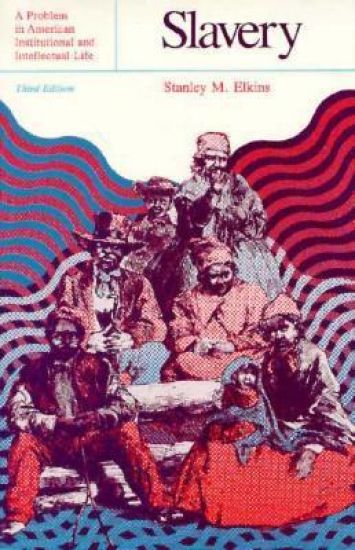
Slavery

Slavery

Stanley M. Elkins

University of Chicago Press
1976
nidottu
American slavery is viewed from historical, sociological, and psychological perspectives in a study which reflects the continuing scholarly interest in the institution
To the End of the Earth

To the End of the Earth

Stanley M. Hordes

Columbia University Press
2005
sidottu
In 1981, while working as New Mexico State Historian, Stanley M. Hordes began to hear stories of Hispanos who lit candles on Friday night and abstained from eating pork. Puzzling over the matter, Hordes realized that these practices might very well have been passed down through the centuries from early crypto-Jewish settlers in New Spain. After extensive research and hundreds of interviews, Hordes concluded that there was, in New Mexico and the Southwest, a Sephardic legacy derived from the converso community of Spanish Jews. In To the End of the Earth, Hordes explores the remarkable story of crypto-Jews and the tenuous preservation of Jewish rituals and traditions in Mexico and New Mexico over the past five hundred years. He follows the crypto-Jews from their Jewish origins in medieval Spain and Portugal to their efforts to escape persecution by migrating to the New World and settling in the far reaches of the northern Mexican frontier. Drawing on individual biographies (including those of colonial officials accused of secretly practicing Judaism), family histories, Inquisition records, letters, and other primary sources, Hordes provides a richly detailed account of the economic, social and religious lives of crypto-Jews during the colonial period and after the annexation of New Mexico by the United States in 1846. While the American government offered more religious freedom than had the Spanish colonial rulers, cultural assimilation into Anglo-American society weakened many elements of the crypto-Jewish tradition. Hordes concludes with a discussion of the reemergence of crypto-Jewish culture and the reclamation of Jewish ancestry within the Hispano community in the late twentieth century. He examines the publicity surrounding the rediscovery of the crypto-Jewish community and explores the challenges inherent in a study that attempts to reconstruct the history of a people who tried to leave no documentary record.
To the End of the Earth

To the End of the Earth

Stanley M. Hordes

Columbia University Press
2008
pokkari
In 1981, while working as New Mexico State Historian, Stanley M. Hordes began to hear stories of Hispanos who lit candles on Friday night and abstained from eating pork. Puzzling over the matter, Hordes realized that these practices might very well have been passed down through the centuries from early crypto-Jewish settlers in New Spain. After extensive research and hundreds of interviews, Hordes concluded that there was, in New Mexico and the Southwest, a Sephardic legacy derived from the converso community of Spanish Jews. In To the End of the Earth, Hordes explores the remarkable story of crypto-Jews and the tenuous preservation of Jewish rituals and traditions in Mexico and New Mexico over the past five hundred years. He follows the crypto-Jews from their Jewish origins in medieval Spain and Portugal to their efforts to escape persecution by migrating to the New World and settling in the far reaches of the northern Mexican frontier. Drawing on individual biographies (including those of colonial officials accused of secretly practicing Judaism), family histories, Inquisition records, letters, and other primary sources, Hordes provides a richly detailed account of the economic, social and religious lives of crypto-Jews during the colonial period and after the annexation of New Mexico by the United States in 1846. While the American government offered more religious freedom than had the Spanish colonial rulers, cultural assimilation into Anglo-American society weakened many elements of the crypto-Jewish tradition. Hordes concludes with a discussion of the reemergence of crypto-Jewish culture and the reclamation of Jewish ancestry within the Hispano community in the late twentieth century. He examines the publicity surrounding the rediscovery of the crypto-Jewish community and explores the challenges inherent in a study that attempts to reconstruct the history of a people who tried to leave no documentary record.
Modern Control System Theory and Design

Modern Control System Theory and Design

Stanley M. Shinners

John Wiley Sons Inc
1998
sidottu
The definitive guide to control system design Modern Control System Theory and Design, Second Edition offers the most comprehensive treatment of control systems available today. Its unique text/software combination integrates classical and modern control system theories, while promoting an interactive, computer-based approach to design solutions. The sheer volume of practical examples, as well as the hundreds of illustrations of control systems from all engineering fields, make this volume accessible to students and indispensable for professional engineers. This fully updated Second Edition features a new chapter on modern control system design, including state-space design techniques, Ackermann's formula for pole placement, estimation, robust control, and the H method for control system design. Other notable additions to this edition are: *Free MATLAB software containing problem solutions, which can be retrieved from The Mathworks, Inc., anonymous FTP server at ftp://ftp.mathworks.com/pub/books/shinners *Programs and tutorials on the use of MATLAB incorporated directly into the text *A complete set of working digital computer programs *Reviews of commercial software packages for control system analysis *An extensive set of new, worked-out, illustrative solutions added in dedicated sections at the end of chapters *Expanded end-of-chapter problems—one-third with answers to facilitate self-study *An updated solutions manual containing solutions to the remaining two-thirds of the problems Superbly organized and easy-to-use, Modern Control System Theory and Design, Second Edition is an ideal textbook for introductory courses in control systems and an excellent professional reference. Its interdisciplinary approach makes it invaluable for practicing engineers in electrical, mechanical, aeronautical, chemical, and nuclear engineering and related areas.
Advanced Modern Control System Theory and Design

Advanced Modern Control System Theory and Design

Stanley M. Shinners

John Wiley Sons Inc
1998
sidottu
The definitive guide toadvanced control system design Advanced Modern Control System Theory and Design offers the most comprehensive treatment of advanced control systems available today. Superbly organized and easy to use, this book is designed for an advanced course and is a companion volume to the introductory text, Modern Control System Theory and Design, Second Edition (or any other introductory book on control systems). In addition, it can serve as an excellent text for practicing control system engineers who need to learn more advanced control systems techniques in order to perform their tasks. Advanced Modern Control Systems Theory and Design briefly reviews introductory control system analysis concepts and then presents the methods for designing linear control sys-tems using single-degree and two-degrees-of-freedom compensation techniques. The very important subjects of modern control system design using state-space, pole placement, Ackermann's formula, estimation, robust control, and H8 techniques are then presented. The following crucial subjects are then covered in the presentation: *Digital Control System Analysis and Design—extends the continuous concepts presented to discrete systems *Nonlinear Control System Design—extends the linear concepts presented tononlinear systems *Introduction to Optimal Control Theory and Its Applications—presents such key topics as dynamic programming and the maximum principle, as well as applications to the space attitude control problem and the lunar soft-landing problem *Control System Design Examples: Complete Case Studies—presents the complete case studies of five control system design examples that illustrate practical design projects Other notable features of this volume are: *Free MATLAB software containing problem solutions which can be retrieved from the Mathworks, Inc. anonymous FTP server at ftp://ftp.mathworks.com/pub/books/advshinners *MATLAB programs and a tutorial on the use of MATLAB incorporated directly into the text *An extensive set of worked-out, illustrative solutions added in dedicated sections at the end of chapters *End-of-chapter problems—one-third with answers to facilitate self-study *A solutions manual containing solutions to the remaining two-thirds of the problems
Biocatalysts for Fine Chemicals Synthesis

Biocatalysts for Fine Chemicals Synthesis

Stanley M. Roberts; G. Casy

John Wiley Sons
1999
sidottu
From 1992–1997 Preparative Biotransformations was published in loose-leaf format. During this time detailed protocols on the use and handling of cells and enzymes in organic synthesis were collected. Biocatalysts for Fine Chemicals Synthesis*A collection of procedures originally published in the looseleaf publication, Preparative Biotransformations*Includes a state-of-the-art review by Professor S. M. Roberts not previously published*Contains fully tested and validated protocols*Step-by-step instructions for the expert and the inexperienced chemistReplacing the very successful loose-leaf product, this invaluable set of protocols covers those areas where cells and enzymes have been proven to be useful catalysts. This volume is a key reference source for everybody starting in this area of synthesis.
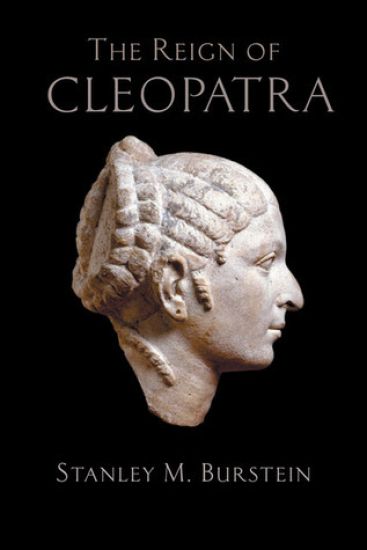
The Reign of Cleopatra

The Reign of Cleopatra

Stanley M. Burstein

University of Oklahoma Press
2007
nidottu
An engaging, accessible biography of the legendary Egyptian queen, with source documentsAmbitious, intelligent, and desired by powerful men, Cleopatra VII came to power at a time when Roman and Egyptian interests increasingly concerned the same object: Egypt itself. Cleopatra lived and reigned at the center of this complex and persistent power struggle. Her legacy has since lost much of its former political significance, as she has come to symbolize instead the potent force of female sexuality and power.In this engaging and multifaceted account, Stanley M. Burstein displays Cleopatra in the full manifold brilliance of the multiple cultures, countries, and people that surrounded her throughout her compelling life, and in so doing develops a stunning picture of a legendary queen and a deeply historic reign. Designed as an accessible introduction to Cleopatra VII and her time, The Reign of Cleopatra offers readers and researchers an appealing mix of descriptive chapters, biographical sketches, and annotated primary documents. The narrative chapters conclude with a discussion of Cleopatra's significance as a person, a queen, and a symbol. A glossary and annotated bibliography round out the volume.
The Life of Religion

The Life of Religion

Stanley M. Harrison; Richard C. Taylor

University Press of America
1986
sidottu
A collection of five essays in which the religious experiences and activities of individuals, communities, and cultures are seen as preeminently rational responses to reality. Of interest to students and scholars of technology and philosophy.
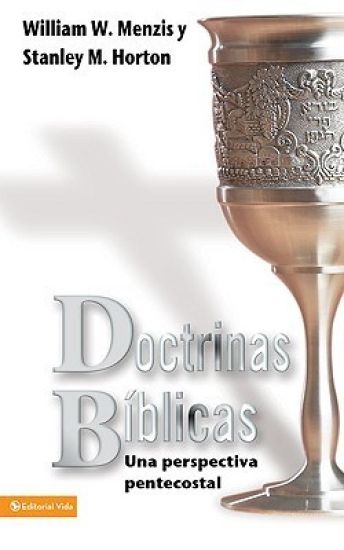
Doctrinas Biblicas Perspectiva Pentecostal

Doctrinas Biblicas Perspectiva Pentecostal

Stanley M. Horton; William W. Menzies

Vida Publishers
1996
nidottu
Spanish Edition. What is false and what is true today? Based on 16 fundamental truths of the Bible, this study offers you an opportunity for growth and stability in the faith. It will help you discern who is for Christ and who is not by the message they bring.
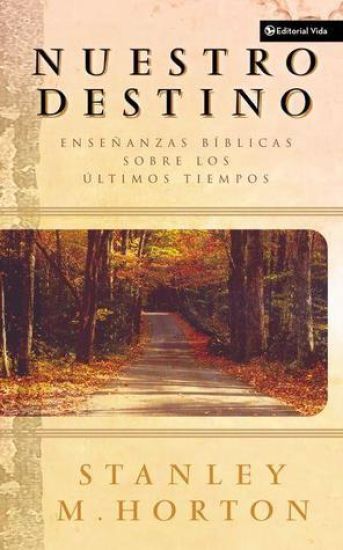
Nuestro Destino

Nuestro Destino

Stanley M Horton

Vida Publishers
2005
pokkari
Our DestinyBiblical teachings on the last things. You'll discover what's in store for God's people and the answers to many other important questions in this eye-opening book by Dr. Horton. You'll discover the glorious events Christians have to look forward to. You'll also come to an even greater understanding of the sobering and fearfully chilling future that awaits those who refuse the gift of salvation. Among other subjects, you'll learn about Death and the Intermediate State, Resurrection and Rapture, The Final State of the Wicked and the Final State of the Righteous.