El segundo de la serie, Jimmy Collins. Jimmy se deja a una embarazada Jeanette. De pie en la plataforma carente. l piensa que ella se ha ido para siempre. Jeanette nunca est lejos. Su verdadera aventura comienza en Berl n. Va a sobrevivir y Jeanette reclamar su hombre
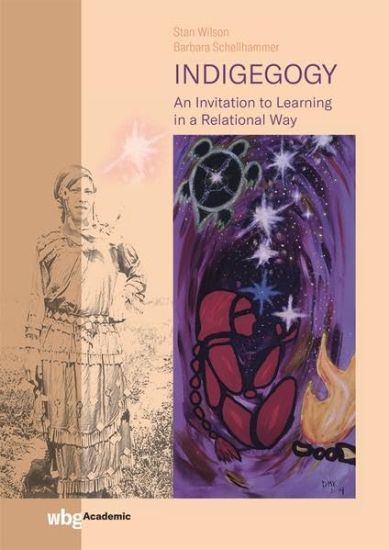
Indigegogy stands for "Indigenous Pedagogy". Yet it is a placeholder signifying the importance of culturally sensitive concepts of teaching and learning. The term is coined by the Opaskwayak Cree Elder and retired Professor Stan Wilson. Having gone through a pedagogical system that strategically set out to kill the "Indian in the child", he invited not only his co-author Barbara Schellhammer, but every reader of this book into a journey of relational learning. His personal life story combined with significant pedagogical insights is the starting point for a process of weaving two world-views together modeling how to be relational, how to live relationality. What Stan is showing his readers is crucial - not just for Canada with its colonial past, but also for countries like Germany which are challenged to offer educational programs for people with diverse cultural backgrounds. Indigegogy unfolds Indigenous concepts by practicing them - concepts that are important not just for educators.
Before technology, cell phones, and the internet stole our attention away from the simpler things in life, kids spent their days outside, running around, hanging out with friends, and playing ball. Kids would end up in one person's yard, field, or pasture, and pick up a game using whatever was available for bats, balls, and bases.The shrill of laughter, raised voices, and excitement would echo throughout the neighborhood. Kids just being themselves and hoping-dreaming-of what was to come. A time when it was okay to kick back, participate in a leisurely game... and just be.Baseball. America's past time for a reason. A simple game of runs and hits. Of strikeouts and swings. Of statistics and averages. Of laughter, fun, camaraderie, and friendship.Such was the case in Stanley, Virginia, a sleepy mountain town a hundred miles from our nation's capital, in the summer days of 1955 and 1956, when the local kids gathered together and formed a baseball league of their own to pass the time. Not just that, but they kept diligent notes and records of each players' statistics - runs, hits, errors, strikeouts. A simple enough task, but one that-over sixty years later-would land them in a place of history and lore: as a part of the Baseball Hall of Fame.In this true-life story, journey along with the kids from the Stanley Sandlot, sliding down memory lane, and learning of their passion for the game of baseball and how it influenced their lives.
The 'Occult Trilogy' is the collective label applied to Colin Wilson's three major works on the occult: The Occult (1971); Mysteries: an Investigation into the Occult, the Paranormal and the Supernatural (1978) and Beyond the Occult (1988). They amounted to a monumental 1600 pages and have spawned many other lesser works.
This first volume of a biography that covers the years 1902-1912, which include Wilson's presidency of Princeton, his governorship of New Jersey, and his election to the Presidency. It seeks to get at the reasons behind his actions in this critical period. Originally published in 1947. The Princeton Legacy Library uses the latest print-on-demand technology to again make available previously out-of-print books from the distinguished backlist of Princeton University Press. These editions preserve the original texts of these important books while presenting them in durable paperback and hardcover editions. The goal of the Princeton Legacy Library is to vastly increase access to the rich scholarly heritage found in the thousands of books published by Princeton University Press since its founding in 1905.
Woodrow Wilson was swept into the White House on the basis of a program characterized by the words "The New Freedom." The exciting story of his attempts to put this program into effect, in spite of a sometimes recalcitrant congress, makes up the body of this book, the second volume in Professor Link's monumental biography of Wilson. Covering the first two years of his presidency and concentrating on domestic issues, Professor Link shows Wilson meeting the complex demands of his new office, selecting his cabinet, paying political debts, organizing congressional support, seeking the approval of the public. Wilson was deeply committed to the reform program, and in the fight to put it into effect the personalities of the Wilson circle and its opponents appear vividly. The picture of Wilson as an astute politician adapting and shaping the forces around him is especially revealing in view of the popular stereotype of Wilson as an impractical, uncompromising idealist. The book also describes the Mexican intervention and the beginnings of the New Freedom diplomacy in Latin American affairs, taking the reader up to the brink of World War I. It is a worthy sequel to the famous first volume, Wilson: The Road to the White House, and will leave its readers eager for the next volume on the problems of neutrality. Originally published in 1956. The Princeton Legacy Library uses the latest print-on-demand technology to again make available previously out-of-print books from the distinguished backlist of Princeton University Press. These editions preserve the original texts of these important books while presenting them in durable paperback and hardcover editions. The goal of the Princeton Legacy Library is to vastly increase access to the rich scholarly heritage found in the thousands of books published by Princeton University Press since its founding in 1905.
Critics have called the two prior volumes in this life of Woodrow Wilson "a model of political biography" (Arthur M. Schlesinger, Jr.), and "a capital piece of work, critical and judicious" (Henry Steele Commager). In this third volume Arthur Link covers the period between the immediate background of World War I and the not, to Great Britain of October 21, 1915, marking the end of Wilson's fight to lay solid foundations for American neutrality. Volume 3 also adds new material on American involvement in Mexico, the Caribbean and the Far East. A less stern picture of Wilson emerges-the picture of man struggling patiently and cautiously to avoid entanglement in the European war, work out a reasonable adjustment to British sea power, and meet the German challenge of submarine warfare in a mod rate restrained manner. Originally published in 1960. The Princeton Legacy Library uses the latest print-on-demand technology to again make available previously out-of-print books from the distinguished backlist of Princeton University Press. These editions preserve the original texts of these important books while presenting them in durable paperback and hardcover editions. The goal of the Princeton Legacy Library is to vastly increase access to the rich scholarly heritage found in the thousands of books published by Princeton University Press since its founding in 1905.