Kirjojen hintavertailu. Mukana 11 244 527 kirjaa ja 12 kauppaa.

Kirjahaku

Etsi kirjoja tekijän nimen, kirjan nimen tai ISBN:n perusteella.

1000 tulosta hakusanalla Stefan Holander

Wallace Stevens and the Realities of Poetic Language
This study examines Wallace Stevens' ideas and practice of poetic language with a focus on the 1930s, an era in which Stevens persistently thematized a keenly felt pressure for the possible social involvement and political utility of poetic language. The argument suggests how mutually implicated elements of his poetry such as diction, prosody and metaphor are relied on to signify or enact aesthetic closure; both in the negative terms of expressive impotence and unethical isolation and the positive ones of imaginative and linguistic change. In this respect, the study deals closely with the epistemologically and ethically fraught issue of the ambiguous and volatile role of non-semantic elements and linguistic difficulty in Stevens' language. Assuming that these facets are not exclusive to this period but receive a very clear, and therefore instructive, formulation in it, the discussion outlines some of Stevens' most central tropes for poetic creativity at this stage of his career, suggesting ways in which they came to form part of his later discourse on poetic functionality, when polemical concepts for the imagination, such as "evasion" and "escapism," became central. Stevens' prosody is discussed from within an eclectic analytical framework in which cumulative rhythmics is complemented by traditional metrics as a way of doing justice to his rich, varied and cognitively volatile use of verse language. The expressive potency of prosodic patterning is understood both as an effect of its resistance to semantic interpretation and by assuming a formal drive to interpret them in relation to the semantic and metaphoric staging of individual poems. A poem, in turn, is understood both as a strategic, stylistically deviant response to the challenges of a particular historical moment, and as an attempt to communicate through creating a sense of linguistic resistance and otherness.
Wallace Stevens and the Realities of Poetic Language
This study examines Wallace Stevens' ideas and practice of poetic language with a focus on the 1930s, an era in which Stevens persistently thematized a keenly felt pressure for the possible social involvement and political utility of poetic language. The argument suggests how mutually implicated elements of his poetry such as diction, prosody and metaphor are relied on to signify or enact aesthetic closure; both in the negative terms of expressive impotence and unethical isolation and the positive ones of imaginative and linguistic change. In this respect, the study deals closely with the epistemologically and ethically fraught issue of the ambiguous and volatile role of non-semantic elements and linguistic difficulty in Stevens' language. Assuming that these facets are not exclusive to this period but receive a very clear, and therefore instructive, formulation in it, the discussion outlines some of Stevens' most central tropes for poetic creativity at this stage of his career, suggesting ways in which they came to form part of his later discourse on poetic functionality, when polemical concepts for the imagination, such as "evasion" and "escapism," became central. Stevens' prosody is discussed from within an eclectic analytical framework in which cumulative rhythmics is complemented by traditional metrics as a way of doing justice to his rich, varied and cognitively volatile use of verse language. The expressive potency of prosodic patterning is understood both as an effect of its resistance to semantic interpretation and by assuming a formal drive to interpret them in relation to the semantic and metaphoric staging of individual poems. A poem, in turn, is understood both as a strategic, stylistically deviant response to the challenges of a particular historical moment, and as an attempt to communicate through creating a sense of linguistic resistance and otherness.
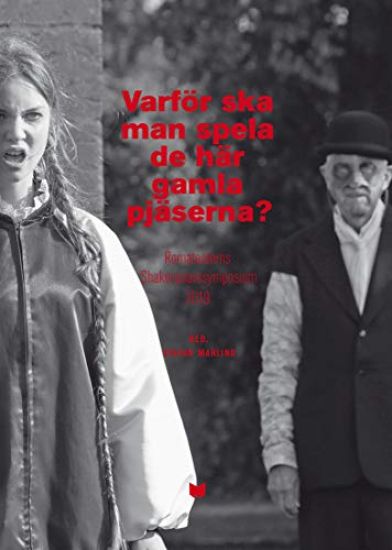
Varför ska man spela de här gamla pjäserna? : Romateaterns Shakespearesymposium 2019

Varför ska man spela de här gamla pjäserna? : Romateaterns Shakespearesymposium 2019

Stefan Marling; Mette Hildeman Sjölin; Stefan Böhm; Kent Hägglund; Ishrat Lindblad; Lotta Grut; Ola Wong; Karin Helander; Magnus Lindman; Martina Montelius; Kira von Knorring Nordmark; Mia Smith; Anna Hedelius

Makadam förlag
2020
nidottu
Romateatern på Gotland har i tre decennier, sedan starten 1989, spelat William Shakespeares pjäser för en bred publik i den natursköna klosterruinen i Roma, känd som en av Sveriges vackraste utomhusscener. Sommaren 2019 arrangerades teaterns femte symposium, med syftet att skapa en plattform för levande och berikande interdisciplinära samtal för alla som intresserar sig för och inspireras av Shakespeares texter. Temat för året var: Varför ska man spela de här gamla pjäserna? En inbjudan att ärligt, klarsynt och ur olika synvinklar undersöka vilken relevans Shakespeares och andra klassiska författares dramatik kan ha för vår föränderliga samtid. Scenkonstnärer, kritiker, debattörer och forskare från flera områden träffades under några dagar på Roma kungsgård och föreläste, diskuterade och samtalade. I denna antologi samlas ett urval av de medverkandes texter tillsammans med bilder från symposiet och den unika miljön kring klosterruinen.
Tillbaka till framtiden : barnkultur i dialog med vårt förflutna

Tillbaka till framtiden : barnkultur i dialog med vårt förflutna

Anette Andersson; Stefan Casta; Anna Götlind; Bengt Sandin; Eva Nordlinder; Sara Backman Prytz; Helena Hörnfeldt; Anna Wennergren; Björn Sjöblom; Karin Helander; Rickard Jonsson; Boel Westin

Centrum för barnkulturforskning
2017
nidottu
Redaktör: Catharina Hällström Boken är baserad på 2016 års barnkultursymposium vid Centrum för barnkulturforskning och belyser och diskuterar förhållandet mellan nu och då i barnkulturen. Forskare från olika discipliner, universitet och högskolor samt författare, regissörer och andra kulturskapare presenterade olika perspektiv på vila dåtida, nutida och framtida barnkultur ingår i ett ständigt pågående samtal. Ambitionen med symposiet var att olika tidsplan skulle korsas och mötas för att belysa ett barnkulturell dialog genom tid och rum. Medverkande föreläsare gav intrsseveckande exempel på hur ett sätt att titta framåt även är ett sätta att blicka bakåt, det vill säga barnkulturens tidslighet, rumslighet och rörlighet framkom tydligt. Innehållsförteckning - Under tiden. Om konsten att skriva vilse, Stefan Castas - Varifrån kommer barns rättigheter? - rättighetsdiskursernas politiska och sociala rötter i Sverige, Bengt Sandin - Arkivkurragömma med historiens flickor - ett genusperspektiv på barn- och ungdomshistoriska källor, Sara Backman Prytz - Klimathot, atombomber och meteorer. Barns rädslor nu och då, Helena Hörnfeldt - Spara spelet - Att bevara barns datorspelshistoria, Björn Sjöblom - Blandning, mångfald och nya influenser: samtal om de Andra när ingen är rasist, Rickard Jonsson - Konstprojekt om identitet och minnen - Dialoger med och utan ord, Anette Andersson och Anna Wennergren - Vargbröder. Människa idag - igår - Ett arkeologi- och litteraturpedagogiskt projekt, Eva Norlinder - Klassiker i nya tolkningar - Om samtida scenkonst för ung publik, Karin Helander - Historiska källor om barn - En bredvidläsningsbok för mellanstadiet, Anna Götlind - Såsom i en spegel. Den tidiga barn- och ungdomslitteraturen och dess reflexer, Boel Westin
Grupphandledning : forskning och erfarenheter från olika verksamhetsområden

Grupphandledning : forskning och erfarenheter från olika verksamhetsområden

Johan Näslund; Marie-Louise Ögren; Stefan Jern; Siv Boalt Boëthius; Kjell Granström; Eva Hammar Chiriac; Thorbjörn Ahlgren; Ingrid Hylander; Gunilla Guvå; Christer Sandahl

Studentlitteratur AB
2010
nidottu
Handledning i grupp tillämpas idag inom ett flertal verksamhetsområden, ofta i syfte att spara pengar, men även för att avhjälpa bristen på handledare. Det finns då en uppenbar risk att grupphandledning blir individuell handledning i turordning snarare än att man faktiskt använder sig av de grupprocesser som uppstår och verkar i en grupp. Grupphandledningens möjligheter och utmaningar belyses inom olika verksamheter utifrån såväl ett ”praktikerperspektiv” som utifrån aktuell forskning och teori inom området.Bokens författare har alla mångårig erfarenhet av såväl praktisk tillämpning som forskning inom handlednings- och grupp-/organisationsområdet. Vardagliga exempel på frågeställningar som brukar aktualiseras inom grupphandledningens olika tillämpningsområden har tagits som utgångspunkt. Boken vänder sig till läsare som är intresserade av och arbetar med handledning i grupp inom områden som vård, omsorg, socialt arbete, pedagogik, psykoterapi, konsultation, organisation, ledarskap och forskning.
Stefan

Stefan

Eve Langlais

Eve Langlais
2022
pokkari
For her, he'll unleash the tiger within.Stefan's getting married for the good of his family, because if he doesn't, the local werewolves will run them out of town. He's not exactly happy about it, but it could be worse. His bride is quite beautiful when she's not completely off her canine leash. As beta for her pack, she's used to giving orders and has a bite to go with her bark. However, if she thinks he's giving in to the beast within, then she'll be waiting a long time.Stefan's spent the last decade keeping his tiger caged. Past experience has shown him he can't lose control. Yet, when he's captured by the company that created him, he'll realize he doesn't have a choice.He'll have to learn how to growl if he wants to protect those he loves.
Stefan

Stefan

Eve Langlais

Eve Langlais
2022
pokkari
Stefan se marie pour sa famille car s'il ne le fait pas, leurs voisins loups-garous vont les chasser de la ville. Il n'est pas vraiment ravi de le faire, mais a pourrait tre pire. Son pouse est tr s belle, quand elle n'est pas totalement incontr lable. tant une b ta dans sa meute, elle a l'habitude de donner des ordres et a autant de mordant que de voix. Pourtant, si elle s'imagine qu'il va c der la b te qui sommeille en lui, eh bien, elle peut toujours attendre Stefan a lutt toute cette derni re d cennie pour ne pas lib rer le tigre en lui. Les exp riences pass es lui ont appris qu'il n'a pas le droit de perdre le contr le. Cependant, le jour o la soci t qui l'a cr le capture, il r alise qu'il n'a plus le choix. Il va devoir apprendre rugir s'il veut prot ger ceux qu'il aime.
Stefan

Stefan

L J Diva

Royal Star Publishing
2021
sidottu
L.J. Diva's Porn Star Brothers series continues in Stefan: The New Generation...Thirty years has passed since Carlos, Pedro and Tomas Stefan made a name for themselves in the world of porn in the late '70s. They have not only forged new careers for themselves but kept the secrets of the past hidden from their children.Or so they thought...The lives they've made, the businesses they've created, the bonds they've forged; the memories, loved ones, and traumas they wish they could forget...like dead lovers. What happened to them thirty years ago is now rearing its very ugly head in so many ways to threaten the family, bringing to life those thought long dead and those never known about. And until the past is finally put to rest, none of them can move on...
Stefan

Stefan

L J Diva

Royal Star Publishing
2019
pokkari
L.J. Diva's Porn Star Brothers Series continues in Stefan: The New Generation...Thirty years has passed since Carlos, Pedro and Tomas Stefan made a name for themselves in the world of porn in the late '70s. They have not only forged new careers for themselves but kept the secrets of the past hidden from their children.Or so they thought...The lives they've made, the businesses they've created, the bonds they've forged; the memories, loved ones, and traumas they wish they could forget...like dead lovers. What happened to them thirty years ago is now rearing its very ugly head in so many ways to threaten the family, bringing to life those thought long dead and those never known about. And until the past is finally put to rest, none of them can move on...
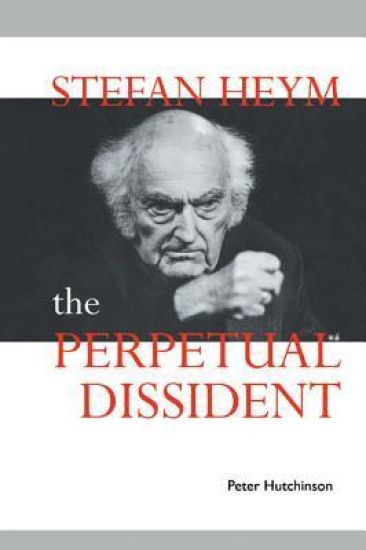
Stefan Heym

Stefan Heym

Peter Hutchinson

Cambridge University Press
2006
pokkari
Stefan Heym's uncompromising stance made him unpopular with a succession of political regimes. The Nazis, the CIA and the East German secret police all held files on him. He was Hitler's youngest literary exile; McCarthyism was to drive him from the USA; and even in what appeared his natural home - the first socialist state on German soil - he was to become the country's leading dissident. By continuing to compose in both English and German, however, he maintained an international reputation, and has been translated into over twenty languages. This study traces Heym's career principally by reference to his novels, journalism, and political essays, from his earliest works. All his novels are analysed, the major ones in depth, and English translations of all German quotations are provided. Peter Hutchinson focuses particularly on Heym's battles against Stalinism and censorship, and the way in which his courageous defiance of a repressive regime inspired others and paved the way for the 'new' eastern literature of the eighties.
Stefan Heym

Stefan Heym

Peter Hutchinson

Cambridge University Press
1992
sidottu
Stefan Heym's uncompromising stance made him unpopular with a succession of political regimes. The Nazis, the CIA and the East German secret police all held files on him. He was Hitler's youngest literary exile; McCarthyism was to drive him from the USA; and even in what appeared his natural home - the first socialist state on German soil - he was to become the country's leading dissident. By continuing to compose in both English and German, however, he maintained an international reputation, and has been translated into over twenty languages. This study traces Heym's career principally by reference to his novels, journalism, and political essays, from his earliest works. All his novels are analysed, the major ones in depth, and English translations of all German quotations are provided. Peter Hutchinson focuses particularly on Heym's battles against Stalinism and censorship, and the way in which his courageous defiance of a repressive regime inspired others and paved the way for the 'new' eastern literature of the eighties.
Stefan Zweig

Stefan Zweig

John W Kiser

Appleton Press
2021
pokkari
Zweig was one of the most prolific and widely-read writers of the 1930s and 1940s. Considered to be one of Europe's "wise men" during the interwar years, his work was translated into more than 50 languages.The author became perplexed by Zweig's suicide in 1942, living safely in Brazil, wealthy, world famous and with a young new wife. This book was an attempt to understand the suicide of a man whose writings were discovered by accident and greatly enjoyed.
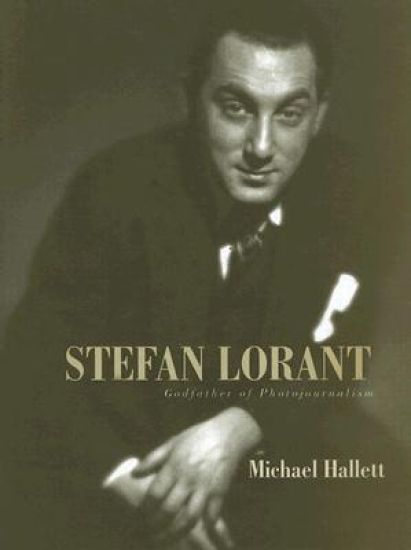
Stefan Lorant

Stefan Lorant

Michael Hallett

Scarecrow Press
2005
sidottu
Hungarian-born Stefan Lorant's work as a visual and literary editor allowed him to pioneer and develop the genré of picture-based journalism at a period that saw the emergence of modern mass communications. Lorant became a guiding force on an international scale, disseminating his ideas and political knowledge throughout Europe in the late-twenties and thirties by working in Hungary, Germany, and England. His innovative layouts, his "exclusive" interviews and his thirst for knowledge became a familiar part of millions of everyday lives, largely through the pages of his own creations and in particular the legendary Picture Post. Eventually his sphere of influence spread to America where he introduced the concept of the pictorial biography. His vision of photography as a documentary medium inspired Life and Look magazines and paved the way for the eventual emergence of the television documentary. For this he has become recognized as "the godfather" of photojournalism. Lorant's work enlightened the world - yet his own world was shrouded with darkness. His secret past, hidden throughout his lifetime, reveals the changing attitude of sexual politics as it evolved throughout the century. His serial womanizing and scandalous love affairs provide insight into the unhappy alliance between his sexual fulfillment and intellectual frustration, his searching in others for what he could not find within himself. Michael Hallett first interviewed Stefan Lorant in late 1990 and spent the following years researching and interviewing his subject. Hallett examines Lorant's public image, his huge ego, his manipulative nature, and his devious love of subterfuge and confusion. Hallett also reveals Lorant's warmth, his generosity, his callousness, his passions and his extraordinary humanity. This biography encompasses the 20th century, while focusing on the emergence of modern mass communications throughout Europe and the United States. Additionally there is a small but key section that highlights Lorant's pl
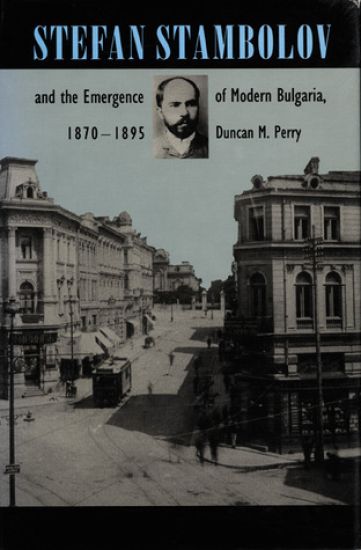
Stefan Stambolov and the Emergence of Modern Bulgaria, 1870-1895
Little known in the United States but increasingly important in the affairs of southeastern Europe, Bulgaria is a land with a stormy history. No less stormy is the story of Stefan Stambolov, who ruled the country during some of its most turbulent years. Duncan M. Perry's biography of Stambolov, the first in English in the twentieth century, illuminates the life, motives, and personality of this major figure.Perry begins with Bulgaria in the tumultuous years immediately following its founding in 1878. After the ousting of the country's first prince, Stambolov enters the stage as the fiery young lawyer who restored him to the throne. Although the prince promptly abdicated, Stambolov stepped into the breach and led the nation during the interregnum. Perry traces this patriotic politician's transformation into an authoritarian prime minister. He shows how Stambolov stabilized the Bulgarian economy and brought relative security to the land-but not without cost to himself and his regime. Perry depicts a man whose promotion of Bulgaria's independence exacted its price in individual rights, a ruler whose assassination in 1895 was the cause of both rejoicing and sorrow.Stambolov thus emerges from these pages as a complex historical figure, an authoritarian ruler who protected his country's liberty at the cost of the people's freedom and whose dictatorial policies set Bulgaria upon a course of stability and modernization. An afterword compares the Bulgarian liberation era of Stambolov with the communist-era dictator, Todor Zhikov, analyzing similarities and differences.
Stefan Sagmeister - the Happy Film Pitch Book

Stefan Sagmeister - the Happy Film Pitch Book

University of Pennsylvania,Institute of Contemporary Art
2013
nidottu
Austrian-born, New York-based graphic designer, typographer and artist Stefan Sagmeister (born 1962) often tests and transgresses the boundary between art and design, through his imaginative implementation of typography. "The Happy Film Pitch Book" both documents Sagmeister's touring exhibition, "The Happy Show," and anticipates his ongoing feature length film, "The Happy Film." In both projects, Sagmeister undergoes a series of self-experiments (each experiment lasting three months)--with meditation, cognitive therapy, and mood-altering pharmaceuticals--attempting to improve his personal happiness. I am usually rather bored with definitions," Sagmeister says. "Happiness, however, is just such a big subject that it might be worth a try to pin it down." "The Happy Show," Sagmeister's first museum show in the United States, documents his adventures in video, print, infographics, sculpture and interactive installations, most of which were custom-made for this exhibition. Here, Sagmeister offers his own witty and poignant thoughts and reasons for his ten-year exploration of happiness. Throughout the book, Sagmeister's trademark maxims serve as access points to a larger exploration of happiness, its cultural significance, our constant pursuit of it and its notoriously ephemeral nature.
Skeletal Songs Decomposed by Stefan Duncan

Skeletal Songs Decomposed by Stefan Duncan

Stefan Duncan

Raven's Light Publishing
2013
nidottu
Skeletal Songs is a collection of 43 poems mixed with chills and laughter ranging from hungry grandmothers to boogeymen beneath the bleachers. You'll experience the rare emotional moments of laughing and screaming at the same time. Simply horribly adorable. Warning: these are a collection of poems in the horror genre that may create opposite emotions at the same time. You may feel the urge to laugh and scream simultaneously on some of the poems. While there are a few dark humored poems, some in this collection seek to capture the emotions and psyche of a normal person in supernatural situations. Some are haunting tales such as "Tale of Waccamaw Lake. Some of the poetry is about lost love, fear of our inner natures, turning vampire, and becoming werewolves. Many of these reflect our society today such as "A Howl, A Howl, Howl". The poems were written from various locations such as from a room in the Stanley Hotel that inspired Stephen King to write the Shining. Several were written at the Waldorf Hotel in New York during the Horror Writers of American gathering of the greatest horror writers of our generation. Tale of Waccamaw Lake was written from the shores of Lake Waccamaw. Each have been published and for the first time gathered into one collection by Stefan Duncan who is publishing horror and fantasy books. Its been Stefan's dream to create memorable poems, tales of horror, and fantasy. Stefan is the author of "Swordslinger" and "Raven's Light." His next novel "Crematory" will be published 2014 that is also in preproduction for a movie.