Kirjahaku
Etsi kirjoja tekijän nimen, kirjan nimen tai ISBN:n perusteella.
1000 tulosta hakusanalla Stefan Tilg
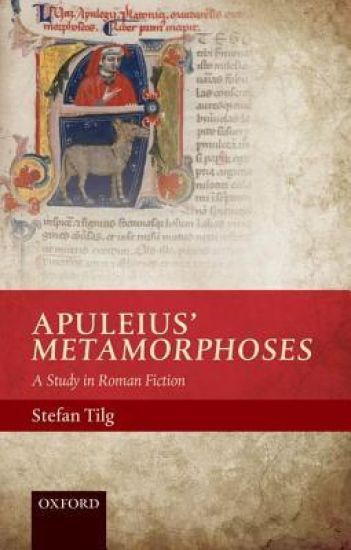
This volume reveals how Apuleius' Metamorphoses - the only fully extant Roman novel and a classic of world literature - works as a piece of literature, exploring its poetics and the way in which questions of production and reception are reflected in its text. Providing a roughly linear reading of key passages, the volume develops an original idea of Apuleius as an ambitious writer led by the literary tradition, rhetoric, and Platonism, and argues that he created what we could call a seriocomic 'philosophical novel' avant la lettre. The author focuses, in particular, on the ways in which Apuleius drew attention to his achievement and introduced the Greek ass story to Roman literature. Thus, the volume also sheds new light on the forms and the literary and intellectual potential of the genre of the ancient novel.
Chariton of Aphrodisias and the Invention of the Greek Love Novel
Stefan Tilg
Oxford University Press
2010
sidottu
The best known variety of the ancient novel - sometimes identified with the ancient novel tout court - is the Greek love novel. The question of its origins has intrigued scholars for centuries and has been the focus of a great deal of research. Stefan Tilg proposes a new solution to this ancient puzzle by arguing for a personal inventor of the genre, Chariton of Aphrodisias, who wrote the first Greek (and, with that, the first European) love novel, Narratives about Callirhoe, in the mid-first century AD. Tilg's conclusion is drawn on the basis of two converging lines of argument, one from literary history, another from Chariton's poetics, and will shed fresh light upon the reception of Latin literature in the Greek world.
Die heilige Katharina von Alexandria galt wegen ihres rhetorischen Sieges gegen fünfzig heidnische Philosophen seit dem Mittelalter als eine Leitfigur christlicher Bildung. Ihre Legende lieferte auch den Stoff für zahlreiche literarische Bearbeitungen. Die hier erstmals edierten Dramen sind die Hauptzeugnisse für die spannende Rezeption des Katharinenstoffs auf der frühen Bühne des Jesuitentheaters. Ausgehend von der Tragödie »Catharina« des belgischen Humanisten Grégoire de Hologne (ca. 1531-1594), stehen die Bearbeitungen von 1576 und 1577 am Beginn des jesuitischen Märtyrerdramas, das in der Folgezeit die Bühne der Gesellschaft Jesu beherrschen sollte. Der enge Zusammenhang aller drei hier präsentierten Stücke war bis jetzt unbekannt, bei der zeitlichen Einordnung der Spieltexte und bei der Bestimmung ihres Verhältnisses zueinander unterliefen zahlreiche Fehler. Dabei ergibt sich gerade aus der Abhängigkeit der späteren Texte von dem bzw. den früheren eine bisher nicht gebotene Gelegenheit, die "Wanderung" eines Stücks durch verschiedene dramaturgische Stile und sich ändernde historische Voraussetzungen zu beobachten. Dem kritisch herausgegebenen Text sind ein Similienapparat und eine metrische Übersetzung beigegeben. Einleitung und Kommentar liefern die wesentlichen Informationen zur Einordnung und zum Verständnis der Stücke.
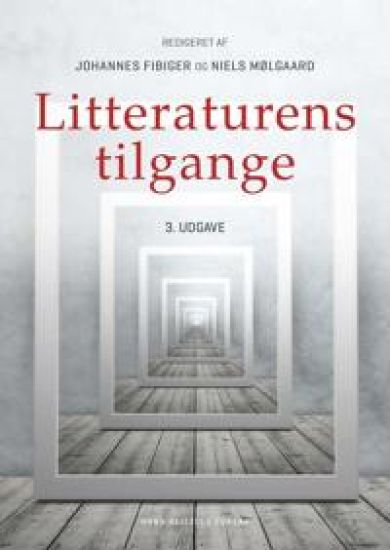
Litteraturens tilgange
Johannes Fibiger; Niels Mølgaard; Henrik Zetterberg-Nielsen; Johnny Kondrup; Hans Hauge; Svend Erik Larsen; Søren Schou; Thomas Illum Hansen; Stefan Iversen; Ayoe Quist Henkel; Stefan Kjerkegaard; Jørgen Bruhn; Dag Heede; Anne-Marie Mai; Peter Stein Larsen; Simona Zetterberg-Nielsen; Bergur Rønne Moberg; Tobias Skiveren; Martin Rohr Gregersen; Christian Hejlesen Christensen
Gyldendal
2023
sidottu
Få et panoreret blik over metodelandskabet med eksemplariske læsninger. Denne solide og populære grundbog er til undervisning i litterær metode på videregående uddannelser. Metodekapitlerne er suppleret med vejledende litteraturlister og et leksikon over centrale begreber og personer samt en antologi med de anvendte teksteksempler. Bogen er skrevet af en række erfarne forskere og undervisere. Du får et standardværk, som i denne nyeste udgave indeholder en række nye kapitler. Samtidigt er de tilbageblevne kapitler alle opdateret.
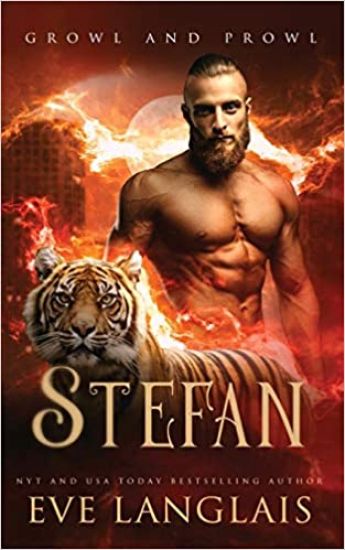
For her, he'll unleash the tiger within.Stefan's getting married for the good of his family, because if he doesn't, the local werewolves will run them out of town. He's not exactly happy about it, but it could be worse. His bride is quite beautiful when she's not completely off her canine leash. As beta for her pack, she's used to giving orders and has a bite to go with her bark. However, if she thinks he's giving in to the beast within, then she'll be waiting a long time.Stefan's spent the last decade keeping his tiger caged. Past experience has shown him he can't lose control. Yet, when he's captured by the company that created him, he'll realize he doesn't have a choice.He'll have to learn how to growl if he wants to protect those he loves.
Stefan se marie pour sa famille car s'il ne le fait pas, leurs voisins loups-garous vont les chasser de la ville. Il n'est pas vraiment ravi de le faire, mais a pourrait tre pire. Son pouse est tr s belle, quand elle n'est pas totalement incontr lable. tant une b ta dans sa meute, elle a l'habitude de donner des ordres et a autant de mordant que de voix. Pourtant, si elle s'imagine qu'il va c der la b te qui sommeille en lui, eh bien, elle peut toujours attendre Stefan a lutt toute cette derni re d cennie pour ne pas lib rer le tigre en lui. Les exp riences pass es lui ont appris qu'il n'a pas le droit de perdre le contr le. Cependant, le jour o la soci t qui l'a cr le capture, il r alise qu'il n'a plus le choix. Il va devoir apprendre rugir s'il veut prot ger ceux qu'il aime.
L.J. Diva's Porn Star Brothers series continues in Stefan: The New Generation...Thirty years has passed since Carlos, Pedro and Tomas Stefan made a name for themselves in the world of porn in the late '70s. They have not only forged new careers for themselves but kept the secrets of the past hidden from their children.Or so they thought...The lives they've made, the businesses they've created, the bonds they've forged; the memories, loved ones, and traumas they wish they could forget...like dead lovers. What happened to them thirty years ago is now rearing its very ugly head in so many ways to threaten the family, bringing to life those thought long dead and those never known about. And until the past is finally put to rest, none of them can move on...
L.J. Diva's Porn Star Brothers Series continues in Stefan: The New Generation...Thirty years has passed since Carlos, Pedro and Tomas Stefan made a name for themselves in the world of porn in the late '70s. They have not only forged new careers for themselves but kept the secrets of the past hidden from their children.Or so they thought...The lives they've made, the businesses they've created, the bonds they've forged; the memories, loved ones, and traumas they wish they could forget...like dead lovers. What happened to them thirty years ago is now rearing its very ugly head in so many ways to threaten the family, bringing to life those thought long dead and those never known about. And until the past is finally put to rest, none of them can move on...
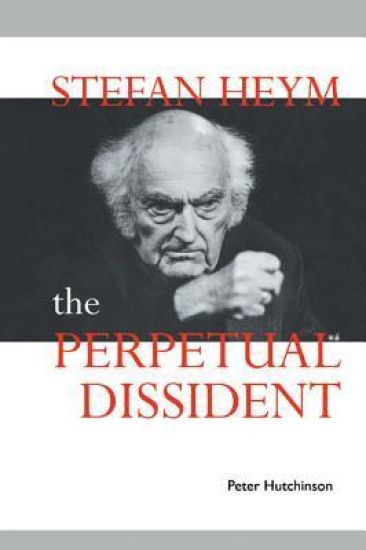
Stefan Heym's uncompromising stance made him unpopular with a succession of political regimes. The Nazis, the CIA and the East German secret police all held files on him. He was Hitler's youngest literary exile; McCarthyism was to drive him from the USA; and even in what appeared his natural home - the first socialist state on German soil - he was to become the country's leading dissident. By continuing to compose in both English and German, however, he maintained an international reputation, and has been translated into over twenty languages. This study traces Heym's career principally by reference to his novels, journalism, and political essays, from his earliest works. All his novels are analysed, the major ones in depth, and English translations of all German quotations are provided. Peter Hutchinson focuses particularly on Heym's battles against Stalinism and censorship, and the way in which his courageous defiance of a repressive regime inspired others and paved the way for the 'new' eastern literature of the eighties.
Zweig was one of the most prolific and widely-read writers of the 1930s and 1940s. Considered to be one of Europe's "wise men" during the interwar years, his work was translated into more than 50 languages.The author became perplexed by Zweig's suicide in 1942, living safely in Brazil, wealthy, world famous and with a young new wife. This book was an attempt to understand the suicide of a man whose writings were discovered by accident and greatly enjoyed.
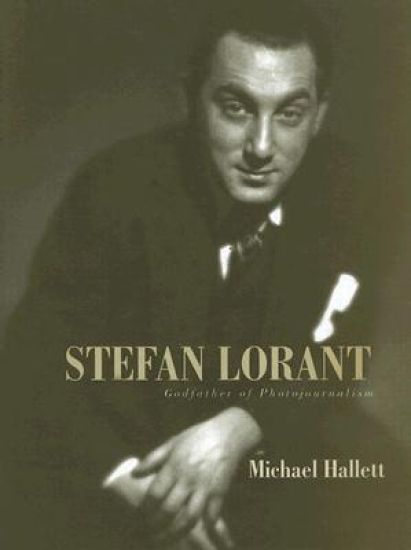
Hungarian-born Stefan Lorant's work as a visual and literary editor allowed him to pioneer and develop the genré of picture-based journalism at a period that saw the emergence of modern mass communications. Lorant became a guiding force on an international scale, disseminating his ideas and political knowledge throughout Europe in the late-twenties and thirties by working in Hungary, Germany, and England. His innovative layouts, his "exclusive" interviews and his thirst for knowledge became a familiar part of millions of everyday lives, largely through the pages of his own creations and in particular the legendary Picture Post. Eventually his sphere of influence spread to America where he introduced the concept of the pictorial biography. His vision of photography as a documentary medium inspired Life and Look magazines and paved the way for the eventual emergence of the television documentary. For this he has become recognized as "the godfather" of photojournalism. Lorant's work enlightened the world - yet his own world was shrouded with darkness. His secret past, hidden throughout his lifetime, reveals the changing attitude of sexual politics as it evolved throughout the century. His serial womanizing and scandalous love affairs provide insight into the unhappy alliance between his sexual fulfillment and intellectual frustration, his searching in others for what he could not find within himself. Michael Hallett first interviewed Stefan Lorant in late 1990 and spent the following years researching and interviewing his subject. Hallett examines Lorant's public image, his huge ego, his manipulative nature, and his devious love of subterfuge and confusion. Hallett also reveals Lorant's warmth, his generosity, his callousness, his passions and his extraordinary humanity. This biography encompasses the 20th century, while focusing on the emergence of modern mass communications throughout Europe and the United States. Additionally there is a small but key section that highlights Lorant's pl
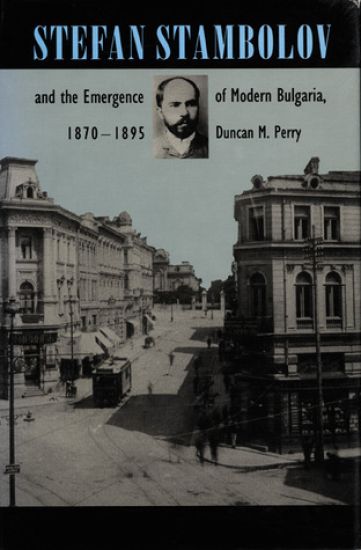
Stefan Stambolov and the Emergence of Modern Bulgaria, 1870-1895
Duncan M. Perry
Duke University Press
1993
sidottu
Little known in the United States but increasingly important in the affairs of southeastern Europe, Bulgaria is a land with a stormy history. No less stormy is the story of Stefan Stambolov, who ruled the country during some of its most turbulent years. Duncan M. Perry's biography of Stambolov, the first in English in the twentieth century, illuminates the life, motives, and personality of this major figure.Perry begins with Bulgaria in the tumultuous years immediately following its founding in 1878. After the ousting of the country's first prince, Stambolov enters the stage as the fiery young lawyer who restored him to the throne. Although the prince promptly abdicated, Stambolov stepped into the breach and led the nation during the interregnum. Perry traces this patriotic politician's transformation into an authoritarian prime minister. He shows how Stambolov stabilized the Bulgarian economy and brought relative security to the land-but not without cost to himself and his regime. Perry depicts a man whose promotion of Bulgaria's independence exacted its price in individual rights, a ruler whose assassination in 1895 was the cause of both rejoicing and sorrow.Stambolov thus emerges from these pages as a complex historical figure, an authoritarian ruler who protected his country's liberty at the cost of the people's freedom and whose dictatorial policies set Bulgaria upon a course of stability and modernization. An afterword compares the Bulgarian liberation era of Stambolov with the communist-era dictator, Todor Zhikov, analyzing similarities and differences.
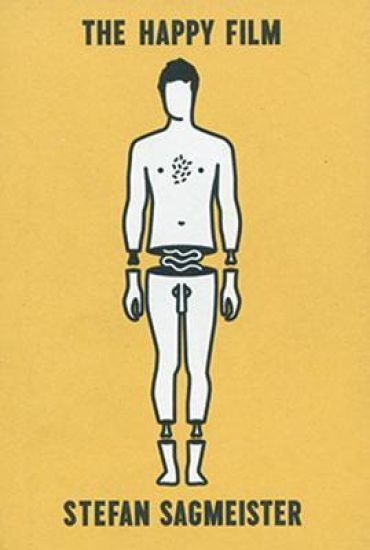
Stefan Sagmeister - the Happy Film Pitch Book
University of Pennsylvania,Institute of Contemporary Art
2013
nidottu
Austrian-born, New York-based graphic designer, typographer and artist Stefan Sagmeister (born 1962) often tests and transgresses the boundary between art and design, through his imaginative implementation of typography. "The Happy Film Pitch Book" both documents Sagmeister's touring exhibition, "The Happy Show," and anticipates his ongoing feature length film, "The Happy Film." In both projects, Sagmeister undergoes a series of self-experiments (each experiment lasting three months)--with meditation, cognitive therapy, and mood-altering pharmaceuticals--attempting to improve his personal happiness. I am usually rather bored with definitions," Sagmeister says. "Happiness, however, is just such a big subject that it might be worth a try to pin it down." "The Happy Show," Sagmeister's first museum show in the United States, documents his adventures in video, print, infographics, sculpture and interactive installations, most of which were custom-made for this exhibition. Here, Sagmeister offers his own witty and poignant thoughts and reasons for his ten-year exploration of happiness. Throughout the book, Sagmeister's trademark maxims serve as access points to a larger exploration of happiness, its cultural significance, our constant pursuit of it and its notoriously ephemeral nature.
Skeletal Songs is a collection of 43 poems mixed with chills and laughter ranging from hungry grandmothers to boogeymen beneath the bleachers. You'll experience the rare emotional moments of laughing and screaming at the same time. Simply horribly adorable. Warning: these are a collection of poems in the horror genre that may create opposite emotions at the same time. You may feel the urge to laugh and scream simultaneously on some of the poems. While there are a few dark humored poems, some in this collection seek to capture the emotions and psyche of a normal person in supernatural situations. Some are haunting tales such as "Tale of Waccamaw Lake. Some of the poetry is about lost love, fear of our inner natures, turning vampire, and becoming werewolves. Many of these reflect our society today such as "A Howl, A Howl, Howl". The poems were written from various locations such as from a room in the Stanley Hotel that inspired Stephen King to write the Shining. Several were written at the Waldorf Hotel in New York during the Horror Writers of American gathering of the greatest horror writers of our generation. Tale of Waccamaw Lake was written from the shores of Lake Waccamaw. Each have been published and for the first time gathered into one collection by Stefan Duncan who is publishing horror and fantasy books. Its been Stefan's dream to create memorable poems, tales of horror, and fantasy. Stefan is the author of "Swordslinger" and "Raven's Light." His next novel "Crematory" will be published 2014 that is also in preproduction for a movie.