
Kirjahaku
Etsi kirjoja tekijän nimen, kirjan nimen tai ISBN:n perusteella.
1000 tulosta hakusanalla Stefania Contardi
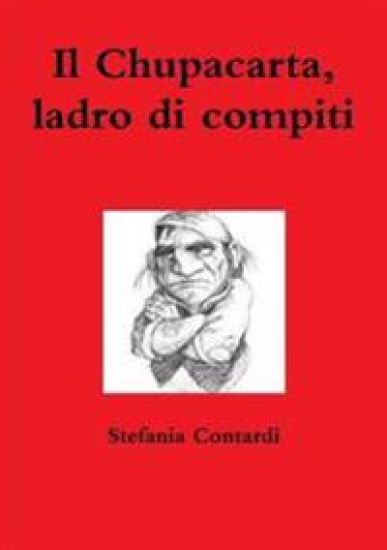
Nell'Istituto "Domenico Strazio" si stanno verificando fatti molto strani. Gli alunni non portano piu i compiti da un bel po' di tempo: asseriscono tutti di aver perso i libri e i quaderni. Ovviamente ne la maestra Verruca ne la maestra Pennarossa credono a una sola parola. Ed e il caos. Specialmente perche si avvicinano le Gare di Artematica e le Sfide di Lingua Madre e Lingua Padre del Circondario Tutto. Tra ansia da prestazione e stress da competizione, c'e anche un mistero da risolvere e i fratelli Campofelice...Insomma leggete la storia. Una storia senza tempo con protagonisti molto speciali: i bambini di oggi, di ieri e di domani.
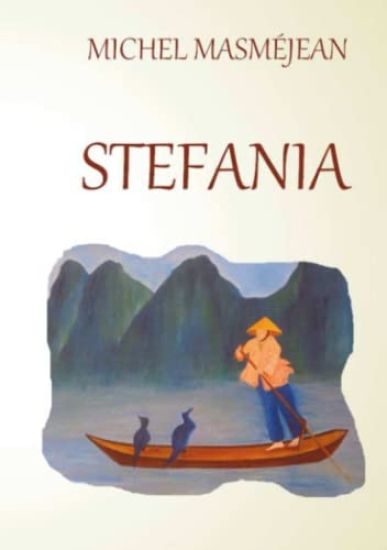
L'histoire d bute Venise. Une jeune femme, Stefania, rencontre un Fran ais, M d ric, venu dans la cit de Marco Polo pour des raisons professionnelles. Stefania a un projet, se rendre en Asie pour retrouver sa m re, disparue lorsqu'elle avait dix ans, lors du pogrom perp tr par le g n ral Pol Pot. Se sentant incapable d'assumer seule ce voyage, elle demande M d ric de l'accompagner dans cette recherche afin qu'il veille sur elle. Manipulation de la part de la jeune fille, complaisance et opportunisme de la part de M d ric qui se voit offrir de singuli res vacances ? Cette qu te les entra nera jusqu'aux confins de l'Asie, au coeur de la r gion du Triangle d'or. Pour ce faire, ils remonteront le M kong, traverseront de lointaines contr es sous un climat souvent hostile sur la trace d'un pass douloureux. La route sera longue, pleine d'emb ches, de d couvertes, de surprises et de d convenues. Une fois parvenus leur but, trouveront-ils enfin, l'un et l'autre, la lumi re et la paix int rieure ?

Flip Portfolio Anna Stefania Gelsi
Ian McKenzie
Createspace Independent Publishing Platform
2018
nidottu

Die Bedeutung Stefania Wilczynksas für das Waisenhaus "Dom Sierot"
Yannah Holzderber
Grin Verlag
2016
pokkari


Based on the true history of the uncrowned kings of Sicily: the story of a family, restless and ambitious, shrewd and determined to be richer and more powerful than anybody else. In this grand, sweeping epic inspired by the real lives of history-making titans, international best-selling author Stefania Auci brings to life the dark secrets, the loves and betrayals, and the cruel acts of revenge that marked the Florio family’s century of influence. The Florios arrive in Sicily, with nothing but the clothes on their back after an earthquake destroys their hometown. Against all odds, the family begins anew despite the looming Napoleonic wars and devastating plagues. But when Vincenzo is spurned by his aristocratic lover, he vows to avenge his honor by becoming the wealthiest man in Italy. Sacrificing love and family, he strives to buy what cannot be his by birth. Not to be outdone by the men, the Florio women unapologetically demand their place outside the restraints of caring mothers, alluring lovers, or wounded wives. Giulia, though only a mistress, is fiercely intelligent and runs the empire from the shadows. Angelina, born a bastard, charts her own future against the wishes of her father. In this epic yet intimate tale of power, passion, and revenge, the rise and fall of a family taps into the universal desire to become more than who we are born as.Translated from the Italian by Katherine Gregor

The epic saga behind the Disney-produced Hulu Original Series The Lions of SicilyBased on the true history of the uncrowned kings of Sicily: the story of a family, restless and ambitious, shrewd and determined to be richer and more powerful than anybody else. In this grand, sweeping epic inspired by the real lives of history-making titans, international best-selling author Stefania Auci brings to life the dark secrets, the loves and betrayals, and the cruel acts of revenge that marked the Florio family’s century of influence.The Florios arrive in Sicily, with nothing but the clothes on their back after an earthquake destroys their hometown. Against all odds, the family begins anew despite the looming Napoleonic wars and devastating plagues. But when Vincenzo is spurned by his aristocratic lover, he vows to avenge his honor by becoming the wealthiest man in Italy. Sacrificing love and family, he strives to buy what cannot be his by birth. Not to be outdone by the men, the Florio women unapologetically demand their place outside the restraints of caring mothers, alluring lovers, or wounded wives. Giulia, though only a mistress, is fiercely intelligent and runs the empire from the shadows. Angelina, born a bastard, charts her own future against the wishes of her father.In this epic yet intimate tale of power, passion, and revenge, the rise and fall of a family taps into the universal desire to become more than who we are born as.Translated from the Italian by Katherine Gregor

The basis for the Disney-produced series on Hulu The Lions of Sicily“A blazing epic of countless twists and turns.”—Le Figaro"A compelling combination of historical sweep and family drama" –Kirkus ReviewsFrom the author of the acclaimed The Florios of Sicily, a magnificent novel that explores the origins of one of Italy’s most powerful and notorious families, men and women whose ruthless ambition and caprice would chart the course of modern Italian history—a tale of grand historical dramas, exotic locales, political intrigue, and heartbreaking romance that rivals the bestselling works of Philippa Gregory, Jennifer Chiaverini, and Adriana Trigiani.Known as the Lions of Sicily, the Florios have officially arrived. Once rich only in ambition, the family has amassed a fortune that includes palaces, factories, ships, silks, and jewels. The city of Sicily admires them, honors them and, above all, fears them.Ignazio was destined to rule Casa Florio since birth, a fearless drive that pulses through his veins, pushing him to look beyond Sicily towards Rome, Europe and its courts, the naval domination of the Mediterranean, and eventually the purchase of the entire Archipelago of the Egadi to build his dazzling empire. But his heart is black as ice. To seize Casa Florio, he abandoned the love of his life—an act of treachery which still casts a dark shadow.Barely twenty, his son Ignazziddu stands to inherit all that his father has built. Yet he is nothing like Ignazio. A nervous young man, he does not want to be shackled to his infamous name, to sacrifice himself for the family. Despite his fears, he embraces Ignazio’s legacy, and must face a world that changes too quickly, agitated by new, violent, and uncontrollable forces. Ignazziddu eventually realizes that it’s not enough to have Florio blood to become the imposing force his grandfather and father were. What is it they had that he lacks?Beside father and son are two extraordinary women: Giovanna, Ignazio’s wife, hard and fragile as crystal, full of passion but hungry for love, and Franca, the wife of Ignazziddu, the most beautiful woman in Europe, whose golden existence is threatened by the blows of a cruel fate. It is these women who unforgettably animate The Triumph of the Lions.Bringing the Belle Epoque into stunning relief, Auci dives deeper into the exhilarating and terrible, glorious and tragic history of a family that, for decades, sat high above Italian society, and made the heart of an island and city beat.Translated from the Italian by Katherine Gregor and Howard Curtis
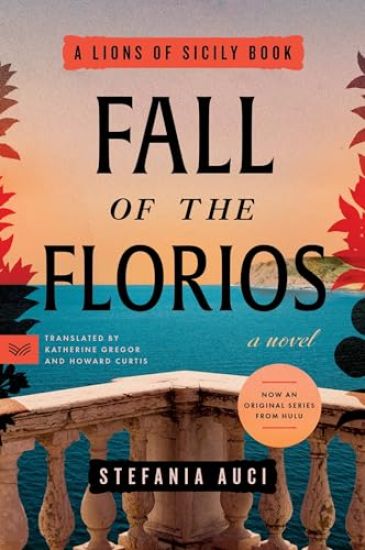
The epic saga behind the Disney-produced Hulu series The Lions of SicilyThe magnificent third installment of the Florio story–a sweeping, decadent, and romantic finale that tells the story of Italy’s most powerful and notorious family as it faces its dramatic end.After triumph and brilliance, the Sicilian Lions enter their fall . . .Glory is fleeting, fate sometimes cruel. For more than sixty years, the Florios have reigned supreme, establishing the city of Palermo as a European beacon of commerce, and making Sicily one of Italy’s most powerful regions. But now fate has taken a turn. As social and economic pressures erode the stability of a young Italy, the Florios—despite their wealth and power—must watch as their iron grip over the South begins to weaken.Following in the steps of the father he idolized, Ignazzidu, now Don Ignazio, finds himself commanding the Florio family’s interests and enterprises. Negligent, impetuous, and headstrong, he is everything his industrious father was not. But while he struggles to live up to the family name, his charming and loyal wife Franca rises to the occasion. A gracious and formidable host, Franca’s hospitality becomes unmatched across Europe, informally crowned the “Queen of Palermo” as she holds court with an esteemed coterie of luminaries from the womanizing Puccini to the scandalous Boldini.Yet as the tides of fortune change– economic hardships, war, and human loss- their relationship will be put to the test and Franca will find that even a love as devoted as hers may falter. But the biggest threat to their survival is the death of an heir. In losing the flesh of his flesh, Ignazio—who succeeded his father without the strength or conviction to do so—will ultimately oversee the collapse of an empire built by his family’s ambition, cunning, and sweat.What kind of future will the Florios have now? Will anything remain of their greatness?Translated from the Italian by Katherine Gregor and Howard Curtis.

Uncertainty in Post-Reformation Catholicism
Stefania Tutino
Oxford University Press Inc
2017
sidottu
This book provides a historical account of early modern probabilism and its theological, intellectual, and cultural implications. First developed in the second half of the sixteenth century, probabilism represented a significant and controversial novelty in Catholic moral theology. By the second half of the seventeenth century, and thanks in part to Pascal's influential anti-probabilist stances, probabilism had become inextricably linked to the Society of Jesus and to a laxist system of morality, which emphasized and exploited the elasticity of moral rules. To this day, most scholars of early modern religious history either ignore probabilism, or associate it with moral duplicity and intellectual and cultural decadence. Uncertainty in Post-Reformation Catholicism argues that probabilism played a central role in addressing the challenges that a geographically and intellectually expanding world posed to traditional Catholic theology. Early modern probabilist theologians realized that their time was characterized by many changes and novelties that traditional theology was not equipped to deal with, and that consequently provoked an exponential growth of uncertainties, doubts, and dilemmas of conscience. These theologians used probabilism as a means to integrate changes and novelties within the post-Reformation Catholic theological and intellectual system. Seen in this light, probabilism represented the result of their attempts to appreciate, come to terms with, and manage uncertainty. The problem of uncertainty was not only crucial then, but remains central even today. Despite the unprecedented amount of information available to us, we are becoming less able to formulate arguments based on facts, and more dependent on a cacophony of opinions that often simply reproduce our own implicit or explicit biases, prejudices, and preconceived preferences.

A Fake Saint and the True Church uncovers the remarkable story of a fake saint to tell a tale about truth. It begins at the end of the 1650s, when a large quantity of forged documents suddenly appeared throughout the Kingdom of Naples. Narrating the life and deeds of a previously unknown medieval saint named Giovanni Calà, the trove generated much excitement around the kingdom. No one was more delighted by the news than Carlo Calà, Giovanni's wealthy and politically influential seventeenth-century descendant. Attracted by the prospect of adding a saint to the family tree, Carlo presented Giovanni's case to the Roman Curia. The Catholic authorities, however, immediately realized that the sources were forged, and that Giovanni was not real (let alone holy). Yet, it took more than two decades before the forgery was exposed: why? Vividly reconstructing the intricate case of the supposed saint, Stefania Tutino explores the tensions between historical and theological truth. How much could the truth of doctrine depend on the truth of the facts before religion lost its connection with the supernatural? To what extent could the truth of doctrine ignore the truth of the facts without ending up engulfed in falsity and deceit? How could the absolute truth of theology relate to the far less absolute certainty of human affairs? This story of a fake saint illuminates early modern tensions. But the struggles to distinguish between facts, opinions, and beliefs remain with us. Examining, as this book does, how our predecessors dealt with the relationship between truth and authenticity guides us too in thinking through what is true and what is not.
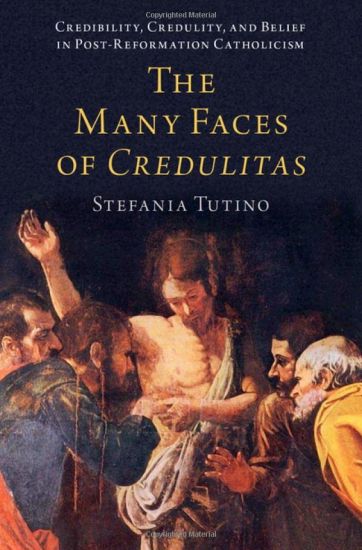
This book is about the relationship between belief, credibility, and credulity in post-Reformation Catholicism. It argues that, starting from the end of the sixteenth century and due to different political, intellectual, cultural, and theological factors, credibility assumed a central role in post-Reformation Catholic discourse. This led to an important reconsideration of the relationship between natural reason and supernatural grace and consequently to novel and significant epistemological and moral tensions. From the perspective of the relationship between credulity, credibility, and belief, early modern Catholicism emerges not as the apex of dogmatism and intellectual repression, but rather as an engine for promoting the importance of intellectual judgment in the process of embracing faith. To be sure, finding a balance between conscience and authority was not easy for early modern Catholics. This book seeks to elucidate some of the difficulties, anxieties, and tensions caused by the novel insistence on credibility that came to dominate the theological and intellectual landscape of the early modern Catholic Church. In addition to shedding light on early modern Catholic culture, this book helps us to understand better what it means to believe. For the most part, in modern Western society we don't believe in the same things as our early modern predecessors. Even when we do believe in the same things, it is not in the same way. But believe we do, and thus understanding how early modern people addressed the question of belief might be useful as we grapple with the tension between credibility, credulity, and belief.
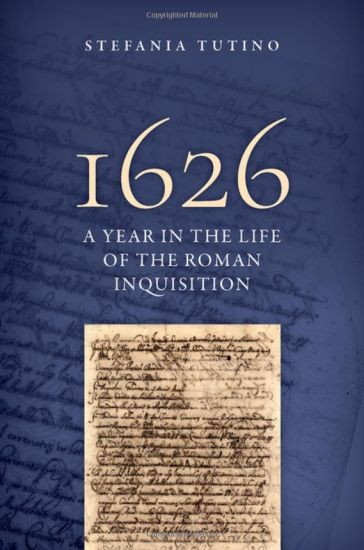
In 1626, Europe was in the midst of the Thirty Years' War; a flu pandemic began spreading in Asia; the Dutch acquired the island of Manhattan; Queen Christina of Sweden was born; and Francis Bacon died. A lot can happen in a year, and 1626 was no exception. It was an exceptional year for the Roman Inquisition, however, but not because of anything that happened. What makes it exceptional is that an extraordinarily large body of archival material from that year has been preserved. Drawing on this hitherto unexamined material, Stefania Tutino reconstructs all the activities of the Roman Inquisition in the year 1626. This book demonstrates that the early-seventeenth-century Roman Inquisition was not solely the expression of the most militant and repressive aspects of post-Reformation Catholicism. Rather, to understand the historical role the Holy Office played, we need to see its development in terms of the tension between rigidity on the one hand and flexibility and complexity on the other. Having the opportunity to see all the activities of the Holy Office in one entire year makes the centrality of this tension easier to appreciate than if we just focused on a specific and necessarily limited subset of issues such as witchcraft or book censorship. Conversely, the granular analysis of those activities provided in this book is necessary to get a concrete sense of all the ways in which this tension manifested. The strength of the Roman Inquisition in 1626 -and simultaneously the reason for its downfall in the long run-is that an institution that thrives on rigidity and whose core mission is to maintain inflexible boundaries between the one true faith and all deviations is intrinsically unable to deal with complexity, mobility, and fluidity. All those factors rendered the imposition of stringent norms increasingly difficult and ultimately impossible. The Holy Office tried to keep up, but the complexity of the world that Roman Inquisitors presumed to oversee overwhelmed the intrinsic rigidity of their mandate.
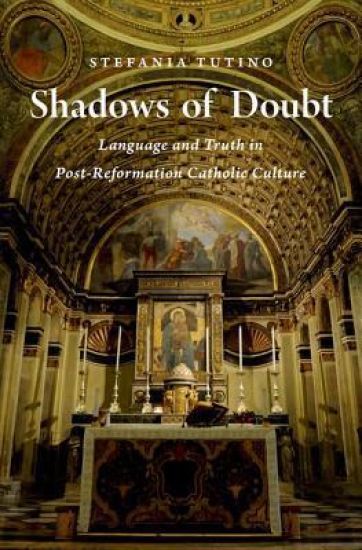
Stefania Tutino shows that the hermeneutical and epistemological anxieties that characterize our current intellectual climate are rooted in the early modern world. Showing that post-Reformation Catholicism did not simply usher in modernity, but indeed postmodernity as well, her study complicates the well-established scholarly view concerning the context of the Protestant Reformation and the Catholic response to it. Shadows of Doubt provides a collection of case-studies centered on the relationship between language, the truth of men, and the Truth of theology. Most of these case-studies illuminate little-known figures in the history of early modern Catholicism. The militant aspects of post-Tridentine Catholicism can be appreciated through study of figures such as Robert Bellarmine or Cesare Baronio, the solid pillars of the intellectual and theological structure of the Church of Rome; however, an understanding of the more enigmatic aspects of early modernity requires exploration of the demimonde of post-Reformation Catholicism. Tutino examines the thinkers whom few scholars mention and fewer read, demonstrating that post-Reformation Catholicism was not simply a world of solid certainties to be opposed to the Protestant falsehoods, but also a world in which the stable Truth of theology existed alongside and contributed to a number of far less stable truths concerning the world of men. Post-Reformation Catholic culture was not only concerned with articulating and affirming absolute truths, but also with exploring and negotiating the complex links between certainty and uncertainty. By bringing to light this fascinating and hitherto largely unexamined side of post-Tridentine Catholicism, Tutino reveals that post-Reformation Catholic culture was a vibrant laboratory for many of the issues that we face today: it was a world of fractures and fractured truths which we, with a heightened sensitivity to discrepancies and discontinuities, are now well-suited to understand.
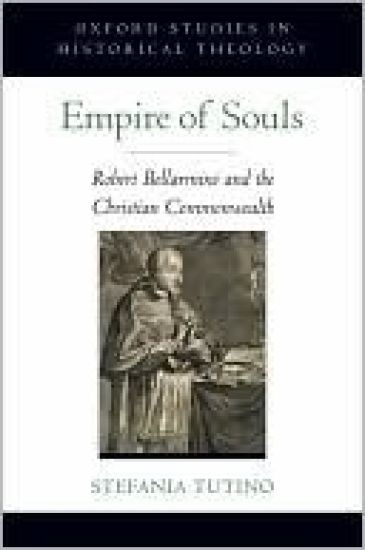
Robert Bellarmine was one of the pillars of post-Reformation Catholicism: he was a celebrated theologian and a highly ranked member of the Congregations of the Inquisition and of the Index, the censor in charge of the Galileo affair. Bellarmine was also one of the most original political theorists of his time, and he participated directly in many of the political conflicts that agitated Europe between the end of the sixteenth and the beginning of the seventeenth century. Stefania Tutino offers the first full-length study of the impact of Bellarmine's theory of the potestas indirecta in early modern Europe. Following the reactions to Bellarmine's theory across national and confessional boundaries, this book explores some of the most crucial political and theological knots in the history of post-Reformation Europe, from the controversy over the Oath of Allegiance to the battle over the Interdetto in Venice. The book sets those political and religious controversies against the background of the theological and institutional developments of the post-Tridentine Catholic Church. By examining the violent and at times surprising controversies originated by Bellarmine's theory, this book challenges some of the traditional assumptions regarding the theological shape of post-Tridentine Catholicism; it offers a fresh perspective on the centrality of the links between confessional affiliation and political allegiance in the development of the modern nation-states; and it contributes to our understanding of the development of 'modern' notions of power and authority.
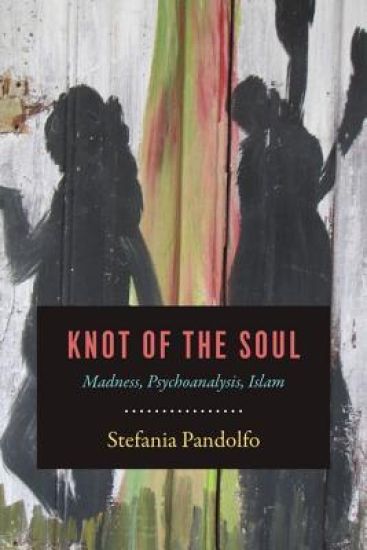
In this unsettling and innovative book, anthropologist Stefania Pandolfo addresses the problematic of the subject through a dual examination of psychoanalysis and Islamic theological-medical reasoning, reflecting on the unconscious maladies of the soul at a time of tremendous global upheaval. Drawing on in-depth historical research and sensitively listening to contemporary patients in Morocco, she offers both an ethnographic journey through madness and contemporary formations of despair and a philosophical and theological exploration of the vicissitudes of the soul. Pandolfo's study spans a breadth that encompasses experiences of psychosis in psychiatric hospitals, visionary torments of the soul in urban life, the difficulty of undocumented migration, and the liturgical space of Quranic healing. Demonstrating how contemporary Islamic cures for madness address some of the core preoccupations of the psychoanalytic approach, she reveals how a religious and ethical relation to the "ordeal" of madness might actually allow for spiritual transformation. Altogether, this sophisticated work illuminates new dimensions of psychoanalysis and the ethical imagination while also sensitively examining the collective psychic strife that so many communities endure today.
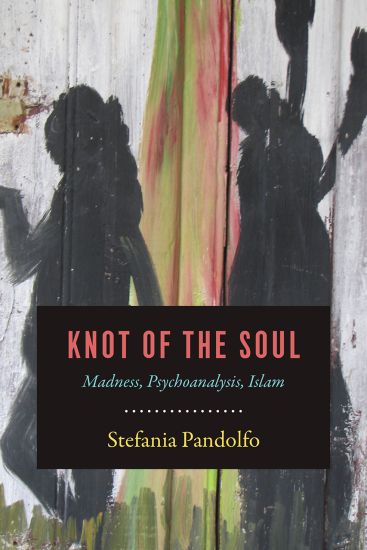
In this unsettling and innovative book, anthropologist Stefania Pandolfo addresses the problematic of the subject through a dual examination of psychoanalysis and Islamic theological-medical reasoning, reflecting on the unconscious maladies of the soul at a time of tremendous global upheaval. Drawing on in-depth historical research and sensitively listening to contemporary patients in Morocco, she offers both an ethnographic journey through madness and contemporary formations of despair and a philosophical and theological exploration of the vicissitudes of the soul. Pandolfo's study spans a breadth that encompasses experiences of psychosis in psychiatric hospitals, visionary torments of the soul in urban life, the difficulty of undocumented migration, and the liturgical space of Quranic healing. Demonstrating how contemporary Islamic cures for madness address some of the core preoccupations of the psychoanalytic approach, she reveals how a religious and ethical relation to the "ordeal" of madness might actually allow for spiritual transformation. Altogether, this sophisticated work illuminates new dimensions of psychoanalysis and the ethical imagination while also sensitively examining the collective psychic strife that so many communities endure today.

The image of the ethnographer in the field who observes his or her subjects from a distance while copiously taking notes has given way in recent years to a more critical and engaged form of anthropology. Composed as a polyphonic dialogue of texts, Stefania Pandolfo's Impasse of the Angels takes this engagement to its limit by presenting the relationship between observer and observed as one of interacting equals and mutually constituting interlocuters. Impasse of the Angels explores what it means to be a subject in the historical and poetic imagination of a southern Moroccan society. Passionate and lyrical, ironic and tragic, the book listens to dissonant, often idiosyncratic voices--poetic texts, legends, social spaces, folktales, conversations--which elaborate in their own ways the fractures, wounds, and contradictions of the Maghribn postcolonial present. Moving from concrete details in a traditional ethnographic sense to a creative, experiential literary style, Impasse of the Angels is a tale of life and death compellingly addressing readers from anthropology, literature, philosophy, postcolonial criticism, and Middle Eastern studies.

The image of the ethnographer in the field who observes his or her subjects from a distance while copiously taking notes has given way in recent years to a more critical and engaged form of anthropology. Composed as a polyphonic dialogue of texts, Stefania Pandolfo's Impasse of the Angels takes this engagement to its limit by presenting the relationship between observer and observed as one of interacting equals and mutually constituting interlocuters. Impasse of the Angels explores what it means to be a subject in the historical and poetic imagination of a southern Moroccan society. Passionate and lyrical, ironic and tragic, the book listens to dissonant, often idiosyncratic voices—poetic texts, legends, social spaces, folktales, conversations—which elaborate in their own ways the fractures, wounds, and contradictions of the Maghribî postcolonial present. Moving from concrete details in a traditional ethnographic sense to a creative, experiential literary style, Impasse of the Angels is a tale of life and death compellingly addressing readers from anthropology, literature, philosophy, postcolonial criticism, and Middle Eastern studies.