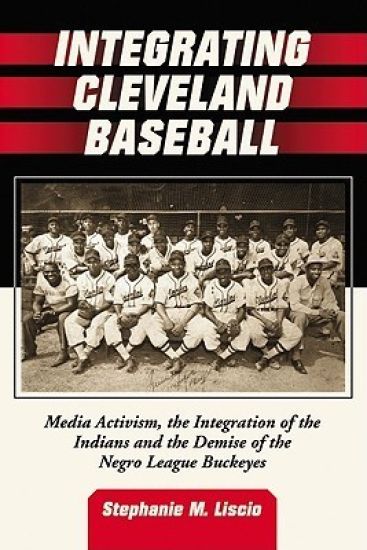
Focusing on the Negro American League Buckeyes, this detailed history describes the effects of major league integration on blackball in Cleveland, as well as the controversial role that the local black press played in the transformation. Included are historical photos, rosters for all Cleveland Negro League teams, and a list of the city's players in the annual East-West All-Star game.
Making Catholicism Chinese examines a little-known chapter of Catholic life in China, when a coalition of foreign-born and Chinese Catholics strove to make the Church indigenously "Chinese." This book demonstrates how the indigenization movement, begun as a bid to render Catholicism a Chinese religion, came to support Chinese state-building instead. In the first half of the 20th century, China transformed from a faltering and semi-colonized empire to a tentatively pluralistic republic to an increasingly militarized one-party state. Religious communities were driven to "modernize" for the sake of the new nation. In the case of Catholicism, the Belgian-born Lazarist Vincent Lebbe most publicly advocated for a Chinese Church, though the wider movement was guided by an array of Chinese clergy, newspaper magnates, scholar-politicians, artists, and army medics and combatants striving in various ways to be both faithful Catholics and patriotic citizens. Their indigenization project coincided with a national embrace of modernity as an ideal, leading Catholics to take up a variety of causes: promoting Chinese clergy as bishops in opposition to French dominance in the missions, experimenting with new forms of education and mass media, and ultimately joining the right-leaning Nationalist regime's war effort against Japan. Stephanie Wong thoroughly documents this history and definitively shows that the movement failed to establish the local Church as a distinct Chinese religion
Surviving and escaping a toxic or abusive relationship can often only be part of the struggle. Long after, survivors often struggle to heal; your self-esteem may be damaged, you may feel rage and betrayal, and you may punish and/or blame yourself. The author of Gaslighting and specialist in toxic behavior, narcissistic abuse, and personality disorders, Dr. Stephanie Sarkis has seen it all--and she is here to help you understand how to move forward. In Healing from Toxic Relationships, Dr. Sarkis extends compassion and knowledge to survivors, helping you understand the underpinnings of toxic behavior and how to find peace.Highlighting ten essential steps, Dr. Sarkis provides survivors with an accessible framework that can be applied to anyone preparing to heal: 1. Block or Limit Contact2. Create Your Own Closure3. Forgive Yourself4. Establish Boundaries5. Talk to a Professional6. Practice Self-Care7. Reconnect8. Grieve9. Look Outward10. Prevent: Keeping Toxic People AwayAnyone who is in a toxic relationship-whether it's with a romantic partner, colleague, family member, or friend-deserves a way out and a path forward. Dr. Sarkis offers help and hope.
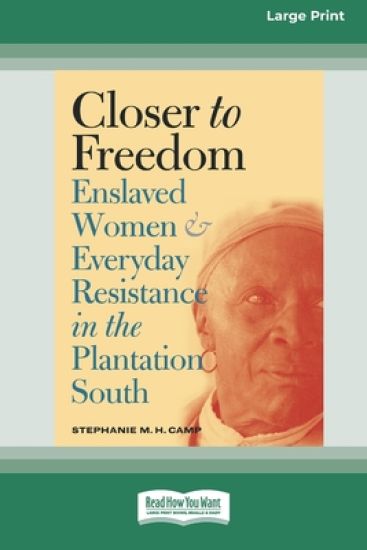
Recent scholarship on slavery has explored the lives of enslaved people beyond the watchful eye of their masters. Building on this work and the study of space, social relations, gender, and power in the Old South, Stephanie M.H. Camp examines the everyday containment and movement of enslaved men and, especially, enslaved women. In her investigation of the movement of bodies, objects, and information, she extends our recognition of slave resistance into new arenas and reveals an important and hidden culture of opposition. Camp discusses the multiple dimensions to acts of resistance that might otherwise appear to be little more than fits of temper. She brings new depth to our understanding of the lives of enslaved women, whose bodies and homes were inevitably political arenas. Through Camp's insight, truancy becomes an act of pursuing personal privacy. Illegal parties (''frolics'') become an expression of bodily freedom. And bondwomen who acquired printed abolitionist materials and posted them on the walls of their slave cabins (even if they could not read them) become the subtle agitators who inspire more overt acts. The culture of opposition created by enslaved women's everyday resistance helped foment and sustain the more visible resistance of men in the individual act of running away and in the collective action of slave revolts. Ultimately, Camp argues, the Civil War years saw revolutionary change that had been in the making for decades.
An authoritative guide for improving teaching, learning, and literacy in content area classrooms This book introduces teachers to the Disciplinary Literacy instructional framework developed by the Institute for Learning, University of Pittsburgh. Grounded in the Principles of Learning developed by acclaimed educator Lauren Resnick, the framework is designed to prepare students, grades 6 and up, to master the rigorous academic content learning required for college success. Unlike 'generic' teaching models, the framework is specifically tailored for each of the content disciplines. Highly practical, the book shows teachers how to integrate literacy development and thinking practices into their routine content instruction, with separate chapters devoted to math, science, history, and English/language arts. The book also shows how school instructional leaders can support teachers in learning and using this instructional approach. Offers an innovative approach for improving literacy, thinking, and content learning in secondary studentsIncludes detailed instructional guidance plus numerous classroom examples of lessons, dialogs, and teaching routinesFeatures chapters on each of the content areas-math, science, language arts, and social sciencesProvides leadership guidance in implementing the methodForeword written by internationally acclaimed educator and cognitive scientist Lauren Resnick
It is always "riot season" in Robeson County, NC where 65k state recognized Lumbees oppress 4k NC Tuscarora. During the wild summer of 2020, Bruce Black's life turns from moonshine to wine when he learns the truth about his heritage, and he ends up fighting for his life and four thousand others who grew up believing the lies. A grassroots movement to educate the masses on the area's true Native history, to lift the oppression, expose the unscrupulous and find the stolen proof of ascendency, leads to a powerful explosion when outsiders rush in to help Bruce Black.
The Practice of Journaling Prayer, Testimony, and Gratitude provides practical wisdom on cultivating a transformative practice of spiritual journaling. This book is designed to be a companion book to assist anyone interested in journaling their prayer, testimony and gratitude. In this book, you are invited to deepen your understanding of the spiritual discipline of journaling. It provides practical and theoretical insights for a deeper understanding about prayer, gratitude and testimony, as spiritual, life-giving practices. It also provides practical tips and examples of what to write and a 'DIY' guide to developing your own journal.
Is it possible to derive a viable definition of persons from Aristotle’s work? In A Person as a Lifetime: An Aristotelian Account of Persons, Stephanie M. Semler argues that we can. She finds the component parts of this definition in his writing on ethics and metaphysics, and the structure of this working definition is that of an entire lifetime. If J.O. Urmson is right that “[t]o call somebody a eudaimon is to judge his life as a whole,” then a Greek, and by extension an Aristotelian account of personhood would be a description of an entire human life. Likewise, the evaluation of that life would have to be done at its termination. The concept of persons is at least as much a moral one as it is a metaphysical one. For this reason, Semler contends that an important insight about persons is to be found in Aristotle’s ethical works. The significance of judging one to be a eudaimon is in understanding that the life is complete—that is, it has a beginning, middle, and an end, with the same person at the helm for the duration. If we know what Aristotle’s requirements are for a human lifetime is to have all of these features, it follows that we can derive an Aristotelian concept of persons from it. We find the benefit of such an investigation when the difficulties with issues surrounding personal identity seem to indicate that either personal identity must inhere in the physical body of a person, or that, on pain of a view that resembles dualism, it simply doesn’t exist. A Person as a Lifetime will be of particular interest to students and scholars of philosophy, history, classics, and psychology, and to anyone with an interest in Aristotle.
In the wake of the devastating WWI, three Jews headed the most valuable territory in the British Empire in addition to a strategically important new addition. Edwin Montagu held the position of Secretary of State for India, Rufus Isaacs (Lord Reading) was the newly appointed Viceroy of India, and Herbert Samuel arrived in Jerusalem as the first High Commissioner of Palestine. Their appointments came at a time of great upheaval as Indian nationalists clamoured for independence, pan-Islamists fought to keep the defeated Ottoman Empire intact and the sultan in Constantinople, and Zionists sought to build on the wartime promise by the British government to create a Jewish homeland in Palestine in face of opposition by Palestinians and pan-Islamists. The task of tackling these issues was made all the more difficult by accusations that Jews were not loyal to the British Empire and its goals, a view promoted by the appearance of the antisemitic Protocols of the Elders of Zion in English translation. This book follows this web of divisive imperial politics, and nationalist and pan-Islamist aspirations in India and Palestine, through the lives and work of these three men whose efforts were coloured by the post-war fear of a declining empire that was being corroded from within.
An in-depth examination of the different forms of privilege perpetuating inequality within American society In this era of #MeToo and #BlackLivesMatter, inequality is at the forefront of American thought like never before. Yet many of the systems of privilege upholding the status quo remain unchanged. Many Americans who advocate a merit-based, race-free worldview do not acknowledge the systems of privilege which benefit them. Men remain at the top of the gender wage gap and white people are five times less likely to be stopped by police than their Black neighbors. White families can build lives using social and financial inheritances that have been denied to Black Americans and immigrants for centuries. Individual chapters focus on language, the workplace, the implications of comparing racism and sexism, race-based housing privilege, the dream of diversity and the cycle of exclusion, the rule of law and invisible systems of privilege, and the power of law to transform society. Twenty-five years since its first publication, Privilege Revealed is more relevant than ever. With a new preface and substantive foreword, this book offers readers important insight into the inequalities still pervading American society and encourages us all to confront our own relationship to these too often invisible privileges.
An in-depth examination of the different forms of privilege perpetuating inequality within American society In this era of #MeToo and #BlackLivesMatter, inequality is at the forefront of American thought like never before. Yet many of the systems of privilege upholding the status quo remain unchanged. Many Americans who advocate a merit-based, race-free worldview do not acknowledge the systems of privilege which benefit them. Men remain at the top of the gender wage gap and white people are five times less likely to be stopped by police than their Black neighbors. White families can build lives using social and financial inheritances that have been denied to Black Americans and immigrants for centuries. Individual chapters focus on language, the workplace, the implications of comparing racism and sexism, race-based housing privilege, the dream of diversity and the cycle of exclusion, the rule of law and invisible systems of privilege, and the power of law to transform society. Twenty-five years since its first publication, Privilege Revealed is more relevant than ever. With a new preface and substantive foreword, this book offers readers important insight into the inequalities still pervading American society and encourages us all to confront our own relationship to these too often invisible privileges.
We Gon’ Be Alright: Resistance and Healing in Black Movement Spaces, 2012–2021 is a profound exploration of Black activism and organizing during a pivotal decade in American history. Rev. Dr. Stephanie M. Crumpton explores the practices of care, reflection, and creativity that Black activists employed to heal and resist amidst the sociopolitical turbulence from the Obama era through the first Trump presidency. This period, marked by the myth of a “post-racial” America, saw a resurgence in racial violence and hate crimes, culminating in the 2021 Capitol insurrection. Against this backdrop, Crumpton captures the resilience and ingenuity of Black movement workers as they navigated these challenges. Drawing on oral histories and personal narratives, Crumpton provides an intimate look at the lived experiences of thirty-seven full-time community organizers. These activists and organizers share their strategies for maintaining an ethic of care that sustains them while fighting against both external oppression and internal community struggles. The book highlights how contemporary Black resisters have leveraged a growing understanding of trauma and healing to enhance their activism. This blend of historical knowledge and modern therapeutic practices has equipped them with a broader array of tools to support their communities. Rooted in womanist practical theology, We Gon’ Be Alright emphasizes the interconnectedness of white supremacy with other forms of oppression such as sexism, homophobia, and classism. Crumpton’s work underscores the necessity of “deep, deep healing” to address these multifaceted threats to Black life. This book is an essential resource for scholars, activists, and anyone interested in understanding the dynamics of Black resistance and healing in contemporary America. Through its detailed examination of the past decade, it offers valuable insights into the ongoing struggle for Black humanity, dignity, and a thriving future.
The Two of Me is an in-depth Bible study on the two natures of every Christian. This book will take you through each nature and help you understand why you do what you do. This book will help you escape the "Jekyll and Hyde" lifestyle.