Drawing on a wealth of ethnographic detail, Stephanie Bjork offers the first study on the messy role of clan or tribe in the Somali diaspora, and the only study on the subject to include women's perspectives. Somalis Abroad illuminates the ways clan is contested alongside ideas of autonomy and gender equality, challenged by affinities towards others with similar migration experiences, transformed because of geographical separation from family members, and leveraged by individuals for cultural capital. Challenging prevailing views in the field, Bjork argues that clan-informed practices influence everything from asylum decisions to managing money. The practices also become a pattern that structures important relationships via constant--and unwitting--effort.
Drawing on a wealth of ethnographic detail, Stephanie Bjork offers the first study on the messy role of clan or tribe in the Somali diaspora, and the only study on the subject to include women's perspectives. Somalis Abroad illuminates the ways clan is contested alongside ideas of autonomy and gender equality, challenged by affinities towards others with similar migration experiences, transformed because of geographical separation from family members, and leveraged by individuals for cultural capital. Challenging prevailing views in the field, Bjork argues that clan-informed practices influence everything from asylum decisions to managing money. The practices also become a pattern that structures important relationships via constant--and unwitting--effort.
Massachusetts is a state that has left a lasting mark on the entire nation. The site of one of the earliest European settlements in the New World, it also saw the outbreak of the American Revolution, and today the state is a pioneer in innovation and education. Filled with fun facts, vivid photographs, and interesting sidebars, this book explores the history and geography of this important state and introduces readers to some of its famous residents and most important contributions.
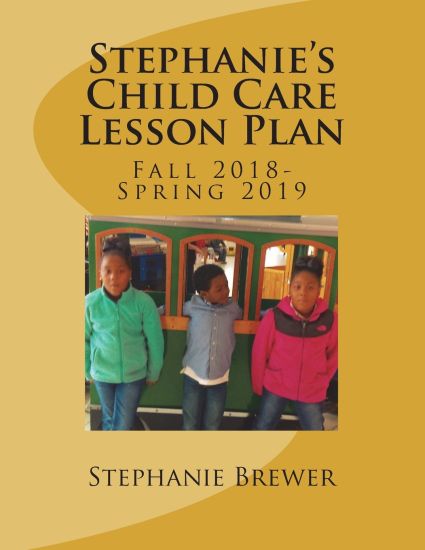
This is a book that can be used to tutor and to teach children as young as 2 years old, but primarily focused on 3 and 4 year old's in a Child Care setting. it focuses on learning letters, numbers, colors, their name, and shapes. It can help children get a early jump into education before elementary school.
This is a Child Care Lesson Plan/ Worksheet that allows Teachers or Parents to start teaching their children as early as age 2 at home or in a Child Care Setting. This promotes learning early on and prepares children for Elementary School, but also life in general.
What It Feels Like interrogates an underexamined reason for our failure to abolish rape in the United States: the way we communicate about it. Using affective and feminist materialist approaches to rhetorical criticism, Stephanie Larson examines how discourses about rape and sexual assault rely on strategies of containment, denying the felt experiences of victims and ultimately stalling broader claims for justice.Investigating anti-pornography debates from the 1980s, Violence Against Women Act advocacy materials, sexual assault forensic kits, public performances, and the #MeToo movement, Larson reveals how our language privileges male perspectives and, more deeply, how it is shaped by systems of power—patriarchy, white supremacy, ableism, and heteronormativity. Interrogating how these systems work to propagate masculine commitments to “science” and “hard evidence,” Larson finds that US culture holds a general mistrust of testimony by women, stereotyping it as “emotional.” But she also gives us hope for change, arguing that testimonies grounded in the bodily, material expression of violation are necessary for giving voice to victims of sexual violence and presenting, accurately, the scale of these crimes. Larson makes a case for visceral rhetorics, theorizing them as powerful forms of communication and persuasion.Demonstrating the communicative power of bodily feeling, Larson challenges the long-held commitment to detached, distant, rationalized discourses of sexual harassment and rape. Timely and poignant, the book offers a much-needed corrective to our legal and political discourses.
What It Feels Like interrogates an underexamined reason for our failure to abolish rape in the United States: the way we communicate about it. Using affective and feminist materialist approaches to rhetorical criticism, Stephanie Larson examines how discourses about rape and sexual assault rely on strategies of containment, denying the felt experiences of victims and ultimately stalling broader claims for justice.Investigating anti-pornography debates from the 1980s, Violence Against Women Act advocacy materials, sexual assault forensic kits, public performances, and the #MeToo movement, Larson reveals how our language privileges male perspectives and, more deeply, how it is shaped by systems of power—patriarchy, white supremacy, ableism, and heteronormativity. Interrogating how these systems work to propagate masculine commitments to “science” and “hard evidence,” Larson finds that US culture holds a general mistrust of testimony by women, stereotyping it as “emotional.” But she also gives us hope for change, arguing that testimonies grounded in the bodily, material expression of violation are necessary for giving voice to victims of sexual violence and presenting, accurately, the scale of these crimes. Larson makes a case for visceral rhetorics, theorizing them as powerful forms of communication and persuasion.Demonstrating the communicative power of bodily feeling, Larson challenges the long-held commitment to detached, distant, rationalized discourses of sexual harassment and rape. Timely and poignant, the book offers a much-needed corrective to our legal and political discourses.
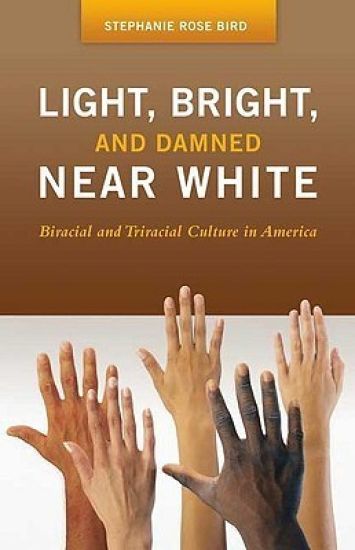
The election of America's first biracial president brings the question dramatically to the fore. What does it mean to be biracial or tri-racial in the United States today? Anthropologist Stephanie Bird takes us into a world where people are struggling to be heard, recognized, and celebrated for the racial diversity one would think is the epitome of America's melting pot persona. But being biracial or tri-racial brings unique challenges - challenges including prejudice, racism and, from within racial groups, colorism. Yet America is now experiencing a multiracial baby boom, with at least three states logging more multiracial baby births than any other race aside from Caucasians. As the Columbia Journalism Review reported, American demographics are no longer black and white. In truth, they are a blended, difficult-to-define shade of brown.Bird shows us the history of biracial and tri-racial people in the United States, and in European families and events. She presents the personal traumas and victories of those who struggle for recognition and acceptance in light of their racial backgrounds, including celebrities such as golf expert Tiger Woods, who eventually quit trying to describe himself as Cablanasin, a mix including Asian and African American. Bird examines current events, including the National Mixed Race Student Conference, and the push to dub this Generation MIX. And she examines how American demographics, government, and society are changing overall as a result. This work includes a guide to tracing your own racial roots.
It's not the lack of desire that keep us from achieving our goals...it's the lack of consistent, diligent, persistence in focusing on achieving those goals. In other words, we forget the plans that we have made, or we forget the motivation for the plans that we have created. Forget no more...Here is an opportunity to identify and preserve your most treasured plans. Here is an opportunity to plan your success and keep to that plan. Here is your Vision Planner!
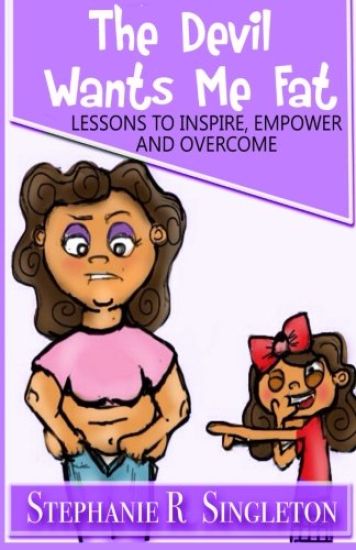
Have you ever been called fat? Do you feel guilty and ashamed when you overeat? Have you ever felt challenged about whether or not you are considered a glutton? These questions and others are confronted through the personal stories of the author, Stephanie Singleton. She shares an autobiographical account of her personal struggles and victories with weight loss and takes readers on her personal journey in understanding the pain surrounding emotional eating.Through utilizing biblically inspired lessons, she has been able to go from a size 20 to a size 8. Singleton shares the lessons that she has learned throughout her years of her weight fluctuations and is transparent as she provides a practical approach to understanding the spiritual battle surrounding emotional eating. The lessons provide insight to help readers understand their own emotional eating battles and to guide them toward their individual healing.
Peacemaker had a long road to the spotlight and he's not alone. There are dozens of unique, sometimes absurd, and yet truly memorable characters waiting for their chance to shine. Strange and Unsung All-Stars of the DC Multiverse celebrates some of the quirkiest, most compelling, and ready-for-primetime characters from throughout DC's history. With peculiar powers-like Matter-Eater Lad to Arm-Fall-Off Boy-and one-of-a-kind costumes-from Red Tornado with her red long johns and a cooking pot for a helmet to Blue Snowman with her wintry robotic armour-these characters are truly unforgettable. Dive in and discover your next favourite DC Super Hero or Villain.
In Resisting Equality Stephanie R. Rolph examines the history of the Citizens' Council, an organisation committed to coordinating opposition to desegregation and black voting rights. In the first comprehensive study of this racist group, Rolph follows the Citizens' Council from its establishment in the Mississippi Delta, through its expansion into other areas of the country and its success in incorporating elements of its agenda into national politics, to its formal dissolution in 1989.Founded in 1954, two months after the Brown v. Board of Education decision by the U.S. Supreme Court, the Council spread rapidly in its home state of Mississippi. Initially, the organisation relied on local chapters to monitor signs of black activism and take action to suppress that activism through economic and sometimes violent means. As the decade came to a close, however, the Council's influence expanded into Mississippi's political institutions, silencing white moderates and facilitating a wave of terror that severely obstructed black Mississippians' participation in the civil rights movement. As the Citizens' Council reached the peak of its power in Mississippi, its ambitions extended beyond the South. Alliances with like-minded organisations across the country supplemented waning influence at home, and the Council movement found itself in league with the earliest sparks of conservative ascension, cultivating consistent messages of grievance against minority groups and urging the necessity of white unity. Much more than a local arm of white terror, the Council's work intersected with anticommunism, conservative ideology, grassroots activism, and Radical Right organisations that facilitated its journey from the margins into mainstream politics.Perhaps most crucially, Rolph examines the extent to which the organisation survived the successes of the civil rights movement and found continued relevance even after the Council's campaign to preserve state-sanctioned forms of white supremacy ended in defeat. Using the Council's own materials, papers from its political allies, oral histories, and newspaper accounts, Resisting Equality illuminates the motives and mechanisms of this destructive group.
So Much Inside is a first person story on a young woman named Shelly. It details the events of her path to find herself and self love. This book creates the scene of a developing little girl who is turned into a woman before she is ready, forced to hold secrets that damages her young mind, taking you through Shelly's interesting life as a young woman who has been criticized, demeaned and hurt beyond what could possibly be imagined. Not all of her moments in life help to destroy her, but instead make her stronger. She gets it together in the end and answer the one probing question, "Why Didn't She Love Herself?"
Compensation fairness is a universal preoccupation in today’s workplace, from whispers around the water cooler to kabuki in the C-suite. Gender discrimination takes center stage in discussions of internal pay equity, but many other protected characteristics may be invoked as grounds for alleging discrimination: age, race, disability, physical appearance, and more. This broad range of vulnerability to discrimination charges is often neglected in corporate assessments of how well compensation systems comply with the law and satisfy employee norms of fairness. Blind spots in general equity constitute a serious threat to organizational performance and risk management. In Compensating Your Employees Fairly, a respected practitioner and consultant lays out in practical terms everything you need to know to protect your company along the full spectrum of internal pay equity issues, including all the technical methods you need to optimize compliance and minimize risk. Compensating Your Employees Fairly is a timely survey and comprehensive handbook for compensation specialists, HR professionals, EEO compliance officers, and in-house counsel. It provides all the information you need to ensure that compensation systems are equitable, auditable, internally consistent, and externally compliant with equal employment opportunity laws and regulations. The author presents technical information—both legal and statistical—in common-sense terms. Her non-technical breakdown of complex statistical concepts distills just as much as practitioners need to know in order to effectively deploy and interpret the standard applications of statistical analysis to internal pay equity. The focus throughout the book is on real-world application, current examples, and up-to-the-minute information on recent and pending wrinkles in the evolving legal landscape. Readers of Compensating Your Employees Fairly will learn: Whyinternal equity in compensation matters How to detect intentional and non-intentional discrimination in compensation The basics of statistical inference and multiple regression analysis The essentials of data availability, measurability, and collection The criteria for assessing compensation systems for internal equity How to investigate potential problems and react to formal complaints and actions How to avoid litigation and put in place ongoing measures for proactive self-auditing