Kirjojen hintavertailu. Mukana 11 244 527 kirjaa ja 12 kauppaa.

Kirjahaku

Etsi kirjoja tekijän nimen, kirjan nimen tai ISBN:n perusteella.

1000 tulosta hakusanalla Stephen Douglas

Stephen Douglas

Stephen Douglas

Damon Wells

University of Texas Press
1971
pokkari
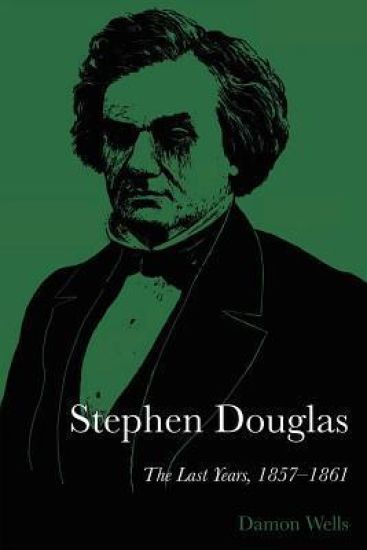
Stephen Douglas and the old Union lived out their last years together. It was the most critical time in the life of both the Illinois senator and his country. During most of the period 1857–1861 the American nation could still choose between adjustment of its sectional differences and civil war, and the man they called the Little Giant seemed the one statesman most likely to lead the country onto a course of compromise and reconciliation. But Douglas’ intense involvement with the American political scene-his great accomplishments in enacting the Compromises of 1850 and 1854, and his victory in the senatorial campaign of 1858-tended at times to disguise a growing alienation from the mainstream of American political life. By 1857 that alienation had reached acute proportions. In part, Douglas fell victim to his own virtues. He sought to be a nationalist in an age of sectionalism; he preached the value of compromise when most Americans questioned its worth. In other respects, Douglas’ political failures are less excusable. His attempt to convert an apparently amoral attitude toward slavery into a principle-popular sovereignty-found him dismissed by antislavery citizens as immoral and by proslavery citizens as unreliable. For too long, Douglas, professing to “care not” about the future of slavery, overlooked how much Americans could care once their consciences had been aroused or their way of life supposedly threatened. Douglas failed to win the presidential campaign of 1860 largely because he could satisfy neither the proponents nor the enemies of slavery. Yet if the last years of Douglas’ life were marred by failure, he was not ultimately the tragic figure some historians have suggested. During the campaign of 1860 a profound change began to take place in Stephen Douglas. The outmoded nationalism he had preached for so long began to give way to Unionism. In his eventual support of Lincoln and his defense of the Union, Douglas at last found a policy worthy of his great talents. Damon Wells first became interested in Stephen Douglas in 1959 after seeing a Broadway dramatization of the Lincoln-Douglas Debates. Later, his studies convinced him that playwright and historian alike were often unfair to Douglas. If Lincoln was to be a hero, then Douglas had to be cast as a villain. This study fills the need for a fresh and dispassionate look at Douglas and provides a fairer assessment than can be reached by simply endorsing contradictory views of apologists and critics. It places particular emphasis on the Little Giant’s struggle with President James Buchanan, the debates with Lincoln, the presidential campaign of 1860, Douglas’ complex relationship with the South, and a careful analysis of the elusive and at times exasperating principle of popular sovereignty.
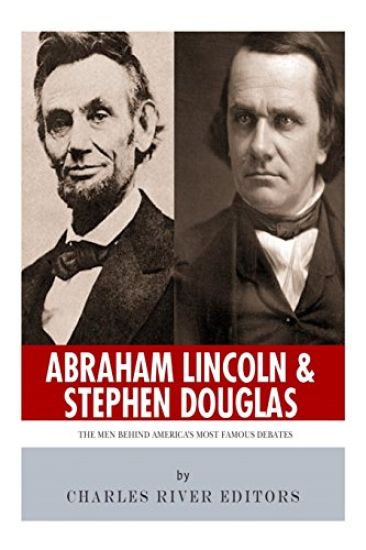
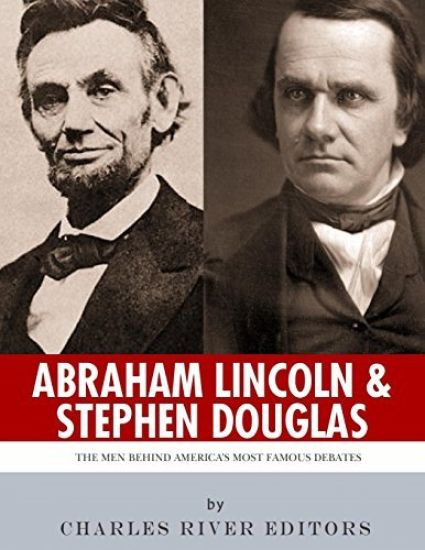
Abraham Lincoln and Stephen Douglas: The Men Behind America's Most Famous Debates

Abraham Lincoln and Stephen Douglas: The Men Behind America's Most Famous Debates

Charles River

Createspace Independent Publishing Platform
2013
nidottu
"This declared indifference, but, as I must think, covert real zeal for the spread of slavery, I cannot but hate. I hate it because of the monstrous injustice of slavery itself. I hate it because it deprives our republican example of its just influence in the world-enables the enemies of free institutions, with plausibility, to taunt us as hypocrites-causes the real friends of freedom to doubt our sincerity, and especially because it forces so many really good men amongst ourselves into an open war with the very fundamental principles of civil liberty-criticizing the Declaration of Independence, and insisting that there is no right principle of action but self-interest." - Abraham Lincoln Abraham Lincoln (1809-1865) is one of the most famous Americans in history and one of the country's most revered presidents. Schoolchildren can recite the life story of Lincoln, the "Westerner" who educated himself and became a self made man, rising from lawyer to leader of the new Republican Party before becoming the 16th President of the United States. Lincoln successfully navigated the Union through the Civil War but didn't live to witness his crowning achievement, becoming the first president assassinated when he was shot at Ford's Theater by John Wilkes Booth on April 14, 1865. In the generation after the Civil War, Lincoln became an American deity and one of the most written about men in history. With such a sterling reputation, even historians hesitate to write a critical word; in Team of Rivals Doris Kearns Goodwin casts Lincoln as an almost superhuman puppet master in control of his Cabinet's political machinations and the war's direction, juggling the balancing act flawlessly. As a result, Lincoln the man is far less known than Lincoln the myth. Naturally, Lincoln participated in the most famous debates in American history. Throughout the Fall of 1858, U.S. Senate candidates Abraham Lincoln and Stephen Douglas participated in seven three-hour debates throughout Illinois. This unprecedented method of campaigning drew national attention, one that is still often idealized even today among those who feel politics is too bitterly partisan. The main theme of the debates was the topic being discussed across the nation: slavery. When Congress created the territories of Kansas and Nebraska in 1854, it allowed the citizens of those territories to vote whether the new states would be free states or slave states. This idea of allowing the citizens to vote was known as "popular sovereignty", and it was championed by the "Little Giant", Stephen Douglas. Casting himself as a moderate, Douglas believed popular sovereignty would not divide the nation, and thinking further ahead he believed slavery could not thrive in the Western territories because the land there was inhospitable to slave labor anyway. Douglas looked to blunt Lincoln's arguments during the debates by casting him as a radical "Black Republican", accusing him of advocating for the social and legal equality of the races. Though he opposed slavery on moral grounds, Douglas also wanted to deny citizenship to all African-Americans, which the Supreme Court had ruled in the Dred Scott case. In his rebuttal, Lincoln offered one of his most quotable moments: "I protest against the counterfeit logic which concludes that, because I do not want a black woman for a slave, I must necessarily want her for a wife."
Abraham Lincoln and Stephen Douglas: The Men Behind America's Most Famous Debates

Abraham Lincoln and Stephen Douglas: The Men Behind America's Most Famous Debates

Charles River

Createspace Independent Publishing Platform
2018
nidottu
"This declared indifference, but, as I must think, covert real zeal for the spread of slavery, I cannot but hate. I hate it because of the monstrous injustice of slavery itself. I hate it because it deprives our republican example of its just influence in the world-enables the enemies of free institutions, with plausibility, to taunt us as hypocrites-causes the real friends of freedom to doubt our sincerity, and especially because it forces so many really good men amongst ourselves into an open war with the very fundamental principles of civil liberty-criticizing the Declaration of Independence, and insisting that there is no right principle of action but self-interest." - Abraham Lincoln Abraham Lincoln (1809-1865) is one of the most famous Americans in history and one of the country's most revered presidents. Schoolchildren can recite the life story of Lincoln, the "Westerner" who educated himself and became a self made man, rising from lawyer to leader of the new Republican Party before becoming the 16th President of the United States. Lincoln successfully navigated the Union through the Civil War but didn't live to witness his crowning achievement, becoming the first president assassinated when he was shot at Ford's Theater by John Wilkes Booth on April 14, 1865. In the generation after the Civil War, Lincoln became an American deity and one of the most written about men in history. With such a sterling reputation, even historians hesitate to write a critical word; in Team of Rivals Doris Kearns Goodwin casts Lincoln as an almost superhuman puppet master in control of his Cabinet's political machinations and the war's direction, juggling the balancing act flawlessly. As a result, Lincoln the man is far less known than Lincoln the myth. Naturally, Lincoln participated in the most famous debates in American history. Throughout the Fall of 1858, U.S. Senate candidates Abraham Lincoln and Stephen Douglas participated in seven three-hour debates throughout Illinois. This unprecedented method of campaigning drew national attention, one that is still often idealized even today among those who feel politics is too bitterly partisan. The main theme of the debates was the topic being discussed across the nation: slavery. When Congress created the territories of Kansas and Nebraska in 1854, it allowed the citizens of those territories to vote whether the new states would be free states or slave states. This idea of allowing the citizens to vote was known as "popular sovereignty", and it was championed by the "Little Giant", Stephen Douglas. Casting himself as a moderate, Douglas believed popular sovereignty would not divide the nation, and thinking further ahead he believed slavery could not thrive in the Western territories because the land there was inhospitable to slave labor anyway. Douglas looked to blunt Lincoln's arguments during the debates by casting him as a radical "Black Republican", accusing him of advocating for the social and legal equality of the races. Though he opposed slavery on moral grounds, Douglas also wanted to deny citizenship to all African-Americans, which the Supreme Court had ruled in the Dred Scott case. In his rebuttal, Lincoln offered one of his most quotable moments: "I protest against the counterfeit logic which concludes that, because I do not want a black woman for a slave, I must necessarily want her for a wife."
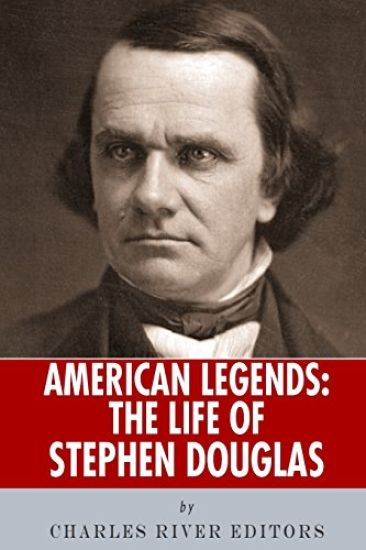
American Legends: The Life of Stephen Douglas

American Legends: The Life of Stephen Douglas

Charles River

Createspace Independent Publishing Platform
2013
nidottu
*Explains the central issues of the 1850s, including the Missouri Compromise, the Kansas-Nebraska Act, popular sovereignty and the Dred Scott Decision. *Includes pictures of Douglas and other important people, places, and events in his life. *Includes a Bibliography for further reading. "Now, I hold that Illinois had a right to abolish and prohibit slavery as she did, and I hold that Kentucky has the same right to continue and protect slavery that Illinois had to abolish it. I hold that New York had as much right to abolish slavery as Virginia has to continue it, and that each and every State of this Union is a sovereign power, with the right to do as it pleases upon this question of slavery, and upon all its domestic institutions. ... And why can we not adhere to the great principle of self-government, upon which our institutions were originally based." - Stephen Douglas A lot of ink has been spilled covering the lives of history's most influential figures, but how much of the forest is lost for the trees? In Charles River Editors' American Legends series, readers can get caught up to speed on the lives of America's most important men and women in the time it takes to finish a commute, while learning interesting facts long forgotten or never known. The most famous debates in American history were held over 150 years ago, and today they are remembered and celebrated mostly because they included future President Abraham Lincoln, one of the nation's most revered men. But in the Fall of 1858, Lincoln was just a one-term Congressman who had to all but beg his U.S. Senate opponent to debate him. That's because his opponent, incumbent U.S. Senator Stephen Douglas, was one of the most famous national politicians of the era. Though Douglas is remembered today almost entirely for his association with Lincoln, in 1858 he was "The Little Giant" of American politics and a leader of the Democratic Party. In particular, it was Douglas who had championed the idea of "popular sovereignty", advocating that the settlers of federal territory should vote on whether their state would become a free state or a slave state. When Congress created the territories of Kansas and Nebraska in 1854, it followed this model, and Douglas believed it was a moderate position that would hold the Union together. But many in the North considered popular sovereignty a deliberate attempt to circumvent the Missouri Compromise, which was supposed to have banned slavery in any state above a certain parallel. As a result, the Lincoln-Douglas debates would be almost entirely about issues pertaining to slavery. Douglas would go on to win reelection in 1858, but Lincoln would win the war, literally and figuratively. In the presidential election of 1860, Lincoln would win the Republican nomination and the presidency in large part because Douglas had fractured the national Democratic Party with some of his stated policies during the 1858 debates. When the Democrats ran a Northern Democrat (Douglas) and a Southern Democrat (Breckenridge) in 1860, they split the vote and handed the election to Lincoln. American Legends: The Life of Stephen Douglas profiles the life and politics of the Little Giant, his seminal debates with Lincoln, and his lasting legacy. Along with pictures of important people, places, and events, you will learn about Stephen Douglas like you never have before, in no time at all.
American Legends: The Life of Stephen Douglas

American Legends: The Life of Stephen Douglas

Charles River

Createspace Independent Publishing Platform
2018
nidottu
*Explains the central issues of the 1850s, including the Missouri Compromise, the Kansas-Nebraska Act, popular sovereignty and the Dred Scott Decision. *Includes pictures of Douglas and other important people, places, and events in his life. *Includes a Bibliography for further reading. "Now, I hold that Illinois had a right to abolish and prohibit slavery as she did, and I hold that Kentucky has the same right to continue and protect slavery that Illinois had to abolish it. I hold that New York had as much right to abolish slavery as Virginia has to continue it, and that each and every State of this Union is a sovereign power, with the right to do as it pleases upon this question of slavery, and upon all its domestic institutions. ... And why can we not adhere to the great principle of self-government, upon which our institutions were originally based." - Stephen Douglas A lot of ink has been spilled covering the lives of history's most influential figures, but how much of the forest is lost for the trees? In Charles River Editors' American Legends series, readers can get caught up to speed on the lives of America's most important men and women in the time it takes to finish a commute, while learning interesting facts long forgotten or never known. The most famous debates in American history were held over 150 years ago, and today they are remembered and celebrated mostly because they included future President Abraham Lincoln, one of the nation's most revered men. But in the Fall of 1858, Lincoln was just a one-term Congressman who had to all but beg his U.S. Senate opponent to debate him. That's because his opponent, incumbent U.S. Senator Stephen Douglas, was one of the most famous national politicians of the era. Though Douglas is remembered today almost entirely for his association with Lincoln, in 1858 he was "The Little Giant" of American politics and a leader of the Democratic Party. In particular, it was Douglas who had championed the idea of "popular sovereignty", advocating that the settlers of federal territory should vote on whether their state would become a free state or a slave state. When Congress created the territories of Kansas and Nebraska in 1854, it followed this model, and Douglas believed it was a moderate position that would hold the Union together. But many in the North considered popular sovereignty a deliberate attempt to circumvent the Missouri Compromise, which was supposed to have banned slavery in any state above a certain parallel. As a result, the Lincoln-Douglas debates would be almost entirely about issues pertaining to slavery. Douglas would go on to win reelection in 1858, but Lincoln would win the war, literally and figuratively. In the presidential election of 1860, Lincoln would win the Republican nomination and the presidency in large part because Douglas had fractured the national Democratic Party with some of his stated policies during the 1858 debates. When the Democrats ran a Northern Democrat (Douglas) and a Southern Democrat (Breckenridge) in 1860, they split the vote and handed the election to Lincoln. American Legends: The Life of Stephen Douglas profiles the life and politics of the Little Giant, his seminal debates with Lincoln, and his lasting legacy. Along with pictures of important people, places, and events, you will learn about Stephen Douglas like you never have before, in no time at all.
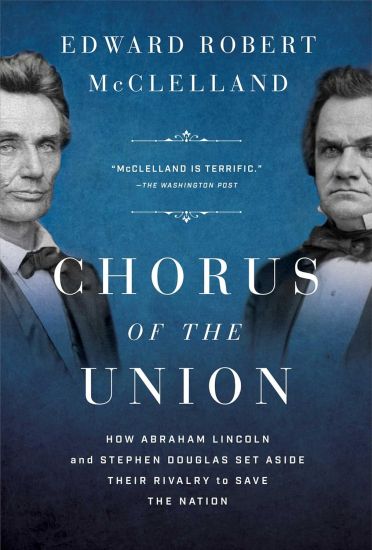
Chorus of the Union: How Abraham Lincoln and Stephen Douglas Set Aside Their Rivalry to Save the Nation
An impassioned and timely exploration of Abraham Lincoln's long-time rivalry--and eventual alliance--with Stephen Douglas. Abraham Lincoln and Stephen Douglas are a misunderstood duo. History remembers them as antagonists, and for most of the years the two men knew each other, they were. In the 1830s, they debated politics around the stove in the back of Joshua Speed's store in Springfield, Illinois. In the 1850s, they disagreed over the Kansas-Nebraska Act and debated slavery as opponents for a Senate seat. In 1860, they both ran for president. Lincoln and Douglas ended as allies, though, against the greatest threat--slavery--that our country has ever faced. When Douglas realized he was going to lose the 1860 election, he stopped campaigning for himself and went South to persuade the slave states to accept Lincoln as president. After that effort failed, and the newly formed Confederate States of America bombed Fort Sumter, Douglas met with Lincoln to discuss raising an army. The story of how Lincoln and Douglas put aside their rivalry to work together for the preservation of the Union has important lessons for our time. We have just been through a presidential election where the loser refused to concede defeat, with violent consequences. Not only did Douglas accept his loss, he spent the final days of his campaign barnstorming the country to build support for his opponent's impending victory, setting aside his long-held desire for the presidency for the higher principle of national unity. Also, by focusing on the importance of Illinois to Lincoln's political development, Chorus of the Union will challenge the notion that he was an indispensable "great man." Lincoln was the right person to lead the country through the Civil War, but he became president because he was from the right place. Living in Illinois provided Lincoln the opportunity to confront Douglas over the Kansas-Nebraska Act. The debates with Douglas during the 1858 Senate campaign brought him the fame and prestige to contend for the Republican presidential nomination in 1860. Lincoln's moderate views on slavery, which he developed in the swing region of a swing state, made him the ideal candidate for an election that had sweeping historical consequences.
Civil War Flags of Tennessee

Civil War Flags of Tennessee

Stephen Douglas Cox

University of Tennessee Press
2020
sidottu
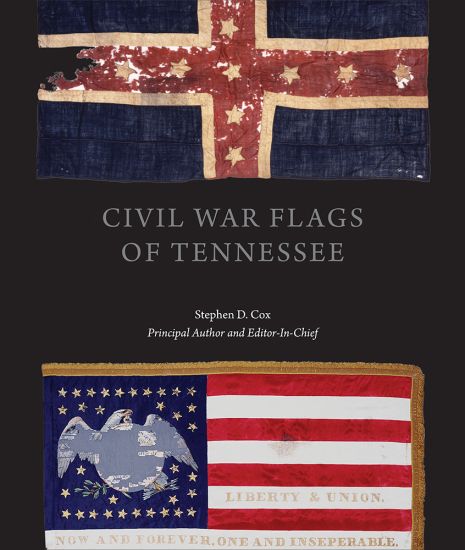
Civil War Flags of Tennessee provides information on all known Confederate and Union flags of the state and showcases the Civil War flag collection of the Tennessee State Museum. This volume is organized into three parts. Part 1 includes interpretive essays by scholars such as Greg Biggs, Robert B. Bradley, Howard Michael Madaus, and Fonda Ghiardi Thomsen that address how flags were used in the Civil War, their general history, their makers, and preservation issues, among other themes. Part 2 is a catalogue of Tennessee Confederate flags. Part 3 is a catalogue of Tennessee Union flags. The catalogues present a collection of some 200 identified, extant Civil War flags and another 300 flags that are known through secondary and archival sources, all of which are exhaustively documented. Appendices follow the two catalogue sections and include detailed information on several Confederate and Union flags associated with the states of Mississippi, North Carolina, and Indiana that are also contained in the Tennessee State Museum collection.Complete with nearly 300 color Illustrations and meticulous notes on textiles and preservation efforts, this volume is much more than an encyclopedic log of Tennessee-related Civil War flags. Stephen Cox and his team also weave the history behind the flags throughout the catalogues, including the stories of the women who stitched them, the regiments that bore them, and the soldiers and bearers who served under them and carried them. Civil War Flags of Tennessee is an eloquent hybrid between guidebook and chronicle, and the scholar, the Civil War enthusiast, and the general reader will all enjoy what can be found in its pages.Unprecedented in its variety and depth, Cox's work fills an important historiographical void within the greater context of the American Civil War. This text demonstrates the importance of Tennessee state heritage and the value of public history, reminding readers that each generation has the honor and responsibility of learning from and preserving the history that has shaped us all-and in doing so, honoring the lives of the soldiers and civilians who sacrificed and persevered.