Reflecting on the deep and complex changes in Georgian politics over the last quarter of a century, this book highlights the domestic and international developments that have shaped Georgia as a state and society. Georgia: From Autocracy to Democracy covers a wide array of topics, including the economy, elections, judicial and educational systems, relations with the EU, and Georgia’s interaction with its regional neighbours, including Russia, Turkey, and Iran. In the book, Georgian policy-makers, practitioners, and scholars who have worked in the administration, in the opposition, in the Third Sector, and in academia provide first-hand perspectives on Georgia’s political and economic life. They demonstrate unusual insight into the extraordinary transformations in Georgia over the last twenty-five years, from the authoritarianism of President Gamsakhurdia, through the experience of civil war in the 1990s, to democracy today.
Georgian social democracy was the most successful social democratic movement in the Russian Empire. Despite its small size, it produced many of the leading revolutionary figures of 1917, including Irakli Tsereteli, Karlo Chkheidze, Noe Zhordania, and Joseph Stalin. In the first of two volumes, Stephen Jones writes the first history in English of this undeservedly neglected national movement, which represented one of the earliest examples of European social democracy at the turn of the twentieth century. Georgian social democracy was part of the Russian social democracy from which Bolshevism and Menshevism emerged. But innovative theoretical programs and tactics led Georgian social democracy down an independent path. The powerful Georgian organization united all native classes behind it, and it set a remarkable precedent for many of the anti-colonial nationalist movements of the twentieth century. At the same time, Georgian social democracy was committed to a "European" path, a "third way" that attempted to combine grassroots democracy, private manufacturing, and private land ownership with socialist ideology.One of the few Western historians fluent in Georgian, Jones fills major gaps in the history of revolutionary and national movements of the Russian Empire.
Following the collapse of the Russian Empire, the small nation of Georgia established its independence in May 1918. Its leaders surprised the world by creating the first social democratic state. Based on a combination of parliamentarianism and direct democracy, it was a representative government of the peasants and workers themselves, with ballots in their hands.The First Social Democracy is the definitive history of a government that should inspire social democrats today. Stephen F. Jones chronicles how the founders of the new state navigated myriad challenges, including territorial threats from abroad, internal ethnic conflicts, and geopolitical rivalries between the imperial Ottomans, the British, and Germans. In the midst of these existential challenges, Georgia’s social democrats set about writing a constitution to put the country on a distinctive path of genuine self-government—protecting democratic rights, promoting political pluralism, and championing equality. Jones brings to life the passionate debates that shaped Georgia’s democracy during a moment of acute global instability.The Democratic Republic of Georgia was strangled in its crib. Just four days after the constitution was ratified, its capital fell to the Red Army. Under Soviet rule, the republic was lost to history. Soviet scholars were forbidden to research this Georgian story, and Western scholars had little interest in a small and peripheral state that was independent for only three years. Recovering a forgotten experiment in democratic citizenship and statecraft, Jones reminds us of those audacious times when Georgians created and defended political freedom against the rise of Soviet communism.
La Triviata: The Tree of Us is a satiric, poetic allegory of sorts, portraying the present-day situation of civilization, a quest for love, riches and fame, politics, man and his world, and where it is all going. The characters are very "real," even the "choruses of trees" carrying on as they do. The interplay of the characters, each with a driving need and a plan, a desire, a quest, playing off each other, trying to use each other to their own desired ends, all the time spouting pompous, often ridiculous rhetoric. The "message" is relevant in every way as the characters converge on and around and under the archaic iconic monument, a towering monolith, "The Tree of Us," overshadowing everything. La Triviata is unique in about every way possible. Read it. Slowly, out loud. Take away what you will from the quotable lines spilling off every page, easily taken out of context, changing their meanings, to the overall story and the concept(s) not only implied but expressed at every turn and shattering out with the climax, an end foretold, an end to be expected by any and all, and yet an indescribable end.About the AuthorF. Stephen Jones is a curious character, absolutely normal in every way, yet idiosyncratically unique in his own quaint way. He is better known in his circles as "F." F. wrote his first novel, an adventure story, when he was seven years old. He went on to write short stories, poetry, and songs, and worked with bands in the seminal 60s when not involved with helping organize peaceful protests or graduating from the University of Texas with a triple major in English Literature, Classical Greek, and Philosophy (having eschewed advanced theoretical mathematics for its limitations). The author is not what he has done, his "day job." but what he sees: a world that is a big crazy circus on the island of misfit toys, with sideshow freaks and center ring spectacle performers and clowns continually trading place with the audience, and the animals (oh, the animals), and it is all us. We are the misfit toys. The author is you, the author is me, the author is whoever you reach out to be.
James Dobbins; Seth G. Jones; Keith Crane; Christopher S. Chivvis; Andrew Radin; F. Stephen Larrabee; Nora Bensahel; Brooke K. Stearns; Benjamin W. Goldsmith
Peace is the most essential product of nation-building. Without peace, neither economic growth nor democratization is possible. The authors of "Europe's Role in Nation-Building" investigate the use of armed force as part of broader nation-building efforts led by European powers and its success at achieving the objective of transforming a society emerging from conflict into one at peace with itself and its neighbours. They then evaluate Europe's performance against the U.S. and United Nations records in past nation-building operations.The authors focus on factors that can be influenced by outside powers, making valuable recommendations that address the pitfalls of and lessons learned from past operations. They emphasize the need for multilateral operations and the involvement of crucial actors like the European Union and NATO. The success of nation-building activities depends on the wisdom with which all resources are employed."The RAND Nation-Building" series is just this kind of resource, having drawn from a total of 22 European, U.N. and U.S. led nation-building operations since World War II.Other volumes in the series examine the involvement of the United States and the UN in nation-building efforts. In this new addition to the series, the authors take an in-depth look at six European cases (Macedonia, Bosnia, Cote d'Ivoire, Albania, the Democratic Republic of Congo, and Sierra Leone) and one Australian-led operation (the Solomon Islands) to complete a comprehensive history of best practices in nation-building. This series serves as an indispensable reference for the planning of successful future interventions.
G. W. Albee; David Ametrand; Irene Mass Ametrano; Allan Barclay; Thomas E. Backer; John P. Garske; Nelson F. Jones; Stephen Mcconnell; Regis Mcnamara; David Mills; Loren Pankratz; William Schofield; Lee Sechrest; Julian R. Taplin
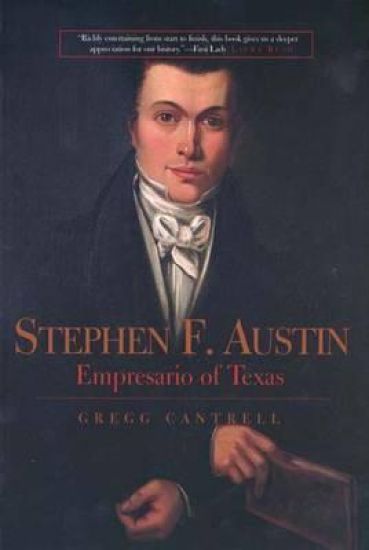
Stephen F. Austin, the "Father of Texas," has long been enshrined in the public imagination as an authentic American hero, but one who was colorless and rather remote. This book, the first major biography in more than seventy years, brings Austin's private life, motives, personality, and character into sharp focus, revealing a driven man who successfully mixed effort and cunning, idealism and pragmatism to build an illustrious career. Gregg Cantrell traces Austin's early life from his privileged boyhood as the son of the Missouri mining baron Moses Austin to his family's humiliating financial downfall after the War of 1812. He tells how in 1821 Stephen Austin inherited his father's daring plan to colonize Spanish Texas. Over the next fifteen years Austin carried out this plan with dazzling success, becoming a consummate manager, exhorter, politician, and diplomat, and playing a central role in the events that led to the Texas Revolution and the establishment of the Lone Star Republic. Within a generation, as a result largely of forces that he helped set in motion, the United States completed its drive for mastery over the North American continent.
This work has been selected by scholars as being culturally important and is part of the knowledge base of civilization as we know it.This work is in the public domain in the United States of America, and possibly other nations. Within the United States, you may freely copy and distribute this work, as no entity (individual or corporate) has a copyright on the body of the work.Scholars believe, and we concur, that this work is important enough to be preserved, reproduced, and made generally available to the public. To ensure a quality reading experience, this work has been proofread and republished using a format that seamlessly blends the original graphical elements with text in an easy-to-read typeface.We appreciate your support of the preservation process, and thank you for being an important part of keeping this knowledge alive and relevant.
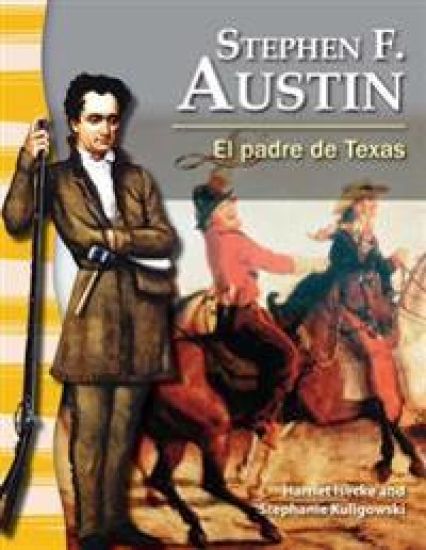
Stephen F. Austin grew up to become known as the Father of Texas. Readers can learn about his interesting and incredible life in this appealing biography that has been translated into Spanish and highlights both Austin's life and Texas history. Through vivid images and illustrations, supportive text, an accommodating glossary and index, and fascinating facts, readers will learn about Texas pioneers, the empresario system, Freemasons, and how Austin became such an important figure in Texas history.
This is a biography and memoir of the founder of Briggs & Stratton & Outboard Marine. One of two individuals to have started two New York Stock Exchange companies prior to 1970. It is a real insight into the life of a remarkable inventor with over 100 patents many developed in the early days of the automotive industry. At the same time it shows his great love for his wife Beatrice Branch and their commitment to enhancing the future of Naples, Fl.
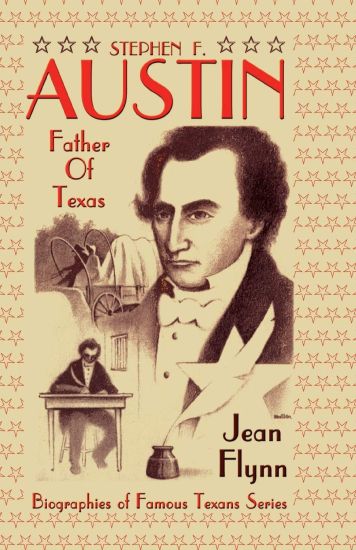
Stephen F. Austin established the first successful Anglo-American colony in what would become Texas. He brought 300 families to Texas in 1825 and while he led the effort for settlers to get along with the Mexican government, he would eventually become a leader in the effort for Texas independence. Today he is recognized as "The Father of Texas."
*Includes pictures *Includes contemporary accounts *Includes online resources and a bibliography for further reading "The independence of Texas is recognized Don't you see it in the papers?" - Stephen F. Austin's last words Texas has a unique history among the 50 states that comprise the United States of America, and much of that is due to the nature of the men who brought about its independence. Of them, few are as famous or more important than Stephen F. Austin. Born in the very shadow of the Founding Fathers in Virginia, Austin seemed destined from birth to do something special. Certainly, his father Moses saw potential in the boy, training him up to take the lead in whatever situation he found himself in, and various life experiences transformed Stephen. Moses provided his son with plenty of the difficulties, including bankruptcy, business losses, and family squabbles, all by the time his son was 20 years old. Ultimately Moses bequeathed his son the chance to become an empresario, a 19th century leader of American pioneers in Texas. Austin in turn shaped the future of Texas in a way that no other leader ever had the opportunity to do, and by carefully choosing men like himself, politically, religiously, and ethically, he helped create an independent nation (and future state) known for its rugged individualism and self-determination. Unfortunately, he also created a place where slavery, America's great shame, was allowed to flourish for more than 40 years, and a place where people of color would struggle for generations to receive equality under the laws, many of which he either wrote or inspired. Ironically, the man whose name is so synonymous with Texas was not involved in the most famous battles that secured its independence. This actually ensured that he survived when so many of his contemporaries died, but he still lost his run for the presidency of Texas and instead had to accept an appointment as the Republic's first Secretary of State. Ultimately, it made little difference in the end, for he served only two months before he died of pneumonia just after his 43rd birthday, but despite his premature death, what cannot be questioned is how profound an impact Austin had on Texas, Mexico, and the United States over the course of several decades. Stephen F. Austin: The Life and Legacy of the Father of Texas looks at how he became one of the Southwest's most important figures. Along with pictures of important people, places, and events, you will learn about Austin like never before.
*Includes pictures *Includes contemporary accounts *Includes online resources and a bibliography for further reading "The independence of Texas is recognized Don't you see it in the papers?" - Stephen F. Austin's last words Texas has a unique history among the 50 states that comprise the United States of America, and much of that is due to the nature of the men who brought about its independence. Of them, few are as famous or more important than Stephen F. Austin. Born in the very shadow of the Founding Fathers in Virginia, Austin seemed destined from birth to do something special. Certainly, his father Moses saw potential in the boy, training him up to take the lead in whatever situation he found himself in, and various life experiences transformed Stephen. Moses provided his son with plenty of the difficulties, including bankruptcy, business losses, and family squabbles, all by the time his son was 20 years old. Ultimately Moses bequeathed his son the chance to become an empresario, a 19th century leader of American pioneers in Texas. Austin in turn shaped the future of Texas in a way that no other leader ever had the opportunity to do, and by carefully choosing men like himself, politically, religiously, and ethically, he helped create an independent nation (and future state) known for its rugged individualism and self-determination. Unfortunately, he also created a place where slavery, America's great shame, was allowed to flourish for more than 40 years, and a place where people of color would struggle for generations to receive equality under the laws, many of which he either wrote or inspired. Ironically, the man whose name is so synonymous with Texas was not involved in the most famous battles that secured its independence. This actually ensured that he survived when so many of his contemporaries died, but he still lost his run for the presidency of Texas and instead had to accept an appointment as the Republic's first Secretary of State. Ultimately, it made little difference in the end, for he served only two months before he died of pneumonia just after his 43rd birthday, but despite his premature death, what cannot be questioned is how profound an impact Austin had on Texas, Mexico, and the United States over the course of several decades. Stephen F. Austin: The Life and Legacy of the Father of Texas looks at how he became one of the Southwest's most important figures. Along with pictures of important people, places, and events, you will learn about Austin like never before.
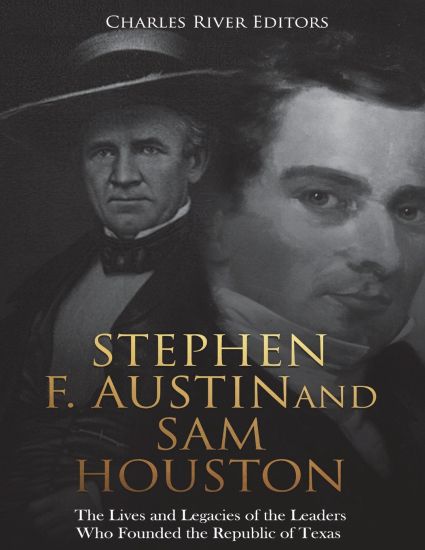
*Includes pictures *Includes contemporary accounts *Includes online resources and a bibliography for further reading Texas has a unique history among the 50 states that comprise the United States of America, and much of that is due to the nature of the men who brought about its independence. Of them, few are as famous or more important than Stephen F. Austin. Born in the very shadow of the Founding Fathers in Virginia, Austin seemed destined from birth to do something special. Certainly, his father Moses saw potential in the boy, training him up to take the lead in whatever situation he found himself in, and various life experiences transformed Stephen. Moses provided his son with plenty of the difficulties, including bankruptcy, business losses, and family squabbles, all by the time his son was 20 years old. Ultimately Moses bequeathed his son the chance to become an empresario, a 19th century leader of American pioneers in Texas. Austin in turn shaped the future of Texas in a way that no other leader ever had the opportunity to do, and by carefully choosing men like himself, politically, religiously, and ethically, he helped create an independent nation (and future state) known for its rugged individualism and self-determination. Unfortunately, he also created a place where slavery, America's great shame, was allowed to flourish for more than 40 years, and a place where people of color would struggle for generations to receive equality under the laws, many of which he either wrote or inspired. Ironically, the man whose name is so synonymous with Texas was not involved in the most famous battles that secured its independence. This actually ensured that he survived when so many of his contemporaries died, but he still lost his run for the presidency of Texas and instead had to accept an appointment as the Republic's first Secretary of State. Ultimately, it made little difference in the end, for he served only two months before he died of pneumonia just after his 43rd birthday. Austin's most famous contemporary, Sam Houston, was also a colorful and controversial individual. He was born in the United States while George Washington was in office, and in an era when the native people who were gradually being subjugated were considered savages, he called them friends and even lived among them. He was abandoned by his first wife and, after suffering the sting of divorce, married again in the manner of his native family, only to abandon his Indian bride to return to life among his own people. In the interim, he fought for their rights in the halls of government, defending them even as he obtained favor in the eyes of one of their worst enemies. More than a decade passed before he would finally make a successful marriage, marrying a woman more than 20 years his junior but with the right mix of charm and grit to make a successful life with him and their large family. Though he was born and raised elsewhere, Houston is considered one of Texas' truest sons, and during his life he fought for its independence from Mexico and then for its submission to the United States. He owned slaves himself but spent his entire political career fighting against the spread of "the American cancer" to the West. Then, when his beloved state seceded from the Union, he not only opposed secession but sacrificed his own position to protest it, only to turn around and support the Confederacy during the last years of his life. What cannot be questioned is how profound an impact both men had on Texas, Mexico, and the United States over the course of several decades. Stephen F. Austin and Sam Houston: The Lives and Legacies of the Leaders Who Founded the Republic of Texas looks at how the two became some of the Southwest's most important figures. Along with pictures of important people, places, and events, you will learn about Stephen F. Austin and Sam Houston like never before.
*Includes pictures *Includes contemporary accounts *Includes online resources and a bibliography for further reading Texas has a unique history among the 50 states that comprise the United States of America, and much of that is due to the nature of the men who brought about its independence. Of them, few are as famous or more important than Stephen F. Austin. Born in the very shadow of the Founding Fathers in Virginia, Austin seemed destined from birth to do something special. Certainly, his father Moses saw potential in the boy, training him up to take the lead in whatever situation he found himself in, and various life experiences transformed Stephen. Moses provided his son with plenty of the difficulties, including bankruptcy, business losses, and family squabbles, all by the time his son was 20 years old. Ultimately Moses bequeathed his son the chance to become an empresario, a 19th century leader of American pioneers in Texas. Austin in turn shaped the future of Texas in a way that no other leader ever had the opportunity to do, and by carefully choosing men like himself, politically, religiously, and ethically, he helped create an independent nation (and future state) known for its rugged individualism and self-determination. Unfortunately, he also created a place where slavery, America's great shame, was allowed to flourish for more than 40 years, and a place where people of color would struggle for generations to receive equality under the laws, many of which he either wrote or inspired. Ironically, the man whose name is so synonymous with Texas was not involved in the most famous battles that secured its independence. This actually ensured that he survived when so many of his contemporaries died, but he still lost his run for the presidency of Texas and instead had to accept an appointment as the Republic's first Secretary of State. Ultimately, it made little difference in the end, for he served only two months before he died of pneumonia just after his 43rd birthday. Austin's most famous contemporary, Sam Houston, was also a colorful and controversial individual. He was born in the United States while George Washington was in office, and in an era when the native people who were gradually being subjugated were considered savages, he called them friends and even lived among them. He was abandoned by his first wife and, after suffering the sting of divorce, married again in the manner of his native family, only to abandon his Indian bride to return to life among his own people. In the interim, he fought for their rights in the halls of government, defending them even as he obtained favor in the eyes of one of their worst enemies. More than a decade passed before he would finally make a successful marriage, marrying a woman more than 20 years his junior but with the right mix of charm and grit to make a successful life with him and their large family. Though he was born and raised elsewhere, Houston is considered one of Texas' truest sons, and during his life he fought for its independence from Mexico and then for its submission to the United States. He owned slaves himself but spent his entire political career fighting against the spread of "the American cancer" to the West. Then, when his beloved state seceded from the Union, he not only opposed secession but sacrificed his own position to protest it, only to turn around and support the Confederacy during the last years of his life. What cannot be questioned is how profound an impact both men had on Texas, Mexico, and the United States over the course of several decades. Stephen F. Austin and Sam Houston: The Lives and Legacies of the Leaders Who Founded the Republic of Texas looks at how the two became some of the Southwest's most important figures. Along with pictures of important people, places, and events, you will learn about Stephen F. Austin and Sam Houston like never before.