Kirjojen hintavertailu. Mukana 12 459 402 kirjaa ja 12 kauppaa.

Kirjahaku

Etsi kirjoja tekijän nimen, kirjan nimen tai ISBN:n perusteella.

1000 tulosta hakusanalla Stephen Goode; Scott Annin

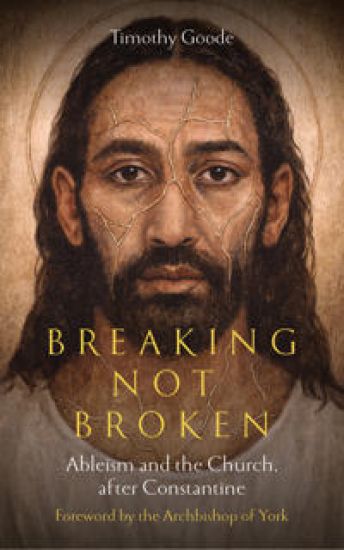
Breaking, not Broken

Breaking, not Broken

Timothy Goode; Stephen Cottrell

SCM PRESS
2026
nidottu
How have inherited and contemporary notions of perfection distorted our theology and the way in which we have expressed and lived out our faith? Breaking, not Broken exposes how Western Christianity, post-Constantine, assimilated a Greco-Roman ideal of the flawless body as its anthropology and built its theology, architecture, and memory around it. Against this ableist inheritance, Timothy Goode offers a radical alternative: a return to a risen body anthropology grounded in the wounded yet glorified body of Christ. Drawing deeply on disability and liberation theology, critical heritage studies, and his own lived experience of disability, Timothy Goode reframes how the Church understands the body, healing, time and space. Here, disabled lives are not marginal but central: living archives of God’s story, prophetic voices that disrupt and renew, and bearers of hope for a more just ecclesiology. Written with theological depth and human honesty, this book bridges scholarship and practice, inviting the Church to rediscover its true heritage not in monuments of stone or ideals of perfection, but in the scars of resurrection and the grace of embodied diversity.
Stephen Es Un Buen Nieto (Stephen Is a Good Grandson)
Stephen loves visiting his maternal grandparents in the country. When he visits, he plays outside, goes fishing, and goes for long hikes. He also loves visiting his paternal grandmother, who lives in the city. When he visits her, they take walks to the local shops. To be a good grandson, Stephen picks up after himself, helps wash up after dinner, and listens to what his grandparents tell him to do. The brightly colored illustrations and manageable text make this book perfect for story-time listeners and emerging readers.
The Militant Christian; or, the Good Soldier of Jesus Christ, Described in his Arms Compleat; ... Carefully Abridged From the Original of Mr. Stephen Coven,
The 18th century was a wealth of knowledge, exploration and rapidly growing technology and expanding record-keeping made possible by advances in the printing press. In its determination to preserve the century of revolution, Gale initiated a revolution of its own: digitization of epic proportions to preserve these invaluable works in the largest archive of its kind. Now for the first time these high-quality digital copies of original 18th century manuscripts are available in print, making them highly accessible to libraries, undergraduate students, and independent scholars.The Age of Enlightenment profoundly enriched religious and philosophical understanding and continues to influence present-day thinking. Works collected here include masterpieces by David Hume, Immanuel Kant, and Jean-Jacques Rousseau, as well as religious sermons and moral debates on the issues of the day, such as the slave trade. The Age of Reason saw conflict between Protestantism and Catholicism transformed into one between faith and logic -- a debate that continues in the twenty-first century.++++The below data was compiled from various identification fields in the bibliographic record of this title. This data is provided as an additional tool in helping to insure edition identification: ++++British LibraryT104429 Sherborne]: London: printed in the year 1668. Sherborne: re-printed by R. Goadby and Co., 1781. ix, 1],81, 1]p.; 12
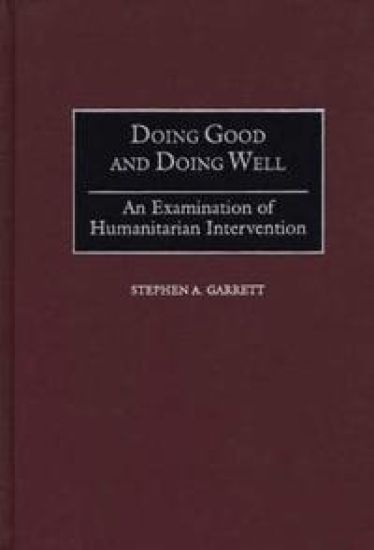
Doing Good and Doing Well

Doing Good and Doing Well

Stephen A. Garrett

Praeger Publishers Inc
1999
sidottu
Garret deals with the issue of humanitarian intervention, of which the recent Kosovo conflict provides a prime example. Even though the writing of this book was completed before NATO began its intervention on behalf of the Kosovars, the book provides a valuable background for assessing the Kosovo issue—it lays out the history of previous humanitarian interventions and analyzes the controversies surrounding them. Garret provides a sophisticated framework by which such interventions can be evaluated both morally and pragmatically. His book offers some particularly relevant material on the American role in humanitarian interventions. This book is valuable for those who wish to make sense of the pros and cons of humanitarian efforts in international hot spots, like Kosovo. After an analysis of the legal and philosophical issues bearing on the idea of humanitarian intervention, defined as the use of force by one or more states to remedy severe human rights abuses in a particular country—this study focuses upon the moral duties that individual members of the international community have toward the welfare of others. Recent events have indicated that humanitarian intervention will likely play a larger role in international relations in the future. Examples in the contemporary period include Kosovo Somalia, Liberia, Haiti, the Kurds in Iraq, Uganda, and East Pakistan. This book emphasizes the role of the United States in humanitarian intervention and argues that increased American involvement is essential. Garrett suggests that the American people as a whole may be more prepared to see the United States take an active role in humanitarian intervention than are certain media and government elites. Strong national leadership that stresses the moral duty of the United States will be necessary to tap this latent altruism in order to contribute to higher standards of international human rights. Individual topics include assessment criteria for the moral legitimacy of intervention, unilateral versus multilateral efforts, and factors that appear to persuade or dissuade states from participating in such intervention. This volume focuses on certain themes and patterns in humanitarian intervention, which are then illustrated by using historical data taken from a variety of different examples.
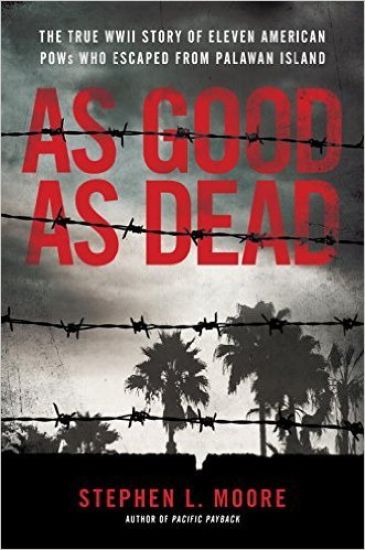
As Good as Dead

As Good as Dead

Stephen L Moore

Penguin Putnam Inc
2016
sidottu
The heroic story of eleven American POWs who defied certain death in World War II "As Good as Dead" is an unforgettable account of the Palawan Massacre survivors and their daring escape. In late 1944, the Allies invaded the Japanese-held Philippines, and soon the end of the Pacific War was within reach. But for the last 150 American prisoners of war still held on the island of Palawan, there would be no salvation. After years of slave labor, starvation, disease, and torture, their worst fears were about to be realized. On December 14, with machine guns trained on them, they were herded underground into shallow air raid shelters death pits dug with their own hands. Japanese soldiers doused the shelters with gasoline and set them on fire. Some thirty prisoners managed to bolt from the fiery carnage, running a lethal gauntlet of machine gun fire and bayonets to jump from the cliffs to the rocky Palawan coast. By the next morning, only eleven men were left alive but their desperate journey to freedom had just begun. "As Good as Dead "is one of the greatest escape stories of World War II, and one that few Americans know. The eleven survivors of the Palawan Massacre some badly wounded and burned spent weeks evading Japanese patrols. They scrounged for food and water, swam shark-infested bays, and wandered through treacherous jungle terrain, hoping to find friendly Filipino guerrillas. Their endurance, determination, and courage in the face of death make this a gripping and inspiring saga of survival."
As Good As Dead

As Good As Dead

Stephen L Moore

Penguin Putnam Inc
2020
nidottu
" A] truly uplifting tale of deliverance from certain death . . . A deeply personal read, in which the reader is drawn into the highs and lows of the action, the tragedy, and the salvation, because Moore has so successfully drawn out the characters. . . . Compelling reading and hard to put down."--Naval History The heroic story of eleven American POWs who defied certain death in World War II, As Good as Dead is an unforgettable account of the Palawan Massacre survivors and their daring escape. In late 1944, the Allies invaded the Japanese-held Philippines, and soon the end of the Pacific War was within reach. But for the last 150 American prisoners of war still held on the island of Palawan, there would be no salvation. After years of slave labor, starvation, disease, and torture, their worst fears were about to be realized. On December 14, with machine guns trained on them, they were herded underground into shallow air raid shelters--death pits dug with their own hands. Japanese soldiers doused the shelters with gasoline and set them on fire. Some thirty prisoners managed to bolt from the fiery carnage, running a lethal gauntlet of machine gun fire and bayonets to jump from the cliffs to the rocky Palawan coast. By the next morning, only eleven men were left alive--but their desperate journey to freedom had just begun. As Good as Dead is one of the greatest escape stories of World War II, and one that few Americans know. The eleven survivors of the Palawan Massacre--some badly wounded and burned--spent weeks evading Japanese patrols. They scrounged for food and water, swam shark-infested bays, and wandered through treacherous jungle terrain, hoping to find friendly Filipino guerrillas. Their endurance, determination, and courage in the face of death make this a gripping and inspiring saga of survival.
Why Good Things Happen to Good People

Why Good Things Happen to Good People

Stephen Post; Jill Neimark; Otis Moss

Broadway Books (A Division of Bantam Doubleday Dell Publishing Group Inc)
2008
pokkari
A distinguished bioethicist examines the life-enhancing benefits of compassion, generosity, kindness, and caring, establishing a link between doing good and physical health, longevity, well-being, life-satisfaction, and more, and outlines a personalized plan for creating a more generous life that finds an outlet and style of giving that suits one's personality and lifestyle. Reprint. 15,000 first printing.
The Good of Being: God, life and the basis of ethics

The Good of Being: God, life and the basis of ethics

Stephen Charles Lovatt

Createspace Independent Publishing Platform
2012
nidottu
The business of this book is to elucidate the connection between "goodness, value and worth" on the one hand and "life, being and existence" on the other. This may seem like an abstruse academic project, but I believe it to be of great practical importance. I think that a careful consideration of this topic results in a clear vision of what it means to be a living human being; how we ought to live our lives, and so be happy; and what fulfilment we can reasonably hope for.In the first part of this book (Chapters One to Nine) I argue that mortal existence can only be rationally accounted for and made sense of on the prospect of union with God; as envisaged by Plato of Athens and promised by Jesus of Nazareth. First I discuss rationality, truth, logic and reality; showing how these ideas are interconnected. I then move on to consider physical existence in general before reflecting on the kind of existence which we identify as life, and in particular the life of sentient and sapient beings. Next, I discuss the ideas of beauty, justice, love and value. I argue that they are intimately connected, and ultimately united in the single idea of "the Good" or God. I then consider the relationship between human beings and God: characterized on the one hand by sin, death and futility; and on the other by mercy, love and immortality.Now, if God is no more than a figment of human imagination, my claim that sense can be made of our mortality by referring it to eternity would not amount to much. Hence, the second part of this book (Chapters Ten to Fourteen) deals with reasons for believing that God is real and that therefore the idea of human immortality is reasonable. After identifying some wrong reasons for believing in God I address the issue of suffering which legitimately calls God's reality into question. In doing so, I offer a view of the Fall and of Original Sin which casts light on the fundamental purpose of mortal existence and makes it possible to account for why God generally deals with us remotely and obscurely. I then present critical accounts of four potentially sound reasons for believing in the reality of God.The third part of the book (Chapters Fifteen to Seventeen) addresses more carefully the relationship between mortal existence and Eternal Life. I discuss the notion of freewill which underpins much of what has gone before and then turn to consider more strictly theological matters: the vocation to enlightenment communion and fellowship with God; the significance of the life and death of Jesus of Nazareth, and how this relates to the Eucharist; and the mission, purpose and business of the Church.
The Good Lives After: Reflections of a Baby Boomer

The Good Lives After: Reflections of a Baby Boomer

Stephen L. Canipe

Createspace Independent Publishing Platform
2015
nidottu
This book is a compilation of 78 weekly columns, which focused on issues of concern to those who are termed "baby boomers." It will be by, for, and about boomers and their issues. In other words, it means it is specifically for those who were born between 1946 and 1964. Current population estimates are that there are nearly 75 million boomers. The author is one of this illustrious number being born in 1946 Although boomers are the target of this series, it should be interesting and possibly informative for anyone who knows or loves a boomer.Have boomers already begun turning "old" at 65? According to published reports, there are more than a thousand turning that magic 65 every day and this aging will go on until 2029. Why is 65 considered the age of "oldness"? Even the oldest boomers didn't qualify for Social Security at that age. The oldest boomers had to be 66 to qualify for full benefits and the youngest will need to be 67 for full benefits. Currently boomers qualify for Medicare at 65 and they can still take early retirement at 62. Maybe the Medicare is the trigger for the magic 65.During the years since their birth, boomers have had a profound impact on any number of things because of the large population numbers. Many boomers have been witness to some pretty spectacular things and some of those might best be forgotten. Some of the technology that was being developed was instrumental in boomer power. Television began to make a strong penetration into the entertainment scene and along with it the advertising that was targeted towards boomers.Boomers were the first generation to really embrace differences in all forms. They were pretty much responsible for a different type music and our more open attitudes have led to more relaxed attitudes on race, sex, drugs, etc. They were often more open in seeing and accepting differences than their parents and have instilled that attitude into their children and grandchildren. Each generation had its war and Viet Nam was the one for boomers. It was not pretty and there were many different attitudes about the conflict. Some were willing to go and fight to defend a country that was loved so much or because they believed in obeying authority, even if not in support of the war; others loved the country just as much but were willing to leave the country to avoid doing something that was antithetical to what was believed. Schools saw boomers crowded into large classes or sometimes, if lucky, even new school buildings. Classes were always larger than the classes which had been ahead of the boomers, at least for those in the early years of the boom. New teachers, new school classrooms, and lots of other things because of large numbers were needed. Boomers changed education, just as they changed almost everything else. As a group boomers were pretty egalitarian and believed that everyone should be judged by their merits. The leaders who were respected covered a broad range from Martin Luther King, Jr. to John Kennedy to Billy Graham. These role models have led to boomer leaders including Bill Clinton and George W. Bush - almost a paradox. But then boomers never were easy to pigeonhole as a group and remain that way.