Kirjojen hintavertailu. Mukana 11 244 527 kirjaa ja 12 kauppaa.

Kirjahaku

Etsi kirjoja tekijän nimen, kirjan nimen tai ISBN:n perusteella.

1000 tulosta hakusanalla Stephen Greenblatt

Stephen Greenblatt

Stephen Greenblatt

Mark Robson

Routledge
2007
sidottu
Stephen Greenblatt is the most important exponent of 'new historicism', a dynamic critical movement which rejects the traditional reliance on individual canonical texts, exploring a multitude of other, more marginal works and voices. Questioning not just literary but social, political and cultural assumptions about knowledge and power, Greenblatt’s work has had a huge impact on contemporary theory.Mark Robson discusses ideas specific to particular works and explores the relation of Greenblatt’s thought to new historicism as well as other modes of criticism including the key topics of: contextcultural poeticspower, subversion and containmentthick descriptionanecdotes.Providing a starting point for readers new to this crucial theorist’s sometimes complex texts, or support for those deepening their understanding of his work, this guidebook is ideal for students in the fields of literary, history, social and cultural studies.
Stephen Greenblatt

Stephen Greenblatt

Mark Robson

Routledge
2007
nidottu
Stephen Greenblatt is the most important exponent of 'new historicism', a dynamic critical movement which rejects the traditional reliance on individual canonical texts, exploring a multitude of other, more marginal works and voices. Questioning not just literary but social, political and cultural assumptions about knowledge and power, Greenblatt’s work has had a huge impact on contemporary theory.Mark Robson discusses ideas specific to particular works and explores the relation of Greenblatt’s thought to new historicism as well as other modes of criticism including the key topics of: contextcultural poeticspower, subversion and containmentthick descriptionanecdotes.Providing a starting point for readers new to this crucial theorist’s sometimes complex texts, or support for those deepening their understanding of his work, this guidebook is ideal for students in the fields of literary, history, social and cultural studies.
An Analysis of Stephen Greenblatt's Renaissance Self-Fashioning
What is a self? Greenblatt argues that the 16th century saw the awakening of modern self-consciousness, the ability to fashion an identity out of the culture and politics of one’s society. In a series of brilliant readings, Greenblatt shows how identity is constructed in the work of Shakespeare, Marlowe, Spenser and other Renaissance writers. A classic piece of literary criticism, and the origins of the New Historicist school of thought, Renaissance Self-Fashioning remains a critical and challenging text for readers of Renaissance literature.
An Analysis of Stephen Greenblatt's Renaissance Self-Fashioning
What is a self? Greenblatt argues that the 16th century saw the awakening of modern self-consciousness, the ability to fashion an identity out of the culture and politics of one’s society. In a series of brilliant readings, Greenblatt shows how identity is constructed in the work of Shakespeare, Marlowe, Spenser and other Renaissance writers. A classic piece of literary criticism, and the origins of the New Historicist school of thought, Renaissance Self-Fashioning remains a critical and challenging text for readers of Renaissance literature.
The Greenblatt Reader

The Greenblatt Reader

Stephen Greenblatt

Wiley-Blackwell (an imprint of John Wiley Sons Ltd)
2004
nidottu
Stephen Greenblatt is one of the most influential practitioners of new historicism. This Reader makes available in one volume Greenblatt’s most important writings on culture, Renaissance studies, and Shakespeare. It also features occasional pieces on subjects as diverse as story-telling and miracles, demonstrating the range of his cultural interests. Taken together, the texts collected here dispel the idea that new historicism is antithetical to literary and aesthetic value.
Swerve

Swerve

Stephen Greenblatt

Random House UK
2012
pokkari
WINNER OF THE PULITZER PRIZE FOR NON-FICTION 2012Almost six hundred years ago, a short, genial man took a very old manuscript off a library shelf.
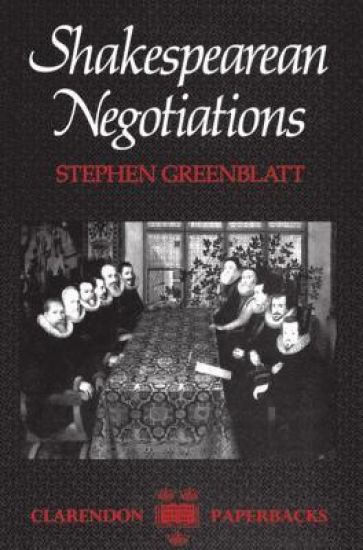
Shakespearean Negotiations

Shakespearean Negotiations

Stephen Greenblatt

Clarendon Press
1990
nidottu
Stephen Greenblatt has been at the centre of a major shift in literary interpretation towards a critical method that places cultural creation in history. In this book - a sustained and powerful exemplification of this innovative method - he asks how collective beliefs and experiences are shaped, moved from one medium to another, concentrated in manageable form, and offered to the public on the stage. As well as giving us a new way of understanding Shakespeare's achievement, the book is an original analysis of a cultural process. Shakespearean Negotiations provides significant insights into Henry IV and Henry V, Twelfth Night, King Lear, and The Tempest; it also includes fascinating analyses of such aspects of early modern culture as exorcism, cross-dressing, colonial propaganda, and martial law codes. It is, as well, a masterly example of a new critical method by its leading practitioner.
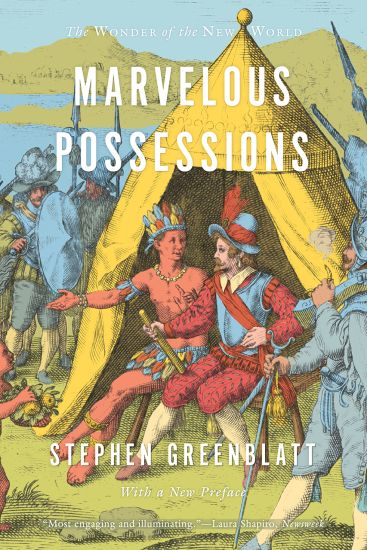
Marvelous Possessions

Marvelous Possessions

Stephen Greenblatt

Clarendon Press
1992
nidottu
`And there I found very many islands filled with people innumerable, and of all of them I have taken possession for their highnesses, by proclamation made and with the royal standard unfurled, and no one contradicted me' - Christopher Columbus Marvelous Possessions is a study of the ways in which Europeans of the late Middle Ages and the early modern period represented non-European peoples and took possession of their lands, in particular the New World. In a series of innovative readings of travel narratives, judicial documents, and official reports, Greenblatt shows that the experience of the marvelous, central to both art and philosophy, was cunningly yoked by Columbus and others to the service of colonial appropriation. He argues that the traditional symbolic actions and legal rituals through which European sovereignty was asserted were strained to breaking-point by the unprecedented nature of the discovery of the New World. But the book also shows that the experience of the marvelous is not necessarily an agent of empire: in writers as different as Herodotus, Jean de Léry, and Montaigne - and notably in Mandeville's Travels, the most popular travel book of the Middle Ages - wonder is the sign of a remarkably tolerant recognition of cultural difference.
Renaissance Self-Fashioning

Renaissance Self-Fashioning

Stephen Greenblatt

University of Chicago Press
2005
nidottu
"Renaissance Self-Fashioning" is a study of sixteenth-century life and literature that spawned a new era of scholarly inquiry. Stephen Greenblatt examines the structure of selfhood as evidenced in major literary figures of the English Renaissance - More, Tyndale, Wyatt, Spenser, Marlowe, and Shakespeare - and finds that in the early modern period new questions surrounding the nature of identity heavily influenced the literature of the era. Now a classic text in literary studies, "Renaissance Self-Fashioning" continues to be of interest to students of the Renaissance, English literature, and the new historicist tradition, and this new edition includes a preface by the author on the book's creation and influence.
Shakespeare's Freedom

Shakespeare's Freedom

Stephen Greenblatt

University of Chicago Press
2010
sidottu
Shakespeare lived in a world of absolutes-of claims for the absolute authority of scripture, monarch, and God, and the authority of fathers over wives and children, the old over the young, and the gentle over the baseborn. With the elegance and verve for which he is well known, Stephen Greenblatt, author of the best-selling Will in the World, shows that Shakespeare was strikingly averse to such absolutes and constantly probed the possibility of freedom from them. Again and again, Shakespeare confounds the designs and pretensions of kings, generals, and churchmen. His aversion to absolutes even leads him to probe the exalted and seemingly limitless passions of his lovers. Greenblatt explores this rich theme by addressing four of Shakespeare's preoccupations across all the genres in which he worked. He first considers the idea of beauty in Shakespeare's works, specifically his challenge to the cult of featureless perfection and his interest in distinguishing marks. He then turns to Shakespeare's interest in murderous hatred, most famously embodied in Shylock but seen also in the character Bernardine in Measure for Measure. Next Greenblatt considers the idea of Shakespearean authority-that is, Shakespeare's deep sense of the ethical ambiguity of power, including his own. Ultimately, Greenblatt takes up Shakespearean autonomy, in particular the freedom of artists, guided by distinctive forms of perception, to live by their own laws and to claim that their creations are singularly unconstrained. A book that could only have been written by Stephen Greenblatt, Shakespeare's Freedom is a wholly original and eloquent meditation by the most acclaimed and influential Shakespearean of our time.
Shakespeare's Freedom

Shakespeare's Freedom

Stephen Greenblatt

University of Chicago Press
2012
nidottu
Shakespeare lived in a world of absolutes - the absolute authority claimed for God over the world, for the holy scriptures over the faithful, monarchs over subjects, fathers over wives and children, men over women, the old over the young, and the gentle over the baseborn. With the elegance and verve for which he is well known, Stephen Greenblatt, author of the best-selling "Will in the World", shows that Shakespeare was strikingly averse to such absolute claims and constantly probed the possibility of freedom from them. Greenblatt explores this rich theme by addressing four of Shakespeare's preoccupations across all the genres in which he worked: beauty, hatred, authority, and autonomy. He considers Shakespeare's challenge to the cult of featureless perfection, his sense of the inherent limits of murderous hatred, his awareness of the ethical ambiguity of power, and his doubt that artists, guided by distinctive forms of perception, were at liberty to create without constraints of any kind. A book that could only have been written by Stephen Greenblatt, "Shakespeare's Freedom" is a wholly original and eloquent meditation by the most acclaimed and influential Shakespearean of our time.
Marvelous Possessions: The Wonder of the New World

Marvelous Possessions: The Wonder of the New World

Stephen Greenblatt

University of Chicago Press
2017
nidottu
A masterwork of history and cultural studies, Marvelous Possessions is a brilliant meditation on the interconnected ways in which Europeans of the Age of Discovery represented non-European peoples and took possession of their lands, particularly in the New World. In a series of innovative readings of travel narratives, judicial documents, and official reports, Stephen Greenblatt shows that the experience of the marvelous, central to both art and philosophy, was manipulated by Columbus and others in the service of colonial appropriation. Much more than simply a collection of the odd and exotic, Marvelous Possessions is both a highly original extension of Greenblatt's thinking on a subject that has permeated his career and a thrilling tale of wandering, kidnapping, and go-betweens--of daring improvisation, betrayal, and violence. Reaching back to the ancient Greeks, forward to the present, and, in his new preface, even to fantastical meetings between humans and aliens in movies like Close Encounters of the Third Kind, Greenblatt would have us ask: how is it possible, in a time of disorientation, hatred of the other, and possessiveness, to keep the capacity for wonder--for tolerant recognition of cultural difference--from being poisoned?
A New History of Early English Drama

A New History of Early English Drama

Stephen Greenblatt

Columbia University Press
1997
pokkari
For many years the study of pre-seventeenth-century English drama was shaped largely by an understanding that everything written revolved around the individual author, either as part of the tradition that prepared the way for Shakespeare or as part of his legacy. Now twenty-five original essays by leading theorists and historians chart a paradigmatic shift within the field. In contrast to the traditional emphasis on individual authors, the contributors here explore the place of the stage within the larger society, as well as issues of performance and physical space. The essays are organized into three sections: "Early English Drama and Physical Space" examines the settings in which plays were acted; "Early English Drama and Social Space" juxtaposes the theater with such contemporary subcultures as the church, the city, and the court. Finally, "Early English Drama and Conditions of Performance and Publication" explores a wide range of material conditions and contexts, from props to printers. A major summary of contemporary scholarship and a storehouse of new theoretical and historical information, A New History of Early English Drama skillfully illustrates the complex influence of physical and social elements woven into the texts, and provides an innovative approach to literary studies and cultural history.
Will in the World: How Shakespeare Became Shakespeare

Will in the World: How Shakespeare Became Shakespeare

Stephen Greenblatt

W. W. Norton Company
2004
sidottu
Stephen Greenblatt, the charismatic Harvard professor who "knows more about Shakespeare than Ben Jonson or the Dark Lady did" (John Leonard, Harper's), has written a biography that enables us to see, hear, and feel how an acutely sensitive and talented boy, surrounded by the rich tapestry of Elizabethan life; full of drama and pageantry, and also cruelty and danger; could have become the world's greatest playwright. A young man from the provinces--a man without wealth, connections, or university education--moves to London. In a remarkably short time he becomes the greatest playwright not just of his age but of all time. His works appeal to urban sophisticates and first-time theatergoers; he turns politics into poetry; he recklessly mingles vulgar clowning and philosophical subtlety. How is such an achievement to be explained?Will in the World interweaves a searching account of Elizabethan England with a vivid narrative of the playwright's life. We see Shakespeare learning his craft, starting a family, and forging a career for himself in the wildly competitive London theater world, while at the same time grappling with dangerous religious and political forces that took less-agile figures to the scaffold. Above all, we never lose sight of the great works--A Midsummer Night's Dream, Romeo and Juliet, Hamlet, Macbeth, and more--that continue after four hundred years to delight and haunt audiences everywhere. The basic biographical facts of Shakespeare's life have been known for over a century, but now Stephen Greenblatt shows how this particular life history gave rise to the world's greatest writer. Bringing together little-known historical facts and little-noticed elements of Shakespeare's plays, Greenblatt makes inspired connections between the life and the works and deliver "a dazzling and subtle biography" (Richard Lacayo, Time). Readers will experience Shakespeare's vital plays again as if for the first time, but with greater understanding and appreciation of their extraordinary depth and humanity.A Best Book of the Year: The New York Times 10 Best Books of 2004; Time magazine's #1 Best Nonfiction Book; A Washington Post Book World Rave; An Economist Best Book; A San Francisco Chronicle Best Book; A Christian Science Monitor Best Book; A Chicago Tribune Best Book; A Pittsburgh Post-Gazette Best Book; NPR's Maureen Corrigan's Best.
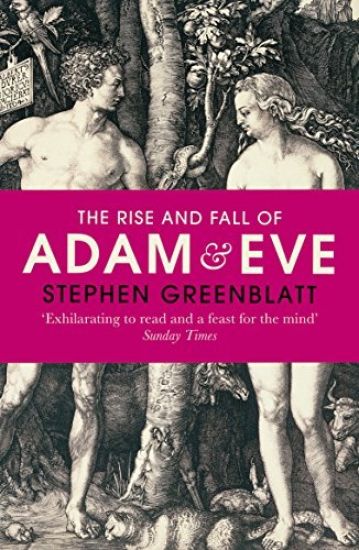
The Rise and Fall of Adam and Eve

The Rise and Fall of Adam and Eve

Stephen Greenblatt

W. W. Norton Company
2017
sidottu
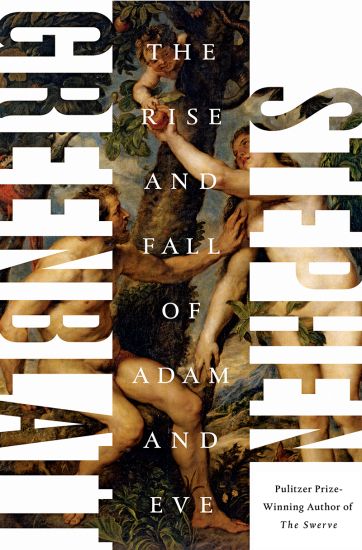
Bolder, even, than the ambitious books for which Stephen Greenblatt is already renowned, The Rise and Fall of Adam and Eve explores the enduring story of humanity's first parents. Comprising only a few ancient verses, the story of Adam and Eve has served as a mirror in which we seem to glimpse the whole, long history of our fears and desires, as both a hymn to human responsibility and a dark fable about human wretchedness.Tracking the tale into the deep past, Greenblatt uncovers the tremendous theological, artistic, and cultural investment over centuries that made these fictional figures so profoundly resonant in the Jewish, Christian, and Muslim worlds and, finally, so very "real" to millions of people even in the present. With the uncanny brilliance he previously brought to his depictions of William Shakespeare and Poggio Bracciolini (the humanist monk who is the protagonist of The Swerve), Greenblatt explores the intensely personal engagement of Augustine, D rer, and Milton in this mammoth project of collective creation, while he also limns the diversity of the story's offspring: rich allegory, vicious misogyny, deep moral insight, and some of the greatest triumphs of art and literature.The biblical origin story, Greenblatt argues, is a model for what the humanities still have to offer: not the scientific nature of things, but rather a deep encounter with problems that have gripped our species for as long as we can recall and that continue to fascinate and trouble us today.
The Swerve: How the World Became Modern

The Swerve: How the World Became Modern

Stephen Greenblatt

W. W. Norton Company
2012
nidottu
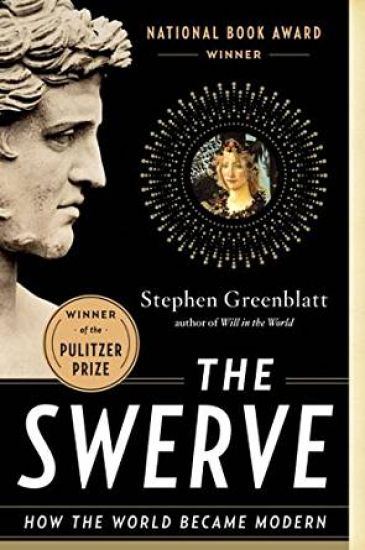
In the winter of 1417, a short, genial, cannily alert man in his late thirties plucked a very old manuscript off a dusty shelf in a remote monastery, saw with excitement what he had discovered, and ordered that it be copied. He was Poggio Bracciolini, the greatest book hunter of the Renaissance. His discovery, Lucretius' ancient poem On the Nature of Things, had been almost entirely lost to history for more than a thousand years. It was a beautiful poem of the most dangerous ideas: that the universe functions without the aid of gods, that religious fear is damaging to human life, that pleasure and virtue are not opposites but intertwined, and that matter is made up of very small material particles in eternal motion, randomly colliding and swerving in new directions. Its return to circulation changed the course of history. The poem's vision would shape the thought of Galileo and Freud, Darwin and Einstein, and--in the hands of Thomas Jefferson--leave its trace on the Declaration of Independence. From the gardens of the ancient philosophers to the dark chambers of monastic scriptoria during the Middle Ages to the cynical, competitive court of a corrupt and dangerous pope, Greenblatt brings Poggio's search and discovery to life in a way that deepens our understanding of the world we live in now. "An intellectually invigorating, nonfiction version of a Dan Brown-like mystery-in-the-archives thriller." --Boston Globe