Die Wise does not offer seven steps for coping with death. It does not suggest ways to make dying easier. It pours no honey to make the medicine go down. Instead, with lyrical prose, deep wisdom, and stories from his two decades of working with dying people and their families, Stephen Jenkinson places death at the center of the page and asks us to behold it in all its painful beauty. Die Wise teaches the skills of dying, skills that have to be learned in the course of living deeply and well. Die Wise is for those who will fail to live forever. Dying well, Jenkinson writes, is a right and responsibility of everyone. It is not a lifestyle option. It is a moral, political, and spiritual obligation each person owes their ancestors and their heirs. Die Wise dreams such a dream, and plots such an uprising. How we die, how we care for dying people, and how we carry our dead: this work makes our capacity for a village-mindedness, or breaks it. Table of ContentsThe Ordeal of a Managed DeathStealing Meaning from DyingThe Tyrant HopeThe Quality of LifeYes, But Not Like ThisThe WorkSo Who Are the Dying to You? Dying Facing HomeWhat Dying Asks of Us AllKidsAh, My Friend the Enemy
Raina Abouzeid; Jon B. Alterman; Ali M. Ansari; James Barr; Ali Fathollah-Nejad; Peter Frankopan; Chaim Gans; Amber Gartrell; Kim Ghattas; Andrew S. Gilmour; Martin Goodman; Sir John Jenkins; Halil M. Karaveli; Elisabeth Kendall; Hugh Kennedy; Stephen Kotkin; Nelly Lahoud; Göran Larsson; Gabriel Martinez-Gros; General Sir Simon Mayall; Yossef Rapoport; Mark Ronan; Stefanie Rudolf; Peter Sarris; Nathan Shachar; Brendan Simms; Selena Wisnom
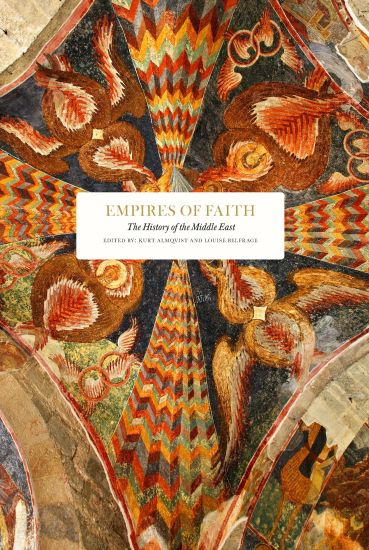
Mellanöstern har alltid varit en central plats för handel och erövringar. Läget har medfört enorma rikedomar, kulturellt utbyte och intellektuell vitalitet – men också konflikter, instabilitet och ihållande geopolitiska spänningar. Att förstå regionens förflutna är avgörande för att förstå dess nutid. Antologin Empires of Faith utforskar Mellanösterns långa historia – från Mesopotamien, de persiska kungarikena och Alexander den store till kristendomens och islams uppkomst, det bysantinska och ottomanska riket, och 1900-talets dramatiska omvandling av regionen. Hur har religion, civilisation och imperialistiska ambitioner format regionen? Vilka arv lämnade de stora imperierna efter sig och hur påverkade de lagstiftning, kultur, styre och undersåtarnas vardagsliv? Och i vilken utsträckning är historiens efterverkningar fortfarande synliga i dagens politiska och religiösa landskap? Boken utkommer även på svenska våren 2027.
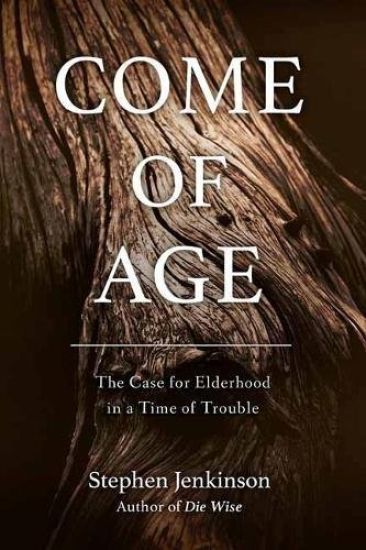
In his landmark provocative style, Stephen Jenkinson makes the case that we must birth a new generation of elders, one poised and willing to be true stewards of the planet and its species. Come of Age does not offer tips on how to be a better senior citizen or how to be kinder to our elders. Rather, with lyrical prose and incisive insight, Stephen Jenkinson explores the great paradox of elderhood in North America: how we are awash in the aged and yet somehow lacking in wisdom; how we relegate senior citizens to the corner of the house while simultaneously heralding them as sage elders simply by virtue of their age. Our own unreconciled relationship with what it means to be an elder has yielded a culture nearly bereft of them. Meanwhile, the planet boils, and the younger generation boils with anger over being left an environment and sociopolitical landscape deeply scarred and broken. Taking on the sacred cow of the family, Jenkinson argues that elderhood is a function rather than an identity--it is not a position earned simply by the number of years on the planet or the title "parent" or "grandparent." As with his seminal book Die Wise, Jenkinson interweaves rich personal stories with iconoclastic observations that will leave readers radically rethinking their concept of what it takes to be an elder and the risks of doing otherwise. Part critique, part call to action, Come of Age is a love song inviting us--imploring us--to elderhood in this time of trouble. That time is now. We're an hour before dawn, and first light will show the carnage, or the courage, we bequeath to the generations to come.
In a time when communal rituals and cultural ceremonies fail, longtime scholar, storyteller, and ceremonialist Stephen Jenkinson asks what it means to lose cultural inheritance. In examining matrimony and its ritual twin, patrimony, Matrimony contemplates culture-making, building and preserving cultural memory, and the ache of living in a world bereft of meaning and connection. There is a real and palpable consequence to turning away from public ceremony - and not just for the celebrants. “Matrimony and patrimony are village rites, a communal affirmation of the village’s ways of going on, sometimes not quite knowing how to,” shares Jenkinson. “The village needs and deserves a rite of public recognition of the seismic change in its life that matrimony means to make.” Privatising love, turning matrimony into a social institution barren of almost all substance, and flattening rituals into convenient events that fit into the routine of modern living erodes our connections and commitment to community and compromises our use as citizens of a troubled time. The way forward, then, is to learn and reclaim our cultural ceremonies and their meaning. Through witty stories, insightful history, and meditative questions, Matrimony invites us to contemplate the significance of matrimony, ceremony, and cultural articulation - and how to redeem them for future generations.
From the award-winning author of Die Wise comes a poetic, meditative and honest memoir that dares to grapples with the indescriminate nature of illness Stephen Jenkinson is perhaps best known for his work helping people navigate grief, death, and dying. Now, he confronts an “undoing” of his own in the form of the degenerative neurological condition known as Parkinson’s disease. In Trembling Still Stephen details his experience—beginning with his diagnosis—through a collection of musings, stories, and reflections on life and illness, both poignant and poetic as his fine-motor skills and cognitive abilities begin to decline. Written as a series of entries beginning January 3, 2024, and ending with an epilogue dated July 17, 2025, Trembling Still is a lyrical and meditative journey that will find its way both to Stephen’s well-established audience and to a broader readership.
This book has been considered by academicians and scholars of great significance and value to literature. This forms a part of the knowledge base for future generations. So that the book is never forgotten we have represented this book in a print format as the same form as it was originally first published. Hence any marks or annotations seen are left intentionally to preserve its true nature.
One week, red wine is good for the heart. The next week, new reports say it's bad for the health. So which is true? Anyone who's ever read science news with fascination, or who's ever been confounded by conflicting stories will appreciate this book. Taking a look at some true to life contemporary news stories, the author assesses recent studies on topics ranging from vitamin C and caffeine to pollution and cancer. With straight talk and a passion for the whole project of science, he demysifies the cult of the expert and sheds light on the nitty-gritty details of scientific processes. Any scientist loves a challenge, but the biggest challenge of all, observes Jenkins, is shared by scientists and nonscientitsts alike: how to make practical decisions in light of ambiguous evidence. Promising no simple answers, this book does offer excellent food for thought for people pondering that next glass of wine.
One week, red wine is good for the heart. The next week, new reports say it's bad for the health. So which is true? Anyone who's ever read science news with fascination, or who's ever been confounded by conflicting stories will appreciate this book. Taking a look at some true to life contemporary news stories, the author assesses recent studies on topics ranging from vitamin C and caffeine to pollution and cancer. With straight talk and a passion for the whole project of science, he demysifies the cult of the expert and sheds light on the nitty-gritty details of scientific processes. Any scientist loves a challenge, but the biggest challenge of all, observes Jenkins, is shared by scientists and nonscientitsts alike: how to make practical decisions in light of ambiguous evidence. Promising no simple answers, this book does offer excellent food for thought for people pondering that next glass of wine.
The renowned Oxford Chemistry Primers series, which provides focused introductions to a range of important topics in chemistry, has been refreshed and updated to suit the needs of today's students, lecturers, and postgraduate researchers. The rigorous, yet accessible, treatment of each subject area is ideal for those wanting a primer in a given topic to prepare them for more advanced study or research. Moreover, cutting-edge examples and applications throughout the texts show the relevance of the chemistry being described to current research and industry. Foundations of Surface Science provides a review of the most up-to-date developments of surface science by exploring contemporary theories, key concepts, and a number of pioneering techniques that have recently been developed. Based around the author's experience lecturing and supervising undergraduates on this topic, the text is aimed squarely at providing a rigorous grounding in the subject at an accessible level, with chapters covering thermodynamics; symmetry and structure; electronic structure; and the kinetics and dynamics of surfaces. The learning features provided, including questions at the end of every chapter and online multiple-choice questions, encourage active learning and promote understanding. Furthermore, frequent diagrams, margin notes, further reading, and glossary definitions all help to enhance a student's understanding of these essential areas of chemistry. The primer is supported by online resources and is available for students and institutions to purchase in a variety of formats. The e-book offers a mobile experience and convenient access along with functionality tools, navigation features and links that offer extra learning support: www.oxfordtextbooks.co.uk/ebooks
Most information about the incomes of people in Britain today, such as provided by official statistics, tells us how much inequality there is or how many poor people there are in a given year and compares those numbers with the corresponding statistics from the previous year. Missing from snapshot pictures like these is information about whether the people who were poor one year are the same people who are poor the following year; and the circumstances of those with middle-income or top-income origins are not tracked over time. This book fills in the missing information. The author likens Britain's income distribution to a multi-story apartment building with the numbers of residents on the different floors corresponding to the concentration of people at different income levels in any particular year. The poorest are in the basement, the richest are in the penthouse, and the majority somewhere in between. This book assesses how much movement there is between floors, the frequency of moves, whether the distance travelled has been changing over the last two decades, and whether basement dwellers ever reach the penthouse. Using the British Household Panel Survey, which has followed and interviewed the same people annually since 1991, it documents the patterns of income mobility and poverty dynamics in Britain, shows how they have changed over the last two decades, and explores the reasons why. It draws attention to the relationships between changes in income and changes in other aspects of people's lives - not only in their jobs, earnings, benefits, and credits, but also in the households within which they live (people marry and divorce; children are born). Trends over time are also related to changes in Britain's labour market and the reforms to the tax-benefit system introduced by the Labour government in the late-1990s.
The American Association for the Advancement of Science's report on Vision and Change in Undergraduate Biology Education suggests that instructors "can no longer rely solely on trying to cover a syllabus packed with topics" but rather should "introduce fewer concepts but present them in greater depth." They further suggest that the principles embodied in a set of core concepts and competencies should be the basis for all undergraduate biology courses, including those designed for nonmajors. The theme of Tools for Critical Thinking in Biology will be the first and most fundamental of these competencies: the ability to apply the process of science. Biology courses and curricula must engage students in how scientific inquiry is conducted, including evaluating and interpreting scientific explanations of the natural world. The book uses diverse examples to illustrate how experiments work, how hypotheses can be tested by systematic and comparative observations when experiments aren't possible, how models are useful in science, and how sound decisions can be based on the weight of evidence even when uncertainty remains. These are fundamental issues in the process of science that are important for everyone to understand, whether they pursue careers in science or not. Where other introductory biology textbooks are organized scientific concepts, Tools for Critical Thinking in Biology will instead show how methods can be used to test hypotheses in fields as different as ecology and medicine, using contemporary case studies. The book will provide students with a deeper understanding of the strengths and weaknesses of such methods for answering new questions, and will thereby change the way they think about the fundamentals of biology.
A comprehensive introduction to the fundamental aspects of surface chirality, covering both chemical and physical consequences Written by a leading expert in the field, Chirality at Solid Surfaces offers an introduction to the concept of chirality at surfaces, starting from the foundation of chirality in isolated molecules and bulk systems. Fundamental properties such as surface energy and surface stress are then linked to a universal systematization of surface structure and symmetry. The author includes key examples of surface chemistry and physics, such as the interplay between adsorbate and substrate chirality, amplification of chirality, chiral catalysis, and the influence of surface chirality upon optical and magnetic phenomena. The book also explores the chirality apparent in the electronic structure of graphene, topological insulators and half-metallic materials. This important reference: Provides an introduction to the fundamental concept of chiralityContains discussions of the chemical and physical consequences of surface chirality, including magnetic, electronic and optical properties in addition to molecular propertiesOffers an account of the most current research needed to support growth in the field Written for surface scientists, professionals in the field, academics, and students, Chirality at Solid Surfaces is an essential resource that contains an overview of the fundamentals of surface chirality and reviews both the chemical and physical consequences.
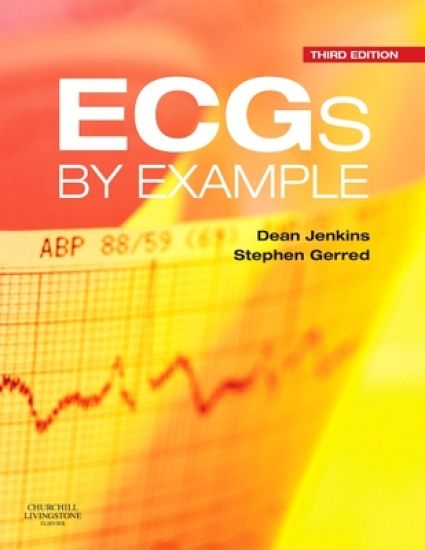
This unique book shows ECGs as they really appear in everyday practice and not in the usual format as presented in textbooks. Each of the 100 traces is accompanied by a list of the main diagnostic features along with a full report of the ECG, noting any other clinical details that may be important. Boxes list the common causes of the abnormalities shown. Key features of the ECG are reproduced again using annotations to guide the reader. Thus the book provides in itself a collection of full 12-lead ECGs of a wide range of common clinical problems encountered in casualty. This collection of traces, updated for this Third Edition with new cases, will be invaluable to all involved in the diagnosis of the most commonly encountered ECG abnormalities. Provides full size and realistic reproduction of 12-lead ECGs Includes a wide range of cardiac abnormalities Highlights the diagnostic criteria for each abnormality listed Reflects how this subject is encountered in practice Assists the reader by illustrating alongside the key features of the recording; thus these can be viewed in relation to the whole trace The Third Edition is spiral bound to make it easier for a reader to lay the ECG traces flat for study. Several new cases are included plus a new section on the approach to the ECG has been added.
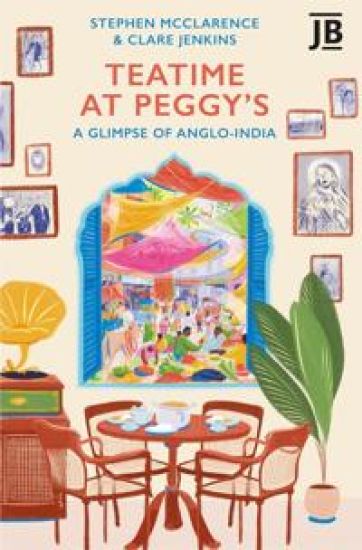
For 15 years, award-winning travel writer Stephen McClarence and his BBC Radio journalist wife Clare Jenkins made a series of journeys through India to learn about one of its most eccentric and fast-dwindling communities: the Anglo-Indians. Mainly descendants of British men and Indian women, their combined heritage stretches back 350 years through the times of the East India Company and the British Raj. In Jhansi - a railway hub in the state of Uttar Pradesh and inspiration for John Masters's 1950s book Bhowani Junction - the Anglo-Indian community is reduced to around 30 families. Teatime at Peggy's shares their stories. Inspired by Jenkins' own Anglo-Indian family connections, the couple immersed themselves in the customs of this little-known dimension to India, soon developing a profound affection for their new friends, particularly for two of the area's most memorable figureheads: the title character 'Aunty Peggy', daughter and widow of railwaymen, overseer of the European cemetery, and 'friend of the great and the good, the rich and the poor'; and Captain Roy Abbott, the last British landowner in India, who never dined without wearing a blazer, cravat and immaculately pressed trousers. The authors spent hours at Peggy's kitchen table - eating cake, samosas and curry; drinking tea; welcoming eccentric characters, like Pastor Rao who could recite Winston Churchill speeches from memory; listening to stories, told in lilting accents, of the Railway Institute and May Queen Balls, Monsoon Toad Balls (where 'the ugliest, most hideous-looking man' would win the prize), waltzes and foxtrots, dancing in the jungle to Victor Silvester gramophone records, games of rummy and housey-housey, and Anglo-Indian cookery that embraced plum cake, goat's brain curry, Mulligatawny soup and crème caramel. Warm, humorous and evocative, Teatime at Peggy's is a lyrical, loving homage to the Anglo-Indians. Filled with larger-than-life characters and with the ever-present exhilaration of 21st-century India, it is both intimate and revelatory, and a testament to the importance of tradition, community and friendship. This enchanting book is for anyone who knows India well - or who simply yearns to take the 'trip of a lifetime' to the 'sub-continent'. and see things a little differently.