Kirjahaku
Etsi kirjoja tekijän nimen, kirjan nimen tai ISBN:n perusteella.
1000 tulosta hakusanalla Stephen Marshall Hadley
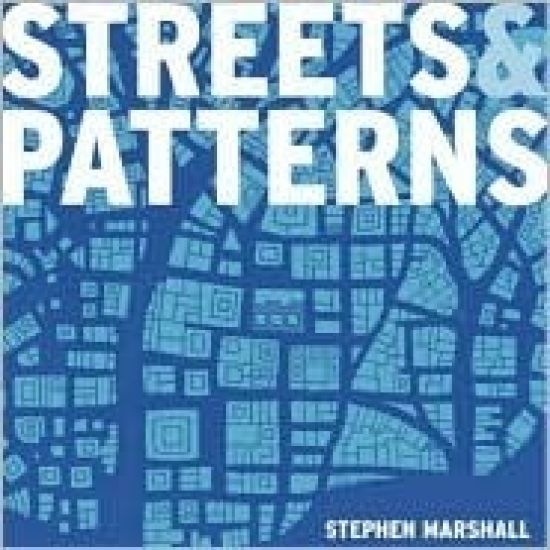
There is an emerging consensus that urban street layouts should be planned with greater attention to ‘placemaking’ and urban design quality, while maintaining the conventional transport functions of accessibility and connectivity. However, it is not always clear how this might be achieved: we still tend to have different sets of guidance for main road networks and for local streetgrids. What is needed is a framework that addresses both of these, plus main streets – that don’t easily fit either set of guidance – in an integrative manner. Streets and Patterns takes up this challenge to create a coherent rationale to underpin today’s streets-oriented urban design agenda. Informed by recent research, the book looks behind existing design conventions and beyond immediate policy rhetoric, and analyses a range of first principles – from Le Corbusier and Colin Buchanan to New Urbanism.The book provides a new framework for the design and planning of urban layouts, integrating transport issues such as road hierarchy, arterial streets and multi-modal networks with urban design and planning issues such as street type, grid type, mixed-use blocks and urban design coding.
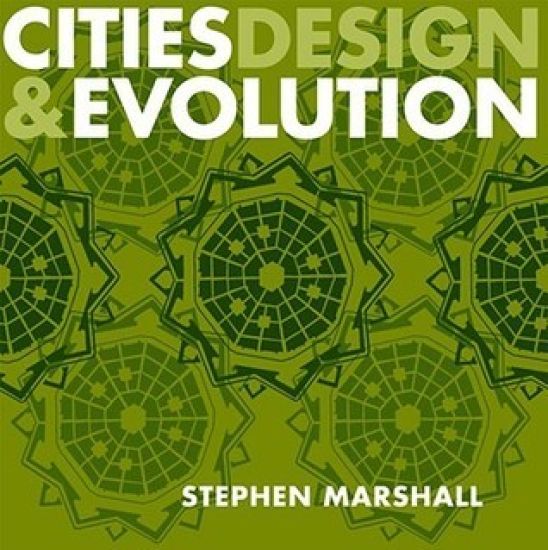
Why does modern planning sometimes create urban environments that are less attractive and functional than the ‘organic urbanism’ of traditional cities? Cities Design and Evolution takes up the challenge of this question, investigating ‘how cities are put together’, both in the sense of how the parts are organized in relation to the whole, and how they are created or evolve over time. Cities Design and Evolution offers an engaging and original narrative that interprets planning philosophies from Modernism to New Urbanism, organic theories from Patrick Geddes to Le Corbusier, and evolutionary thinking from Charles Darwin to Richard Dawkins. The book develops a new evolutionary perspective that recognizes both the ‘designed’ and ‘organic’ nature of cities, and provides a rationale and impetus for fresh approaches to urban planning and design. In what is the first book to significantly apply modern evolutionary thinking to urbanism, Cities Design and Evolution promises to stimulate thought, debate and action concerning the nature of cities and future urban planning. The book should appeal to all who are interested in cities, in design and in evolution.
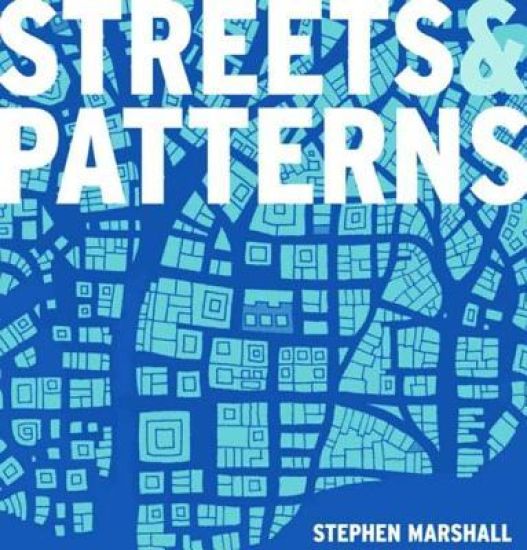
There is an emerging consensus that urban street layouts should be planned with greater attention to ‘placemaking’ and urban design quality, while maintaining the conventional transport functions of accessibility and connectivity. However, it is not always clear how this might be achieved: we still tend to have different sets of guidance for main road networks and for local streetgrids. What is needed is a framework that addresses both of these, plus main streets – that don’t easily fit either set of guidance – in an integrative manner. Streets and Patterns takes up this challenge to create a coherent rationale to underpin today’s streets-oriented urban design agenda. Informed by recent research, the book looks behind existing design conventions and beyond immediate policy rhetoric, and analyses a range of first principles – from Le Corbusier and Colin Buchanan to New Urbanism.The book provides a new framework for the design and planning of urban layouts, integrating transport issues such as road hierarchy, arterial streets and multi-modal networks with urban design and planning issues such as street type, grid type, mixed-use blocks and urban design coding.
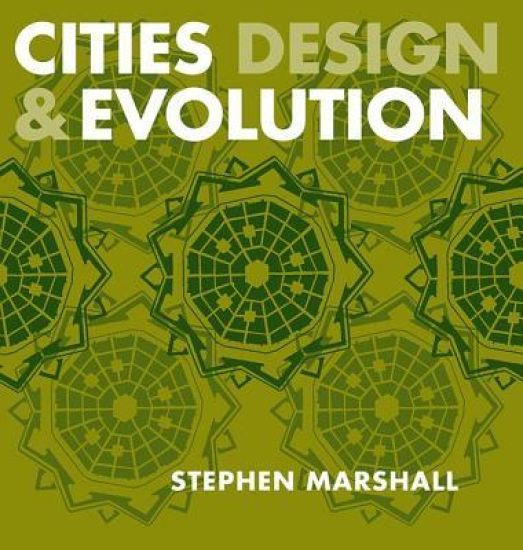
Why does modern planning sometimes create urban environments that are less attractive and functional than the ‘organic urbanism’ of traditional cities? Cities Design and Evolution takes up the challenge of this question, investigating ‘how cities are put together’, both in the sense of how the parts are organized in relation to the whole, and how they are created or evolve over time. Cities Design and Evolution offers an engaging and original narrative that interprets planning philosophies from Modernism to New Urbanism, organic theories from Patrick Geddes to Le Corbusier, and evolutionary thinking from Charles Darwin to Richard Dawkins. The book develops a new evolutionary perspective that recognizes both the ‘designed’ and ‘organic’ nature of cities, and provides a rationale and impetus for fresh approaches to urban planning and design. In what is the first book to significantly apply modern evolutionary thinking to urbanism, Cities Design and Evolution promises to stimulate thought, debate and action concerning the nature of cities and future urban planning. The book should appeal to all who are interested in cities, in design and in evolution.
A Sermon Preached Before The Honorable House Of Commons, Now Assembled In Parliament, At Their Public Fast, November 17, 1640 (1641)
Stephen Marshall
KESSINGER PUBLISHING, LLC
2010
sidottu

Sermon Preached Before The Honorable House Of Commons, Now Assembled In Parliament, At Their Public Fast, November 17, 1640 (1641)
Stephen Marshall
KESSINGER PUBLISHING CO
2009
pokkari
A compelling conversation between African American political intellectuals and the canon of western political philosophy

A compelling conversation between African American political intellectuals and the canon of western political philosophy
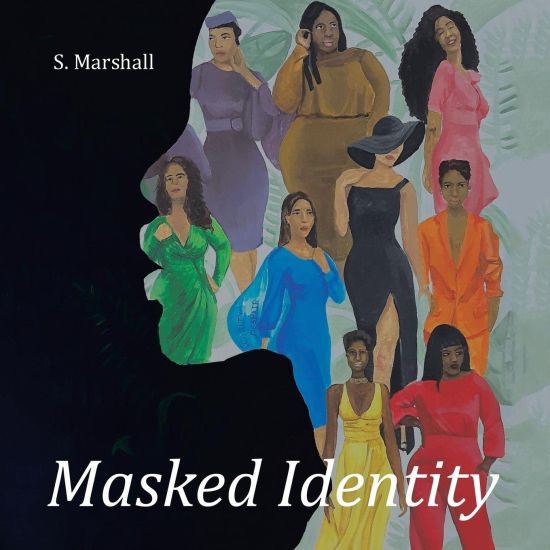
Masked Identity is about the challenges women face throughout their life while still trying to sustain in society. It's a book of poetry which consists of nine women living out their purpose and encountering trouble and sacrifices along the way. Each woman represents a certain color and all of the women have one common goal which is survival. Through poetry, each woman is able to tell her story about heartbreak, friends, being accepted in society, family and love related matters.
Young men growing up in the East End of London on the edge of criminality
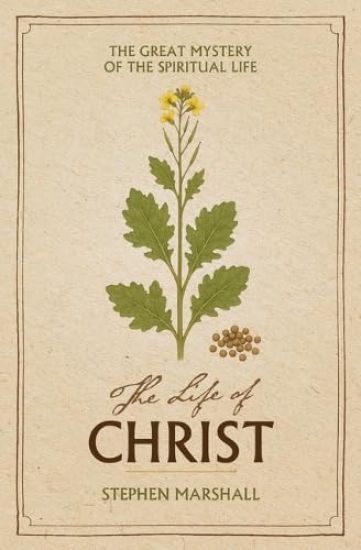
Experience the Transformative Power of Faith Discover the profound mystery at the heart of Christian living in The Life of Christ: The Great Mystery of the Spiritual Life by Stephen Marshall. This inspiring work, rooted in the teachings of one of the most influential preachers of the Puritan era, invites readers to explore what it truly means to live by faith in Christ. Marshall masterfully unpacks the biblical doctrine that every believer, while in this world, is called to live not by their own strength, but by the very life of Christ within them. Through clear exposition and practical application, he demonstrates that spiritual life is not merely a set of beliefs or outward practices, but a dynamic, inward transformation—a new life received from Christ, sustained by faith, and evidenced by a deep hunger for God’s Word and a heartfelt pursuit of holiness. With rich historical context and timeless wisdom, The Life of Christ challenges readers to examine their own spiritual condition, embrace the comfort and assurance found in Christ’s righteousness, and cultivate a faith that shapes every aspect of daily living. This book is an essential guide for anyone longing to experience the fullness, joy, and excellence of a life truly lived by faith.
This book guides you through doctoral study from the student's point of view - the challenges, pitfalls, and ups and downs that you're likely to encounter in the course of your PhD. Inside you'll find: -Advice on doing research - Examples of PhD problems and their resolution - Reflections on life as a PhD student - Insights into how the academic system works - Real life cases of famous (and not so famous)PhD students. Over and above what your supervisors and university may have to offer, Your PhD Companion will help explain all kinds of things that no one ever seems to tell you - and you don't necessarily know to ask.Contents: Acknowledgements; Preface; 1. Introduction; 2. Embarking on a PhD; 3. You and your supervisor; 4. Finding your feet (and a desk to put them under); 5. Doing the research; 6. Life as a PhD student; 7. Academia; 8. Thesis construction; 9. Survival; 10. The end game; 11. The examination; 12. The afterlife; Further Reading; Index.
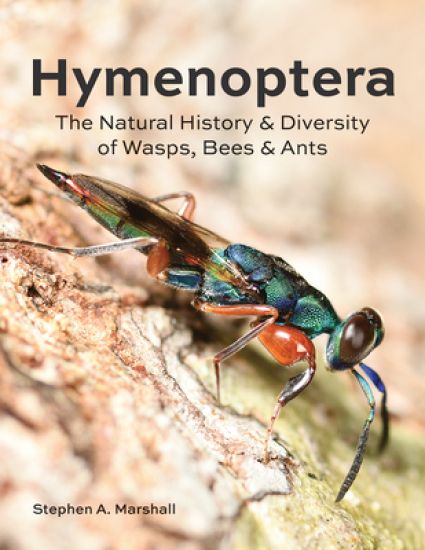
Stephen A. Marshall’s natural history titles — Insects: Their Natural History and Diversity (2017, ISBN 978 177085 962 3), Beetles: The Natural History and Diversity of Coleoptera (2018, ISBN 978 02281 0069 0) and Flies: The Natural History and Diversity of Diptera (2012; ISBN 978 177085 100 9) — are among the most respected books on the insect world published in the last 20 years. More admirable than the books’ rigorous science, however, is that they are wholly suitable for a lay audience, including high school students interested in entomology. The books have been adopted as classroom texts at the university level and are on the reference shelves of many practicing entomologists. In Hymenoptera, Marshall has again applied his broad knowledge of insects to the world of wasps, bees and ants. The subject of this book is an enormous one, since Hymenoptera is arguably the largest order of living things. Comprehensive and packed with richly illustrated keys and thousands of colour photographs identified with help from nearly 100 of the world’s best hymenopterists, this volume provides the reader with a colourful and enjoyable introduction to a huge group of organisms, along with an overview of the diversity of fascinating families included in the group. Marshall opens with a description of what makes a wasp a wasp, and then introduces the diversity, importance and natural history of the order with copious examples and explanations. Topics include the life histories of wasps, hymenoptera and plants, hymenoptera in history, culture and fiction, kleptoparasitism, and many more. Part two of Hymenoptera is a guided tour of the diversity of the order, with fascinating stops for almost all of the world’s 100 or so families of wasps as well as most of the significant subfamilies. Thousands of photographs, almost all taken in the field by the author, are used to capture the range of form and function in each family, with pages of photographs of the popular groups — such as bees, hornets and ants — but also with little-known groups ranging from pincer wasps to fairyflies. Essential information about importance, range, behaviour and biology is provided for each group, and easy-to-use photographic keys to most families are provided for those wishing to use the book as an identification guide. Like Marshall’s companion titles, Hymenoptera will be welcomed by the scientific, academic and naturalist communities, as well as the next generation of entomologists.
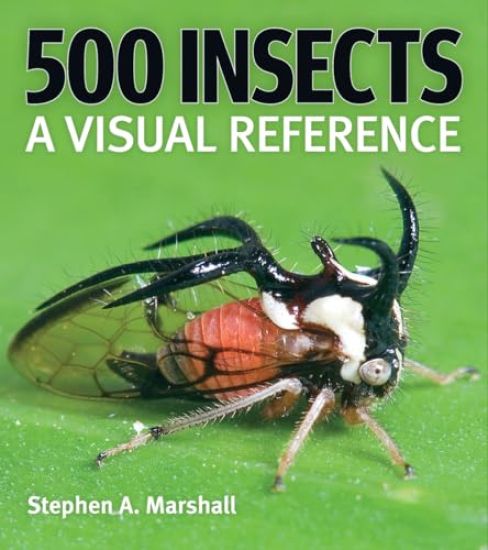
“Incorporating several newly identified species, this insect field guide provides single-page entries describing 500 of the world’s reported one million recognized varieties. The detail of each full-colour, highly magnified photograph is so stunning that, if you’re not fond of bugs, it will doubtlessly incite your flight reflex. Nevertheless, the vivid photographic detail is essential to the book’s scientific value: nothing is lost in creative translation.... Highly recommended for entomology collections.” —Library Journal. Fascinating insects from around the world, including some newly discovered species. Insects account for more than half of the approximately 1.7 million named species of all living things. The number of insect species yet undiscovered runs into many further millions. Stephen Marshall has selected 500 of the most interesting insects from his travels to North and South America, the Caribbean, Australia, New Zealand and beyond. Beautiful photographs show the insects in their natural habitats, and informative “factfiles” provide further details about the lives of these fascinating creatures. Some of the insects are new species, photographed here for the first time. In addition to the entries for each of the species, there is an introduction on insect biology, classification and distribution, along with information on collecting and photographing insects.