

Kirjahaku
Etsi kirjoja tekijän nimen, kirjan nimen tai ISBN:n perusteella.
1000 tulosta hakusanalla Stephen Paul Tolmie






Heart of the Dragon: The Warrior Prophecy
Stephen Paul
Createspace Independent Publishing Platform
2015
nidottu
Gareth Hensleap thought his fighting days were over, but when an army of nightmarish monsters invades his homeland, the former military legend finds himself forced to take up the sword again in the most important fight of all--the fight to save his family. While Gareth is no stranger to combat, it is one of his ten young children who may find the power to save them all. The powerful dragon Xirdneh has come to the shores of Jenai seeking the key to immortality, and the people inhabiting the land mean nothing to him until Sarily Hensleap, a defiant teenage girl, destroys one of his eyes with a flaming arrow. Caught up in the chaos of war, the Hensleap family is separated in their attempt to flee to safety. For Gareth, five of his ten children are missing. His struggle to protect those that are with him is magnified by his concern for those who aren't. Fighting against monsters of incredible size and strength, Gareth sets off on a quest to unite and protect his family. His three oldest children, Jake, Edwin, and Sarily, are forced to fend for themselves when their chance to rendezvous with their father is cut off. Ten-year-old twins Jak and Zak find themselves in deeper trouble-partially of their own making-and forced to flee on their own. Dragons, monsters, haunted forests, and cursed cities threaten the family at every turn, but the greatest danger may be the betrayal of one of their own kind. Amidst the chaos and death of war, the Hensleaps fight to find each other and fulfill the destiny spoken of in The Warrior Prophecy.

Constructive Bidding 401 is the first of two books that provides advancing partnerships with a complete and consistent framework in the form of a bidding system for competition in stratified tournaments at higher levels.This first book emphasizes the importance of working with your partner. Concepts of teamwork from the business world are presented in a bridge context with a number of partnership development exercises. The book moves on to hand evaluation and follows with a complete range of opening bids from 1C to 4S in all seat positions. Finally, it deals with responses to an opening bid.This convention-rich system can be simplified to suit the requirements of individual partnerships at any level. Developing partnerships can start with the basic system and then add to it with the understanding that everything will work seamlessly together. The system's bidding philosophy is to aggressively locate and bid game contracts. Bidding structures derived from that approach depend upon shape and high-card points to differentiate between types of bids. Patterned after a college textbook, concepts are presented, explained and then detailed in a tabular format. A summary and quiz following each major section develops the reader's understanding. The quizzes in both books contain more than 450 question and answers.

This book is a follow-up to Constructive Bidding 401, which introduced the teamwork and structure needed for a complete bidding system. Together, the two books provide advancing partnerships a complete and consistent framework in the form of a bidding system for competition in stratified tournaments at higher levels.Book Two begins with opener's rebids and progresses to slam bidding. The book finishes a discussion on the strategy required for matchpoints and IMPs. Two Over One bids and Forcing 1NT are a small component of this bidding system. Of greater importance is the need to define and manage a broad range of bidding situations in a predictable fashion. While discussion on Two Over One is complete, it is a small portion of the total content and the focus is on a complete system.Patterned after a college text book, concepts are presented, explained and then detailed in a tabular format. A summary and quiz following each major section develops the reader's understanding. The quizzes in both books contain more than 450 question and answers.

Improving your partnership's ability to overcome interference is essential for good results. Finding the right contract requires a clear understanding of the values represented by responder's bids after the opponents interfere. Duplicate Bridge 403: Defending Second Seat Interference provides the reader with two sets of tools for this: 1.Hand valuation in competition using an algorithm developed by Lawrence and Wirgren. This method of hand evaluation provides the reader with a competitive advantage relative to older methods of estimating trick count. 2.A comprehensive set of bidding structures is provided for defending against bids made in the second seat. Where possible, alternatives are detailed giving partnerships a choice that fits their individual style. Quizzes follow each section allowing the reader to test their understanding. Discussions include defending against: -A Takeout double-Natural overcalls using Negative Doubles-Two-suited overcalls such as Unusual 2NT, Michaels, and Roman Jump Overcall-Two-level opening preempts using the Lebensohl relay-Natural overcalls of a 1NT opening (Lebensohl relay)-1NT overcalls with one known suit and one unknown suit (Lebensohl relay) -1NT overcalls with two known suits (Lebensohl relay)Bidding structures for Lebensohl were based on "The Lebensohl Convention Complete" by Ron Andersen. This text is designed to improve your partnership understandings in competition. Given the frequency opponents interfere in today's game a small improvement and can quickly lead you to stronger results.

When evil lurks in an expanding shadow of darkness, the forces of light search for a hero to bring the Universe back into balance. Colton Donovan was once a college pitching phenom, but a horrific accident ended his dreams of baseball stardom. Now, he is haunted by a different kind of dream, a recurring nightmare that won't let him rest. At the behest of his wise-cracking roommate Adam, Colton enlists the help of Shawna, a beautiful empath who is adept at reading energies and interpreting dreams. Shawna senses trouble right away, but only when a grisly murder mirrors Colton's nightmare does she realize the danger they now face. When a second murder occurs, Colton finds himself as the lead suspect in a federal investigation, and Shawna realizes the ritualistic nature of the killings could lead to apocalyptic consequences. Now, as the body count rises, Colton, Shawna, and Adam race to stay one step ahead of the feds and unravel the clues to find the killer before it's too late for everyone.
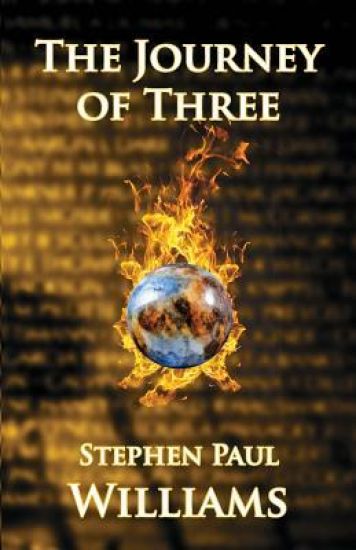
The life and times of three people, Lenny, Joey and big Eddie, unfold in The Journey of Three. Their lives change when a mysterious agate orb washes ashore on the beach of Sharp Park, California. What follows is a dramatic adventure spanning decades of their friendships, their loves, and heartaches. Each of them have a compelling story of battles, triumphs, disappointments, and finding life's purpose.A Viking ship that never sails, a leaf, a marble, and names etched on a wall, play a pivotal role in the lives of the three. Join them as they discover what power exists for the holder of a small round stone, and how it influenced their lives. Was the power already within them, or was it something much greater. Truth or fiction, you decide. Explore the depths of their lives to find out for yourself.

Most would agree that American culture changed dramatically from the 1960s to the 1980s. Yet the 1970s, the decade “in between,” is still somehow thought of as a cultural wasteland. In The Seventies Now Stephen Paul Miller debunks this notion by examining a wide range of political and cultural phenomena-from the long shadow cast by Richard Nixon and the Watergate scandal to Andy Warhol and the disco scene-identifying in these phenomena a pivotal yet previously unidentified social trend, the movement from institutionalized external surveillance to the widespread internalization of such practices.The concept of surveillance and its attendant social ramifications have been powerful agents in U.S. culture for many decades, but in describing how during the 1970s Americans learned to “survey” themselves, Miller shines surprising new light on such subjects as the women’s movement, voting rights enforcement, the Ford presidency, and environmental legislation. He illuminates the significance of what he terms “microperiods” and analyzes relevant themes in many of the decade’s major films-such as The Deer Hunter, Network, Jaws, Star Wars, and Apocalypse Now-and in the literature of writers including John Ashbery, Toni Morrison, Adrienne Rich, and Sam Shepard. In discussing the reverberations of the 1969 Stonewall riots, technological innovations, the philosophy of Michel Foucault, and a host of documents and incidents, Miller shows how the 1970s marked an important period of transition, indeed a time of many transitions, to the world we confront at the end of the millennium.The Seventies Now will interest students and scholars of cultural studies, American history, theories of technology, film and literature, visual arts, and gay and lesbian studies.
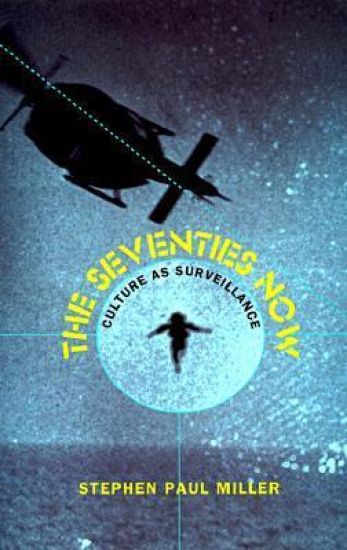
Most would agree that American culture changed dramatically from the 1960s to the 1980s. Yet the 1970s, the decade “in between,” is still somehow thought of as a cultural wasteland. In The Seventies Now Stephen Paul Miller debunks this notion by examining a wide range of political and cultural phenomena-from the long shadow cast by Richard Nixon and the Watergate scandal to Andy Warhol and the disco scene-identifying in these phenomena a pivotal yet previously unidentified social trend, the movement from institutionalized external surveillance to the widespread internalization of such practices.The concept of surveillance and its attendant social ramifications have been powerful agents in U.S. culture for many decades, but in describing how during the 1970s Americans learned to “survey” themselves, Miller shines surprising new light on such subjects as the women’s movement, voting rights enforcement, the Ford presidency, and environmental legislation. He illuminates the significance of what he terms “microperiods” and analyzes relevant themes in many of the decade’s major films-such as The Deer Hunter, Network, Jaws, Star Wars, and Apocalypse Now-and in the literature of writers including John Ashbery, Toni Morrison, Adrienne Rich, and Sam Shepard. In discussing the reverberations of the 1969 Stonewall riots, technological innovations, the philosophy of Michel Foucault, and a host of documents and incidents, Miller shows how the 1970s marked an important period of transition, indeed a time of many transitions, to the world we confront at the end of the millennium.The Seventies Now will interest students and scholars of cultural studies, American history, theories of technology, film and literature, visual arts, and gay and lesbian studies.
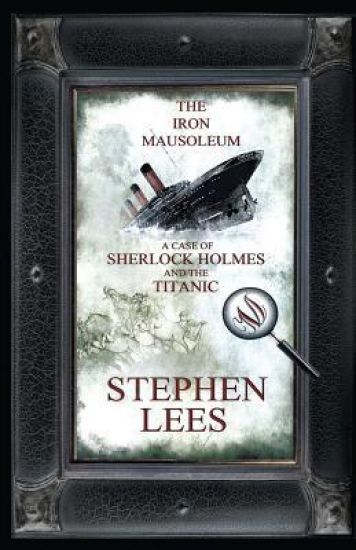
Sherlock Holmes joins forces with his faithful companion Dr Watson in a new adventure story, set in 1911 in a fog-bound London. The story offers an alternative explanation about the fate of the RMS Titanic and is based partly on fiction and on fact and will delight lovers of the Titanic mystery and fans of the Sherlock Holmes stories. Written in the style of Conan Doyle, The Iron Mausoleum - a case of Sherlock Holmes and the Titanic is - with permission obtained from the Conan Doyle Estate - based on the characters and places created by Conan Doyle and therefore are familiar - if interpreted slightly differently. The story begins when Sir James Walter, the Head of the Marine Department at the Admiralty, visits Holmes in Baker Street. He tells of the suspicious death of a clerk who worked in the Admiralty offices in Whitehall and tries to persuade a reluctant Holmes to investigate. Eventually Holmes agrees and with Watson are drawn into a world of criminal conspiracy and murder. We are taken on a journey with Holmes and Watson and witness Holmes' forensic application to solving the mystery of the sinking of the Titanic. Beginning in the atmospheric fog bound streets of London and then Brookwood Necropolis to the Titanic at the Herculaneum Dock in Liverpool and back to London. From scoundrels encountered in the infamous Colony Room Club to wealthy financiers and an American heiress the clues unfold. Told with conviction and humour, the author totally immerses us in this Holmesian world of the early 1900s. The book includes a map of Holmes' London allowing the reader to re-trace the footsteps of Holmes and Watson on their various journeys through the fog-bound Metropolis. Drawings by the author of some of the buildings, which feature in the novel, giving the reader vital clues in solving the mystery.