
Kirjahaku
Etsi kirjoja tekijän nimen, kirjan nimen tai ISBN:n perusteella.
1000 tulosta hakusanalla Stephen Skinner

Uncover the Techniques Used by Graeco-Egyptian Magicians Egypt was once at the heart of magical practice, and the Graeco-Egyptian papyri are the clearest and most extensive documentation of some of these earliest methods. Using academic tools, Stephen Skinner has translated and presented the information contained in the papyri so that the magic will transcend theory and become a real practice. More than simply a guide to the papyri, Techniques of Graeco-Egyptian Magic is a complete survey and explanation of the techniques, including: Attracting love, health, and foresight Bowl and lamp skrying Sending of dreams Mystery rites for fellowship with the gods And more Uncover the techniques once used by Graeco-Egyptian magicians to bring this powerful magic into your life.
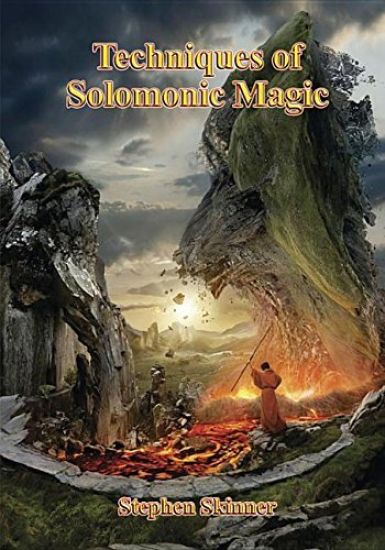
The most detailed analysis of the techniques of Solomonic magic from the seventh to the nineteenth century ever published. This volume explores the methods of Solomonic magic in Alexandria, tracing how the tradition passed through Byzantium (the Hygromanteia) to the Latin Clavicula Salomonis and its English incarnation as the Key of Solomon. Discover specific magical techniques such as the invocation of the gods, the binding of demons, the use of the four demon Kings, and the construction of the circle and lamen. The use of amulets, talismans, and phylacteries is outlined along with their methods of construction. Also included are explanations of the structures and steps of Solomonic evocation, the facing directions, practical considerations, the use of thwarting angels, achieving invisibility, sacrifice, love magic, treasure finding and the binding, imprisoning, and licensing of spirits.
In August 1963, one of the best-selling aircraft of British civil aviation, the BAC One-Eleven, took to the skies for the first time. With an order book for sixty aircraft, more than half were from the United States, which was an unprecedented situation for a British civil aircraft. The first project for the newly formed British Aircraft Corporation, the One-Eleven was wholly designed and built by BAC, and remained in production throughout the entire seventeen-year history of the organisation, performing strongly even when profits were at a low. After flying commercially in Europe for the last time in March 2002, here the One-Eleven is celebrated in style.

In a world of multinational conglomerates, one name in British aviation has remained independent for the past nine decades. Marshall of Cambridge has quietly grown to be one of the single largest employers in Cambridgeshire. Founded in the Edwardian era as a motor engineers, the company branched out into aviation after WWI, teaching pilots to fly, and became a major aircraft repair centre during the WWII. In the inter-war period it purchased the land which later became Cambridge Airport.Marshall have a repair facilty at Cambridge that has worked on almost every type of aircraft manufactured in the UK and USA,winning many civilian and military contracts. They have made components for aircraft as diverse as Comets and Concordes. The company also has a string of motor dealerships and manufactures ambulance and lorry bodies for both military and civilian use. This is the story of the firm's prodigious enterprise over the past century.

This is the history of BAe 146, Britain’s best-selling jet airliner and also its last. It ended a long development of jet airliners in Britain that began with the very first jet airliner, the de Havilland Comet, in 1949. Indeed, the 146 was first designed in the same de Havilland factory at Hatfield as the Comet, but by the time of its first flying in 1981 it was part of British Aerospace at the Avro factory. Though production of this aircraft ended in 2002, many continue to fly today and the 146 will always be representative of the British Aircraft industry at its peak.

In August 1963, one of the best-selling aircraft of British civil aviation, the BAC One-Eleven, took to the skies for the first time. With an order book for sixty aircraft, more than half were from the United States, which was an unprecedented situation for a British civil aircraft. The first project for the newly formed British Aircraft Corporation, the One-Eleven was wholly designed and built by BAC, and remained in production throughout the entire seventeen-year history of the organisation, performing strongly even when profits were at a low. After flying commercially in Europe for the last time in March 2002, here the One-Eleven is celebrated in style.

The last great mystery of World War I has been solved. Drawing from more than two thousand pages of unpublished material, archeological digs in France and dozens of interviews with the descendents of those involved, The Stand: The Final Flight of Lt. Frank Luke, Jr. writes the last chapter on the life and death of America’s most spectacular fighter pilot. After fifteen years of research, author and Telly Award-winning television host Stephen Skinner pens a driving, dynamic account that fills in the blanks left behind byhistoryafter the legendary Arizona balloon buster died under controversial circumstances deep in enemy lines in September of 1918.
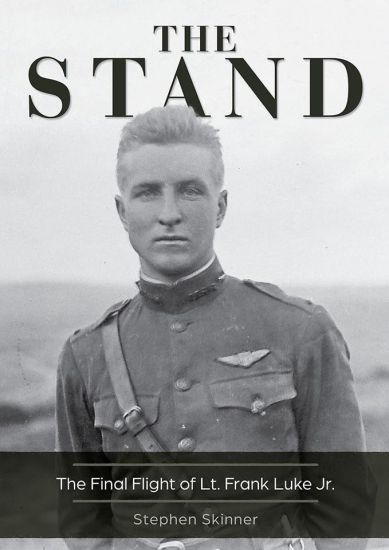
A revised and expanded new edition of this classic biography of a legendary American fighter pilot. Frank Luke was the first American airman to be awarded the Medal of Honor. He was the second-highest-scoring American fighter ace of the First World War, just behind Eddie Rickenbacker. Unlike the jovial Rickenbacker, Luke is an enigma. On the basis of his unmatched rate of aerial victories, including many heavily defended balloons, Luke was likely one of the bravest and most gifted fighter pilots of the war. On the other hand, the young Arizonan was almost universally disliked and doubted by his peers. Frank Luke was shot down and killed on September 29, 1918; he was 21 years old and had been in combat for just over a month. The details of this exceptional pilot's death were murky, heavily shrouded by rumor and mythos. Author Stephen Skinner changed that. Skinner immersed himself in the life and death of Frank Luke. Fifteen years of research, including archeological digs, dozens of interviews, nine trips to France, and the review of 2,000 pages of unpublished archival material, produced the definitive work on a truly legendary figure in US military history. This new edition combines new content and revisions with a refreshed presentation and format.

Learn to change your outlook and amplify your good luck with specific advice from a feng shui expert. Feng shui is the Chinese art of improving quality of life by making specific changes to the arrangement of a landscape, a house, or a room. Making these changes alters the energy, or ch'i, or the space. In Flying Star Feng Shu, you'll learn in a step-by-step manner how to change your energy patterns to improve your relationships, finances, and health. Flying Star Feng Shui adds a new "time dimension" to feng shui practice reflecting the fact that the subtle energies present in our living environment are constantly changing. The flying star combinations make it possible to respond to—or prepare for—these changing energy "situations." These methods produce impressive and rapid results that can shorten periods of bad luck, while initiating or prolonging periods of good fortune. These concepts have previously been available only from a few highly technical sources. The book's 15 chapters include: Theory of Feng Shui Space Dimension Room-by-Room Analysis Interpreting the Stars Remedies Author Stephen Skinner has an international reputation as a leader in bringing feng shui concepts to Westerners. You never know—Flying Star Feng Shuicould change your life.

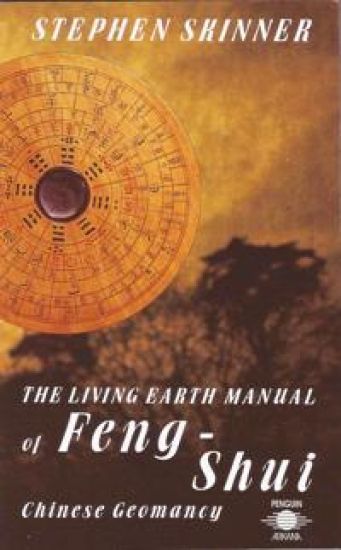
This book tracks the evolution of feng shui in detail in China from 221 BC till the present day, and then its spread throughout SE Asia, and finally to the rest of the world in the last 35 years. This has never been done before in English. The only information on the history of feng shui occurs as scattered chapters in a number of books, but these books often repeat the same tired generalisations, and include many largely erroneous statements such as: 1. "Feng shui is 6000 years old." In fact the characters 'feng shui' were not used in this context before 320 CE. Even the older names (ti li, kan yi, etc.) for this practice do not occur in any surviving texts before 221 BC. 2. "Feng shui derives from the Yi Jing". In fact, apart from the 8 trigrams being used as basic directional indicators, no feng shui compass shows the 60 hexagrams till 1600 CE, and not the full 64 hexagrams till 1824. 3. "The feng shui compass derives from a magnetised spoon revolving on a plate." In fact this incorrect deduction made by Wang Chen-To in 1946 (and later reluctantly repeated by Needham) was completely discredited by several researchers in the 1990s. This book has been meticulously researched, from authoritative Chinese texts and the analysis of many antique lo p'ans, and gives the real history of feng shui. It contains the biographical details of many masters, and tracks the developments and people involved in propagating feng shui in the US, UK, Europe and China, Singapore, Hong Kong, Taiwan, in the 20th and 21st century, right up to date in 2012. It clearly shows the different feng shui methods and masters, and how they relate to each other.


One of the largest bank robberies of the 20th century: a retelling of a real event that was hushed up.
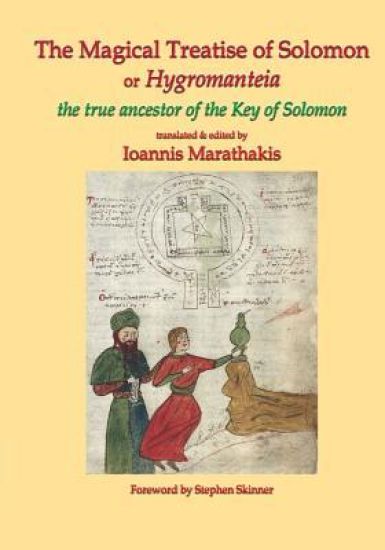
This is the true ancestor of the famous grimoire the Key of Solomon. The book includes translations of 12 different manuscripts of the Hygromanteia. This book is sometimes called the Hygromanteia. Throughout history thousands of people have been fascinated by the grimoire the Key of Solomon. This is the original Greek book of magic that was the source of the Key of Solomon, and in turn the ancestor of most of the grimoire-based ceremonial magic practiced in Europe and the US from the 15th century to the present day. This is a ground-breaking work. For the first time (outside of a handful of pages in academic works) the full Greek original of the Key of Solomon appears in English. Contrary to popular opinion the Key of Solomon was not translated from a Hebrew original. During the gradual decline and fall of the Byzantine Empire, this precious text, along with many others, was taken from Constantinople to Italy probably around 1453 were it was translated into Latin and Italian. Abridged Latin copies entitled the Clavicula Salomonis circulated in Europe, going through many changes, languages and versions to become the Key of Solomon as we know it (some of those manuscripts are published as Volume IV of the present series). Now for the first time you can read the whole text (large slabs of which were left out of the Latin translations) arranged clearly in the order in which it was meant to be read.
Educational Essays; Or, Practical Observations On the Intellectual and Moral Training and Scholastic Discipline of Youth
Stephen Skinner
Hutson Street Press
2025
sidottu
Educational Essays; Or, Practical Observations On the Intellectual and Moral Training and Scholastic Discipline of Youth
Stephen Skinner
Hutson Street Press
2025
pokkari


In its case law on the use of lethal and potentially lethal force, the European Court of Human Rights declares a fundamental connection between the right to life in Article 2 of the European Convention on Human Rights and democratic society. This book discusses how that connection can be understood by using narrative theory to explore Article 2 law’s specificities and its deeper historical, social and political significance. Focusing on the domestic policing and law enforcement context, the book draws on an extensive analysis of case law from 1995 to 2017. It shows how the connection with democratic society in Article 2’s substantive and procedural dimensions underlines the right to life’s problematic duality, as an expression of a basic value demanding a high level of protection and a contextually limited provision allowing states leeway in the use of force. Emphasising the need to identify clear standards in the interpretation and application of the right to life, the book argues that Article 2 law’s narrative dimensions bring to light its core purposes and values. These are to extract meaning from pain and death, ground democratic society’s foundational distinction between acceptable force and unacceptable violence, and indicate democratic society’s essential attributes as a restrained, responsible and reflective system.
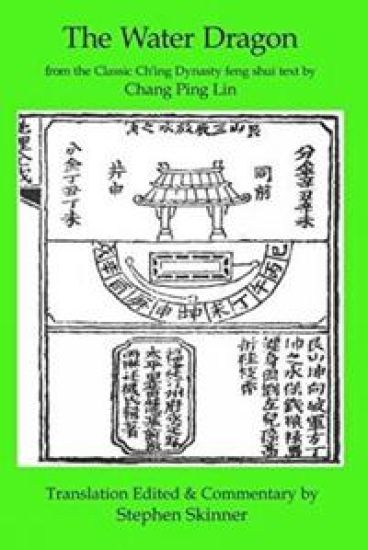

Original Eight Mansions Formula
Stephen Skinner
Createspace Independent Publishing Platform
2016
nidottu