Kirjojen hintavertailu. Mukana 12 083 983 kirjaa ja 12 kauppaa.

Kirjahaku

Etsi kirjoja tekijän nimen, kirjan nimen tai ISBN:n perusteella.

1000 tulosta hakusanalla Stephen Stich; Thomas Donaldson

Philosophy, 2e

Philosophy, 2e

Stephen Stich; Thomas Donaldson

OXFORD UNIVERSITY PRESS INC
2024
nidottu
Featuring a remarkably clear writing style, Philosophy: Asking Questions--Seeking Answers is a brief and accessible guide designed for students with no prior knowledge of the subject. Written by renowned scholars Stephen Stich and Tom Donaldson, it focuses on the key issues in Western philosophy, presenting balanced coverage of each issue and challenging students to make up their own minds. Each chapter incorporates discussion questions, key terms, a glossary, and suggestions for further readings to help make the material more understandable to novices. While comprehensive enough to be used on its own, Philosophy can also be used as a supplement to any introductory anthology.
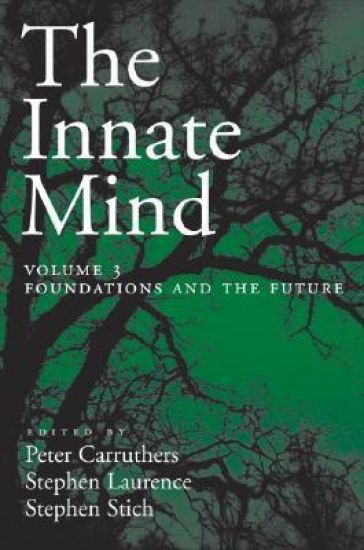
The Innate Mind, Volume 3

The Innate Mind, Volume 3

Stephen Stich

Oxford University Press Inc
2008
nidottu
This is the third volume of a three-volume set on The Innate Mind. The extent to which cognitive structures, processes, and contents are innate is one of the central questions concerning the nature of the mind, with important implications for debates throughout the human sciences. By bringing together the top nativist scholars in philosophy, psychology, and allied disciplines these volumes provide a comprehensive assessment of nativist thought and a definitive reference point for future nativist inquiry. The Innate Mind: Volume 3: Foundations and the Future, concerns a variety of foundational issues as well as questions about the direction of future nativist research. It addresses such questions as: What is innateness? Is it a confused notion? What is at stake in debates between nativists and empiricists? What is the relationship between genes and innateness? How do innate structures and learned information interact to produce adult forms of cognition, e.g. about number, and how does such learning take place? What innate abilities underlie the creative aspect of language, and of creative cognition generally? What are the innate foundations of human motivation, and of human moral cognition? In the course of their discussions, many of the contributors pose the question (whether explicitly or implicitly): Where next for nativist research?Together, these three volumes provide the most intensive and richly cross-disciplinary investigation of nativism ever undertaken. They point the way toward a synthesis of nativist work that promises to provide a powerful picture of our minds and their place in the natural order.
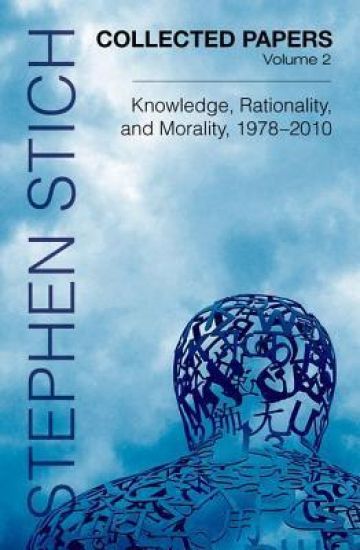
Collected Papers, Volume 2

Collected Papers, Volume 2

Stephen Stich

Oxford University Press Inc
2012
sidottu
This volume collects the best and most influential essays on knowledge, rationality and morality that Stephen Stich has published in the last 40 years. All of the essays are concerned, in one way or another, with the ways in which findings and theories in the cognitive sciences can contribute to, and sometimes reshape traditional philosophical conversations and debates. A central theme in the essays on epistemology and rationality is the philosophical significance of empirical work on human reasoning done by researchers in the "heuristics and biases" tradition, and by their critics in evolutionary psychology. In the essays on morality, a wide range of empirical work is explored, including studies of the psychological foundations of norms, work on the moral / conventional distinction, and empirical attempts to determine whether humans ever act on altruistic motives. Stich was one of the pioneers in the experimental philosophy movement, and work in experimental philosophy plays a prominent role in many of these essays. The volume includes a new introductory essay that offers an overview of the papers and traces the history of how they emerged.
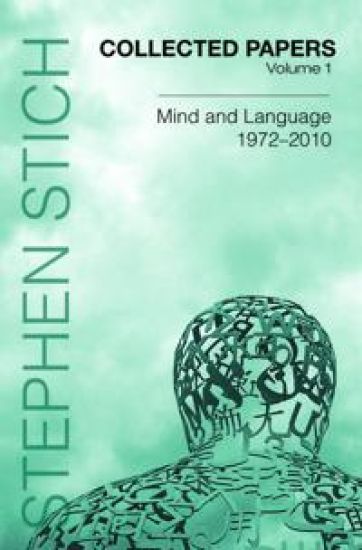
Collected Papers, Volume 1

Collected Papers, Volume 1

Stephen Stich

Oxford University Press Inc
2011
sidottu
This volume collects the best and most influential essays that Stephen Stich has published in the last 40 years on topics in the philosophy of mind and the philosophy of language. They discuss a wide range of topics including grammar, innateness, reference, folk psychology, eliminativism, connectionism, evolutionary psychology, simulation theory, social construction, and psychopathology. However, they are unified by two central concerns. The first is the viability of the commonsense conception of the mind in the face of challenges posed by both philosophical arguments and empirical findings. The second is the philosophical implications of research in the cognitive sciences which, in the last half century, has transformed both our understanding of the mind and the ways in which the mind is studied. The volume includes a new introductory essay that elaborates on these themes and offers an overview of the papers that follow.
Deconstructing the Mind

Deconstructing the Mind

Stephen P. Stich

Oxford University Press Inc
1996
sidottu
Over the last two decades, debates over the viability of commonsense psychology have been centre stage in both cognitive science and the philosophy of mind. Eliminativists have argued that advances in cognitive science and neuroscience will ultimately justify a rejection of our "folk" theory of the mind, and of its ontology. In the first half of this book Stich, who was at one time a leading advocate of eliminativism, maintains that even if the sciences develop in the ways that eliminativists foresee, none of the arguments for ontological elimination are tenable. Rather than being resolved by science, he contends, these ontological disputes will be settled by a pragmatic process in which social and political considerations have a major role to play. In later chapters, Stich argues that the widespread worry about "naturalizing" psychological properties is deeply confused, since there is no plausible account of what naturalizing requires on which the failure of the naturalization project would lead to eliminativism. He also offers a detailed analysis of the many different notions of folk psychology to be found in philosophy and psychology, and argues that simulation theory, which purports to be an alternative to folk psychology, is not supported by recent experimental findings.
Deconstructing the Mind

Deconstructing the Mind

Stephen P. Stich

Oxford University Press Inc
1999
nidottu
In this book, Stich unravels - or deconstructs - the doctrine called "eliminativism". Eliminativism claims that beliefs, desires, and many other mental states we use to describe the mind do not exist, but are fictional posits of a badly mistaken theory of "folk psychology". Stich makes a U-turn in his book, opening up new and controversial positions.
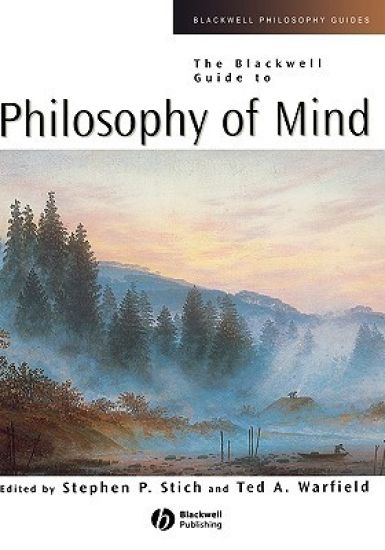
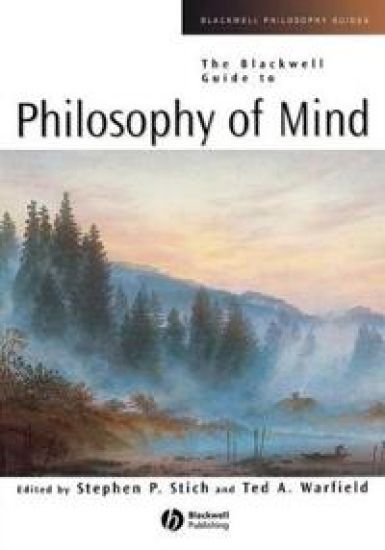
The Blackwell Guide to Philosophy of Mind

The Blackwell Guide to Philosophy of Mind

Stephen P. Stich; Ted A. Warfield

Blackwell Publishers
2002
sidottu
Comprising a series of specially commissioned chapters by leading scholars, this comprehensive volume presents an up-to-date survey of the central themes in the philosophy of mind. It leads the reader through a broad range of topics, including Artificial Intelligence, Consciousness, Dualism, Emotions, Folk Psychology, Free Will, Individualism, Personal Identity and The Mind-Body Problem. Provides a state of the art overview of philosophy of mind. Contains 16 newly-commissioned articles, all of which are written by internationally distinguished scholars. Each chapter reviews a central issue, examines the current state of the discipline with respect to the topic, and discusses possible futures of the field. Provides a solid foundation for further study.
Mindreading

Mindreading

Shaun Nichols; Stephen P. Stich

Clarendon Press
2003
sidottu
The everyday capacity to understand the mind, or "mindreading", plays an enormous role in our ordinary lives. Shaun Nichols and Stephen Stich provide a detailed and integrated account of the intricate web of mental components underlying this fascinating and multifarious skill. The imagination, they argue, is essential to understanding others, and there are special cognitive mechanisms for understanding oneself. The account that emerges has broad implications for longstanding philosophical debates over the status of folk psychology.
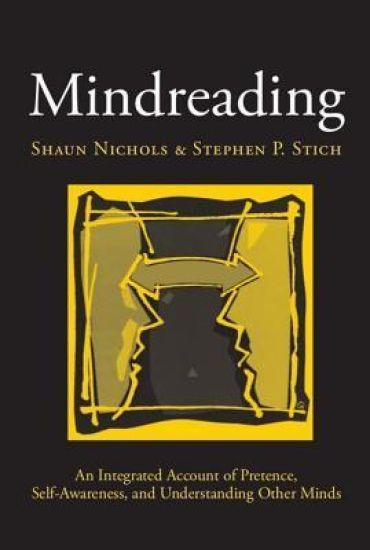
Mindreading

Mindreading

Shaun Nichols; Stephen P. Stich

Clarendon Press
2003
nidottu
The everyday capacity to understand the mind, fancifully dubbed 'mindreading', plays an enormous role in our lives. In the latter half of the 20th century mindreading became the object of sustained scientific and theoretical research, capturing the attention of a wide range of disciplines, including philosophy, developmental psychology, behavioral ecology, anthropology, and cognitive psychopathology. What has been missing is a detailed and integrated account of the mental components that underlie this remarkable capacity. Nichols and Stich develop and defend a new account of the psychological mechanisms underlying mindreading. They maintain that it is, as common sense would suggest, vital to distinguish between reading others' minds and reading one's own. In reading other minds, the imagination plays a central role. As a result, the authors begin with an explicit and systematic account of pretence and imagination which proposes that pretence representations are contained in a separate mental workspace, the 'Possible World Box', which is part of the basic architecture of the human mind. The mechanisms underlying pretence get recruited when people attempt to understand others and predict their behaviour. In some cases, we use our own mental mechanisms to simulate the mental processes of another, as suggested by the 'simulation theory' of mindreading. However, mindreading also implicates very different kinds of mechanisms that rely on rich bodies of information, as suggested by information-based accounts of mindreading. In addition, the authors argue, reading other minds involves important processes that don't fit into either category. None of these mechanisms, though, explain how we read our own minds, which, according to the authors, requires invoking an entirely independent set of mechanisms. What we find, then, is an intricate web of mental components to explain our fascinating and multifarious knack of understanding minds. This account provides a valuable framework for future work on mindreading and has broad implications for philosophical debates that have surrounded the issue for the last quarter century.
Dreamwalking: Based on the TRUE STORY of a defiant young man

Dreamwalking: Based on the TRUE STORY of a defiant young man

Edward Scott Forbes; Stephen Lee Stith

Createspace Independent Publishing Platform
2017
nidottu
"Just finished 'Dreamwalking'. Wow. This true story is beautifully written with love". Audrey Chacon "Loved it While reading 'Dreamwalking' I was overcome with tears and laughter". Kevin Geesa 'DREAMWALKING' is based on the triumphant true story of an athletically gifted young man named J.W. who is accidentally pushed off a cliff, leaving him paralyzed at 23 years old. This happens before the American's with Disabilities Act, so his life gets much worse after the accident. He has no money. His girlfriend doesn't want him anymore. His father's out of the picture. So, he ends up in a nursing home which turns out to be a cuckoo's nest for old people. Initially he is depressed, now in a wheelchair and living in a state-run facility. Fortunately, his grey haired African-American roommate becomes this young man's best friend and confidant. The old man even helps him with a plan to get him out. The Headmaster enlists his two "gang-member" type nurse's aides to intimidate our paralyzed young man. J.W. overcomes all the hurdles and becomes a hero to the old folks. What he ultimately achieves while in this purgatory becomes of national significance in America.
Grief's Walking Stick

Grief's Walking Stick

Stephen L Garrett

Friesenpress
2024
pokkari
With profound insight and heartfelt candor, Grief's Walking Stick takes readers on a transformative journey from death and grief avoidance to embracing these inevitable parts of life. The chronicle of Rev. Stephen Garrett's evolutionary path serves as a beacon of hope and guidance for those seeking to navigate their sense of grief and loss in a more heart-centered way. Filled with encouragement and practical wisdom, this book is an essential read for facing life's inevitable transitions and is an inspiring and invaluable resource for anyone looking to approach the subject of dying, death, and grief with grace and meaning. Take it in Michael Bernard Beckwith Founder & CEO, Agape International Spiritual Center Author, Life Visioning and Spiritual Liberation & Host, Take Back Your Mind Podcast
Grief's Walking Stick

Grief's Walking Stick

Stephen L Garrett

Friesenpress
2024
sidottu
With profound insight and heartfelt candor, Grief's Walking Stick takes readers on a transformative journey from death and grief avoidance to embracing these inevitable parts of life. The chronicle of Rev. Stephen Garrett's evolutionary path serves as a beacon of hope and guidance for those seeking to navigate their sense of grief and loss in a more heart-centered way. Filled with encouragement and practical wisdom, this book is an essential read for facing life's inevitable transitions and is an inspiring and invaluable resource for anyone looking to approach the subject of dying, death, and grief with grace and meaning. Take it in Michael Bernard Beckwith Founder & CEO, Agape International Spiritual Center Author, Life Visioning and Spiritual Liberation & Host, Take Back Your Mind Podcast
Psyksnack! : stick hål på självhjälpsmyterna

Psyksnack! : stick hål på självhjälpsmyterna

Stephen Briers

Natur Kultur Akademisk
2014
sidottu
"Efter att ha läst Psyksnack! kommer jag att ha ett än mer skeptiskt sinnelag vad gäller psykologiska universallösningar, och vara lite mer vaksam på idéer som går ut på att jag nödvändigtvis måste förändras, förbättras, förädlas."Andreas Creutz, Literature Connoisseur"Äntligen en uppstickare i floden av självhjälpsböcker...Psyksnacket säger sig upplysa oss men gör oss i själva verket dummare. Den här underhållande boken kan däremot göra oss lite klokare."Tina Nordlund-Hessler, Katrineholms-Kuriren"Denna kunskapstäta, rakknivsvassa bok sticker ett välgörande hål på självhjälpsindustrins myter".Ingalill Mosander, Aftonbladet En smart och underhållande granskning av självhjälpsindustrins myter och hur väl de egentligen stämmer överens med den forskning som finns. Beror alla dina problem på dålig självkänsla? Kan du bli en vinnare genom att tänka positivt? Är KBT alltid den bästa lösningen? Och behöver ditt inre barn verkligen en kram? Stephen Briers menar att många självhjälpsmetoder faktiskt gör oss olyckligare, eftersom de får oss att tro att det räcker med enkla knep för att förbättra våra liv."Denna kunskapstäta, rakknivsvassa bok sticker ett välgörande hål på självhjälpsindustrins myter". Ingalill Mosander, Aftonbladet
Welchen Gott braucht die Welt? Ohne einen sich verändernden Gott kann es keine Zukunft geben.: Religion und Zukunftsfähigkeit stehen sich gegenseitig
Schauen wir uns auf der Welt um, so k nnen wir sehen, wie unterschiedliche Glaubens- und Sinnkonstruktionen zu unterschiedlichen Lebenswelten im Umgang mit Menschen und der Natur f hren. Deshalb die Frage: Welchen Gott braucht die Welt? Niemand kann das Verhalten nat rlicher Systeme vorhersagen. Wenn ich einen Baum abs ge f llt er um, ja. Wie er w chst und gedeiht entzieht sich im Detail unserem Einfluss. Wenn wir gepflanzt haben k nnen wir nur noch f r ein gedeihliches Umfeld sorgen und, wenn wir es f r gut halten, mit der Astschere eingreifen. Selbst das Altern der Technik ist von Belastung und Pflege abh ngig und nicht exakt planbar. Beobachtbares Muster, als Antwort auf diese grundlegende Unsicherheit, ist der Versuch, Konstante in der jeweiligen Lebenswelt einzuf hren. Das sind dann z. B. Regeln und Vorschriften, mit denen wir gemeinsames Leben ordnen wollen. Dazu kommen noch kulturell gewachsene und verankerte Vorstellungen ber das, was au erhalb unseres direkten physikalischen Erfahrungsbereiches liegt. Dar ber schaffen wir einen Sicherheitsbereich, den wir durch Manipulation der Wahrnehmung und Interpretation versuchen aufrecht zu erhalten, versuchen gegen die Unberechenbarkeit der Umwelt zu verteidigen. Das Nutzbringende ist dabei, f r unser gedeihliches Sein ein notwendiges Ma an Koh renzgef hl zu erm glichen. Wir k nnen uns dann geborgen f hlen. Gleichzeitig schotten wir uns damit von der Vielfalt und Komplexit t der Umwelt ab, orientieren uns an einer selbstbest tigenden Realit tskonstruktion. Das k nnen wir dann Glauben nennen. Spirituelle, wissenschaftliche, politische, soziale oder konomische Gewissheiten entstanden aus vergangenen Erfahrungen, waren zu der Zeit als Teil einer funktionierenden Orientierung erlebbar. Als scheinbare Zukunftssicherung wird solches dann von Organisationen institutionalisiert und durch "Glaubens-sachverst ndige" verteidigt. Wenn wir uns durch Vielfalt im Denken auf die Zukunft vorbereiten wollen, brauchen wir eine kri