

Kirjahaku
Etsi kirjoja tekijän nimen, kirjan nimen tai ISBN:n perusteella.
1000 tulosta hakusanalla Stephen T. Gerdel

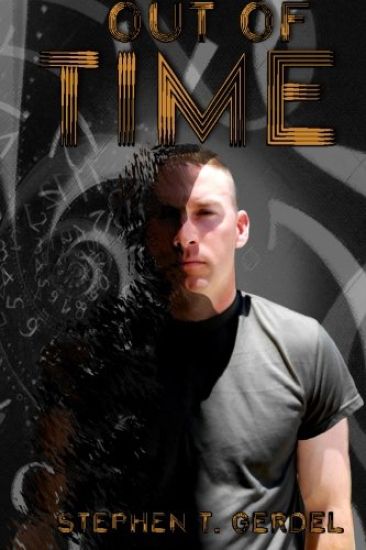
This novel is the weaving together of three tales. The first, in the present, details the destruction of life and relationships through self-will. The second, thirty years in the future, outlines the pain arrogance forces on those close to our protagonist, Jonathan. The third occurs between times in an endless span of grey and smoke.Jonathan Walsh, the principle character, graduates with his PhD and receives a grant to begin his studies. Using questionable methods he perfects the process in lab rats. But temptation overcomes Jonathan, and he injects himself with the formula and travels thirty years into the future.But in his present time he begins to change. His personality is altered, his body weakened, and relationships crumble. His fianc e Maggie is heartbroken, his friends offended. After many trips Jonathan realizes the damage done to those he loved. But it's too late.Each time he travels, Jonathan's life force separates from his body, and creation is required to manufacture a new body for him in the future. One is the name of the replica created on Jonathan's first trip. On his return to the present, the created being remains in the nether world retaining a small portion of Jonathan's life, and lives as an animal.In the beginning, One is a beast and survives in a brutally empty world. He kills the other replicas and accumulates their knowledge and strength. His life changes when he meets the Man in the fog and smoke.On his last trip Jonathan crashes into a hard, gray wall, unable to return to his time. One attacks him but is stopped by the hand of his friend, the Man. Jonathan asks, "Who are you? What is your name? Are you the one in charge?"The Man answers, "I am."Jonathan has expended his life in a foolish quest. He will not return to his life. The Man comforts Jonathan as he dies in his arms. One is then sent to the present to repair the broken relationships Jonathan has left. The story is an allegory of the healing and redemption we receive from God's mercy and grace, and draws the conclusion that in our self-inflicted brokenness, we must be born again.

High in the Hindu Kush Mountains, two American commandos launch an attack on a terrorist communications hub. The attack is a success, but it is not without consequences. A top secret weapons system is captured by the enemy and a new threat against arises. Mike Trapper and his team take action to recover the device on Inauguration Day of a new president. They learn the stunning truth that the president is involved with the top secret weapons capture. Agents around the world join the effort to find the lost equipment. Mike Trapper and Steve Granger learn the lost device is on a particular airplane only seconds before the airliner leaves Kuala Lumpur. Thirty minutes later, the plane vanishes from Malaysian radar carrying three hundred passengers, and the secret weapons system. Join the adventure as Mike Trapper and his team of specialists work to solve the mystery in Wahkan Corridor.

After committing a brutal murder in the park, the deranged killer pursues his ex-wife and her daughter. Private investigator DuPrey is approached by an unexpected, and hard to explain partner to solve the crime and prevent another. His unusual partner, named Watcher, is a twenty-five foot angel more likened to Shreck than Gabriel. DuPrey is challenged by well deserved trust in his superior intellect in conflict with new emotional feelings, and his surprising and supernatural encounters. Sentinel DuPrey's life begins to face new changes in DuPrey, The Beginning.


U.S. Government Officials Commend Work of Mormon Church: Talks Given by Hubert Work, Elwood Mead, Stephen T. Mather, Bishop C.W. Nibley and Priest Ant
Hubert Mead Elwood Mather Work
Hassell Street Press
2021
nidottu
7 things you CAN'T do to raise well behaved children
Stephen T. Graf
Createspace Independent Publishing Platform
2012
nidottu
Buddhism, Booze, and the Four Noble Truths
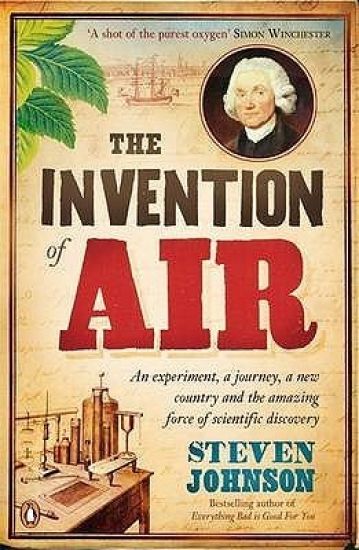
From the bestselling author of Everything Bad is Good for You, Steven Johnson's The Invention of Air tells the incredible story of scientist and radical Joseph Priestley, who invented soda water, discovered oxygen, and incited rioting with his political views. In 1794, Joseph Priestley - amateur scientist, ordained minister and radical thinker - set sail for America to escape persecution. Steven Johnson tells his incredible story: the discovery of oxygen, the invention of a science, the founding of a church, and, with the great minds of his time, the development of the United States itself. But Priestley's revolutionary ideas put him in terrible danger. Johnson uses the progress of Priestley and his colleagues not merely to describe the wonder of discovery, but to show us how we have come to understand the world, how far we have travelled with the power of human enquiry - and how one man's curiosity can help build an entire country. 'A shot of the purest oxygen' Simon Winchester 'Packed with excellent stuff' Russell Davies 'Entertaining ... clear-sighted and intelligent' New Yorker 'As full of ingenuity and as delightful as its subject' Financial Times 'Brilliant' The New York Times 'Johnson paints Priestley not as a man of the past but precisely the sort of figure the world needs more than ever' New York Post Steven Johnson is the author of the acclaimed books Everything Bad is Good for You, Mind Wide Open, Where Good Ideas Come From, The Ghost Map, Emergence and Interface Culture. His writing appeared in the Guardian, the New Yorker, Nation and Harper's, as well as the op-ed pages of The New York Times and the Wall Street Journal. He is a Distinguished Writer In Residence at NYU's School Of Journalism, and a Contributing Editor to Wired.
How we feel is as vital to our survival as how we think. This claim, based on the premise that emotions are largely adaptive, serves as the organizing theme of Why We Need Religion. This book is a novel pathway in a well-trodden field of religious studies and philosophy of religion. Stephen Asma argues that, like art, religion has direct access to our emotional lives in ways that science does not. Yes, science can give us emotional feelings of wonder and the sublime --we can feel the sacred depths of nature-- but there are many forms of human suffering and vulnerability that are beyond the reach of help from science. Different emotional stresses require different kinds of rescue. Unlike secular authors who that praise religion's ethical and civilizing function, Asma argues that its core value lies in its emotionally therapeutic power. No theorist of religion has failed to notice the importance of emotions in spiritual and ritual life, but truly systematic research has only recently delivered concrete data on the neurology, psychology, and anthropology of the emotional systems. This very recent "affective turn" has begun to map out a powerful territory of embodied cognition. Why We Need Religion incorporates new data from these affective sciences into the philosophy of religion. It goes on to describe the way in which religion manages those systems--rage, play, lust, care, grief, and so on. Finally, it argues that religion is still the best cultural apparatus for doing this adaptive work. In short, the book is a Darwinian defense of religious emotions and the cultural systems that manage them.

Monsters. Real or imagined, literal or metaphorical, they have exerted a dread fascination on the human mind for many centuries. They attract and repel us, intrigue and terrify us, and in the process reveal something deeply important about the darker recesses of our collective psyche. Stephen Asma's On Monsters is a wide-ranging cultural and conceptual history of monsters--how they have evolved over time, what functions they have served for us, and what shapes they are likely to take in the future. Asma begins with a letter from Alexander the Great in 326 B.C. detailing an encounter in India with an "enormous beast--larger than an elephantthree ominous horns on its forehead." From there the monsters come fast and furious--Behemoth and Leviathan, Gog and Magog, the leopard-bear-lion beast of Revelation, Satan and his demons, Grendel and Frankenstein, circus freaks and headless children, right up to the serial killers and terrorists of today and the post-human cyborgs of tomorrow. Monsters embody our deepest anxieties and vulnerabilities, Asma argues, but they also symbolize the mysterious and incoherent territory just beyond the safe enclosures of rational thought. Exploring philosophical treatises, theological tracts, newspapers, pamphlets, films, scientific notebooks, and novels, Asma unpacks traditional monster stories for the clues they offer about the inner logic of an era's fears and fascinations. In doing so, he illuminates the many ways monsters have become repositories for those human qualities that must be repudiated, externalized, and defeated. Asma suggests that how we handle monsters reflects how we handle uncertainty, ambiguity, insecurity. And in a world that is daily becoming less secure and more ambiguous, he shows how we might learn to better live with monsters--and thereby avoid becoming one.

Christian Philosophical Theology constitutes a Christian philosopher's look at various crucial topics in Christian theology, including belief in God, the nature of God, the Trinity, christology, the resurrection of Jesus, the general resurrection, redemption, and theological method. The book is tightly argued, and amounts to a coherent explanation of and case for the Christian world view. While the work is written from a broadly Reformed Protestant perspective and the author does not avoid controversial topics, the aim is to present a 'merely Christian' world view (to adapt slightly C. S. Lewis's famous term). That is, Stephen T. Davis attempts to write as much as possible from the perspective of the broad centre of Christian understanding.
Christian Philosophical Theology constitutes a Christian philosopher's look at various crucial topics in Christian theology, including belief in God, the nature of God, the Trinity, christology, the resurrection of Jesus, the general resurrection, redemption, and theological method. The book is tightly argued, and amounts to a coherent explanation of and case for the Christian world view. Although written from a broadly Reformed Protestant perspective, and although the author does not avoid controversial topics, the aim is to present a `merely Christian' world view (to adapt slightly C. S. Lewis's famous term). That is, Stephen T. Davis attempts to write as much as possible from the perspective of the broad centre of Christian understanding.

Hailed as "a feast" (Washington Post) and "a modern-day bestiary" (The New Yorker), Stephen Asma's On Monsters is a wide-ranging cultural and conceptual history of monsters--how they have evolved over time, what functions they have served for us, and what shapes they are likely to take in the future. Beginning at the time of Alexander the Great, the monsters come fast and furious--Behemoth and Leviathan, Gog and Magog, Satan and his demons, Grendel and Frankenstein, circus freaks and headless children, right up to the serial killers and terrorists of today and the post-human cyborgs of tomorrow. Monsters embody our deepest anxieties and vulnerabilities, Asma argues, but they also symbolize the mysterious and incoherent territory beyond the safe enclosures of rational thought. Exploring sources as diverse as philosophical treatises, scientific notebooks, and novels, Asma unravels traditional monster stories for the clues they offer about the inner logic of an era's fears and fascinations. In doing so, he illuminates the many ways monsters have become repositories for those human qualities that must be repudiated, externalized, and defeated. Asma suggests that how we handle monsters reflects how we handle uncertainty, ambiguity, and insecurity. And in a world that is daily becoming less secure and more ambiguous, he shows how we might learn to better live with monsters--and thereby avoid becoming one.

From the school yard to the workplace, there's no charge more damning than "You're being unfair!" Born out of democracy and raised in open markets, fairness has become our de facto modern creed. The very symbol of American ethics - Lady Justice - wears a blindfold as she weighs the law on her impartial scale. In our zealous pursuit of fairness, we have banished our urges to like one person more than another, one thing over another, hiding them away as dirty secrets of our humanity. In "Against Fairness", polymath philosopher Stephen T. Asma drags them triumphantly back into the light. Through playful, witty, but always serious arguments and examples, he vindicates our unspoken and undeniable instinct to favor, making the case that we would all be better off if we showed our unfair tendencies a little more kindness - indeed, if we favored favoritism. Asma makes his point by synthesizing a startling array of scientific findings, historical philosophies, cultural practices, analytic arguments, and a variety of personal and literary narratives to give a remarkably nuanced and thorough understanding of how fairness and favoritism fit within our moral architecture. Examining everything from the survival-enhancing biochemistry that makes our mothers love us to the motivating properties of our "affective community," he not only shows how we favor but the reasons we should. Drawing on thinkers from Confucius to Tocqueville to Nietzsche, he reveals how we have confused fairness with more noble traits, like compassion and open-mindedness. He dismantles a number of seemingly egalitarian pursuits, from classwide Valentine's Day cards to civil rights, to reveal the envy that lies at their hearts, going on to prove that we can still be kind to strangers, have no prejudice, and fight for equal opportunity at the same time we reserve the best of what we can offer for those dearest to us. "Against Fairness" resets our moral compass with favoritism as its lodestar, providing a strikingly new and remarkably positive way to think through all our actions, big and small.
Consider Miles Davis, horn held high, sculpting a powerful musical statement full of tonal patterns, inside jokes, and thrilling climactic phrases all on the fly. Or think of a comedy troupe riffing on a couple of cues from the audience until the whole room is erupting with laughter. Or maybe it's a team of software engineers brainstorming their way to the next Google, or the Einsteins of the world code-cracking the mysteries of nature. Maybe it's simply a child playing with her toys. What do all of these activities share? With wisdom, humor, and joy, philosopher Stephen T. Asma answers that question in this book: imagination. And from there he takes us on an extraordinary tour of the human creative spirit. Guided by neuroscience, animal behavior, evolution, philosophy, and psychology, Asma burrows deep into the human psyche to look right at the enigmatic but powerful engine that is our improvisational creativity the source, he argues, of our remarkable imaginational capacity. How is it, he asks, that a story can evoke a whole world inside of us? How are we able to rehearse a skill, a speech, or even an entire scenario simply by thinking about it? How does creativity go beyond experience and help us make something completely new? And how does our moral imagination help us sculpt a better society? As he shows, we live in a world that is only partly happening in reality. Huge swaths of our cognitive experiences are made up by "what-ifs," "almosts," and "maybes," an imagined terrain that churns out one of the most overlooked but necessary resources for our flourishing: possibilities. Considering everything from how imagination works in our physical bodies to the ways we make images, from the mechanics of language and our ability to tell stories to the creative composition of self-consciousness, Asma expands our personal and day-to-day forms of imagination into a grand scale: as one of the decisive evolutionary forces that has guided human development from the Paleolithic era to today. The result is an inspiring look at the rich relationships among improvisation, imagination, and culture, and a privileged glimpse into the unique nature of our evolved minds.

From the school yard to the workplace, there’s no charge more damning than “you’re being unfair!” Born out of democracy and raised in open markets, fairness has become our de facto modern creed. The very symbol of American ethics—Lady Justice—wears a blindfold as she weighs the law on her impartial scale. In our zealous pursuit of fairness, we have banished our urges to like one person more than another, one thing over another, hiding them away as dirty secrets of our humanity. In Against Fairness, polymath philosopher Stephen T. Asma drags them triumphantly back into the light. Through playful, witty, but always serious arguments and examples, he vindicates our unspoken and undeniable instinct to favor, making the case that we would all be better off if we showed our unfair tendencies a little more kindness—indeed, if we favored favoritism. Conscious of the egalitarian feathers his argument is sure to ruffle, Asma makes his point by synthesizing a startling array of scientific findings, historical philosophies, cultural practices, analytic arguments, and a variety of personal and literary narratives to give a remarkably nuanced and thorough understanding of how fairness and favoritism fit within our moral architecture. Examining everything from the survival-enhancing biochemistry that makes our mothers love us to the motivating properties of our “affective community,” he not only shows how we favor but the reasons we should. Drawing on thinkers from Confucius to Tocqueville to Nietzsche, he reveals how we have confused fairness with more noble traits, like compassion and open-mindedness. He dismantles a number of seemingly egalitarian pursuits, from classwide Valentine’s Day cards to civil rights, to reveal the envy that lies at their hearts, going on to prove that we can still be kind to strangers, have no prejudice, and fight for equal opportunity at the same time we reserve the best of what we can offer for those dearest to us. Fed up with the blue-ribbons-for-all absurdity of "fairness" today, and wary of the psychological paralysis it creates, Asma resets our moral compass with favoritism as its lodestar, providing a strikingly new and remarkably positive way to think through all our actions, big and small. Watch an animated book trailer here: http://www.youtube.com/watch?v=GjPhTQ9zi5Q

Between 1790 and 1850, waves of Anglo-Americans, African Americans, and European immigrants flooded the Old Northwest (modern-day Ohio, Indiana, Michigan, Illinois, and Wisconsin). They brought with them a mosaic of Christian religious belief. Stephen T. Kissel draws on a wealth of primary sources to examine the foundational role that organized religion played in shaping the social, cultural, and civic infrastructure of the region. As he shows, believers from both traditional denominations and religious utopian societies found fertile ground for religious unity and fervor. Able to influence settlement from the earliest days, organized religion integrated faith into local townscapes and civic identity while facilitating many of the Old Northwest's earliest advances in literacy, charitable public outreach, formal education, and social reform. Kissel also unearths fascinating stories of how faith influenced the bonds, networks, and relationships that allowed isolated western settlements to grow and evolve a distinct regional identity. Perceptive and broad in scope, America’s Religious Crossroads illuminates the integral relationship between communal and spiritual growth in early Midwestern history.
Between 1790 and 1850, waves of Anglo-Americans, African Americans, and European immigrants flooded the Old Northwest (modern-day Ohio, Indiana, Michigan, Illinois, and Wisconsin). They brought with them a mosaic of Christian religious belief. Stephen T. Kissel draws on a wealth of primary sources to examine the foundational role that organized religion played in shaping the social, cultural, and civic infrastructure of the region. As he shows, believers from both traditional denominations and religious utopian societies found fertile ground for religious unity and fervor. Able to influence settlement from the earliest days, organized religion integrated faith into local townscapes and civic identity while facilitating many of the Old Northwest's earliest advances in literacy, charitable public outreach, formal education, and social reform. Kissel also unearths fascinating stories of how faith influenced the bonds, networks, and relationships that allowed isolated western settlements to grow and evolve a distinct regional identity. Perceptive and broad in scope, America’s Religious Crossroads illuminates the integral relationship between communal and spiritual growth in early Midwestern history.