Love...Betrayal...and a Guardian Angel After a bitter betrayal, Attorney Monica Cooper's marriage is surely over, but her career is just taking off. Or is it? When chaos strikes her firm, Monica's dream of making partner is thrown into jeopardy. Just when things couldn't get worse, Monica discovers she must face off with her worse enemy, her husband's mistress. Ashley Cooper is not your ordinary dewy-eyed teenager. She's certain her estranged parents still love each other, now all she has to do, is convince them. When her planned parent trap fails and her mother serves divorce papers, Ashley fears her parent's love may be lost forever. When their bitter feud over life, love, and marriage, threatens to destroy their family, Monica and Ashley are visited by a beautiful angelic stranger, Big Rhonda, who forces mother and daughter to walk in the other's shoes. Will Big Rhonda's divine intervention be enough to save mother and daughter? Or will their lives be changed forever?
What equality means in three modern democracies, both to leaders of important groups and to challengers of the status quo, is the subject of this wide-ranging canvass of perceptions and policy. It is based on extensive questionnaire data gathered from leaders in various segments of society in each countrybusiness, labor unions, farm organizations, political parties, the media-as well as from groups that are seeking greater equalityfeminists, black leaders in the United States, leaders of the Burakumin in Japan. The authors describe the extent to which the same meanings of equality exist, both within and across nations, and locate the areas of consensus and conflict over equality. No other book has compared data of this sort for these purposes. The authors address several major substantive and theoretical issues: the role of values in relation to egalitarian outcomes; the comparison of values and perceptions about equality in economics (income equality) and politics (equality of influence); and the difference among the nations in the ways political institutions affect the incorporation of new demands for equality into the policymaking process. They pay particular attention to how policy is set on issues of gender equality. This book will be controversial, for some see no room in the understanding of political economy for the analysis of values. It will be consulted by a general audience interested in politics and culture as well as by social scientists. Elites and the Idea of Equality is an informative sequel to Equality in America by Sidney Verba and Gary R. Orren (Harvard University Press), which considers similar topics in a national context.
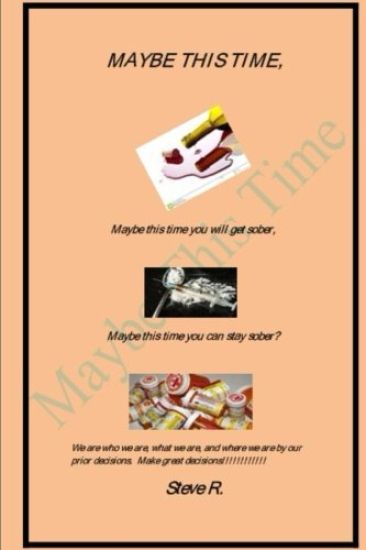
The world of addiction is a darkened abyss, waiting patiently to devour those still lost inside its insidious gates. As we listen to those cries of anguish and torment inside our troubled minds, our spirits stay troubled. Without a powerful merciful intervention, who knows what future those still lost inside must face? Maybe this time's story can reveal how God can grasp a desperate trembling hand and lead them out of the dark abyss that holds them captive, one day and one step at a time. If he did this wonderful miracle for me, He surely will do it for others. This book will use a variety of simple analogies to illustrate personal experiences, experiences that helped me gain my own sobriety. They are just whispers of a true reality of where I came from, shadows left behind after escaping the darkness. The complex moments of uncertainty and clarity that marked my path to recovery, reflections that I care to share with those who desire to learn. I pray that this story will impart a message of hope and courage to those still suffering from this sad disease. I hope that it mirrors the horrors of millions of like people, and shows how I was able to learn the truths that I can now share and write about candidly. I was to discover in that wondrous journey that I partook in that insights weren't any more than rearrangement of facts. Sometimes in life things happen for a reason, though that reason may not be apparent at first. With time though the facts of the complex puzzle pieces when assembled make complete sense. Once one understands how to assemble the puzzle, how to decipher what one has done. That vibrant brilliant light somehow seems to illuminate a path into a new dimension. My hope is that my readers will experience a greater understanding of God's Mercy and Grace, and their own capabilities. It doesn't matter where you came from in life-where you are headed though is of the utmost importance. Inside this book you may come to recognize similarities to your own life, similarities that many alcoholics/addicts have endured over the years. I have gained freedom from the obstacles that held me captive for most of my life, now I want to share those secrets that I learned over forty years. To share with you how I was able to leave behind problems that had previously shackled me, but now I am free from. Agree with me or disagree with me after you have read this book, we should all pray that those who seek help may find God's Grace. Once, maybe even twice in a person's life, an opportunity can appear that can brush against that person's soul. It can alter what they were destined to become. It can make an impression on broken hearts and tortured souls. These will be the evidence, the footprints that God will leave behind. I am one of those blessed individuals who have emerged Within God's Grace, to share His Merciful and Gracious message.
Pastoring a small church is no small job. It can be physically, emotionally, and spiritually exhausting. Read this book for a relief . . . And a turning point. Steve R. Bierly offers the seasoned reassurance of one who has been in the trenches of small-church pastoring. He understands your unique needs and problems not just as a pastor, but as a person. And he shows that, by God's grace, you can fulfill your calling and thrive in the face of its challenges. With humor and fatherly wisdom, Bierly helps you reframe your perspectives on - God - Your ministry - Your relationships - Your personal needs . . . And more. Drawing on years of experience, he offers assurance that you're not alone, a fresh outlook on the successes of your ministry, and an upbeat, practical approach to spiritual, emotional, and physical well-being. How to Thrive as a Small-Church Pastor will help you face realistically the rigors of your vocation . . . and reclaim your first love of ministry.
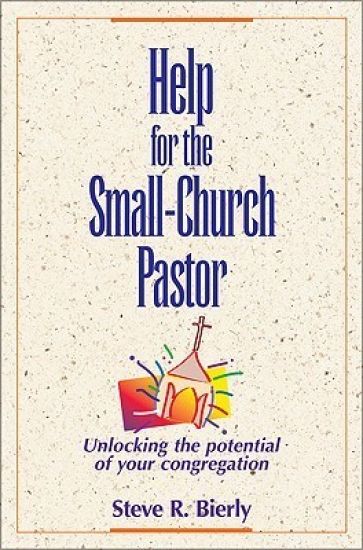
Churches of less than 150 remain the rule rather than the exception in American Christianity. However, seminaries don't equip their students in every way that's necessary to effectively lead smaller congregations -- despite the fact that most seminary graduates will becomes small-church pastors. Help for the Small-Church Pastor offers pastors of small churches the guidance and encouragement they need. In this common-sense book, Steve Bierly draws from his eleven years in ministry to show what makes smaller congregations tick. Help for the Small-Church Pastor provides practical insights on uniquely "small-church" issues, such as-- The characteristics of small churches - How to work effectively as an "insider" within the small church - How God is at work in powerful ways in smaller assemblies - How to motivate your church toward positive change and true growth - How to invest your own time and energy in the right directions - How your church can reach out to the community in ways that are practical and productive -- "There are many ways for even the smallest congregation to be true to the church's calling," says Steve Bierly. Help for the Small-Church Pastor will steer you through the strengths and weaknesses of your small church to unearth its true riches.
The U.S. Army supply organization for the Normandy Invasion, although very impressive, should have done a better job in the summer of 1944. The supply system suffered from several serious shortcomings which should have been avoided. The purpose of this work is to examine an aspect of military history which, as many military historians have pointed out, has received little attention. As the Gulf War demonstrated, logistics, the supplying of armies, is crucial to achieving victory.
You can train men to fight. You can plan for the invasion. But you can't have success on the battlefield if you cannot move the men and material into position. Success is not possible without logistical support and capabilities. The U.S. Army's logistics system began with practically nothing and through numerous conflicts and periods of peace has developed into a first rate supply system capable of supporting the global military commitments of the present day. This work presents the history of U.S. Army logistics as one of evolution, trial and error, and occasionally revolutionary change over a period of two hundred plus years. It is important that logisticians and combat leaders alike understand how the United States Army logistical system developed; the challenges that had to be overcome; and the successes and failures encountered along the way. Creating the U.S. Army in 1775 proved to be easy compared to the task of keeping the army adequately supplied over the short and long term. The availability of resources, industrial capacity, size of the army, geographic scope of operations, organization of the logistics system, competent leadership, congressional support, funding, and new technology have, and continue to impact the logistical system on a daily basis. Each new period of peace or war has brought new challenges and requirements. This work is broken into two key parts. First, to inform the reader on the basic history of U.S. Army Logistics. Second, to identify the key factors that influenced the development of the logistical system.
It's Halloween. The storm of the century is about to hit town, and everyone is searching for three lost kids. Tony is deaf and is the only one who knows where they are, but can't get ahold of his mom to tell her. He and his loyal dog George head over to the abandoned goldmine to investigate. Is it true that the mine is haunted? Can Tony and George find the kids in the pitch-black maze of mine shafts before the storm hits, or will the duo get lost, too?
Mike is a lonely boy who stutters. When the neighborhood bullies are about to hurt him again, a stray dog intervenes and scares the boys away. He names the dog Scrag and they become best friends. After a fun day in the snow, the two are on their way home when they hear cries for help. Mike investigates. He discovers that a few young skaters have fallen through a hole in the ice. Not sure what to do, Mike must think fast. He may be their only hope for survival.
In a brutal thunderstorm, a lone figure in a black cape appears out of nowhere atop the peak of an ancient building. The name Laktos pops into his mind, but everything else about his past eludes him. When nightmares about an unknown man plague Laktos, he treks across the post-apocalyptic landscape in search of answers. On the road to self-discovery, he crosses paths with other travelers who are in peril. Without hesitation, Laktos draws his broadsword to defend then. Grateful to their liberator, his new friends are ready to join Laktos on the treacherous journey ahead.
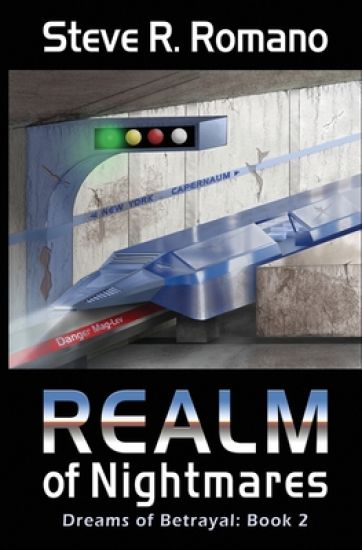
The world has forgotten how the Ancients almost ended all life. Their old cities lie in ruin, but their still-active machines will destroy all life, soon. Humanity's hope for survival depends on what Laktos and his friends do next.
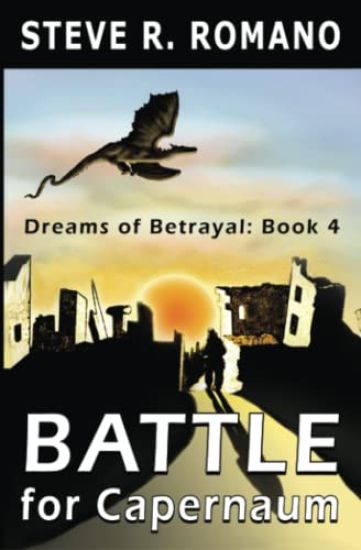
The once peaceful village of Capernaum is now ruled by a perverse dictator known as the presider. He has heard the outrageous news about Laktos, an opposing force who is not intimidated by his power. The brave man has been victorious several times in encounters against the presider's minions who continue to terrorize the people of the village at every turn. Furious, the presider is bent on finding Laktos and putting him to death for his crimes. But there's one fact the presider is unaware of: Laktos and his newly formed band of freedom fighters are headed for Capernaum for one final battle that they pray will end the presider's reign of terror.
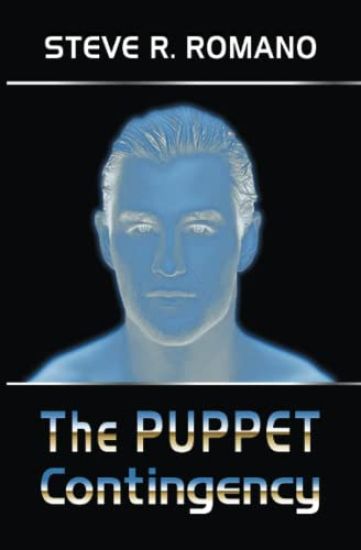
In a secret laboratory called the Cube, researchers are working on an unsanctioned holographic cloning experiment. Their test subject is a soldier who was rescued from the battlefield. Severely wounded, he is not expected to live long.The scientists' task is to create a holographic replica of the subject's body and then transfer his consciousness into it. But will the soldier's soul transfer over once his body is taken off life support?
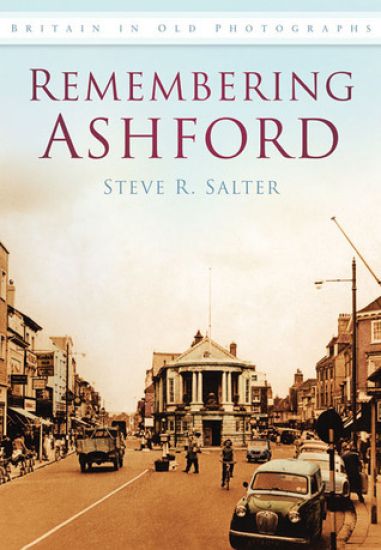
The past fifty years have seen many important changes for Ashford. It was once a quaint and sleepy market town, but for many people recent developments have changed it beyond all recognition. It would be unfair to say that this Kentish town has changed for the worse because it is now one of the fastest-growing key towns in the South-East, and still retains much of its historical character. The developments of the last half-century, especially those in the 1970s, divided local opinion.Large construction projects such as the infamous Ringway, the building of Charter House and the development of Hempsted Street for the Tufton Shopping Centre (later County Square) produced mixed feelings in the town. The 1970s were indeed a controversial time for Ashford but it is now bracing itself for more redevelopment due to be completed by 2005. Changing Ashford is a trip down memory lane featuring over 200 (many previously unpublished) local views from a collection that has been built up over the last seventeen years.
Steve Salter guides us through Old Ashford, as it used to be, illustrating long-lost landmarks and reminding us of what has gone - as well as pointing out historic features that still remain.
A selection of images featuring the town of Ashford along with many of its surrounding villages. Around Ashford provides a glimpse of what life was like in the area in a bygone age.
This is the fifth in the series of old photographs books on Ashford compiled by well-known local author Steve Salter. He has meticulously researched the town and its surroundings yet again to produce another fantastic selection of images. Featured here are the long-forgotten streets and buildings which made way for various developments in the town over the years. Over 300 stunning black and white images, many never published before, are gathered together here to provide an invaluable window onto the Ashford of yesteryear.