Of all of the spirits that seek to destroy the church, the Spirit of Jezebel is perhaps the most prominent Churchbuster. Afflicting both men and women, this spirit masks itself in a cloak of control and spirituality that on the surface seems legit but leaves leadership feeling uneasy and unsure about the person. In Christ there is confidence. When a person is following God there is no doubt. If you have doubt about a person then it is time to try the spirits and see if they are of God. God is ready for our disbelief and does not get angry when we want proof. He provides what we need in our disbelief to bring us to belief. He makes our faith whole. Those afflicted with the Spirit of Jezebel don't have that humility that allows them to withstand the fire and be questioned. They know that if one looks too closely that the truth with be clear. They will be discovered for what they truly are. This is Jezebel and Ahab's ChurchBuster episode.
Serving in ministry in any capacity takes guts. When one assumes the role of leader within a church they in essence put a target on their back - a spiritual one and a physical one. Whether warranted or not, ministers and church leaders are held to a higher standard than others and perhaps they should live at a higher standard as by default they are the example many look to emulate in their desire to know God more. One of the greatest ChurchBusters is "idolatry". I'm not talking eight foot tall totem poles of carved birds and beasts standing in the corner in our living rooms. I'm talking about anything that comes between us and the relationship God desires to have with us. In Scripture were two kings that exemplify what happens when good men and women fail to remove idols from their lives and the impact these idols can have on their ministries and the lives of those under their ministry. These two kings were King Asa and King Josiah. Both men were said to be good men who "did what was right in the eyes of the Lord" but beyond that there was a significant difference between the two. Here is their ChurchBuster episode.
The Spirit of Jacob is a spirit of a "heel holder" or a "supplanter". Within a church, a Jacob spirit can create disaster and delays, bring about manipulations and generate a culture of selfishness filled with unfulfilled promises and broken commitments. The Spirit of Jacob represents a life that will either result in destruction or lead to great blessing. What makes this ChurchBuster spirit so dangerous is that it can be hard to spot and identify. If you don't know what you are looking FOR, then you may not know what you're looking AT. It is through this spirit that a church can either be destroyed or blessed depending on how leadership handles a Jacob in their midst. Since God is associated with Jacob, there is more to Jacob's story than simply being a spirit designed to usurp or supplant, trick, deceive, manipulate and disappoint. This is Jacob's ChurchBuster episode.
Most of us have several key influential people in our lives as we are growing up. The impact of their opinion and ideas cannot be minimized as they shape us as we mature. David was no exception. Several key players in David's ministry years, or the years that David served as King affected and influenced David both on and off the battlefield but none were as influential as Joab, David's General and Absalom, David's son.Because of David's character - or lack of it - these individuals and the spirits that they allowed to control and manipulate them destroyed David's most effective ministry years as a leader and as a father.Both Joab and Absalom held positions of great influence with David. He gave them an audience and listened to their thoughts and opinions. Their opinions mattered to David and their close relationships cloaked a devastating spirit of hidden agendas, malicious intentions, hatreds, jealousies and murderous sentiments.In what should have been trusting relationships that would strengthen and encourage David, we find destruction disguised behind the loving, caring and good. This is David's Ministry years (Part 1) ChurchBuster episode.
It is impossible when writing about the spirit of discouragement to not have all Hell break loose against us. As you read this you may find yourself facing every distraction possible. Even if you've locked yourself in isolation, the quiet may distract. Keep plugging away Press in to the truth God wants to show you. Pray for focus and protection and for God to speak to you as you face this spirit.There is much need for pastors and leaders to understand the spirit of discouragement and how this spirit works on multiple levels and can destroy a ministry swiftly and certainly.This spirit does not play fair. There is much deception in this spirit and this spirit operates from a system of smoke and mirrors leaving leadership unsure of where the attack is coming from until the hits are unmerciful and the damage is done.When we fight the spirit of discouragement it is a lie of this spirit that we don't know how things will work out. We do know. God wins. If God wins and God is for us then who can be against us? (Romans 8:31)This is Nehemiah's ChurchBuster Episode.
Growing up is not always an easy thing to do, especially if we do not have godly influences surrounding us. It is all too easy to succumb to the world around us and to be conformed in its image. David represents an adolescent king, even though he was 30 when he took the throne and reigned for 40 years. He never wanted to grow up. He never let God perfect and mature his character as a man and he never accepted responsibility for his actions or the actions of those under his leadership. The Word of God declares that "many are called, but few are chosen." How many times do we see those who have been "called but not yet installed" in to ministry office? How long will we wait knowing that we have been "anointed but not yet appointed"? In those times of waiting, while the Lord is at work behind the scenes preparing us for what He has destined us to be and to do, it can be hard to be patient and remain faithful because we do not see what the Lord is doing and we do not understand His ways. The walk of faith is an arduous one and testing severely the limits of our endurance and resolve. It is rarely easy nor is it often comfortable. But trusting in the One who is the Author and Finisher of our faith bring comfort and peace that passes all understanding. This is David's Early Years ... Anointed but not Appointed.
David had refused to accept responsibility for the actions of his men. His refusal to hold Joab accountable for deceiving David and going around the king's authority and killing Abner in alleged retribution for the death of Joab's brother provoked unforeseen consequences. While it seems that life went on and there were no extending consequences to David's lack of accountability, there were. On the sidelines, David's son, Absalom watched his father rule without authority and do nothing to right wrongs inside the kingdom as well as inside of David's own house and family. David's decisions and the way he refused to be responsible and responsive as King, led Absalom to rebel. David's lack of responsibility allowed a spirit of sedition to come upon Absalom that would lead not only to Absalom's death but the destruction of David's ministryIt would be this visual of injustices that would lead Absalom to challenge David's throne. This is David the Ministry Years (Part 2) ChurchBuster episode.
Moses was in the wilderness for 40 years in preparation for what God had for him. He spent a lot of time with God. But was he really ready to do what the LORD would be calling him to do?Moses suffered from over-extension, self-reliance and did not trust others enough to delegate even menial tasks. As a result, his ministry nearly died in its infancy.His people were under the oppression of a spirit of slavery and it was difficult for them to trust in the LORD and looked to Moses as their leader and provider.Moses wanted the best for his people, but even Moses had a hard time in "letting God be God". In spite of his short-comings and his nursing father mentality, Moses learned how to let God's people grow and to experience not only the freedom of the Spirit but the consequences of their corporate and individual actions.This is Moses' the Nursing Father: A Study of Smothering Love and the Coming of Age.
What do we do when we see one of our beloved leaders failing and falling? Do we ignore the sins and the faults or do we confront the sins directly? Or do we simply "pray" and hope for the best? What do we do when a leader refuses to repent from hidden sins? What happens to those around this leader when unconfessed and unrepentant sins continue to lead from the pulpit? Many times in ministry and in Church we have been told to "touch not my anointed" (1 Chronicles 16:22 and Psalms 105:15) by those who are supposed to be watching over us, and yet there seems to be little or no balance with the Scriptures that promise us that there is wisdom in the council of wise men. Without debate, God is the ultimate and final Judge of all things. Only He truly knows the heart and intentions of a man. No one can continue to violate the principle and precepts of a Holy God for ever and not suffer the consequences. Through His Word and through the examples given to us to study and apply we can learn how to rule and reign in victory in life. Here is Samson's ChurchBuster episode .... Power Without Purity Is A Dangerous Illusion
Eli exemplifies a person in ministry leadership who knows that there is wrongdoing and corruption but refuses to take care of business and instead attempts to ignore it. Suffering from disappointment in his offspring and with no one qualified to leave his legacy to, Eli opted to ignore the issues and the very obvious and well publicized sins of his family and allowed his life's work to crumble before his very eyes. When things fall apart an "Eli" acts surprised that things were so bad. To say that Eli "turned a blind eye" would be an understatement when compared to the damage that was allowed to continue not only in his family but in the Temple of God and in the lives of the people as a result of Eli's denial. Eli's ChurchBuster was justification of his actions instead of sanctification of his life. Eli also justified the sins of his sons instead of admonishing them to sanctify themselves and be holy. In his disappointment and self-indulgence along with an unwillingness to do what he had been called to do by the LORD, Eli failed to rule in his own house as well as in his own ministry and lived just long enough to see the judgement of the LORD upon his house and ministry. Let's allow Eli's failures to be lessons by which we learn to do things in truth and righteousness.Here is Eli's ChurchBuster Episode.
Churches are the prime target of cults. In order to minister to the people within our church there can be no mistake - Christianity is directly and indirectly under attack. Direct attacks are seen in areas and countries where God is not served and worshipped and other gods have displaced Him. Indirect attacks come from people, even Christians, who dabble in the occult and the mindset of New Age Spirituality and may not even realize it. Whether direct or indirect, known or unknown, the Spirit of Cult Worship is clear and at work in our churches, desiring to destroy them. This is Simon's ChurchBuster episode.
Sun Tzu in the Art of War wrote one of the most widely used but unaccredited lines of relationships - Keep your friends close and your enemies closer. This is a cute proverb, and although it is not necessarily a Biblical proverb, it presents a good principle we should all endorse. Jesus kept his friends close and his enemies closer. Jesus knew the heart of men and women. Jesus knew the truth about people. He knew all about Judas. He knew what Judas was going to do, but still He kept him very close to His side. When dealing with the Spirit of Judas inside of the church there is a distinct before-Judas timeline and an after-Judas timeline. The spirit of Judas chisels at the strength of relationships inside of a church. Before the ultimate betrayal, the spirit of Judas sabotages and operates through manipulation trying to gain desired place, power and possession. This spirit blurs the lines between God's purpose within a church and a manmade purpose. In the aftermath of Judas, those remaining behind must deal with trust issues, being vulnerable and remaining faithful to the work within the Kingdom of God in spite of their hurt and betrayal. Who was this spirit's namesake? How did a man whose name paralleled the meaning of the name Judah, the name of one of the 12 sons of Abraham and another name for the God's chosen people get selected by God to be part of His ministry? It was through the linage of Judah that Jesus was born. Why did God use Judas, whose name, like Judah, also meant "praise and thanks" to be the one we now know as a traitor or betrayer? This is Judas' ChurchBuster episode.
If we have been set free, then "why" are we still struggling? Why are our families, our Churches and our societies in such a mess? We know that the things that God has given us in His Word record the good and the bad, the strengths and the weakness of men and women in the Bible. We know that they are accurately recorded that we may learn from what others have done. A spirit of slavery is still prevalent in both our cultures and in our churches. Even after we have come out of our darkness and are living in the Light of His Word, old ways of doing things can keep us chained to our past. The life of Moses depicted in the Book of Exodus is the story of Moses and the Israelites rescued from the spirit of slavery. The poignant truths revealed in a walk through Moses' life teach us how to live within the inheritance of Christ, as sons and daughters of the living God, not in a spirit of slavery. "Moses: The Spirit of Slavery" is an in-depth Bible Study of something that is not-so-easily identified in Churches today but its impact can be clearly seen.
David's life was really separated into three time periods; the Early Years, the Wilderness Years and the Ministry Years. Many of us can relate to the patterns and the principles that God is using here in David's life. It is important to recognize the different characteristics of the spirits that rise up against the work of God. If we can discover what they are, what they do and how they manifest then we can apply kingdom principles and ultimately know how to address and deal with those kinds of spirits principles to be victorious in the work of the Kingdom of God. We can then deal with the men and women that are manipulated by those spirits and help them. This is David's Wilderness Years: Times of Preparation before the Palace episode.
Three novellas (books 13-15) in the Legends of Havenwood Falls historical fantasy series, sharing the legacies of our town's supernatural residents.Changing Fate by Char WebsterDuring World War I, vila warrior Jerina Ventus's life irrevocably changed when she saved a wounded soldier's life and helped him return to his hometown in Colorado. Twenty-five years later, she's restless and longing for another adventure beyond her forest. Thane Beltaine grew up hearing stories about the beautiful and fierce immortal warrior who saved his father's life. When Jerina's sister Kosa shows up in his hometown on the arm of a wicked mage, Thane volunteers to find Jerina and bring her back. He never expected to meet the woman who was more legend than real and definitely didn't think they would clash about every little thing.Rise of the Witch Hunters by Morgan Wylie - Sequel to Dawn of the Witch HuntersMarie Blackstone is settling into her new life with Judson Carter in the beautiful box canyon they now call home. On a constant quest to prove her legitimacy-especially to the witches-Marie goes to great lengths to follow a feeling she's only encountered once before and hoped never to again. Someone's practicing the dark arts, but she can't quite discern who. When witches begin to disappear or turn up drained of their magic, suspicion and fear grow. And some are looking at Marie, the resident witch hunter.The Drowning Bride by Seven JaneFor generations, Noelani has lived in the forest of Havenwood Falls, bestowing blessings and good fortune on all who drink from the waters of her well. She has been visited by hundreds of blushing brides and aging widows who crave her magic, but never has she met a heart as pure as that of Stella Malloy-or as dark as that of her fianc , Peter Heilen. After hearing stories of Noelani's well, Stella believes it may be the only way to save her love from his dark path and return Peter's heart to her. But the wish she casts at the water's edge may doom them all.Every town has stories of its past, and Havenwood Falls is no different. And when the town's residents include a variety of supernatural creatures, those historical tales often become Legends. These are but three.The Havenwood Falls shared world is a collaborative effort by multiple authors across multiple series all in the paranormal fantasy genre, allowing readers to discover new authors and stories to fall in love with. Each author brings a stand-alone plotline, so they can be read in any order, but there are many crossovers among the stories.Volumes in the Legends of Havenwood Falls historical fantasy series: Legends of Havenwood Falls Volume One by Tish Thawer, Morgan Wylie, Eric R. AsherLegends of Havenwood Falls Volume Two by Brynn Myers, Belinda Boring, E.J. FechendaLegends of Havenwood Falls Volume Three by Katie M. John, Brynn Myers, Kallie RossLegends of Havenwood Falls Volume Four by Belinda Boring, Desiree Lafawn, Colleen Nye
A lighthearted, humorous picture book from the author/illustrator duo behind Don't Hug Doug about a boy who wants everything to be perfectly even. Say hello to Steven. Steven likes to share He knows the best way to share something is to split it in half. It's fun It's fair And it's EVEN. But some things aren't so easy to split in half . . . Like a nickel. Or a book. Or a slide. Sometimes taking turns is better. Or giving one of something to each person. Steven likes these options because they're fun, and fair, and still EVEN But...can some things be even, but not fair? Can some things be fair, but not even? Steven isn't so sure, and he'll need YOUR help to figure it out
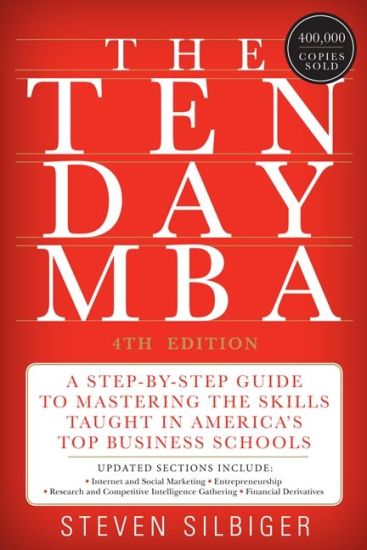
Revised and updated to answer the challenges of a rapidly changing business world, the 4th edition of The Ten-Day MBA includes the latest topics taught at America's top business schools, from corporate ethics and compliance to financial planning and real estate to leadership and negotiation. With more than 400,000 copies sold around the world, this internationally acclaimed guide distills the lessons of the most popular business school courses taught at Harvard, Stanford, the University of Pennsylvania, the University of Chicago, Northwestern, and the University of Virginia. Author Steven A. Silbiger delivers research straight from the notes of real MBA students attending these top programs today--giving you the tools you need to get ahead in business and in life.
Social order is regulated from above by the law but its foundation is built on norms and customs, informal social practices that enable people to make meaningful and productive uses of their time and resources. Despite the importance of these practices in keeping the social fabric together, very little of the jurisprudential literature has focused on a discussion of these norms and customs. In Social Norms in a Wired World Steven Hetcher argues that the traditional conception of norms as rule-like linguistic entities is erroneous. Instead, norms must be understood as patterns of rationally governed behaviour maintained in groups by acts of conformity. Using informal game theory in the analysis of norms and customs, Hetcher applies his theory of norms to tort law and Internet privacy laws. This book will appeal to students and professionals in law, philosophy, and political and social theory.
Social order is regulated from above by the law but its foundation is built on norms and customs, informal social practices that enable people to make meaningful and productive uses of their time and resources. Despite the importance of these practices in keeping the social fabric together, very little of the jurisprudential literature has focused on a discussion of these norms and customs. In Social Norms in a Wired World Steven Hetcher argues that the traditional conception of norms as rule-like linguistic entities is erroneous. Instead, norms must be understood as patterns of rationally governed behaviour maintained in groups by acts of conformity. Using informal game theory in the analysis of norms and customs, Hetcher applies his theory of norms to tort law and Internet privacy laws. This book will appeal to students and professionals in law, philosophy, and political and social theory.