Kirjahaku
Etsi kirjoja tekijän nimen, kirjan nimen tai ISBN:n perusteella.
1000 tulosta hakusanalla Steven B Bryant


Steven B. Silas
Megan Simmons
2021
pokkari
Steven B. Silas was a silly boy, or so it seemed. He always giggled.Morning, noon, and night, Steven B. Silas giggled out loud.But...why?Follow Steven and his mom on their adventures to find a reason for all of his giggles.The answer might just tickle you

Steven B. Smith
Radius Books
2020
sidottu
The work of photographer and Rhode Island School of Design professor Steven B. Smith (born 1963) chronicles the transition of the Western landscape into suburbia. Robert Pinsky, US Poet Laureate, wrote of his work, "Smith's images record not so much a contrast as two violent absences joining as a single force. Landfill, seedling, turnabout, heating coil collude with the sky and mountains in a triumph of disproportion: scale not so much confused or lost as irrelevant." Steven B. Smith: Your Mountain is Waiting documents the accelerating suburbanization of Smith's native Utah. Peeling back the layers of westward expansion with equal parts subtlety and irony, Smith captures the new McMansions springing up against the rocky, rust-red mountains and deep blue skies of the West. Smith is equally attentive to the cast of characters that fill these new landscapes the people that build them, and the people that live in them.
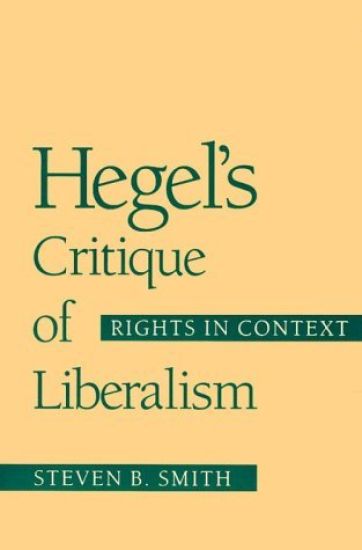
In Hegel's Critique of Liberalism, Steven B. Smith examines Hegel's critique of rights-based liberalism and its relevance to contemporary political concerns. Smith argues that Hegel reformulated classic liberalism, preserving what was of value while rendering it more attentive to the dynamics of human history and the developmental structure of the moral personality. Hegel's goal, Smith suggests, was to find a way of incorporating both the ancient emphasis on the dignity and even architectonic character of political life with the modern concern for freedom, rights, and mutual recognition. Smith's insightful analysis reveals Hegel's relevance not only to contemporary political philosophers concerned with normative issues of liberal theory but also to political scientists who have urged a revival of the state as a central concept of political inquiry.
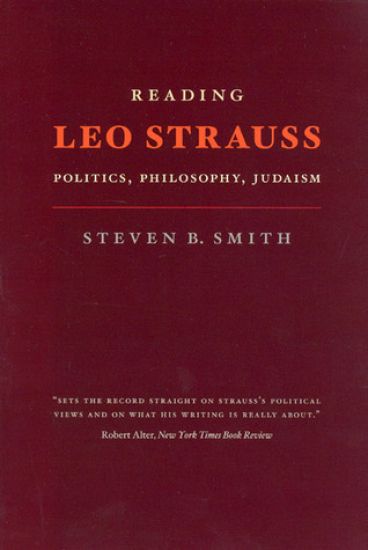
Interest in Leo Strauss is greater now than at any time since his death, mostly because of the purported link between his thought and the political movement known as neoconservatism. Steven B. Smith, though, surprisingly depicts Strauss not as the high priest of neoconservatism but as a friend of liberal democracy - perhaps the best defender democracy has ever had. Moreover, in "Reading Leo Strauss", Smith shows that Strauss' defense of liberal democracy was closely connected to his skepticism of both the extreme Left and extreme Right. It was as a skeptic, Smith argues, that Strauss considered the seemingly irreconcilable conflict between reason and revelation - a conflict Strauss dubbed the "theologico-political problem." Calling this problem "the theme of my investigations," Strauss asked the same fundamental question throughout his life: what is the relation of the political order to revelation in general and Judaism in particular? Smith bases his book on this question and assesses Strauss' attempt to direct the teaching of political science away from the examination of mass behavior and interest-group politics and toward the study of the philosophical principles on which politics are based. With his provocative, lucid study, Smith establishes a distinctive form of Straussian liberalism himself.
Interest in Leo Strauss is greater now than at any time since his death, mostly because of the purported link between his thought and the political movement known as neoconservatism. Steven B. Smith, though, surprisingly depicts Strauss not as the high priest of neoconservatism but as a friend of liberal democracy - perhaps the best defender democracy has ever had. Moreover, in "Reading Leo Strauss", Smith shows that Strauss's defense of liberal democracy was closely connected to his skepticism of both the extreme Left and the extreme Right. Smith asserts that this philosophical skepticism defined Strauss's thought. It was as a skeptic, Smith argues, that Strauss considered the seemingly irreconcilable conflict between reason and revelation - a conflict Strauss dubbed the "theologico-political problem". Calling this problem "the theme of my investigations," Strauss asked the same fundamental question throughout his life: what is the relation of the political order to revelation in general and Judaism in particular? Smith organizes his book with this question, first addressing Strauss's views on religion and then examining his thought on philosophical and political issues. In his investigation of these philosophical and political issues, Smith assesses Strauss's attempt to direct the teaching of political science away from the examination of mass behavior and interest group politics and toward the study of the philosophical principles on which politics are based. With his provocative, lucid essays, Smith goes a long way toward establishing a distinctive form of Straussian liberalism.

Spinoza, Liberalism, and the Question of Jewish Identity
Steven B. Smith
Yale University Press
1998
pokkari
Baruch de Spinoza (1632-1677)—often recognized as the first modern Jewish thinker—was also a founder of modern liberal political philosophy. This book is the first to connect systematically these two aspects of Spinoza's legacy. Steven B. Smith shows that Spinoza was a politically engaged theorist who both advocated and embodied a new conception of the emancipated individual, a thinker who decisively influenced such diverse movements as the Enlightenment, liberalism, and political Zionism.Focusing on Spinoza's Theologico-Political Treatise, Smith argues that Spinoza was the first thinker of note to make the civil status of Jews and Judaism (what later became known as the Jewish Question) an essential ingredient of modern political thought. Before Marx or Freud, Smith notes, Spinoza recast Judaism to include the liberal values of autonomy and emancipation from tradition. Smith examines the circumstances of Spinoza's excommunication from the Jewish community of Amsterdam, his skeptical assault on the authority of Scripture, his transformation of Mosaic prophecy into a progressive philosophy of history, his use of the language of natural right and the social contract to defend democratic political institutions, and his comprehensive comparison of the ancient Hebrew commonwealth and the modern commercial republic. According to Smith, Spinoza's Treatise represents a classic defense of religious toleration and intellectual freedom, showing them to be necessary foundations for political stability and liberal regimes. In this study Smith examines Spinoza's solution to the Jewish Question and asks whether a Judaism, so conceived, can long survive.

Most readers of Spinoza treat him as a pure metaphysician, a grim determinist, or a stoic moralist, but none of these descriptions captures the author of the Ethics, argues Steven B. Smith in this intriguing book. Offering a new reading of Spinoza’s masterpiece, Smith asserts that the Ethics is a celebration of human freedom and its attendant joys and responsibilities and should be placed among the great founding documents of the Enlightenment.Two aspects of Smith’s book distinguish it from other studies. It treats the famous “geometrical method” of the Ethics as a form of moral rhetoric, a model for the construction of individuality. And it presents the Ethics as a companion to Spinoza’s major work of political philosophy, the Theologico-Political Treatise, each work helping to explore the problem of freedom. Affirming Spinoza’s centrality for both critics and defenders of modernity, the book will be of value to students of political theory, philosophy, and intellectual history.

Who ought to govern? Why should I obey the law? How should conflict be controlled? What is the proper education for a citizen and a statesman? These questions probe some of the deepest and most enduring problems that every society confronts, regardless of time and place. Today we ask the same crucial questions about law, authority, justice, and freedom that Plato, Aristotle, Machiavelli, Hobbes, Locke, Rousseau, and Tocqueville faced in previous centuries. In this lively and enlightening book, Professor Steven B. Smith introduces the wide terrain of political philosophy through the classic texts of the discipline. Works by the greatest thinkers illuminate the permanent problems of political life, Smith shows, and while we may not accept all their conclusions, it would be a mistake to overlook the relevance of their insights.
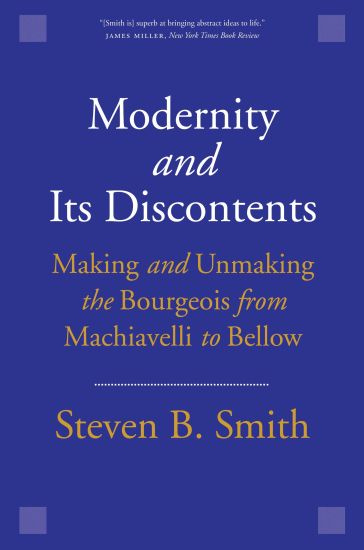
Steven B. Smith examines the concept of modernity, not as the end product of historical developments but as a state of mind. He explores modernism as a source of both pride and anxiety, suggesting that its most distinctive characteristics are the self-criticisms and doubts that accompany social and political progress. Providing profiles of the modern project’s most powerful defenders and critics—from Machiavelli and Spinoza to Saul Bellow and Isaiah Berlin—this provocative work of philosophy and political science offers a novel perspective on what it means to be modern and why discontent and sometimes radical rejection are its inevitable by-products.

A rediscovery of patriotism as a virtue in line with the core values of democracy in an extremist age “Like you perhaps, I still regard myself as an extremely patriotic person. Which is why I so admired [this book]. . . . It explained my emotion to me, as it might yours to you." —David Brooks, New York Times “Smith superbly illuminates the distinctiveness of the American idea of patriotism and reminds us of how important patriotism is, and how essential to making America better.”—Leslie Lenkowsky, Wall Street Journal The concept of patriotism has fallen on hard times. What was once a value that united Americans has become so politicized by both the left and the right that it threatens to rip apart the social fabric. On the right, patriotism has become synonymous with nationalism and an “us versus them” worldview, while on the left it is seen as an impediment to acknowledging important ethnic, religious, or racial identities and a threat to cosmopolitan globalism. Steven B. Smith reclaims patriotism from these extremist positions and advocates for a patriotism that is broad enough to balance loyalty to country with other loyalties. Describing how it is a matter of both the head and the heart, Smith shows how patriotism can bring the country together around the highest ideals of equality and is a central and ennobling disposition that democratic societies cannot afford to do without.

A rediscovery of patriotism as a virtue in line with the core values of democracy in an extremist age “Like you perhaps, I still regard myself as an extremely patriotic person. Which is why I so admired [this book]. . . . It explained my emotion to me, as it might yours to you." —David Brooks, New York Times “Smith superbly illuminates the distinctiveness of the American idea of patriotism and reminds us of how important patriotism is, and how essential to making America better.”—Leslie Lenkowsky, Wall Street Journal The concept of patriotism has fallen on hard times. What was once a value that united Americans has become so politicized by both the left and the right that it threatens to rip apart the social fabric. On the right, patriotism has become synonymous with nationalism and an “us versus them” worldview, while on the left it is seen as an impediment to acknowledging important ethnic, religious, or racial identities and a threat to cosmopolitan globalism. Steven B. Smith reclaims patriotism from these extremist positions and advocates for a patriotism that is broad enough to balance loyalty to country with other loyalties. Describing how it is a matter of both the head and the heart, Smith shows how patriotism can bring the country together around the highest ideals of equality and is a central and ennobling disposition that democratic societies cannot afford to do without.

What true statecraft consists of, and how to know a statesman when we see one In the modern world we yearn for great leaders but resist them when they come along. In this much-needed essay, Steven B. Smith tells us that a statesman is something far different from a demagogue or a technocrat; he or she incorporates many qualities of leadership--persuasiveness, courage, foresight, judgment--to take people where they need to go while hardly seeming to lead them at all. A true statesman is focused not on amassing power but on finding the best way to use power toward responsible ends. Above all else, Smith argues, the statesman is an educator who, through language and argument, helps shape a people's civic understanding. This book is a timely reminder of a set of qualities we desperately need in our political leaders but have forgotten how to talk about.

An Introduction to Philosophy
Steven B. Sherman; Richard A. Holland; Gary S. Osmundsen; Peter J. Rasor
ZONDERVAN
2025
sidottu
Designed for students in Christian colleges and seminaries, An Introduction to Philosophy surveys the four main areas of philosophy - logic, metaphysics, epistemology, and ethics - in an accessible and engaging manner. Yet, it also covers important topics sometimes left unaddressed in introductions, including:why philosophy matters in our daycritical thinking and intellectual virtuea brief history of philosophyphilosophical hermeneuticsthe relationship between philosophy, faith, and worldviewreligious epistemologybioethics, sexual ethics, other types of ethicsa Christian philosophy of lifeGrounded in the Christian intellectual tradition, each chapter in An Introduction to Philosophy includes student-friendly features such as chapter summaries, explanatory sidebars, reflection questions, vocabulary words and definitions, and suggestions for further reading. Professors and students will find it to be a broad and useful overview, perfect for undergraduate and seminary students alike.

One sixth grader takes his battle against homework all the way to the Supreme Court Sixth-grader Sam Warren is sick of stressing over assignments, and that's exactly what he tells his teacher: NO. MORE. HOMEWORK Suspended from school, Sam recruits his elderly neighbor, ex-attorney Mr. Kalman, to the cause. He's ready to file a class action suit on behalf of all the children in Los Angeles, and eventually the country. Their argument? Homework is unconstitutional. With his sister, Sadie, Mr. Kalman, and his besties, Sam takes his case to Washington, D.C., and the highest court in the land. Will Sam's case pay off and allow him and his friends some time to grow and play, or will he just look like the laziest kid in America?

A group of 12-year-old friends concerned about climate change proposes a new way to save the earth: amending the U.S. Constitution. Their project propels these activists on an amazing journey across America--and all the way to Norway--with plenty of outside-the-box hijinks and civil disobedience, as they work to save the planet and their futures on it. For sixth grader Sam Warren and his friends Catalina, Alistair, Jaesang, and Zoe, the effects of climate change are too pressing to ignore. Adults don't seem to be up to the challenge of taking action to make real change, but kids know it's their futures on the line. If their parents, teachers, and government officials won't step up well, then, they will And these young people will stop at nothing to save the planet and their futures on it. With a little help from a retired kids' rights lawyer and a grandma who knows how to march, they are ready to think big: Constitutional amendment big. But can a bunch of 12-year-olds really draft an amendment that protects the planet, get it to pass in Congress, and change enough hearts and minds across the country to get it ratified before the clock runs out? Steven B. Frank crafts another funny and fast-paced story of heightened-reality wish-fulfillment, loaded with the witty patter of smart kids, in this book that reads like Aaron Sorkin for middle grade and plumbs the complexities of the Constitution and the critical turning point of global climate change.

During the pilot year of a Los Angeles school system integration program, Armstrong and Charlie learn to cope with everything from first crushes and playground politics to the loss of loved ones and racial prejudice in the 1970s.Charlie isn't looking forward to sixth grade. If he starts sixth grade, chances are he'll finish it, and he'll be older than his older brother ever was.Armstrong isn't looking forward to sixth grade either. He'll have to wake up at five-thirty to ride a bus to an all-white school in the Hollywood Hills. When they are assigned seats next to each other, what starts as a rivalry becomes a close friendship.Set in Los Angeles in the 1970s, Armstrong and Charlie is the funny and heartwarming tale of two boys. Different, yet the same.