Kirjahaku
Etsi kirjoja tekijän nimen, kirjan nimen tai ISBN:n perusteella.
1000 tulosta hakusanalla Steven C Roach
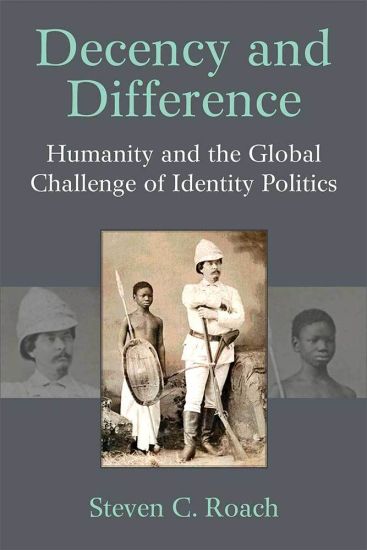
Decency remains one of the most prevalent yet least understood terms in today’s political discourse. In evoking respect, kindness, courage, integrity, reason, and tolerance, it has long expressed an unquestioned duty and belief in promoting and protecting the dignity of all persons. Today this unquestioned belief is in crisis. Tribalism and identity politics have both hindered and threatened its moral stability and efficacy. Still, many continue to undertheorize its political character by isolating it from the effects of identity politics. Decency and Difference argues that decency is a primary source of the political tension that has long shaped the struggles for power, identity, and justice in the global arena. It distinguishes among basic, conservative, and liberal strands of decency to critically examine the many conflicting and competing applications of decency in global politics. Together these different strands reflect a long and uneven evolution from the British and American empires to a global network of justice. This powerful book exposes the gaps of decency and the disparate ways it is practiced, thus addressing the global challenge of configuring a diverse political ethic of decency.
The Comprehensive Peace Agreement marked the end of Sudan's second civil war between the North and South. But in creating an autonomous southern region and a pathway toward statehood, it failed to resolve the effects of rebel factionalism, party infighting, and corruption in the South. In South Sudan's Fateful Struggle, Steven C. Roach analyzes these persistent effects of the South-South war, showing how they disrupted the transition to statehood and divided the transitional government of national unity in South Sudan. Throughout, he stresses the centrality of elite mismanagement and the durable dynamics of war which have shaped the country's troubled political destiny. The government, plagued by patronage-fueled corruption and patrimonialism, continues to rely on the threat of violence to govern the country and to delay the transition to a new government of national unity. Roach argues that in naturally sowing division and distrust, government elites must ultimately learn to engage civil society to achieve long-term peace, accountability, and justice. Along with providing an overview of the country's trajectory in this century, Roach traces its state of war to colonial times and uses the notion of militarized patronage to describe the distinct nature of South Sudan's patronage networks. He shows how the Sudan People's Liberation Movement came to dominate the country's affairs to become a powerful deterrent to democracy, security, justice, and national unity. He then discusses the promising efforts by civil society actors to advance hybrid justice by pressuring the government to implement a truth commission, a war crimes court, and reparations commission. Comprehensive in scope, the book represents the first systematic examination of South Sudan's quandary both before and after its civil war.
Critical international theory encompasses several distinct, radical approaches that focus on identity, difference, hegemonic power, and order. As an applied theory, critical international theory draws on critical social theories to shed light on international processes and global transformations. While this approach has led to increasing interest in formulating an empirically relevant critical international theory, it has also revealed the difficulties of applying critical theory to international politics. What are these difficulties and problems? And how can we move beyond them? This book addresses these questions by investigating the intellectual currents and key debates of critical theory, from Kant and Hegel to Habermas and Derrida, and the recent work of critical international theory, including Robert Cox and Andrew Linklater. By drawing on these debates, the book formulates an original theory of complementarity that brings together critical theory and critical international theory. It argues that complementarity—a governing principle in international law and politics—offers a conceptual framework for working toward two goals: engaging the changing contexts and forms of resistance and redressing some of the difficulties of applying critical theory to international relations.In adopting three critical perspectives on complementarity to analyze the evolving social and political contexts of global justice, this book provides an essential resource for undergraduate and graduate students and scholars interested in the application of critical theory to international relations.
International Relations: The Key Concepts
Steven C. Roach; Martin Griffiths; Terry O'Callaghan
Routledge
2013
nidottu
‘To attempt such a difficult task requires ambition, confidence and skill. All three qualities are evident in this impressive reference book. It deserves a prominent place in all International Relations libraries’. Dr Scott Burchill, In Australian Journal of Political Science, 43:4, 747 — 766.Now in its third edition, International Relations: The Key Concepts, remains an important resource for anyone interested in international politics. Comprehensive and relevant, it has been fully revised to reflect the most important themes and issues in international relations in the post-9/11 era. Featuring new entries on:• The Arab Spring• Responsibility to Protect• Governmentality• Postcolonialism• Neoliberalism• Global Financial CrisisWith suggestions for further reading and a useful guide to websites, International Relations: The Key Concepts is an ideal aid for students and newcomers to the field of International Relations.
Politicizing the International Criminal Court
Steven C. Roach
Rowman Littlefield Publishers
2006
sidottu
The establishment of the International Criminal Court (ICC) in July 1998 has attracted growing interest in the evolving role of politics in international law. Steven C. Roach's innovative and systematic work on the political and ethical dimensions of the ICC is the first comprehensive attempt to situate the politics of the ICC both theoretically and practically. Linking the ICC's internal politicization with its formative development, Roach provides a unique understanding of this institution's capacity to play a constructive role in global politics. He argues that an internal form of politicization will allow the ICC to counter outside efforts to politicize it, whether this involves the political agenda of a state hegemon or the geopolitical interests of U. N. Security Council permanent members. Steering a new path between conventional approaches that stress the formal link between legitimacy and legal neutrality, and unconventional approaches that treat legitimacy and politics as inextricable elements of a repressive international legal order, Roach formulates the concept of political legalism, which calls for a self-directed and engaged application of the legal rules and principles of the ICC Statute. Politicizing the International Criminal Court is a must-read for scholars, students, and policymakers interested in the dynamics of this important international institution.
Politicizing the International Criminal Court
Steven C. Roach
Rowman Littlefield Publishers
2006
nidottu
The establishment of the International Criminal Court (ICC) in July 1998 has attracted growing interest in the evolving role of politics in international law. Steven C. Roach's innovative and systematic work on the political and ethical dimensions of the ICC is the first comprehensive attempt to situate the politics of the ICC both theoretically and practically. Linking the ICC's internal politicization with its formative development, Roach provides a unique understanding of this institution's capacity to play a constructive role in global politics. He argues that an internal form of politicization will allow the ICC to counter outside efforts to politicize it, whether this involves the political agenda of a state hegemon or the geopolitical interests of U. N. Security Council permanent members. Steering a new path between conventional approaches that stress the formal link between legitimacy and legal neutrality, and unconventional approaches that treat legitimacy and politics as inextricable elements of a repressive international legal order, Roach formulates the concept of political legalism, which calls for a self-directed and engaged application of the legal rules and principles of the ICC Statute. Politicizing the International Criminal Court is a must-read for scholars, students, and policymakers interested in the dynamics of this important international institution.
This insightful and timely book analyzes the role of cultural autonomy in advancing minority rights protection on the national and global level. It assesses the historical and legal limits of the right to self-determination and autonomy and draws on Marxist internationalism, liberal nationalism and EU integrationist studies to examine the relationship between cultural autonomy and globalization. As such, emphasis is placed on the sociological and historical value of cultural autonomy, with the aim of working beyond formalistic and utilitarian approaches to cultural autonomy. The volume will appeal primarily to upper-level undergraduate and graduate level students of political science and international law interested in rethinking the role of cultural autonomy in an age of globalization.
Featuring 16 new entries, International Relations: The Key Concepts, now in its fourth edition, is the essential guide for anyone interested in international affairs. Comprehensive and up to date, it introduces the most important themes in international relations. New entries include the following:AnthropoceneAuthoritarian populismBordersBrexitDignityHierarchyIntersectionalityPandemicPostmodern warfareRace warResilienceFeaturing suggestions for further reading as well as a unique guide to websites on international relations, this accessible guide is an invaluable aid to an understanding of this expanding field, ideal for student and non-specialist alike. It will serve as a vital reference text for undergraduate IR courses.
This insightful and timely book analyzes the role of cultural autonomy in advancing minority rights protection on the national and global level. It assesses the historical and legal limits of the right to self-determination and autonomy and draws on Marxist internationalism, liberal nationalism and EU integrationist studies to examine the relationship between cultural autonomy and globalization. As such, emphasis is placed on the sociological and historical value of cultural autonomy, with the aim of working beyond formalistic and utilitarian approaches to cultural autonomy. The volume will appeal primarily to upper-level undergraduate and graduate level students of political science and international law interested in rethinking the role of cultural autonomy in an age of globalization.
Fifty Key Thinkers in International Relations
Martin Griffiths; Steven C. Roach; M. Scott Solomon
Routledge
2008
sidottu
Now in its second edition, Fifty Key Thinkers in International Relations has been thoroughly updated with several new entries and a new preface to reflect the latest developments. There are new sections on Constructivism, International Political Theory, and English School, as well as a range of new thinkers. They include:Samuel Huntington Christine SylvesterJürgen Habermas John RawlsBarry BuzanFully cross-referenced throughout, this book has everything for students of politics and international relations or indeed anyone who wants to gain an understanding of how nations can work together successfully.
Fifty Key Thinkers in International Relations
Martin Griffiths; Steven C. Roach; M. Scott Solomon
Routledge
2008
nidottu
Now in its second edition, Fifty Key Thinkers in International Relations has been thoroughly updated with several new entries and a new preface to reflect the latest developments. There are new sections on Constructivism, International Political Theory, and English School, as well as a range of new thinkers. They include:Samuel Huntington Christine SylvesterJürgen Habermas John RawlsBarry BuzanFully cross-referenced throughout, this book has everything for students of politics and international relations or indeed anyone who wants to gain an understanding of how nations can work together successfully.
Managing Relationships with Industry
Steven C. Schachter; William Mandell; Scott Harshbarger; Randall Grometstein
Academic Press Inc
2008
nidottu
Now more than ever, doctors are being targeted by government prosecutors and whistleblowers challenging the legality of their relationships with drug and device companies. With reputations at stake and the risk of civil and criminal liability, it is incumbent upon doctors to protect themselves. Managing Relationships with Industry: A Physician’s Compliance Manual is an indispensable resource for doctors, professional societies, academic medical centers, community hospitals, and group practices struggling to understand the ever changing law and ethical standards on interactions with pharmaceutical and device companies. It is the first comprehensive summary of the law and ethics on physician relationships with industry written for the physician. Authored by a former state Attorney General, Harvard Medical School Professor, health care lawyer and professor of ethics, Managing Relationships approaches the topic from a balanced and reasoned perspective adding to the on-going national dialogue and debate on the proper limits to medicine’s relationship with industry.
During a seven-decade career that spanned from 19th century Vienna to 1920s Broadway to the golden age of Hollywood, three-time Academy Award winner Max Steiner did more than any other composer to introduce and establish the language of film music. Indeed, revered contemporary film composers like John Williams and Danny Elfman use the same techniques that Steiner himself perfected in his iconic work for such classics as Casablanca, King Kong, Gone with the Wind, The Searchers, Now, Voyager, the Astaire-Rogers musicals, and over 200 other titles. And Steiner's private life was a drama all its own. Born into a legendary Austrian theatrical dynasty, he became one of Hollywood's top-paid composers. But he was also constantly in debt--the inevitable result of gambling, financial mismanagement, four marriages, and the actions of his emotionally troubled son. Throughout his chaotic life, Steiner was buoyed by an innate optimism, a quick wit, and an instinctive gift for melody, all of which would come to the fore as he met and worked with luminaries like Richard Strauss, George Gershwin, Irving Berlin, the Warner Bros., David O. Selznick, Bette Davis, Frank Sinatra, and Frank Capra. In Music by Max Steiner, the first full biography of Steiner, author Steven C. Smith interweaves the dramatic incidents of Steiner's personal life with an accessible exploration of his composing methods and experiences, bringing to life the previously untold story of a musical pioneer and master dramatist who helped create a vital new art with some of the greatest film scores in cinema history.
Non-Epileptic Seizures in Our Experience
Steven C. Schachter
Oxford University Press Inc
2020
nidottu
To an outside observer, Psychogenic Non-Epileptic Seizures (PNES) look like epileptic seizures. The manifestations of PNES include collapses, impaired consciousness, and seizure-related injuries. However, unlike epileptic seizures, which are the result of abnormal electrical discharges in the brain, most PNES are an automatic psychological response to a trigger perceived as threatening. Not least because the changes in the brain that underpin PNES cannot be visualised easily with clinical tests (such as the EEG), there are many uncertainties and controversies surrounding the condition. Patients often provoke a mixture of emotions in healthcare professionals. In the authors' previous book, In Our Words: Personal Accounts of Living with Non-Epileptic Seizures, over 100 individuals with PNES and their family wrote about their experiences with the condition. While some had positive care experiences, many were left feeling confused, angry, and abandoned by the clinicians they had encountered. Non-Epileptic Seizures in Our Experience: Accounts of Health Care Professionals complements the authors' previous book by presenting the perspectives of over 90 members of different healthcare professions from around the world. The anonymous publication format has enabled many not only to share success stories but also to be open about difficulties and failures. This volume will be an invaluable resource for both highly experienced professionals as well as relative novice and those experiencing PNES. This book will challenge negative attitudes surrounding the condition, improve understanding between healthcare professionals and patients, and - ultimately - advance the quality of care provided for those with PNES.
This is the story of the game-changing collaboration between director Alfred Hitchcock and composer Bernard Herrmann, who channelled their inner fears and desires into films that would become the nightmarish narratives and soundtracks of our lives. The 11-year collaboration between Alfred Hitchcock and Bernard Herrmann is often called the greatest director-composer partnership in cinema history. Their eight films together include such classic thrillers as Vertigo, The Man Who Knew Too Much, North by Northwest, Psycho, and The Birds. In Hitchcock and Herrmann: The Friendship and Film Scores that Changed Cinema, Steven C. Smith delivers an intimate account of how the reserved, but deeply anxious, Hitchcock found his ideal creative partner in the cantankerous, but deeply romantic, Herrmann. Smith draws on four decades of research, including previously unpublished documents and new interviews, to deliver a riveting account of what made the teaming of "Benny and Hitch" so memorable and influential -- and why it came to a bitter end. Their story involves the tumultuous changes in Hollywood from the mid-1950s to mid-1960s, as the collapsing studio system gave way to independent, counterculture filmmaking. It also involves the key figures in Hitchcock and Herrmann's inner circle including the director's gifted wife and most valued critic, Alma Reville; Herrmann's beautiful, put-upon spouse, Lucy Anderson; and talent agent-turned-studio mogul Lew Wasserman. Wasserman's negotiations made Hitchcock's greatest filmmaking period possible, but over time Lew's commercial instincts as head of Universal Studios clashed with Herrmann's pure artistic vision. Hitchcock and Herrmann is both a deeply researched historical study and a fast-moving, cinematic narrative -- one that puts readers on the film sets and scoring stages of Hitchcock masterworks. Their collaboration ended in a bitter break; but today Herrmann's pulse-quickening music has become the soundtrack of our own anxious times. The music from their movies is more popular than ever, heard in Quentin Tarantino blockbusters and Lady Gaga music videos. In Smith's expert telling, readers get an an intimate look at two legendary creators who, despite seemingly opposite personalities, found in each other artistic completion.
This is the biography of a contested memory, how it was born, grew, changed the world, and was changed by it. It's the story of the story of how the Church of Jesus Christ of Latter-day Saints began. Joseph Smith, the church's founder, remembered that his first audible prayer, uttered in spring of 1820 when he was about fourteen, was answered with a vision of heavenly beings. Appearing to the boy in the woods near his parents' home in western New York State, they told Smith that he was forgiven and warned him that Christianity had gone astray. Smith created a rich and controversial historical record by narrating and documenting this event repeatedly. In First Vision, Steven C. Harper shows how Latter-day Saints (beginning with Joseph Smith) and others have remembered this experience and rendered it meaningful. When and why and how did Joseph Smith's first vision, as saints know the event, become their seminal story? What challenges did it face along the way? What changes did it undergo as a result? Can it possibly hold its privileged position against the tides of doubt and disbelief, memory studies, and source criticism-all in the information age? Steven C. Harper tells the story of how Latter-day Saints forgot and then remembered accounts of Smith's experience and how Smith's 1838 account was redacted and canonized. He explores the dissonance many saints experienced after discovering multiple accounts of Smith's experience. He describes how, for many, the dissonance has been resolved by a reshaped collective memory.
Organized Innovation
Steven C. Currall; Ed Frauenheim; Sara Jansen Perry; Emily M. Hunter
Oxford University Press Inc
2014
sidottu
An innovation gap has emerged as American universities have focused on basic research and industry has concentrated on incremental product development. This gap has widened in recent decades, and the country has failed to close the gap in large part because of three myths-that innovation is about lone geniuses, the free market, and serendipity. It is time to embrace a new solution. In Organized Innovation: How Universities Can Join Forces with Business and Government to Renew America's Prosperity, Currall, Frauenheim, Perry, and Hunter provide a framework for optimizing the way America creates, develops, and commercializes technology breakthroughs. A blueprint for leaders in universities, business, and government, Organized Innovation addresses the innovation gap before us, builds upon the collaborative, brokered way that innovation happens best, and explains how these new discoveries can be most effectively put into practice today to the benefit of both our country and the world. The Organized Innovation framework is grounded in the authors' nearly decade-long study of lessons from a little-known but highly successful federal research program. Over the past quarter-century, the Engineering Research Center program has returned to the U.S. economy 10 times the funding invested in it. Detailed cases from the ERCs are used to bring to life the elements of the Organized Innovation framework.
The Comprehensive Employment and Training Act made a dramatic entrace on the American economic and social stage in December 1973. No comparable commitment of public funds to subsidize jobs had occurred since the Works Progress Administration programs of the 1930s. An important beneficiary of CETA was the Artists-in-Residence program, in operation from 1977 to 1981. As part of the largest direct monetary transfer to artists since the WPA, AIR employed 108 Chicago-area artists each year in nine fields—from dance and music to video and graphic arts. Bureaucratizing the Muse is a study of the Chicago AIR program. By its very nature art is a nonrational process, even at times antirational, and the idea of organizing artists in this kind of work environment was an unusual one. Steven C. Dubin's account is a fascinating story of the tensions between struggling artists who need a paycheck but fear the compromise of their art and bureaucrats who need to produce measurable results.