Kirjojen hintavertailu. Mukana 11 244 527 kirjaa ja 12 kauppaa.

Kirjahaku

Etsi kirjoja tekijän nimen, kirjan nimen tai ISBN:n perusteella.

1000 tulosta hakusanalla Steven C. Schachter

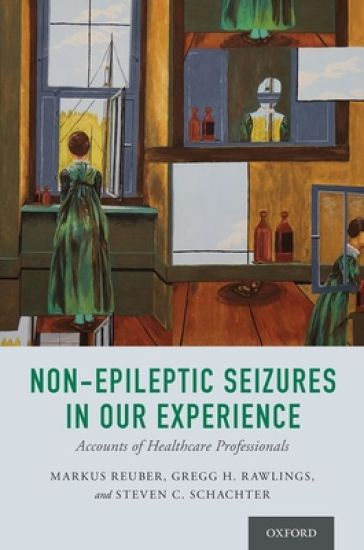
Non-Epileptic Seizures in Our Experience

Non-Epileptic Seizures in Our Experience

Steven C. Schachter

Oxford University Press Inc
2020
nidottu
To an outside observer, Psychogenic Non-Epileptic Seizures (PNES) look like epileptic seizures. The manifestations of PNES include collapses, impaired consciousness, and seizure-related injuries. However, unlike epileptic seizures, which are the result of abnormal electrical discharges in the brain, most PNES are an automatic psychological response to a trigger perceived as threatening. Not least because the changes in the brain that underpin PNES cannot be visualised easily with clinical tests (such as the EEG), there are many uncertainties and controversies surrounding the condition. Patients often provoke a mixture of emotions in healthcare professionals. In the authors' previous book, In Our Words: Personal Accounts of Living with Non-Epileptic Seizures, over 100 individuals with PNES and their family wrote about their experiences with the condition. While some had positive care experiences, many were left feeling confused, angry, and abandoned by the clinicians they had encountered. Non-Epileptic Seizures in Our Experience: Accounts of Health Care Professionals complements the authors' previous book by presenting the perspectives of over 90 members of different healthcare professions from around the world. The anonymous publication format has enabled many not only to share success stories but also to be open about difficulties and failures. This volume will be an invaluable resource for both highly experienced professionals as well as relative novice and those experiencing PNES. This book will challenge negative attitudes surrounding the condition, improve understanding between healthcare professionals and patients, and - ultimately - advance the quality of care provided for those with PNES.

Optimal Care for Patients with Epilepsy: Practical Aspects, an Issue of Neurologic Clinics
This common and very important disorder of Epilepsy is led by Dr. Steven Schachter in this issue of Neurologic Clinics. The majority of articles review methods for application of standards, guidelines, and consensus statement to clinical practice by Primary Care physicians and general Neurologists using validated and evidence-based tools such as screening instruments and algorithms for a number of critically important topics, ranging from initial evaluation to monitoring patients on treatment to counseling and educating patients on SUDEP and driving. Topics in this issue include: Guidelines and quality standards for adult epilepsy patients; Guidelines and quality standards in care of children with epilepsy; Initial evaluation of the patient with suspected epilepsy; Starting, choosing, changing, and discontinuing treatment; Methods for measuring seizure frequency and severity; Assessment of treatment side effects and quality of life; Screening for depression and anxiety; Counseling patients on driving and employment; Issues for women with epilepsy; Patient education (SUDEP - Sudden Unexpected Death in Epilepsy; Self-management; Adherence; Rescue medication); Optimizing the patient-physician therapeutic alliance.
Epilepsy, An Issue of Neurologic Clinics

Epilepsy, An Issue of Neurologic Clinics

Steven C. Schachter

W B Saunders Co Ltd
2009
sidottu
Epilepsy afflicts more than two million people in the United States and over 50 million people globally. This issue of Neurologic Clinics contains the following articles on this condition: Sudden Unexplained Death in Epilepsy; Approaches to Seizure Prediction; Localizing Seizure Onset; Concomitant Mood Disorders; Advances in the Genetics of Epilepsy; Psychogenic Nonepileptic Seizures; Selection of AEDs; Indentification of Refractory Epilepsy; Therapeutic Brain Stimulation in Epilepsy; AED Tertogneiticity; Hormonal Aspects of Epilepsy; Epilepsy and Radiosurgery; Epilepsy and Cognition; and Determinants of Quality of Life in Epilepsy.
Evidence-based Management of Epilepsy

Evidence-based Management of Epilepsy

Steven C. Schachter

TFM Publishing Ltd
2011
sidottu
The clinical management of patients with epilepsy and the associated medical literature are rapidly evolving. This book differs from other epilepsy textbooks by focusing specifically on topics where the available evidence is sufficiently well developed to be synthesised into straightforward summaries of proven therapies. When evidence is missing or there is doubt, controversy or ambiguity, the distinguished authors offer treatment recommendations based on practice guidelines or consensus statements that span the gaps in evidence while pointing to those areas where further research is needed. The initial chapters cover critically important aspects of antiepileptic drugs (AEDs) and surgical treatment such as when to start and stop AEDs, how to monitor their effectiveness, special considerations in women who become pregnant, and when to consider surgery to alleviate seizures. The following chapters cover the therapy of seizures when they develop after traumatic brain injury or stroke, and the treatment of concomitant depression and anxiety in patients with epilepsy. The final chapters discuss emerging topics in epilepsy: the treatment of the post-ictal state, technologies to predict and detect seizures, strategies for closing the treatment gap and sudden unexpected death in epilepsy. The contributors are renowned experts in their fields who successfully and succinctly present state-of-the-art reviews based on the medical evidence designed to help the clinician be as best informed as possible in the care of patients with epilepsy.
Managing Relationships with Industry

Managing Relationships with Industry

Steven C. Schachter; William Mandell; Scott Harshbarger; Randall Grometstein

Academic Press Inc
2008
nidottu
Now more than ever, doctors are being targeted by government prosecutors and whistleblowers challenging the legality of their relationships with drug and device companies. With reputations at stake and the risk of civil and criminal liability, it is incumbent upon doctors to protect themselves. Managing Relationships with Industry: A Physician’s Compliance Manual is an indispensable resource for doctors, professional societies, academic medical centers, community hospitals, and group practices struggling to understand the ever changing law and ethical standards on interactions with pharmaceutical and device companies. It is the first comprehensive summary of the law and ethics on physician relationships with industry written for the physician. Authored by a former state Attorney General, Harvard Medical School Professor, health care lawyer and professor of ethics, Managing Relationships approaches the topic from a balanced and reasoned perspective adding to the on-going national dialogue and debate on the proper limits to medicine’s relationship with industry.
Psychiatric Controversies in Epilepsy

Psychiatric Controversies in Epilepsy

Andres Kanner; Steven C. Schachter

Academic Press Inc
2008
sidottu
Psychiatric Controversies in Epilepsy addresses controversial clinical issues of the psychiatric aspects of epilepsy. The book explores the reasons behind the poor communication between psychiatrists and neurologists and suggests potential remedies to this important problem, and two chapters are devoted to examining whether psychiatrists and neurologists are properly trained to recognize and treat conditions that both disciplines commonly encounter in clinical practice. Identification of the causes behind the high rate of comorbidity between epilepsy and mood, anxiety, psychotic and attention deficit disorders is given high priority in the volume, and a specific review of the evidence of common pathogenic mechanisms that may be operant in epilepsy and these psychiatric disorders is included. Recently identified bidirectional relationship between mood disorders and epilepsy and its implication in the course and response to treatment of the seizure disorder are also explored. Several chapters are devoted to rectify common misunderstandings of the use of psychotropic drugs in patients with epilepsy, including the use of antidepressant and central nervous system stimulants. Finally, one chapter explores the possibility of organic causes of psychogenic non-epileptic seizures.
Epilepsy Explained

Epilepsy Explained

PHD Reuber MD; PHD Elger MD; Steven C Schachter MD; Ulrich MD Altrup

Oxford University Press Inc
2009
nidottu
In the last five years, approximately 2.7 million people have been treated for epilepsy and it is estimated that as much as one in one-hundred of the world's population will develop epilepsy during their lifetime. It is further estimated that 60 million people worldwide have epilepsy and in the United States alone, between seventy to eighty thousand people are newly diagnosed each year. Despite being such a common problem, most people know little about the disorder and people with epilepsy feel stigmatized. Filled with illustrations on almost every page and boasting an attractive and stimulating layout, Epilepsy Explained offers a wealth of crystal clear information on epilepsy, intended for patients, family members, friends, and caregivers. This down-to-earth book is divided into easy-to-digest sections that address such fundamental questions as what epilepsy is, what happens in different types of epileptic seizures, how epilepsy is diagnosed, and how seizures are treated. The authors include much-needed information on numerous topics, including living successfully with seizures, patients rights, and current drugs used to treat epilepsy--all described with directness and clarity, with many real-life examples that shed light on how the topic under discussion affects people with epilepsy. The book includes information for particular groups of readers such as women, children, and teens. It has an easy-to-follow organization, is clearly structured and has a detailed index and glossary, allowing readers to easily find specific information pertaining to their condition. Written by physicians who work daily with epilepsy, this clear and engaging book provides people with the knowledge they need to make informed choices about their illness.
South Sudan's Fateful Struggle

South Sudan's Fateful Struggle

Steven C. Roach

OXFORD UNIVERSITY PRESS INC
2024
sidottu
The Comprehensive Peace Agreement marked the end of Sudan's second civil war between the North and South. But in creating an autonomous southern region and a pathway toward statehood, it failed to resolve the effects of rebel factionalism, party infighting, and corruption in the South. In South Sudan's Fateful Struggle, Steven C. Roach analyzes these persistent effects of the South-South war, showing how they disrupted the transition to statehood and divided the transitional government of national unity in South Sudan. Throughout, he stresses the centrality of elite mismanagement and the durable dynamics of war which have shaped the country's troubled political destiny. The government, plagued by patronage-fueled corruption and patrimonialism, continues to rely on the threat of violence to govern the country and to delay the transition to a new government of national unity. Roach argues that in naturally sowing division and distrust, government elites must ultimately learn to engage civil society to achieve long-term peace, accountability, and justice. Along with providing an overview of the country's trajectory in this century, Roach traces its state of war to colonial times and uses the notion of militarized patronage to describe the distinct nature of South Sudan's patronage networks. He shows how the Sudan People's Liberation Movement came to dominate the country's affairs to become a powerful deterrent to democracy, security, justice, and national unity. He then discusses the promising efforts by civil society actors to advance hybrid justice by pressuring the government to implement a truth commission, a war crimes court, and reparations commission. Comprehensive in scope, the book represents the first systematic examination of South Sudan's quandary both before and after its civil war.
Music by Max Steiner

Music by Max Steiner

Steven C. Smith

Oxford University Press Inc
2020
sidottu
During a seven-decade career that spanned from 19th century Vienna to 1920s Broadway to the golden age of Hollywood, three-time Academy Award winner Max Steiner did more than any other composer to introduce and establish the language of film music. Indeed, revered contemporary film composers like John Williams and Danny Elfman use the same techniques that Steiner himself perfected in his iconic work for such classics as Casablanca, King Kong, Gone with the Wind, The Searchers, Now, Voyager, the Astaire-Rogers musicals, and over 200 other titles. And Steiner's private life was a drama all its own. Born into a legendary Austrian theatrical dynasty, he became one of Hollywood's top-paid composers. But he was also constantly in debt--the inevitable result of gambling, financial mismanagement, four marriages, and the actions of his emotionally troubled son. Throughout his chaotic life, Steiner was buoyed by an innate optimism, a quick wit, and an instinctive gift for melody, all of which would come to the fore as he met and worked with luminaries like Richard Strauss, George Gershwin, Irving Berlin, the Warner Bros., David O. Selznick, Bette Davis, Frank Sinatra, and Frank Capra. In Music by Max Steiner, the first full biography of Steiner, author Steven C. Smith interweaves the dramatic incidents of Steiner's personal life with an accessible exploration of his composing methods and experiences, bringing to life the previously untold story of a musical pioneer and master dramatist who helped create a vital new art with some of the greatest film scores in cinema history.
Hitchcock and Herrmann

Hitchcock and Herrmann

Steven C. Smith

OXFORD UNIVERSITY PRESS INC
2026
sidottu
This is the story of the game-changing collaboration between director Alfred Hitchcock and composer Bernard Herrmann, who channelled their inner fears and desires into films that would become the nightmarish narratives and soundtracks of our lives. The 11-year collaboration between Alfred Hitchcock and Bernard Herrmann is often called the greatest director-composer partnership in cinema history. Their eight films together include such classic thrillers as Vertigo, The Man Who Knew Too Much, North by Northwest, Psycho, and The Birds. In Hitchcock and Herrmann: The Friendship and Film Scores that Changed Cinema, Steven C. Smith delivers an intimate account of how the reserved, but deeply anxious, Hitchcock found his ideal creative partner in the cantankerous, but deeply romantic, Herrmann. Smith draws on four decades of research, including previously unpublished documents and new interviews, to deliver a riveting account of what made the teaming of "Benny and Hitch" so memorable and influential -- and why it came to a bitter end. Their story involves the tumultuous changes in Hollywood from the mid-1950s to mid-1960s, as the collapsing studio system gave way to independent, counterculture filmmaking. It also involves the key figures in Hitchcock and Herrmann's inner circle including the director's gifted wife and most valued critic, Alma Reville; Herrmann's beautiful, put-upon spouse, Lucy Anderson; and talent agent-turned-studio mogul Lew Wasserman. Wasserman's negotiations made Hitchcock's greatest filmmaking period possible, but over time Lew's commercial instincts as head of Universal Studios clashed with Herrmann's pure artistic vision. Hitchcock and Herrmann is both a deeply researched historical study and a fast-moving, cinematic narrative -- one that puts readers on the film sets and scoring stages of Hitchcock masterworks. Their collaboration ended in a bitter break; but today Herrmann's pulse-quickening music has become the soundtrack of our own anxious times. The music from their movies is more popular than ever, heard in Quentin Tarantino blockbusters and Lady Gaga music videos. In Smith's expert telling, readers get an an intimate look at two legendary creators who, despite seemingly opposite personalities, found in each other artistic completion.
First Vision

First Vision

Steven C. Harper

Oxford University Press Inc
2019
sidottu
This is the biography of a contested memory, how it was born, grew, changed the world, and was changed by it. It's the story of the story of how the Church of Jesus Christ of Latter-day Saints began. Joseph Smith, the church's founder, remembered that his first audible prayer, uttered in spring of 1820 when he was about fourteen, was answered with a vision of heavenly beings. Appearing to the boy in the woods near his parents' home in western New York State, they told Smith that he was forgiven and warned him that Christianity had gone astray. Smith created a rich and controversial historical record by narrating and documenting this event repeatedly. In First Vision, Steven C. Harper shows how Latter-day Saints (beginning with Joseph Smith) and others have remembered this experience and rendered it meaningful. When and why and how did Joseph Smith's first vision, as saints know the event, become their seminal story? What challenges did it face along the way? What changes did it undergo as a result? Can it possibly hold its privileged position against the tides of doubt and disbelief, memory studies, and source criticism-all in the information age? Steven C. Harper tells the story of how Latter-day Saints forgot and then remembered accounts of Smith's experience and how Smith's 1838 account was redacted and canonized. He explores the dissonance many saints experienced after discovering multiple accounts of Smith's experience. He describes how, for many, the dissonance has been resolved by a reshaped collective memory.
Organized Innovation

Organized Innovation

Steven C. Currall; Ed Frauenheim; Sara Jansen Perry; Emily M. Hunter

Oxford University Press Inc
2014
sidottu
An innovation gap has emerged as American universities have focused on basic research and industry has concentrated on incremental product development. This gap has widened in recent decades, and the country has failed to close the gap in large part because of three myths-that innovation is about lone geniuses, the free market, and serendipity. It is time to embrace a new solution. In Organized Innovation: How Universities Can Join Forces with Business and Government to Renew America's Prosperity, Currall, Frauenheim, Perry, and Hunter provide a framework for optimizing the way America creates, develops, and commercializes technology breakthroughs. A blueprint for leaders in universities, business, and government, Organized Innovation addresses the innovation gap before us, builds upon the collaborative, brokered way that innovation happens best, and explains how these new discoveries can be most effectively put into practice today to the benefit of both our country and the world. The Organized Innovation framework is grounded in the authors' nearly decade-long study of lessons from a little-known but highly successful federal research program. Over the past quarter-century, the Engineering Research Center program has returned to the U.S. economy 10 times the funding invested in it. Detailed cases from the ERCs are used to bring to life the elements of the Organized Innovation framework.
Bureaucratizing the Muse

Bureaucratizing the Muse

Steven C. Dubin

University of Chicago Press
1987
sidottu
The Comprehensive Employment and Training Act made a dramatic entrace on the American economic and social stage in December 1973. No comparable commitment of public funds to subsidize jobs had occurred since the Works Progress Administration programs of the 1930s. An important beneficiary of CETA was the Artists-in-Residence program, in operation from 1977 to 1981. As part of the largest direct monetary transfer to artists since the WPA, AIR employed 108 Chicago-area artists each year in nine fields—from dance and music to video and graphic arts. Bureaucratizing the Muse is a study of the Chicago AIR program. By its very nature art is a nonrational process, even at times antirational, and the idea of organizing artists in this kind of work environment was an unusual one. Steven C. Dubin's account is a fascinating story of the tensions between struggling artists who need a paycheck but fear the compromise of their art and bureaucrats who need to produce measurable results.
Strong Winds and Widow Makers

Strong Winds and Widow Makers

Steven C. Beda

UNIVERSITY OF ILLINOIS PRESS
2022
sidottu
Winner of the 2022 Philip Taft Labor History Book Prize Often cast as villains in the Northwest's environmental battles, timber workers in fact have a connection to the forest that goes far beyond jobs and economic issues. Steven C. Beda explores the complex true story of how and why timber-working communities have concerned themselves with the health and future of the woods surrounding them. Life experiences like hunting, fishing, foraging, and hiking imbued timber country with meanings and values that nurtured a deep sense of place in workers, their families, and their communities. This sense of place in turn shaped ideas about protection that sometimes clashed with the views of environmentalists--or the desires of employers. Beda's sympathetic, in-depth look at the human beings whose lives are embedded in the woods helps us understand that timber communities fought not just to protect their livelihood, but because they saw the forest as a vital part of themselves.
Strong Winds and Widow Makers

Strong Winds and Widow Makers

Steven C. Beda

UNIVERSITY OF ILLINOIS PRESS
2022
nidottu
Winner of the 2022 Philip Taft Labor History Book Prize Often cast as villains in the Northwest's environmental battles, timber workers in fact have a connection to the forest that goes far beyond jobs and economic issues. Steven C. Beda explores the complex true story of how and why timber-working communities have concerned themselves with the health and future of the woods surrounding them. Life experiences like hunting, fishing, foraging, and hiking imbued timber country with meanings and values that nurtured a deep sense of place in workers, their families, and their communities. This sense of place in turn shaped ideas about protection that sometimes clashed with the views of environmentalists--or the desires of employers. Beda's sympathetic, in-depth look at the human beings whose lives are embedded in the woods helps us understand that timber communities fought not just to protect their livelihood, but because they saw the forest as a vital part of themselves.
Langston Hughes and the Blues

Langston Hughes and the Blues

Steven C. Tracy

UNIVERSITY OF ILLINOIS PRESS
2024
nidottu
The shades and structures of the blues had an immense impact on the poetry of Langston Hughes. Steven C. Tracy provides a cultural context for Hughes’s work while revealing how Hughes mined Black oral and literary traditions to create his poetry. Comparing Hughes’s poems to blues texts, Tracy reveals how Hughes’s experimental forms reflect the poetics, structures, rhythms, and musical techniques of the music. Tracy also offers a discography of recordings by the artists--Bessie Smith, Ma Rainey, Blind Lemon Jefferson, and others--who most influenced the poet.
Going to Cincinnati

Going to Cincinnati

Steven C. Tracy

UNIVERSITY OF ILLINOIS PRESS
2025
nidottu
Available again in paperback, Going to Cincinnati takes readers into the Queen City's long-overlooked blues scene. Steven C. Tracy's award-winning book blends history and analysis with full biographical sketches of bluesmen like Albert Washington, H-Bomb Ferguson, Big Joe Duskin, Pigmeat Jarrett. The result is a celebrated, one-of-a-kind portrait of a scene filled with unique and talented musicians and essential to understanding American blues.
The Walking Med

The Walking Med

Steven C. Schlozman

Pennsylvania State University Press
2016
sidottu
The zombie craze has infected popular culture with the intensity of a viral outbreak, propagating itself through text, television, film, video games, and many other forms of media. As a metaphor, zombies may represent political notions, such as the return of the repressed violence of colonialism, or the embodiment of a culture obsessed with consumerism. Increasingly, they are understood and depicted as a medicalized phenomenon: creatures transformed by disease into a threatening vector of contagion.The Walking Med brings together scholars from across the disciplines of cultural studies, medical education, medical anthropology, and art history to explore what new meanings the zombie might convey in this context. These scholars consider a range of forms—from comics disseminated by the Centers for Disease Control and Prevention to graphic novels and television shows such as The Walking Dead—to show how interrogations of the zombie metaphor can reveal new perspectives within the medical humanities. An unprecedented forum for dialogue between cultural studies of zombies and graphic medicine, The Walking Med is an invaluable contribution to both areas of study, as well as a potent commentary on one of popular culture’s most invasive and haunting figures.In addition to the editors, the contributors are Tully Barnett, Gerry Canavan, Daniel George, Michael Green, Ben Kooyman, Sarah Juliet Lauro, Juliet McMullin, Kari Nixon, Steven Schlozman, Dan Smith, and Darryl Wilkinson.
The Walking Med

The Walking Med

Steven C. Schlozman

Pennsylvania State University Press
2016
pokkari
The zombie craze has infected popular culture with the intensity of a viral outbreak, propagating itself through text, television, film, video games, and many other forms of media. As a metaphor, zombies may represent political notions, such as the return of the repressed violence of colonialism, or the embodiment of a culture obsessed with consumerism. Increasingly, they are understood and depicted as a medicalized phenomenon: creatures transformed by disease into a threatening vector of contagion.The Walking Med brings together scholars from across the disciplines of cultural studies, medical education, medical anthropology, and art history to explore what new meanings the zombie might convey in this context. These scholars consider a range of forms—from comics disseminated by the Centers for Disease Control and Prevention to graphic novels and television shows such as The Walking Dead—to show how interrogations of the zombie metaphor can reveal new perspectives within the medical humanities. An unprecedented forum for dialogue between cultural studies of zombies and graphic medicine, The Walking Med is an invaluable contribution to both areas of study, as well as a potent commentary on one of popular culture’s most invasive and haunting figures.In addition to the editors, the contributors are Tully Barnett, Gerry Canavan, Daniel George, Michael Green, Ben Kooyman, Sarah Juliet Lauro, Juliet McMullin, Kari Nixon, Steven Schlozman, Dan Smith, and Darryl Wilkinson.
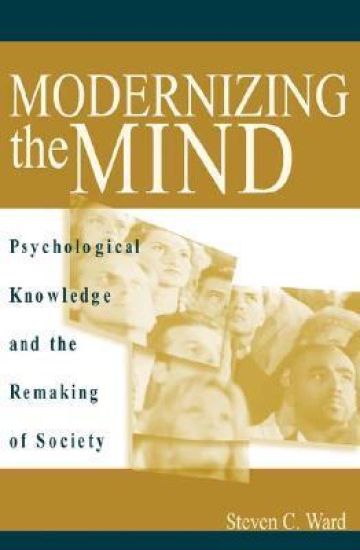
Modernizing the Mind

Modernizing the Mind

Steven C. Ward

Praeger Publishers Inc
2002
sidottu
When did fidgety children begin to suffer from attention deficit disorder? How did frightened people come to be called paranoid? Why are we considered to have emotional intelligence and not simply caring personalities? While psychological knowledge began in the relative isolation of laboratories and universities, it has since permeated various professions, institutions, and everyday life. Society and our conceptions of self have fundamentally changed with psychology's modernization of the mind. Ward provides a social and cultural history of the spread of psychological knowledge, assessing the way this proliferation has reconfigured society's meaning, and the way people view themselves and others. Using ideas borrowed from science and technology studies, the sociology of culture, and the sociology of organizations, Ward examines how American psychology established itself as the central purveyor of truth about the mind and self in the 20th century. He examines how psychology has essentially become common knowledge, and his innovative account offers a novel theory about the growth and influence of numerous different knowledge forms.