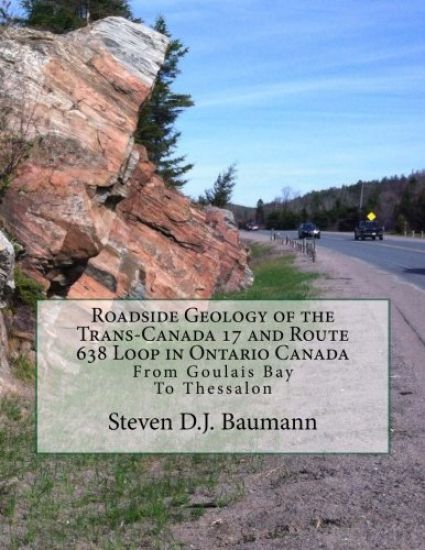
THIS VERSION IS FIRST PRINT AND MAY CONTAIN TYPOS: This is a unique roadside book of the 110 mile loop along Trans-Canada 17 from Goulais Bay to Thessalon and back via Route 638. It is organized in a manner so you can visit outcrops by either following the book or by GPS coordinates within. It explores the Precambrian outcrops common along the transect from the Archean granites, through the Huronian Supergroup, to the post Mid-continental Rift bedrock. There are 35 total outcrops visited. All but three are easily assessable from the roadside. Other road segments include Route 556, Old Soo Road, Gordon Lake Road, Center Line Road, Watson Road, and Government Road. This was a unique time in Earth's history. The Huronian rocks date back almost 2.5 billion years and record many firsts on Earth. The first free oxygen in the atmosphere, the first ice ages, the first time plate tectonics dominates, and the first wide distribution of carbonate rocks. Technical terms are kept to a minimum. Please enjoy and explore your world
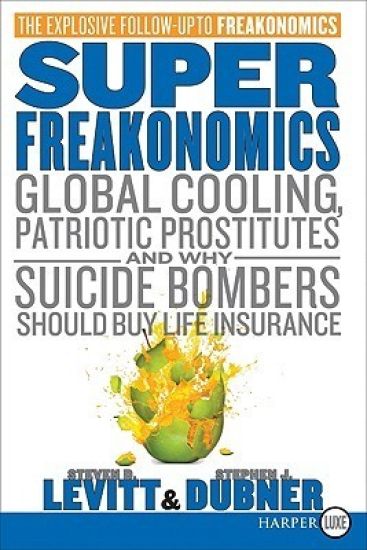
Freakonomics lived on the New York Times bestseller list for an astonishing two years. Now authors Steven D. Levitt and Stephen J. Dubner return with more iconoclastic insights and observations in SuperFreakonomics--the long awaited follow-up to their New York Times Notable blockbuster. Based on revolutionary research and original studies SuperFreakonomics promises to once again challenge our view of the way the world really works.
Freakonomics lived on the New York Times bestseller list for an astonishing two years. Now authors Steven D. Levitt and Stephen J. Dubner return with more iconoclastic insights and observations in SuperFreakonomics--the long awaited follow-up to their New York Times Notable blockbuster. Based on revolutionary research and original studies SuperFreakonomics promises to once again challenge our view of the way the world really works.
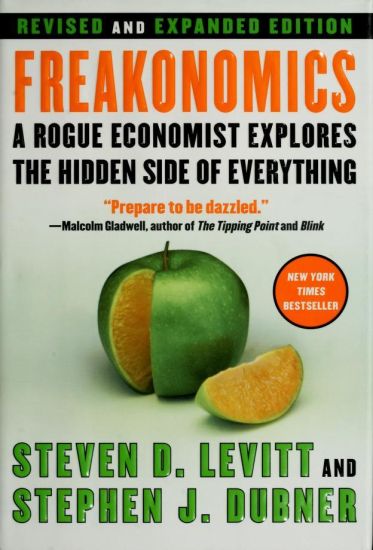
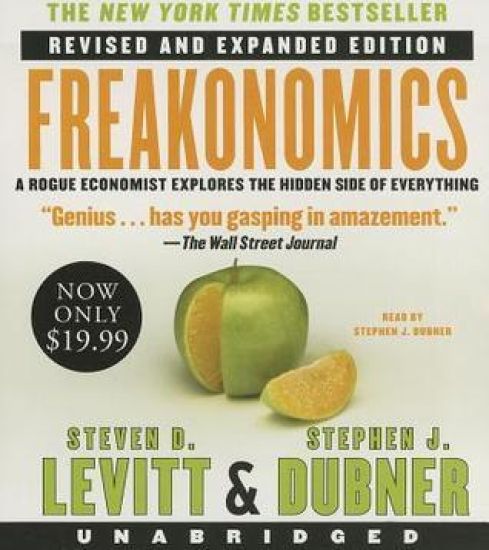
The legendary bestseller that made millions look at the world in a radically different way returns in a new edition, now including an exclusive discussion between the authors and bestselling professor of psychology Angela Duckworth.Which is more dangerous, a gun or a swimming pool? Which should be feared more: snakes or french fries? Why do sumo wrestlers cheat? In this groundbreaking book, leading economist Steven Levitt--Professor of Economics at the University of Chicago and winner of the American Economic Association's John Bates Clark medal for the economist under 40 who has made the greatest contribution to the discipline--reveals that the answers. Joined by acclaimed author and podcast host Stephen J. Dubner, Levitt presents a brilliant--and brilliantly entertaining--account of how incentives of the most hidden sort drive behavior in ways that turn conventional wisdom on its head.
Freakonomics lived on the New York Times bestseller list for an astonishing two years. Now authors Steven D. Levitt and Stephen J. Dubner return with more iconoclastic insights and observations in SuperFreakonomics--the long awaited follow-up to their New York Times Notable blockbuster. Based on revolutionary research and original studies SuperFreakonomics promises to once again challenge our view of the way the world really works.
Freakonomics lived on the New York Times bestseller list for an astonishing two years. Now authors Steven D. Levitt and Stephen J. Dubner return with more iconoclastic insights and observations in SuperFreakonomics--the long awaited follow-up to their New York Times Notable blockbuster. Based on revolutionary research and original studies SuperFreakonomics promises to once again challenge our view of the way the world really works.
Freakonomics lived on the New York Times bestseller list for an astonishing two years. Now authors Steven D. Levitt and Stephen J. Dubner return with more iconoclastic insights and observations in SuperFreakonomics--the long awaited follow-up to their New York Times Notable blockbuster. Based on revolutionary research and original studies SuperFreakonomics promises to once again challenge our view of the way the world really works.
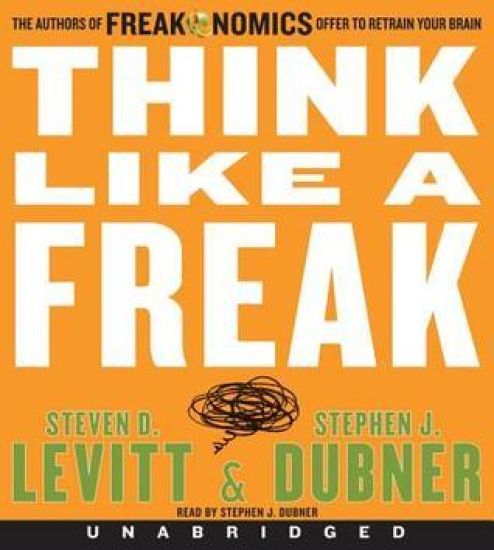
The New York Times bestselling Freakonomics changed the way we see the world, exposing the hidden side of just about everything. Then came SuperFreakonomics, a documentary film, an award-winning podcast, and more.Now, with Think Like a Freak, Steven D. Levitt and Stephen J. Dubner have written their most revolutionary book yet. With their trademark blend of captivating storytelling and unconventional analysis, they take us inside their thought process and teach us all to think a bit more productively, more creatively, more rationally--to think, that is, like a Freak.Levitt and Dubner offer a blueprint for an entirely new way to solve problems, whether your interest lies in minor lifehacks or major global reforms. As always, no topic is off-limits. They range from business to philanthropy to sports to politics, all with the goal of retraining your brain. Along the way, you'll learn the secrets of a Japanese hot-dog-eating champion, the reason an Australian doctor swallowed a batch of dangerous bacteria, and why Nigerian e-mail scammers make a point of saying they're from Nigeria.Some of the steps toward thinking like a Freak: First, put away your moral compass--because it's hard to see a problem clearly if you've already decided what to do about it. Learn to say "I don't know"--for until you can admit what you don't yet know, it's virtually impossible to learn what you need to. Think like a child--because you'll come up with better ideas and ask better questions. Take a master class in incentives--because for better or worse, incentives rule our world. Learn to persuade people who don't want to be persuaded--because being right is rarely enough to carry the day. Learn to appreciate the upside of quitting--because you can't solve tomorrow's problem if you aren't willing to abandon today's dud.Levitt and Dubner plainly see the world like no one else. Now you can too. Never before have such iconoclastic thinkers been so revealing--and so much fun to read.
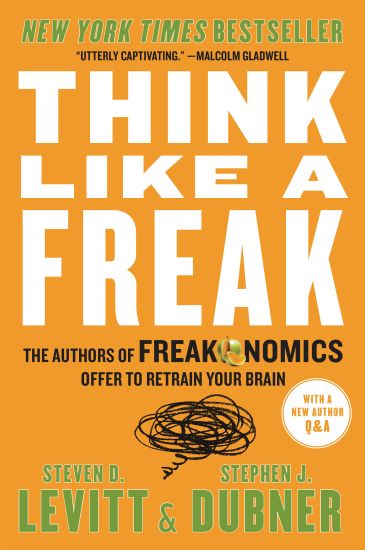
In this major national bestseller and follow-up to Superfreakonomics, the Freakonomics authors are back to take us behind the phenomenon and unveil the tools for thinking like a freak.With their trademark blend of captivating storytelling and unconventional analysis, Steven D. Levitt and Stephen J. Dubner take us inside their thought process and teach us all how to think a bit more productively, more creatively, more rationally. In Think Like A Freak, they offer a blueprint for an entirely new way to solve problems, whether your interest lies in minor lifehacks or major global reforms. The topics range from business to philanthropy to sports to politics, all with the goal of retraining your brain. Along the way, you'll learn the secrets of a Japanese hot-dog-eating champion, the reason an Australian doctor swallowed a batch of dangerous bacteria, and why Nigerian e-mail scammers make a point of saying they're from Nigeria.Levitt and Dubner plainly see the world like no one else. Now you can too. Never before have such iconoclastic thinkers been so revealing--and so much fun to read.This paperback edition includes a new Q&A with the authors.
The New York Times bestselling Freakonomics changed the way we see the world, exposing the hidden side of just about everything. Then came SuperFreakonomics, a documentary film, an award-winning podcast, and more.Now, with Think Like a Freak, Steven D. Levitt and Stephen J. Dubner have written their most revolutionary book yet. With their trademark blend of captivating storytelling and unconventional analysis, they take us inside their thought process and teach us all to think a bit more productively, more creatively, more rationally--to think, that is, like a Freak.Levitt and Dubner offer a blueprint for an entirely new way to solve problems, whether your interest lies in minor lifehacks or major global reforms. As always, no topic is off-limits. They range from business to philanthropy to sports to politics, all with the goal of retraining your brain. Along the way, you'll learn the secrets of a Japanese hot-dog-eating champion, the reason an Australian doctor swallowed a batch of dangerous bacteria, and why Nigerian e-mail scammers make a point of saying they're from Nigeria.Some of the steps toward thinking like a Freak: First, put away your moral compass--because it's hard to see a problem clearly if you've already decided what to do about it. Learn to say "I don't know"--for until you can admit what you don't yet know, it's virtually impossible to learn what you need to. Think like a child--because you'll come up with better ideas and ask better questions. Take a master class in incentives--because for better or worse, incentives rule our world. Learn to persuade people who don't want to be persuaded--because being right is rarely enough to carry the day. Learn to appreciate the upside of quitting--because you can't solve tomorrow's problem if you aren't willing to abandon today's dud.Levitt and Dubner plainly see the world like no one else. Now you can too. Never before have such iconoclastic thinkers been so revealing--and so much fun to read.
The New York Times bestselling Freakonomics changed the way we see the world, exposing the hidden side of just about everything. Then came SuperFreakonomics, a documentary film, an award-winning podcast, and more.Now, with Think Like a Freak, Steven D. Levitt and Stephen J. Dubner have written their most revolutionary book yet. With their trademark blend of captivating storytelling and unconventional analysis, they take us inside their thought process and teach us all to think a bit more productively, more creatively, more rationally--to think, that is, like a Freak.Levitt and Dubner offer a blueprint for an entirely new way to solve problems, whether your interest lies in minor lifehacks or major global reforms. As always, no topic is off-limits. They range from business to philanthropy to sports to politics, all with the goal of retraining your brain. Along the way, you'll learn the secrets of a Japanese hot-dog-eating champion, the reason an Australian doctor swallowed a batch of dangerous bacteria, and why Nigerian e-mail scammers make a point of saying they're from Nigeria.Some of the steps toward thinking like a Freak: First, put away your moral compass--because it's hard to see a problem clearly if you've already decided what to do about it.Learn to say "I don't know"--for until you can admit what you don't yet know, it's virtually impossible to learn what you need to.Think like a child--because you'll come up with better ideas and ask better questions.Take a master class in incentives--because for better or worse, incentives rule our world.Learn to persuade people who don't want to be persuaded--because being right is rarely enough to carry the day.Learn to appreciate the upside of quitting--because you can't solve tomorrow's problem if you aren't willing to abandon today's dud.Levitt and Dubner plainly see the world like no one else. Now you can too. Never before have such iconoclastic thinkers been so revealing--and so much fun to read.
The New York Times bestselling Freakonomics changed the way we see the world, exposing the hidden side of just about everything. Then came SuperFreakonomics, a documentary film, an award-winning podcast, and more.Now, with Think Like a Freak, Steven D. Levitt and Stephen J. Dubner have written their most revolutionary book yet. With their trademark blend of captivating storytelling and unconventional analysis, they take us inside their thought process and teach us all to think a bit more productively, more creatively, more rationally--to think, that is, like a Freak.Levitt and Dubner offer a blueprint for an entirely new way to solve problems, whether your interest lies in minor lifehacks or major global reforms. As always, no topic is off-limits. They range from business to philanthropy to sports to politics, all with the goal of retraining your brain. Along the way, you'll learn the secrets of a Japanese hot-dog-eating champion, the reason an Australian doctor swallowed a batch of dangerous bacteria, and why Nigerian e-mail scammers make a point of saying they're from Nigeria.Some of the steps toward thinking like a Freak: First, put away your moral compass--because it's hard to see a problem clearly if you've already decided what to do about it. Learn to say "I don't know"--for until you can admit what you don't yet know, it's virtually impossible to learn what you need to. Think like a child--because you'll come up with better ideas and ask better questions. Take a master class in incentives--because for better or worse, incentives rule our world. Learn to persuade people who don't want to be persuaded--because being right is rarely enough to carry the day. Learn to appreciate the upside of quitting--because you can't solve tomorrow's problem if you aren't willing to abandon today's dud.Levitt and Dubner plainly see the world like no one else. Now you can too. Never before have such iconoclastic thinkers been so revealing--and so much fun to read.
Steven D. Levitt and Stephen J. Dubner offer the long-awaited paperback edition of Freakonomics, the runaway bestseller, including six Freakonomics columns from the New York Times Magazine and a Q & A with the authors.
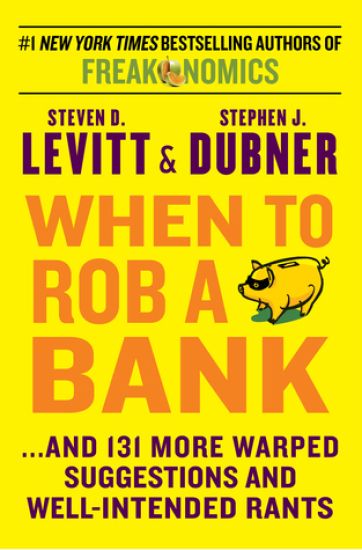
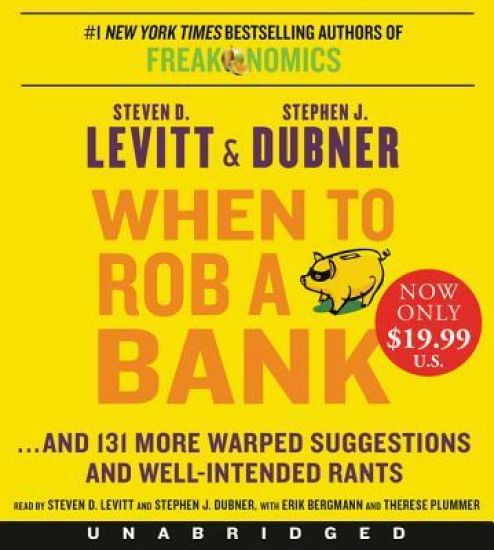
In celebration of the 10th anniversary of the landmark book Freakonomics comes this curated collection from the most readable economics blog in the universe. It's the perfect solution for the millions of readers who love all things Freakonomics. Surprising and erudite, eloquent and witty, When to Rob a Bank demonstrates the brilliance that has made the Freakonomics guys an international sensation, with more than 7 million books sold in 40 languages, and 150 million downloads of their Freakonomics Radio podcast.When Freakonomics was first published, the authors started a blog--and they've kept it up. The writing is more casual, more personal, even more outlandish than in their books. In When to Rob a Bank, they ask a host of typically off-center questions: Why don't flight attendants get tipped? If you were a terrorist, how would you attack? And why does KFC always run out of fried chicken?Over the past decade, Steven D. Levitt and Stephen J. Dubner have published more than 8,000 blog posts on the Freakonomics website. Many of them, they freely admit, were rubbish. But now they've gone through and picked the best of the best. You'll discover what people lie about, and why; the best way to cut gun deaths; why it might be time for a sex tax; and, yes, when to rob a bank. (Short answer: never; the ROI is terrible.) You'll also learn a great deal about Levitt and Dubner's own quirks and passions, from gambling and golf to backgammon and the abolition of the penny.
In celebration of the 10th anniversary of the landmark book Freakonomics comes this curated collection from the most readable economics blog in the universe. It's the perfect solution for the millions of readers who love all things Freakonomics. Surprising and erudite, eloquent and witty, When to Rob a Bank demonstrates the brilliance that has made the Freakonomics guys an international sensation, with more than 7 million books sold in 40 languages, and 150 million downloads of their Freakonomics Radio podcast.When Freakonomics was first published, the authors started a blog--and they've kept it up. The writing is more casual, more personal, even more outlandish than in their books. In When to Rob a Bank, they ask a host of typically off-center questions: Why don't flight attendants get tipped? If you were a terrorist, how would you attack? And why does KFC always run out of fried chicken?Over the past decade, Steven D. Levitt and Stephen J. Dubner have published more than 8,000 blog posts on the Freakonomics website. Many of them, they freely admit, were rubbish. But now they've gone through and picked the best of the best. You'll discover what people lie about, and why; the best way to cut gun deaths; why it might be time for a sex tax; and, yes, when to rob a bank. (Short answer: never; the ROI is terrible.) You'll also learn a great deal about Levitt and Dubner's own quirks and passions, from gambling and golf to backgammon and the abolition of the penny.
In celebration of the 10th anniversary of the landmark book Freakonomics comes this curated collection from the most readable economics blog in the universe. It's the perfect solution for the millions of readers who love all things Freakonomics. Surprising and erudite, eloquent and witty, When to Rob a Bank demonstrates the brilliance that has made the Freakonomics guys an international sensation, with more than 7 million books sold in 40 languages, and 150 million downloads of their Freakonomics Radio podcast.When Freakonomics was first published, the authors started a blog--and they've kept it up. The writing is more casual, more personal, even more outlandish than in their books. In When to Rob a Bank, they ask a host of typically off-center questions: Why don't flight attendants get tipped? If you were a terrorist, how would you attack? And why does KFC always run out of fried chicken?Over the past decade, Steven D. Levitt and Stephen J. Dubner have published more than 8,000 blog posts on Freakonomics.com. Many of them, they freely admit, were rubbish. But now they've gone through and picked the best of the best. You'll discover what people lie about, and why; the best way to cut gun deaths; why it might be time for a sex tax; and, yes, when to rob a bank. (Short answer: never; the ROI is terrible.) You'll also learn a great deal about Levitt and Dubner's own quirks and passions, from gambling and golf to backgammon and the abolition of the penny. --The A.V. Club
In celebration of the 10th anniversary of the landmark book Freakonomics comes this curated collection from the most readable economics blog in the universe. It's the perfect solution for the millions of readers who love all things Freakonomics. Surprising and erudite, eloquent and witty, When to Rob a Bank demonstrates the brilliance that has made the Freakonomics guys an international sensation, with more than 7 million books sold in 40 languages, and 150 million downloads of their Freakonomics Radio podcast.When Freakonomics was first published, the authors started a blog--and they've kept it up. The writing is more casual, more personal, even more outlandish than in their books. In When to Rob a Bank, they ask a host of typically off-center questions: Why don't flight attendants get tipped? If you were a terrorist, how would you attack? And why does KFC always run out of fried chicken?Over the past decade, Steven D. Levitt and Stephen J. Dubner have published more than 8,000 blog posts on the Freakonomics website. Many of them, they freely admit, were rubbish. But now they've gone through and picked the best of the best. You'll discover what people lie about, and why; the best way to cut gun deaths; why it might be time for a sex tax; and, yes, when to rob a bank. (Short answer: never; the ROI is terrible.) You'll also learn a great deal about Levitt and Dubner's own quirks and passions, from gambling and golf to backgammon and the abolition of the penny.