Kirjojen hintavertailu. Mukana 11 627 363 kirjaa ja 12 kauppaa.

Kirjahaku

Etsi kirjoja tekijän nimen, kirjan nimen tai ISBN:n perusteella.

1000 tulosta hakusanalla Steven E. Berry; Michael Hardin

Reading the Bible with Rene Girard: Conversations with Steven E. Berry

Reading the Bible with Rene Girard: Conversations with Steven E. Berry

Steven E. Berry; Michael Hardin

Createspace Independent Publishing Platform
2016
nidottu
Reading the Bible with Rene Girard When Ren Girard introduced the Bible back into conversation with anthropology in 1978, it was all a bit scandalous. Here, for the first time, Girard weaves his life story and that of the mimetic theory with his own faith reflections and interpretation of Scripture. These interviews are a great introduction for the person new to Girard's writings and will delight Girardian scholars and aficionados alike. "One of the many gifts of Ren Girard is his ability to unfold his theory in interviews...many of these dialogues open new perspectives on mimetic theory. Reading the Bible with Rene Girard is a wonderful example of this" Wolfgang Palaver, Universit t Innsbruck, Austria, past COV&R President "Reading the Bible with Ren Girard is an important contribution both to understanding the Bible as a "work in progress" that continues into our own lives and to introducing the ground-breaking insights of Ren Girard on the human condition and the love of God that breaks through to us in the historical process." James G. Williams, Syracuse University, past COV&R President "This is a wonderful introduction to Ren Girard's work. Through it one can follow the unfolding of his theory in the context of his life. We are lucky to have this " Jeremiah Alberg, International Christian University, Tokyo, COV&R President "Very often Ren Girard is at his best when he talks freely in a relaxed interview style. Reading the Bible With Rene Girard provides the master of mimetic theory with one more chance to show this strength. It is indeed hearing the master's voice." Niki Wandinger, University of Innsbruck "One comes away from Reading the Bible with Ren Girard unable to view the Bible-or the modern world that has been so decisively shaped by it-in quite the same way ever again." George A. Dunn, University of Indianapolis "Clear, conversational, and as always brilliantly insightful. There are few more accessible introductions as this little gem." Jarrod McKenna Australian peace award-winning pastor, cofounder of First Home Project "In this excellent book, you are invited to sit in on a series of conversations with one of the leading thinkers of our time, concerning matters of the utmost philosophical, theological, and practical significance. This is a very important volume indeed." Dr Chris Fleming, University of Western Sydney

The American Southeast at the End of the Ice Age

The American Southeast at the End of the Ice Age

David G. Anderson; Derek T. Anderson; Katherine McMillan Barry; Kara Bridgman Sweeney; Samuel O. Brookes; Adam M. Burke; Stephen B. Carmody; Philip J. Carr; William A. Childress; I. Randolph Daniel; Ryan Duggins; Grayal E. Farr; Michael K. Faught; Brendan Fenerty; Jay D. Franklin; Lauren M. Franklin; J. Christopher Gillam; Joseph A. M. Gingerich; Jessi J. Halligan; Kandace D. Hollenbach; Vance T. Holliday; Thomas A. Jennings; K. C. Jones; Shawn A. Joy; Jerald Ledbetter; Greg J. Maggard; Steven M. Meredith; D. Shane Miller

THE UNIVERSITY OF ALABAMA PRESS
2022
sidottu
The definitive book on what is known about the Late Pleistocene and Early Holocene archaeological record in the Southeast The 1996 benchmark volume The Paleoindian and Early Archaic Southeast, edited by David G. Anderson and Kenneth E. Sassaman, was the first study to summarize what was known of the peoples who lived in the Southeast when ice sheets covered the northern part of the continent and mammals such as mammoths, saber-toothed cats, and ground sloths roamed the landscape.The American Southeast at the End of the Ice Age provides an updated, definitive synthesis of current archaeological research gleaned from an array of experts in the region. It is organized in three parts: state records, the regional perspective, and reflections and future directions. Chapters survey a diversity of topics including the distribution of the earliest archaeological sites in the region, chipped-stone tool technology, the expanding role of submerged archaeology, hunter-gatherer lifeways, past climate changes and the extinction of megafauna on the transitional landscape, and evidence of demographic changes at the end of the Ice Age. Discussion of the ethical responsibilities regarding the use of private collections and the relationship of archaeologists and the avocational community, insight from outside the Southeast, and considerations for future research round out the volume.
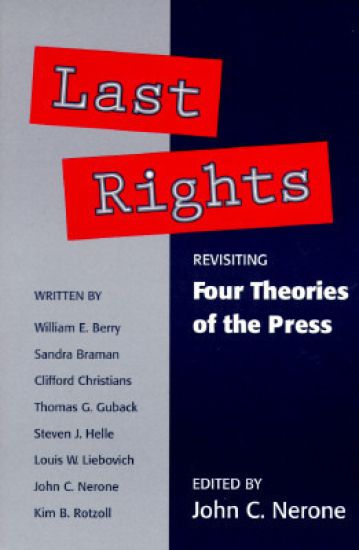
Last Rights

Last Rights

William E Berry; Sandra Braman; Clifford G. Christians; Thomas Guback; Steve J Helle; Louis W Liebovich; John C. Nerone; Kim B Rotzoll

University of Illinois Press
1995
nidottu
Though subjected to years of criticism, Four Theories of the Press remains a core text in communications. Its influence on the field, impact on generations of journalists, and ability to spark debate on why the press acts as it does continue to make it an oft-quoted source and classroom staple. In Last Rights, eight communications scholars critique and expand on the classic text. The authors argue that Four Theories spoke to and for a world beset by a cold war ended long ago. At the same time, they praise the book for offering an alternative view of the press and society and as a useful tool for helping scholars and citizens alike grapple with contradictions in classical liberalism. They also raise important questions about the Internet and other major changes in communications systems and society since the original publication of Four Theories. Contributors: William E. Berry, Sandra Braman, Clifford Christians, Thomas G. Guback, Steven J. Helle, Louis W. Liebovich, John C. Nerone, and Kim B. Rotzoll
A Scythe of Fire: Through the Civil War with One of Lee's Most Legendary Regiments
The men of the Eighth Georgia Infantry Regiment answered the Confederate call to arms in the spring of 1861. They fought hard in most major battles of the war, including Bull Run and Gettysburg, enduring heartbreaking losses and finally, at Appomattox, witnessing their ultimate defeat. A Scythe of Fire tells the remarkable story of this regiment, which held together through long years of victory, defeat, and despair. The magnificent product of meticulous research, Warren Wilkinson and Steven E. Woodworth's stirring chronicle brings the conflict alive through the eyes of the courageous men who fought and died on the nation's battlefields. Based on personal accounts, diaries, letters, and other primary sources, A Scythe of Fire is the history of the Eighth Georgia as experienced by those who carried its standard into battle: doctors and farmers, landowners and simple folk -- each dedicated to victory, yet proud and unbroken in the face of defeat.
Race, Crime, and Justice: The Continuing American Dilemma

Race, Crime, and Justice: The Continuing American Dilemma

Steven E. Barkan

Oxford University Press
2018
nidottu
Brief, timely, and accessible, Race, Crime, and Justice: The Continuing American Dilemma examines many critical issues including why, over the past few decades, African Americans, Latinos, and Native Americans were swept into jails and prisons at rates far beyond their share of the national population. Steven E. Barkan explores racial/ethnic disparities in criminal justice involvement; discrimination in policing, prosecution, and sentencing; the rise and collateral consequences of mass incarceration; racial bias in news media coverage of crime; racial/ethnic differences in rates of criminal behavior and victimization; and social and criminal justice policies that, if successfully implemented, would help correct many of the injustices in the criminal justice system. About the SeriesKeynotes in Criminology and Criminal Justice provides essential knowledge on important contemporary matters of crime, law, and justice to a broad audience of readers. Volumes are written by leading scholars in that area. Concise, accessible, and affordable, these texts are designed to serve either as primers around which courses can be built or as supplemental books for a variety of courses.
Signatures of the Artist

Signatures of the Artist

Steven E. Vigdor

Oxford University Press
2018
sidottu
How does the scientific enterprise really work to illuminate the origins of life and the universe itself? The quest to understand our universe, how it may have originated and evolved, and especially the conditions that allow it to support the existence of life forms, has been a central theme in religion for millennia and in science for centuries. In the past half-century, in particular, enormous progress in particle and nuclear physics and cosmology has clarified the essential role of imperfections - deviations from perfect symmetry or homogeneity or predictability - in establishing conditions that allow for structure in the universe that can support the development of life. Many of these deviations are tiny and seem mysteriously fine-tuned to allow for life. The goal of this book is to review the recent and ongoing scientific research exploring these imperfections, in a broad-ranging, non-mathematical approach with an emphasis on the intricate tapestry of elegant experiments that bear on the conditions for habitability in our universe. This book makes clear what we know and how we know it, as distinct from what we speculate and how we might test it. At the same time, it attempts to convey a sense of wonderment at the tuning of these imperfections and of the rapid rate at which the boundary between knowledge and speculation is currently shifting.
Techniques in Light Microscopy

Techniques in Light Microscopy

Steven E. Ruzin

Oxford University Press
2024
sidottu
This textbook provides an accessible and pedagogical explanation of the way microscopes magnify images and covers all techniques to date in transmitted and fluorescent light microscopy. The first section covers basic optics as it relates to microscopy. The second section describes all the major optical techniques of transmitted light microscopy, starting with brightfield, through darkfield, polarized light, phase contrast, differential interference contrast, and Hoffman modulation contrast microscopy. The final third of the book covers all the techniques of fluorescence microscopy. It begins with a simple explanation of fluorescence and is followed by Widefield epifluorescence, confocal, and 2-photon microscopy. This is followed by computational imaging including restoration ('deconvolution') microscopy, and all the present super-resolution techniques. The book concludes by discussing attainable resolution using transmitted light microscopy, including a thorough discussion of the Rayleigh, Sparrow, and other criteria of resolution, ending with a short discussion of the common pitfalls that result in decreased microscope resolution. The final chapter in the book is a short history of the microscope, beginning with the ancients, then discussing three seminal natural philosophers: Leeuwenhoek, Swammerdam, and Hooke. The remaining sections of the history chapter cover mechanical and optical advancements in the history of transmitted light microscopy. Finally, it includes a short history of fluorescence microscopy starting with Köhler and Rohr's first use of fluorescence microscopy in 1905, and ending with a description of the Sarastro Phoibos 1000, the first commercial confocal microscope.
Computational Physics

Computational Physics

Steven E. Koonin

Westview Press Inc
1998
nidottu
Computational Physics is designed to provide direct experience in the computer modeling of physical systems. Its scope includes the essential numerical techniques needed to "do physics" on a computer. Each of these is developed heuristically in the text, with the aid of simple mathematical illustrations. However, the real value of the book is in the eight Examples and Projects, where the reader is guided in applying these techniques to substantial problems in classical, quantum, or statistical mechanics. These problems have been chosen to enrich the standard physics curriculum at the advanced undergraduate or beginning graduate level. The book will also be useful to physicists, engineers, and chemists interested in computer modeling and numerical techniques. Although the user-friendly and fully documented programs are written in FORTRAN, a casual familiarity with any other high-level language, such as BASIC, PASCAL, or C, is sufficient. The codes in BASIC and FORTRAN are available on the web at http://www.computationalphysics.info (Please follow the link at the bottom of the page). They are available in zip format, which can be expanded on UNIX, Window, and Mac systems with the proper software. The codes are suitable for use (with minor changes) on any machine with a FORTRAN-77 compatible compiler or BASIC compiler. The FORTRAN graphics codes are available as well. However, as they were originally written to run on the VAX, major modifications must be made to make them run on other machines.
Sherman

Sherman

Steven E. Woodworth; Wesley K. Clark

Palgrave Macmillan
2010
nidottu
Sherman is not only one of the most important generals in the American Civil War, but also one of the most famous commanders in the military annals of the western world. He has become an almost mythical character in popular memory, the embodiment of grim-visaged, implacable war. Legend has him burning a sixty-mile-wide swath of desolation across the South, and southerners still confidently assert that their ancestors were burned out by Sherman and his vandal hordes. Sherman famously said, "War is cruelty, and you cannot refine it," and yet, even at his most destructive, he maintained strict limits on the degree of damage his soldiers could inflict. Sherman's wartime career makes a fascinating study of the degree to which the severity of war can be channeled, directed, and limited - especially as it relates to the current war in Iraq.
Scholem, Arendt, Klemperer

Scholem, Arendt, Klemperer

Steven E. Aschheim

Indiana University Press
2001
sidottu
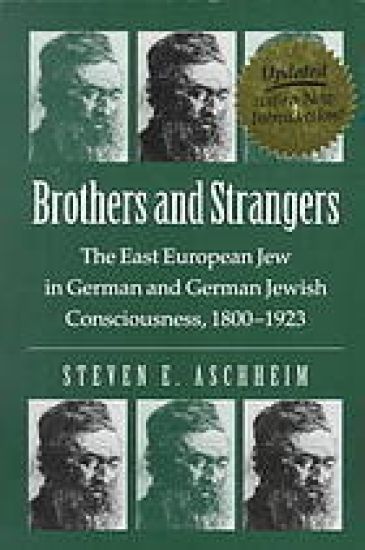
Scholem, Arendt, Klemperer Intimate Chronicles in Turbulent Times Steven E. Aschheim The way three prominent German-Jewish intellectuals confronted Nazism, as revealed by their intimate writings. Through an examination of the remarkable diaries and letters of three extraordinary and distinctive German-Jewish thinkers—Gershom Scholem, Hannah Arendt, and Victor Klemperer—Steven E. Aschheim illuminates what these intimate writings reveal about their evolving identities and world views as they wrestled with the meaning of being both German and Jewish in Hitler's Third Reich. In recounting how their personal and private selves responded to the public experiences these writers faced, their letters and diaries provide a striking composite portrait. Scholem, a scholar of Jewish mysticism and the spiritual traditions of Judaism; Arendt, a political and social philosopher; and Klemperer, a professor of literature and philology, were all highly articulate German-Jewish intellectuals, shrewd observers, and acute analysts of the pathologies and special contours of their times. From their intimate writings Aschheim constructs a revealing "history from within" that sheds new light on the complexity and drama of the 20th-century European and Jewish experience. Steven E. Aschheim holds the Vigevani Chair of European Studies and teaches in the Department of History at the Hebrew University, Jerusalem. He is author of Brothers and Strangers: The East European Jew in German and German-Jewish Consciousness, 1800–1923; The Nietzsche Legacy in Germany, 1890–1990; and Culture and Catastrophe: German and Jewish Confrontations with National Socialism and Other Crises. Published in association with Hebrew Union College–Jewish Institute of Religion, Cincinnati May 2001 120 pages, 5 1/2 x 8 1/2, index cloth0-253-33891-3$19.95 s / £15.50
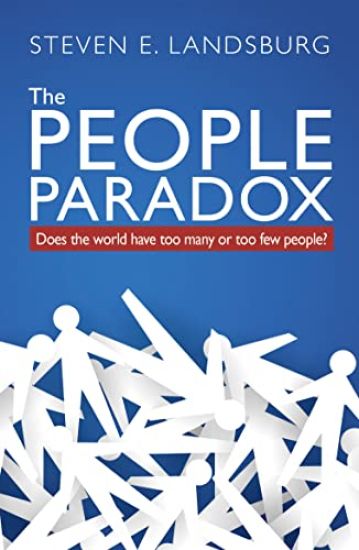
The People Paradox

The People Paradox

Steven E. Landsburg

INSTITUTE OF ECONOMIC AFFAIRS
2022
nidottu
It’s one of the big questions of our time: Are there too many people in the world? Or too few? Whichever way, how would we decide? Here, economist Steven E. Landsburg, acclaimed author of The Armchair Economist and Can You Outsmart an Economist?, assesses the benefits – and the drawbacks – of having a bigger global population. The People Paradox is based on the transcript of his fascinating 2017 IEA Hayek Memorial Lecture, in which Landsburg details how the growth in the world population has brought immense improvements to our quality of life. He contends the planet still has plenty of room – and addresses continued calls for population control. Landsburg, professor of economics at the University of Rochester in Rochester, New York, draws on everything from modern history to everyday life (including the contents of his sock drawer!) to mount a thought-provoking, powerful – and often humorous – argument for continued population growth. With a commentary by Dr Stephen Davies, Head of Education at the Institute of Economic Affairs in London.
Codename Revolution

Codename Revolution

Steven E. Jones; George K. Thiruvathukal

MIT Press
2012
sidottu
Nintendo's hugely popular and influential video game console system considered as technological device and social phenomenon.The Nintendo Wii, introduced in 2006, helped usher in a moment of retro-reinvention in video game play. This hugely popular console system, codenamed Revolution during development, signaled a turn away from fully immersive, time-consuming MMORPGs or forty-hour FPS games and back toward family fun in the living room. Players using the wireless motion-sensitive controller (the Wii Remote, or "Wiimote") play with their whole bodies, waving, swinging, swaying. The mimetic interface shifts attention from what's on the screen to what's happening in physical space. This book describes the Wii's impact in technological, social, and cultural terms, examining the Wii as a system of interrelated hardware and software that was consciously designed to promote social play in physical space.Each chapter of Codename Revolution focuses on a major component of the Wii as a platform: the console itself, designed to be low-powered and nimble; the iconic Wii Remote; Wii Fit Plus, and its controller, the Wii Balance Board; the Wii Channels interface and Nintendo's distribution system; and the Wii as a social platform that not only affords multiplayer options but also encourages social interaction in shared physical space. Finally, the authors connect the Wii's revolution in mimetic interface gaming-which eventually led to the release of Sony's Move and Microsoft's Kinect-to some of the economic and technological conditions that influence the possibility of making something new in this arena of computing and culture.
Codename Revolution

Codename Revolution

Steven E. Jones; George K. Thiruvathukal

MIT PRESS LTD
2024
pokkari
Nintendo's hugely popular and influential video game console system considered as technological device and social phenomenon. The Nintendo Wii, introduced in 2006, helped usher in a moment of retro-reinvention in video game play. This hugely popular console system, codenamed Revolution during development, signaled a turn away from fully immersive, time-consuming MMORPGs or forty-hour FPS games and back toward family fun in the living room. Players using the wireless motion-sensitive controller (the Wii Remote, or "Wiimote") play with their whole bodies, waving, swinging, swaying. The mimetic interface shifts attention from what's on the screen to what's happening in physical space. This book describes the Wii's impact in technological, social, and cultural terms, examining the Wii as a system of interrelated hardware and software that was consciously designed to promote social play in physical space. Each chapter of Codename Revolution focuses on a major component of the Wii as a platform: the console itself, designed to be low-powered and nimble; the iconic Wii Remote; Wii Fit Plus, and its controller, the Wii Balance Board; the Wii Channels interface and Nintendo's distribution system; and the Wii as a social platform that not only affords multiplayer options but also encourages social interaction in shared physical space. Finally, the authors connect the Wii's revolution in mimetic interface gaming--which eventually led to the release of Sony's Move and Microsoft's Kinect--to some of the economic and technological conditions that influence the possibility of making something new in this arena of computing and culture.
Working Through Environmental Conflict

Working Through Environmental Conflict

Steven E. Daniels; Gregg B. Walker

Praeger Publishers Inc
2001
sidottu
Environmental and natural resource policy decision making is changing. Increasingly citizens and management agency personnel are seeking ways to do things differently; to participate meaningfully in the decision making process as parties work through policy conflicts. Doing things differently has come to mean doing things collaboratively. Daniels and Walker examine collaboration in environmental and natural resource policy decision making and conflict management. They address collaboration by featuring a method collaborative learning, that has been designed to address decision making and conflict management needs in complex and controversial policy settings. As they illustrate, collaborative learning differs in some significant ways from existing approaches for dealing with policy decision making, public participation, and conflict management. First, it is a hybrid of systems thinking and alternative dispute resolution concepts. Second, it is grounded explicitly in experiential, team-or organizational-and adult learning theories. It is a theory-based framework through which parties can make progress in the management of controversial environmental policy situations. They discuss both the theory and technique of collaborative learning and present cases where it has been applied. This is a professional and teaching tool for scholars, students, and researchers involved with environmental issues as well as dispute resolution.
Decision in the Heartland

Decision in the Heartland

Steven E. Woodworth

Praeger Publishers Inc
2008
sidottu
The verdict is in: the Civil War was won in the West—that is, in the nation's heartland, between the Appalachian Mountains and the Mississippi River. Yet, a person who follows the literature on the war might still think that it was the conflict in Virginia that ultimately decided the outcome. Each year sees the appearance of new books aimed at the popular market that simply assume that it was in the East, often at Gettysburg, that the decisive clashes of the war took place. For decades, serious historians of the Civil War have completed one careful study after another, nearly all tending to indicate the pivotal importance of what people during the war referred to as the West. In this fast paced overview, Woodworth presents his case for the decisiveness of the theater. Overwhelming evidence now indicates that it was battles like Fort Donelson, Shiloh, Chattanooga, and Atlanta that sealed the fate of the Confederacy-not the nearly legendary clashes at Bull Run or Chancellorsville or the mythical high-water mark at Gettysburg. The western campaigns cost the Confederacy vast territories, the manufacturing center of Nashville, the financial center of New Orleans, communications hubs such as Corinth, Chattanooga, and Atlanta, along with the agricultural produce of the breadbasket of the Confederacy. They sapped the morale of Confederates and buoyed the spirits of Unionists, ultimately sealing the northern electorate's decision to return Lincoln to the presidency for a second term and thus to see the war through to final victory. Detailing the Western clashes that proved so significant, Woodworth contends that it was there alone that the Civil War could be—and was—decided.
The Music of Gershwin

The Music of Gershwin

Steven E. Gibert

Yale University Press
1996
sidottu
George Gershwin is perhaps the most popular American composer of the twentieth century, and his short and dramatic life has been the subject of much attention. His music, however, has never been scrutinized as closely as his life, and the composer known for his show tunes has had difficulty finding a niche in the world of "serious" music. This book is the first in-depth analysis of Gershwin's entire compositional oeuvre, including his concert music.Weaving biographical material with musical analysis, Steven Gilbert presents a chronological study of the highlights of Gershwin's career. He discusses the well-known Rhapsody in Blue, Concerto in F, An American in Paris, and Porgy and Bess, as well as such popular songs as "Swanee." "S'Wonderful," "I Got Rhythm," "Love Walked In," and "Love Is Here to Stay." But he also examines relatively neglected works that are no less deserving, such as Second Rhapsody, Cuban Overture, and Pardon My English, the last of which, says Gilbert, was a failure on Broadway but was one of George and Ira Gershwin's finest collaborations. Written in a fluid, conversational style and illustrated with numerous musical examples, some of which have never before been published, this book will be enjoyed by general readers and appreciated by professional musicians and musical scholars alike.
Manifest Destinies

Manifest Destinies

Steven E. Woodworth

Random House Inc
2011
pokkari
A sweeping history of the 1840s, Manifest Destinies captures the enormous sense of possibility that inspired America's growth and shows how the acquisition of western territories forced the nation to come to grips with the deep fault line that would bring war in the near future. Steven E. Woodworth gives us a portrait of America at its most vibrant and expansive. It was a decade in which the nation significantly enlarged its boundaries, taking Texas, New Mexico, California, and the Pacific Northwest; William Henry Harrison ran the first modern populist campaign, focusing on entertaining voters rather than on discussing issues; prospectors headed west to search for gold; Joseph Smith founded a new religion; railroads and telegraph lines connected the country's disparate populations as never before. When the 1840s dawned, Americans were feeling optimistic about the future: the population was growing, economic conditions were improving, and peace had reigned for nearly thirty years. A hopeful nation looked to the West, where vast areas of unsettled land seemed to promise prosperity to anyone resourceful enough to take advantage. And yet political tensions roiled below the surface; as the country took on new lands, slavery emerged as an irreconcilable source of disagreement between North and South, and secession reared its head for the first time. Rich in detail and full of dramatic events and fascinating characters, Manifest Destinies is an absorbing and highly entertaining account of a crucial decade that forged a young nation's character and destiny.
For King and Kaiser!

For King and Kaiser!

Steven E. Clemente

Praeger Publishers Inc
1992
sidottu
Steven Clemente describes how conservative traditions and artistocratic values were preserved in the selection and training of German army officers prior to World War I despite changing times and the influx of many middle-class recruits into the army. He demonstrates how right thinking and service to the King and the Kaiser were the basis for Prussian officer education in the period from 1860 to 1914. The history provides considerable detail about German secondary school education, the selection of officers, the curriculum, and life in the cadet and war schools, the life of a subaltern, and the education of the Prussian War Academy. The book concludes with an analysis of the attitudes and loyalties of the officers that entered World War I. Students of European history and military affairs will find this study one that raises a number of provocative questions about German performance in World War I and in subsequent years.