Kirjahaku
Etsi kirjoja tekijän nimen, kirjan nimen tai ISBN:n perusteella.
1000 tulosta hakusanalla Steven J R Twigg

The Porta Stabia Neighborhood at Pompeii Volume I
Steven J. R. Ellis; Allison L. C. Emmerson; Kevin D. Dicus
Oxford University Press
2023
sidottu
This is the first of four volumes that present the results from the University of Cincinnati's archaeological excavations of the Porta Stabia neighborhood at Pompeii. These excavations targeted two town blocks on either side of the via Stabiana (insulae VIII.7 and I.1), which comprised modest houses, shops, workshops, food and drink outlets, and hospitality buildings. The present volume describes and documents the phased, structural development of this neighborhood over several centuries. The earliest discernible activity here dates to the 6th century BCE, with the insulae taking their definitive shape only in the 2nd century BCE. It is from this time that production activities dominate the neighborhood, only to be wholly replaced by retail-oriented street-fronts from the early 1st century CE. Underpinning this narrative of urban development is a focus on the social and structural making of the Porta Stabia neighborhood, along with an interest in both the micro- (urban site formation processes) and macro-contextualization of the site (setting the results within a larger historic and urban framework).

Tabernae were ubiquitous in all Roman cities, lining the busiest streets and dominating their most crowded intersections in numbers far exceeding those of any other form of building. That they played a vital role in the operation of the city, and indeed in the very definition of urbanization in ancient Rome, is a point too often under-appreciated in Roman studies, and one which bears fruitful further exploration. The Roman Retail Revolution offers a thorough investigation into the social and economic worlds of the Roman shop, focusing on food and drink outlets in particular. Combining critical analysis of both archaeological material and textual sources, it challenges many of the conventional ideas about the place of retailing in the Roman city and unravels the historical development of tabernae to identify three major waves or revolutions in the shaping of retail landscapes. The volume is underpinned by two new and important bodies of evidence: the first generated from the University of Cincinnati's recent archaeological excavations into a Pompeian neighborhood of close to twenty shop-fronts, and the second resulting from a field-survey of the retail landscapes of more than a hundred cities from across the Roman world. The richness of this information, combined with the volume's interdisciplinary approach to the lives of the Roman sub-elite, results in a refreshingly original look at the history of retailing and urbanism in the Roman world.
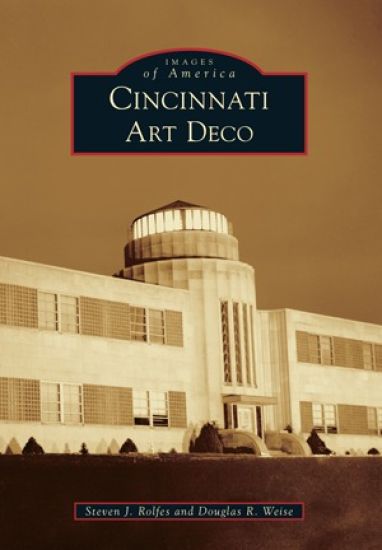
Cincinnati Art Deco
Steven J Rolfes; Douglas R Weise
Arcadia Publishing Library Editions
2014
sidottu

Personality, Character, and Leadership in the White House
Steven J. Rubenzer; Thomas R. Faschingbauer
Potomac Books Inc
2005
pokkari
Personality, Character, and Leadership in the White House is the first book-length work to present truly scientific personality evaluations of the American presidents. This benchmark work dramatically improves the state-of-the-art in classifying presidents and predicting performance in the White House. Dr. Steven Rubenzer and Dr. Thomas Faschingbauer asked 120 experts, including biographers, historians, presidential advisers, and other knowledge-able sources, to rate the presidents by filling out standardized personality tests. For each president that fell within their area of expertise, the evaluators completed a 592-item questionnaire regarding personality, intelligence, and behavior. From the results, the authors identify nine traits related to presidential success, examine how the presidents' personalities affected their job performance, and list their scores on the major dimensions of personality. Rubenzer and Faschingbauer provide revealing insights about every American president and profile twenty-one of them in detail, including all post–World War II presidents and all of the "great" presidents. In addition to revolutionizing the way we look at the presidency, the study offers entertaining and unexpected conclusions. For instance, which recent president's personality and character most closely resembles those of Thomas Jefferson and Abraham Lincoln? The answer may surprise you. Presidential scholars, students, and anyone who likes to be well informed when discussing their political preferences will find this enlightening book irresistible. Visit www.testingthepresidents.com and www.PersonalityinHistory.com for more information.

Where Do Big Creatures Sleep at Night?
Steven J. Simmons; Clifford R. Simmons
CHARLESBRIDGE PUBLISHING,U.S.
2022
sidottu

Where Do Ocean Creatures Sleep at Night?
Steven J. Simmons; Clifford R. Simmons
CHARLESBRIDGE PUBLISHING,U.S.
2024
sidottu
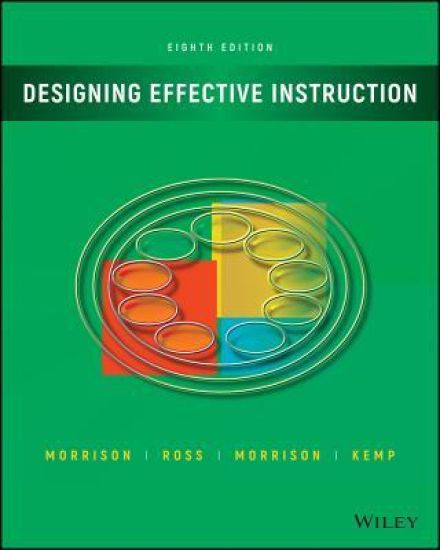
Designing Effective Instruction
Gary R. Morrison; Steven J. Ross; Jennifer R. Morrison; Howard K. Kalman
John Wiley Sons Inc
2020
nidottu
A guide to the information and practical skills for successful instructional design, revised and updated The updated eighth edition of Designing Effective Instruction offers educators an essential guide for designing effective and efficient instruction that is exciting and interesting. The flexible model presented is based on research from many different disciplines. The authors—noted experts on the topic—draw on recent research that incorporates both behavioral and cognitive approaches into the model. The eighth edition highlights the fundamentals of instructional design that can help students develop a solid foundation in the design process. These basic skills can be adapted to a wide variety of settings, such as multimedia, classroom, business, health care, higher education, and distance-education instruction. This new edition has been revised to include information on the most recent research and trends. The book also contains a new section on the topic of lean instructional design. This new section discusses strategies to reduce time and resources for each step of the process. This important guide: Offers a review of the basic skills needed to create effective instructionIncludes various features to stimulate thinking and provides additional explanationsProvides a real-world scenario in every chapterPresents exercises to test skills and knowledgeContains a quality management section to help conduct a quick quality check of the design project Written for instructional designers in business, military, medical, and government settings as well as to those in higher education and P–12 classrooms, Designing Effective Instruction is the proven resource for designing quality instruction that can motivate participants.
Designing Effective Instruction, EMEA Edition
Gary R. (Wayne State University) Morrison; Steven J. Ross
John WileySons Inc
2021
pokkari
Introduction to Human Factors and Ergonomics for Engineers
Mark R. Lehto; Steven J. Landry
CRC Press Inc
2012
sidottu
Supplying a breadth and depth of coverage beyond that found in most traditional texts, Introduction to Human Factors and Ergonomics for Engineers, Second Edition presents and integrates important methods and tools used in the fields of Industrial Engineering, Human Factors and Ergonomics to design and improve jobs, tasks and products. It presents these topics with a practical, applied orientation suitable for engineering undergraduate students. See What’s New in the Second Edition: Revised order of chapters to group together topics related to the physical and cognitive aspects of human-integrated systemsSubstantially updated material emphasizes the design of products people work with, tasks or jobs people perform, and environments in which people liveThe book has sufficient material to be used in its entirety for a two semester sequence of classes, or in part for a single semester course, focusing on selected topics covered in the text. The authors provide a set of guidelines and principles for the design and analysis of human-integrated systems and highlights their application to industry and service systems. It addresses the topics of human factors, work measurement and methods improvement, and product design an approachable style. The common thread throughout the book is on how better "human factors" can lead to improved safety, comfort, enjoyment, acceptance, and effectiveness in all application arenas. Packed with cases studies and examples, readers can use well beyond the classroom and into their professional lives.

Exercise Physiology: Integrating Theory and Application
William J. Kraemer; Steven J. Fleck; Michael R. Deschenes
Lww
2025
sidottu
Gain the scientific knowledge and practical decision-making skills you need to excel in the strength conditioning, clinical exercise physiology and health related professions with Exercise Physiology: Integrating Theory and Application, 4th Edition. This accessible and engaging text helps you connect theory to practice, offering a thorough understanding of how the body adapts to exercise and environmental stresses and how physiology helps in making informed real-world decisions. This new edition reflects new research and evidence in the field, effectively preparing you for the diverse case scenarios most often seen by personal trainers, strength coaches, fitness instructors, athletic trainers, and other health professionals. New Practical Applications boxes, Chapter Objectives, Quick Review boxes, Did You Know? boxes, More to Explore boxes, and full-color illustrations help readers understand and retain key concepts. Updated case studies, as well as videos, and animations include new questions that help you think through complex scenarios, develop your decision-making skills, and fully understand challenging topics. New and expanded discussions of ergogenic supplements; altitude training; updated content on new tools and technologies, such as cooling vests. Practical Questions from Students boxes answer frequently asked questions, and An Expert View boxes share insights from various professional perspectives. Review questions at the end of each chapter give students a chance to assess and apply their knowledge through short-answer and critical thinking questions. Online resources include chapter proficiency quizzes with more emphasis on practical application and PrepU adaptive quizzing for students, and lecture slides and test bank for instructors.

Exercise Physiology
William J. Kraemer; Steven J. Fleck; Michael R. Deschenes
Wolters Kluwer Health
2025
sidottu
NATO Missile Defense and the European Phased Adaptive Approach: The Implications of Burden Sharing and the Underappreciated Role of The U.S. Army (Enlarged Edition)
John R. Deni; Strategic Studies Institute; U.S. Army War College; Steven J. Whitmore
Lulu.com
2014
nidottu
In 2010, NATO decided to expand its ballistic missile defense program, in part because of the American offer to include its European Phased Adaptive Approach (EPAA) as the centerpiece of an expanded effort. For the Allies' part, few have actually contributed tangible ballistic missile defense assets, in terms of missile interceptors, radars or other sensors, or ballistic missile defense-related platforms. This is likely to have significant implications for the U.S. Army, which has an important but largely underappreciated role in NATO missile defense today. In particular, the Army is likely to face increased manpower demands, materiel requirements, and training needs in order to meet the demand signal created by the NATO ballistic missile defense program. Additionally, Army units involved directly in or in support of ballistic missile defense are likely to face a higher OPTEMPO than currently projected. Ultimately, this will exacerbate the perceived imbalance in transatlantic burden-sharing...
The U.S. Army Campaigns of the War of 1812 (Illustrated Edition)
Center of Military History; John R. Maass; Steven J. Rauch; Richard V. Barbuto; Richard D. Blackmon; Charles P. Neimeyer; Joseph F. Stoltz
E-Artnow
2019
nidottu
The War of 1812 is perhaps the United States' least known conflict. Other than Andrew Jackson's 1815 victory at New Orleans and Francis Scott Key's poem "The Star-Spangled Banner" written in 1814 during the British attack on Baltimore, most Americans know little about the country's second major war. This book will give you a full insight into the second largest military conflict that took place on the soil of North America. Contents: Defending a New Nation 1783-1811 The Campaign of 1812 The Canadian Theater, 1813 The Creek War of 1813–1814 The Chesapeake Campaign, 1813–1814 The Canadian Theater, 1814 The Gulf Theater, 1813-1815

The East Field at Isthmia
Eric E. Poehler; Allison L. C. Emmerson; Steven J. R. Ellis
AMERICAN SCHOOL OF CLASSICAL STUDIES AT ATHENS
2026
nidottu
Hesperia Supplement, Volume 55 Since its excavation in the 1970s, the East Field at Isthmia has been dismissed as a jumble of poorly built houses, marginal to the sanctuary proper. Except for a few small-scale excavations and a handful of studies, the site and its excavation data have sat largely neglected ever since. Now, following a reanalysis of this legacy data and a survey of the standing remains, this volume presents the first comprehensive study of the East Field’s architectural and spatial development. Using an innovative method to extract stratigraphic data from outmoded and incomplete sources, the authors disentangle the maze of walls into identifiable structures, setting these within a phased narrative connected to the site’s broader history. The results overturn decades of assumptions, revealing substantial structures central to the sanctuary, some possibly corresponding to buildings otherwise known only from inscriptions: the Stoa of Regulus, the Kataluseis of P. Licinius Priscus Iuventianus, and the final site of the Palaimon sanctuary. Additional structures document activity between the 3rd and the 5th centuries CE unattested elsewhere on the site. The East Field at Isthmia offers a radically new understanding of this neglected area of Isthmia and its relation to the sanctuary; along the way, it both encourages archaeologists to revisit long-abandoned excavation data and provides a road map for doing so.
Business Combinations with SFAS 141 R, 157, and 160
Michael J. Mard; Steven D. Hyden; Edward W. Trott
John Wiley Sons Inc
2009
nidottu
Every time there’s a merger, acquisition, or similar transaction, a giant pile of new documents descends on the accounting department with the call to Book That Deal! But the preparers are typically unprepared to deal quickly and succinctly with the intricacies of fair value. Business Combinations with SFAS 141R, 157 and 160 is the guidance desperately needed by anyone who needs to book a new business combination quickly. It has been rushed into print to clarify the process under the newly revised SFAS 141R, and will enable any preparer to document the appropriate financial reporting measurement clearly and concisely and apply FASB’s interpretations to specific facts and circumstances. Business Combinations with SFAS 141R, 157, and 160 also includes a SFAS 157 flowchart, a checklist for implementing the standard, a SFAS 157 worksheet, supplemental checklists for intangible assets, and insight from FASB’s Valuation Resource Group discussing some 35 areas of discussion. It will be an invaluable tool for any preparer.

Liars, Lovers, and Heroes: What the New Brain Science Reveals about How We Become Who We Are
Steven R. Quartz; Terrence J. Sejnowski
William Morrow Company
2003
nidottu
This book combines cutting-edge findings in neuroscience with examples from history and the headlines to introduce the new science of cultural biology, born of advances in brain imaging, computer modeling, and genetics. Doctors Quartz and Sejnowski show how both our noblest and darkest traits are rooted in brain systems so ancient that we share them with insects. They then demystify the dynamic engagement between brain and world that makes us something far beyond the sum of our parts. The authors show how our humanity unfolds in precise stages as brain and world engage on increasingly complex levels. Their discussion embraces shaping forces as ancient as climate change over millennia and events as recent as the terrorism and heroism of September 11, and offers intriguing answers to some of our most enduring questions, including why we live together, love, kill -- and sometimes lay down our lives for others.
Rothman-Simeone and Herkowitz's The Spine, 2 Vol Set
Steven R. Garfin; Frank J. Eismont; Gordon R. Bell; Christopher M. Bono; Jeffrey S. Fischgrund
Elsevier - Health Sciences Division
2017
sidottu
Get comprehensive, practical coverage of both surgical and non-surgical treatment approaches from the world's most trusted authorities in spine surgery and care. Rothman-Simeone and Herkowitz's The Spine, 7th Edition, edited by Drs. Steven R. Garfin, Frank J. Eismont, Gordon R. Bell, Jeffrey S. Fischgrund, and Christopher M. Bono, presents state-of-the-art techniques in both text and video formats, helping you apply today's newest developments in your practice. Highlights critical information through the use of pearls, pitfalls, and key points throughout the text, as well as more than 2,300 full-color photographs and illustrations. Offers a newly revised, streamlined format that makes it easier than ever to find the information you need. Contains new chapters on the clinical relevance of finite element modeling and SI joint surgery. Includes an expanded section on minimally invasive spine surgery, including recent developments and future directions. Provides the latest evidence-based research from high-quality studies, including new randomized controlled trials for lumbar stenosis, surgery, fusion, and injections. Presents the knowledge and expertise of new international contributors, as well as new editorial leadership from Dr. Steven Garfin. Expert ConsultT eBook version included with purchase. This enhanced eBook experience allows you to search all of the text, figures, and references from the book on a variety of devices.

An Introduction to Trenchless Technology
Steven R. Kramer; William J. McDonald; James C. Thomson
Chapman and Hall
1992
sidottu
In the past decade, the field of trenchless technology has expanded rapidly in products, equipment, and utilization. This expansion would not have occurred without a strong increase ineconomic incentives to the user. Because theoperating environment has changed, trenchless technology is often the preferred alternative to traditional methods of digging holes and installing conduits. The infrastructure in which we live has become more congested and has to beshared by several users. In addition, the cost of restoring a road or landscaped area after construction may be higher than the cost of installing the conduit. These factors add to the need for trenchless technology-the ability to dig holes without disturbing the surface. In some ways, trenchless technology is a futuristic concept. Ruth Krauss in a children'sbookofdefinitions wrote,"AHole...Is to Dig." But thisstatement is not necessarily true. Today, a hole could be to bore. Trenchless technology is not new. But it certainly has become the buzzword of the construction industry and it appears that it will have a growing impact in the way contractors, utilities, and others install new facilities. Methods to bore horizontal holes were practiced as early as the 18005, but this technology has greatly changed. Today's tools include sophisticated drilling methods, state-of the-art power systems, and electronic guidance techniques. These tools can bore faster, safer, and more accurately, and in many instances more economically, than open-cllt methods. Technology has played an important role in these advances, but economics has become the driving force in making these systems popular.