Kirjahaku
Etsi kirjoja tekijän nimen, kirjan nimen tai ISBN:n perusteella.
1000 tulosta hakusanalla Steven L. Goldman
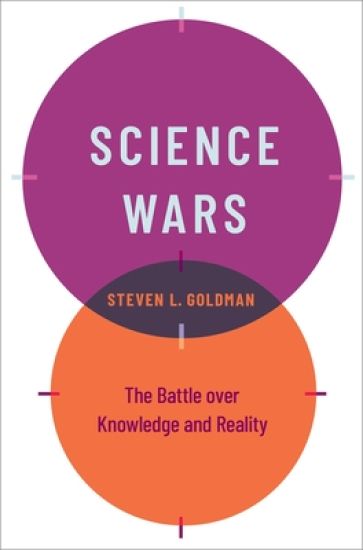
There is ample evidence that it is difficult for the general public to understand and internalize scientific facts. Disputes over such facts are often amplified amid political controversies. As we've seen with climate change and even COVID-19, politicians rely on the perceptions of their constituents when making decisions that impact public policy. So, how do we make sure that what the public understands is accurate? In this book, Steven L. Goldman traces the public's suspicion of scientific knowledge claims to a broad misunderstanding, reinforced by scientists themselves, of what it is that scientists know, how they know it, and how to act on the basis of it. In sixteen chapters, Goldman takes readers through the history of scientific knowledge from Plato and Aristotle, through the birth of modern science and its maturation, into a powerful force for social change to the present day. He explains how scientists have wrestled with their own understanding of what it is that they know, that theories evolve, and why the public misunderstands the reliability of scientific knowledge claims. With many examples drawn from the history of philosophy and science, the chapters illustrate an ongoing debate over how we know what we say we know and the relationship between knowledge and reality. Goldman covers a rich selection of ideas from the founders of modern science and John Locke's response to Newton's theories to Thomas Kuhn's re-interpretation of scientific knowledge and the Science Wars that followed it. Goldman relates these historical disputes to current issues, underlining the important role scientists play in explaining their own research to nonscientists and the effort nonscientists must make to incorporate science into public policies. A narrative exploration of scientific knowledge, Science Wars engages with the arguments of both sides by providing thoughtful scientific, philosophical, and historical discussions on every page.
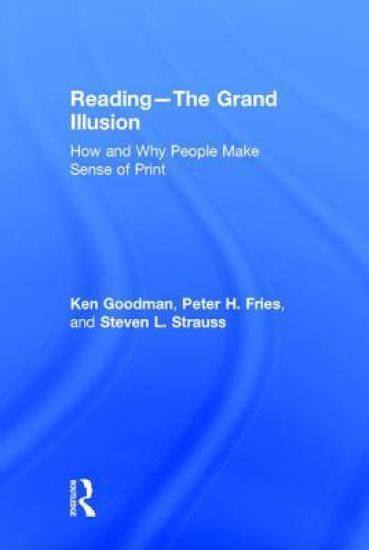
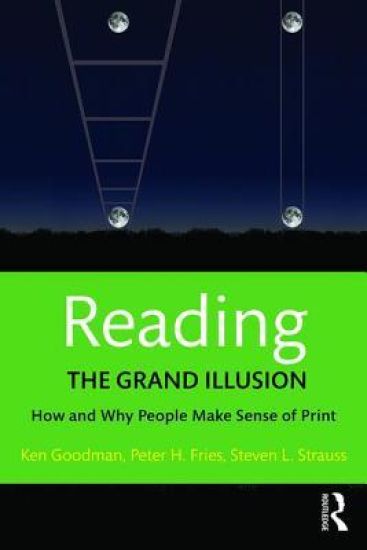
Reading- The Grand Illusion
Kenneth Goodman; Peter H. Fries; Steven L. Strauss
Routledge
2016
sidottu
What is reading? In this groundbreaking book, esteemed researchers Ken Goodman, Peter Fries, and Steven Strauss, explain not only what reading really is but also why common sense makes it seem to be something quite different from that reality. How can this grand illusion be explained? That is the purpose of this book. As the authors show, unraveling the secrets of the grand illusion of reading teaches about far more than reading itself, but also about how remarkable human language is, how the brain uses language to navigate the world, what it means to be human.Each author brings a different perspective, but all share a common view of the reading process. Together they provide a clear and surprising exposition of the reading process, in which they involve readers of this book in exploring the ways they themselves read and make sense of written language while their eyes fixate on fewer than 70 percent of the words in the text. In addition, the authors engage in a cross-disciplinary discussion about how readers use the brain, eyes, and language in reading. The different perspectives provide depth to the authors’ description of reading. The information presented in this book will be new to many teachers, researchers, teacher educators, and the public alike. The final chapter draws on the understandings from the book to challenge the treatment of reading and writing as school subjects and offers the basis for supporting literacy development as a natural extension of oral language development.
Reading- The Grand Illusion
Kenneth Goodman; Peter H. Fries; Steven L. Strauss
Routledge
2016
nidottu
What is reading? In this groundbreaking book, esteemed researchers Ken Goodman, Peter Fries, and Steven Strauss, explain not only what reading really is but also why common sense makes it seem to be something quite different from that reality. How can this grand illusion be explained? That is the purpose of this book. As the authors show, unraveling the secrets of the grand illusion of reading teaches about far more than reading itself, but also about how remarkable human language is, how the brain uses language to navigate the world, what it means to be human.Each author brings a different perspective, but all share a common view of the reading process. Together they provide a clear and surprising exposition of the reading process, in which they involve readers of this book in exploring the ways they themselves read and make sense of written language while their eyes fixate on fewer than 70 percent of the words in the text. In addition, the authors engage in a cross-disciplinary discussion about how readers use the brain, eyes, and language in reading. The different perspectives provide depth to the authors’ description of reading. The information presented in this book will be new to many teachers, researchers, teacher educators, and the public alike. The final chapter draws on the understandings from the book to challenge the treatment of reading and writing as school subjects and offers the basis for supporting literacy development as a natural extension of oral language development.
Les Animaux et Écosystèmes de l`Holocène Disparus de Madagascar
Steven M. Goodman; William L. Jungers
Association Vahatra in Antananarivo
2016
nidottu
While the current biodiversity of Madagascar is the subject of international attention from both evolutionary biologists and conservationists, no in-depth synthesis exists to describe ecological changes on the island during the Holocene and, most importantly, during the periods before and after human colonization. This concise, French-language book provides the first such explication of those alterations. Drawing on various aspects of the morphology and extrapolated habitat use of extinct animals identified from paleontological and archaeological sites, as well as characteristics of extant species, Steven M. Goodman and William L. Jungers reconstruct these organisms’ natural history and the ecosystems in which they lived. These windows into the past are presented in twenty different vignettes beautifully illustrated with plates from Velizar Simeonovski.
The landscapes of Madagascar have long delighted zoologists, who have discovered, in and among the island's baobad trees and thickets, a dizzying array of animals, including something approaching one hundred species of lemur. Madagascar's mammal fauna, for example, is far more diverse, and more endemic, than early explorers and naturalists ever dreamed of. But in the 2,500 or so years since the arrival of the island's first human settlers, the vast majority of its forests have disappeared, and in the wake of this loss a number of species unique to Madagascar have vanished forever into extinction. In Extinct Madagascar, noted scientists Steven M. Goodman and William L. Jungers explore the recent past of these land animal extinctions. Beginning with an introduction to the geologic and ecological history of Madagascar that provides context for the evolution, diversification, and, in some cases, rapid decline of the Malagasy fauna, Goodman and Jungers then seek to recapture these extinct mammals in their environs. Aided in their quest by artist Velizar Simeonovski's beautiful and haunting paintings - images of both individual species and ecosystem assemblages reproduced here in full color - Goodman and Jungers reconstruct the lives of these lost animals and trace their relationships to those still living. Published in conjunction with an exhibition of Simeonovski's paintings set to open at the Field Museum, Chicago, in the fall of 2014, Goodman and Jungers' awe-inspiring book will serve not only as a sobering reminder of the very real threat of extinction, but also as a stunning tribute to Madagascar's biodiversity and a catalyst for further research and conservation.
Professional and Practical Considerations for Landscape Design
Steven L. Cantor
Oxford University Press Inc
2020
sidottu
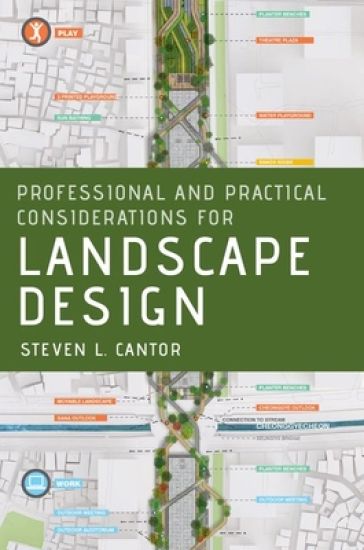
Drawing on decades of professional practice and teaching experience, Steven L. Cantor's Professional and Practical Considerations for Landscape Design explains the field of landscape architecture, outlining with authority how to turn drawings of designs into creative, purposeful, and striking landscapes and landforms in today's world. This comprehensive guide consists of everything a young professional might encounter from conception through final project archiving, ensuring readers have both the tools necessary to keep up with advancements in the field and the practical business knowledge to build life-long partnerships. Each of the book's concise chapters emphasize a specific aspect of landscape architecture practice, from the administration of designs for contracts, areas of practice, human resources, marketing, construction materials, sustainability and ethics. Each chapter is written in a style that best suits the material. Alongside detailed definitions and practical "do's and don'ts" are 30 complex sample problems ranging in difficulty for both individuals and groups. An array of original photographs and clear examples in both black and white and color articulate standards and inspire future possibilities, featuring the work of Vicky Chan, founder of Avoid Obvious Architects, and Richard Alomar, Associate Professor of Landscape Architecture at Rutgers and co-founder of New York Urban Sketchers. By combining the author's unique depth of knowledge with real-world case studies from America, Asia, and Europe, Professional and Practical Considerations for Landscape Design is an up-to-date resource for every level of reader, from students in landscape architecture programs to professionals working in public or private practice, engineering, consulting, or contracting.
Professional and Practical Considerations for Landscape Design
Steven L. Cantor
Oxford University Press Inc
2020
nidottu
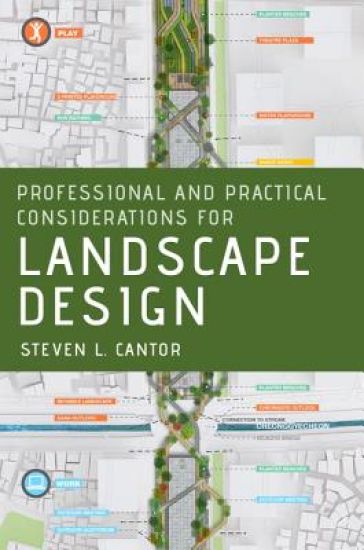
Drawing on decades of professional practice and teaching experience, Steven L. Cantor's Professional and Practical Considerations for Landscape Design explains the field of landscape architecture, outlining with authority how to turn drawings of designs into creative, purposeful, and striking landscapes and landforms in today's world. This comprehensive guide consists of everything a young professional might encounter from conception through final project archiving, ensuring readers have both the tools necessary to keep up with advancements in the field and the practical business knowledge to build life-long partnerships. Each of the book's concise chapters emphasize a specific aspect of landscape architecture practice, from the administration of designs for contracts, areas of practice, human resources, marketing, construction materials, sustainability and ethics. Each chapter is written in a style that best suits the material. Alongside detailed definitions and practical "do's and don'ts" are 30 complex sample problems ranging in difficulty for both individuals and groups. An array of original photographs and clear examples in both black and white and color articulate standards and inspire future possibilities, featuring the work of Vicky Chan, founder of Avoid Obvious Architects, and Richard Alomar, Associate Professor of Landscape Architecture at Rutgers and co-founder of New York Urban Sketchers. By combining the author's unique depth of knowledge with real-world case studies from America, Asia, and Europe, Professional and Practical Considerations for Landscape Design is an up-to-date resource for every level of reader, from students in landscape architecture programs to professionals working in public or private practice, engineering, consulting, or contracting.
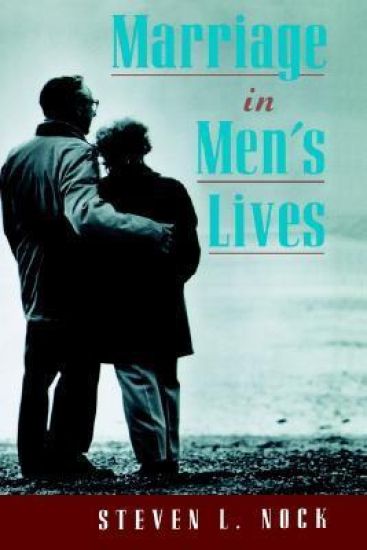
Because men and women live in worlds that are organized around gender, their marriages reflect differing realities. Marriage in Men's Lives focuses on marriage as a system of rules, customs, and expectations, and shows that marriage changes men on basic dimensions of achievement, participation in public and social life, and philanthropy because marriage reinforces such behaviours as part of adult masculinity. Using a huge database of over 6,000 interviews with men the author has studied since 1979, Nock draws some interesting and far-reaching conclusions about the nature of marriage, and predicts that marriage is definitely here to stay.
One of the most important and complex characters in the Bible, King David has been the subject of innumerable portraits, both artistic and literary. Michaelangelo's magnificent sculpture of him is perhaps the single best known work of art in the world, and the story of the humble shepherd who slew Goliath and became king has assumed a powerful mythological status. But was David a real person--and if so what kind of person was he? Through a close and critical reading of biblical texts, ancient history, and recent archeological discoveries, Steven L. McKenzie concludes that David was indeed a real person. This David, however, was no hero but a usurper, adulterer, and murderer--a Middle Eastern despot of a familiar type. McKenzie shows that the story of humble beginnings is utterly misleading: "shepherd" is a metaphor for "king," and David came from a wealthy, upper-class background. Similarly, McKenzie reveals how David's ascent to power, traditionally attributed to popularity and divine blessing, in fact resulted from a campaign of terror and assassination. While instituting a full-blown Middle Eastern monarchy, David was an aggressive leader, a devious politician, and a ruthless war chief. Throughout his scandalous reign, important figures who stood in his way died at convenient times, under questionable circumstances. Even his own sons were not spared. David's story, writes McKenzie, "reads like a modern soap opera, with plenty of sex, violence, and struggles for power." Carefully researched and vividly written, King David: An Unauthorized Biography offers a provocative reappraisal of the life of one of the Bible's most compelling figures.
Through a close and critical reading of biblical texts, ancient history, and recent archeological discoveries, Steven L. McKenzie concludes that David was indeed a real person. This David was not the humble shepherd who slew Goliath and became king, however, but was a usurper, adulterer, and murderer--a Middle Eastern despot of a familiar type. McKenzie shows that the story of humble beginnings is utterly misleading: "shepherd" is a metaphor for "king," and David came from a wealthy, upper-class background. Similarly, McKenzie reveals how David's ascent to power, traditionally attributed to popularity and divine blessing, in fact resulted from a campaign of terror and assassination. While instituting a full-blown Middle Eastern monarchy, David was an aggressive leader, a devious politician, and a ruthless war chief. Throughout his scandalous reign, important figures who stood in his way died at convenient times, under questionable circumstances. Even his own sons were not spared. David's story, writes McKenzie, "reads like a modern soap opera, with plenty of sex, violence, and struggles for power."
More people read the Bible than any other book. Indeed, many try to live their lives according to its words. The question is, do they understand what they're reading? As Steven McKenzie shows in this provocative book, quite often the answer is, "No." McKenzie argues that to comprehend the Bible we must grasp the intentions of the biblical authors themselves--what sort of texts they thought they were writing and how they would have been understood by their intended audience. In short, we must recognize the genres to which these texts belong. McKenzie examines several genres that are typically misunderstood, offering careful readings of specific texts to show how the confusion arises, and how knowing the genre produces a correct reading. The book of Jonah, for example, offers many clues that it is meant as a humorous satire, not a straight-faced historical account of a man who was swallowed by a fish. Likewise, McKenzie explains that the very names "Adam" and "Eve" tell us that these are not historical characters, but figures who symbolize human origins ("Adam" means man, "Eve" is related to the word for life). Similarly, the authors of apocalyptic texts--including the Book of Revelation--were writing allegories of events that were happening in their own time. Not for a moment could they imagine that centuries afterwards, readers would be poring over their works for clues to the date of the Second Coming of Christ, or when and how the world would end. For anyone who takes reading the Bible seriously and who wants to get it right, this book will be both heartening and enlightening.
More people read the Bible than any other book and, as Steven McKenzie shows in this provocative volume, most of us misread it. McKenzie argues that to comprehend the Bible we must grasp the intentions of the biblical authors themselves--what sort of texts they thought they were writing and how they would have been understood by their contemporaries. McKenzie examines several genres that are typically misunderstood, offering careful readings of specific texts to show how the confusion arises, and how knowing the genre produces a correct reading. The book of Jonah, for example, offers many clues that it is meant as a humorous satire, not a straight-faced historical account of a man who was swallowed by a fish. Likewise, the very names "Adam" (man) and "Eve" (life) tell us that these are not historical characters, but figures who symbolize human origins. For anyone who takes reading the Bible seriously and who wants to get it right, this book will be enlightening.
Introduction to Global Politics
Steven L. Lamy; John S. Masker; John Baylis
Oxford Univ Pr
2020
sidottu
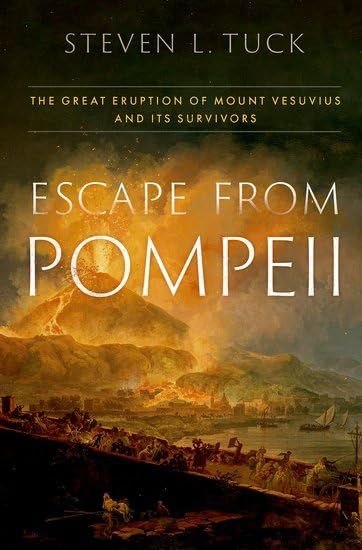
A story of triumph out of tragedy, uncovered in the ashes of Vesuvius The archaeological park of Pompeii is one of the most famous sites of destruction anywhere in the world. From the time of the eruption of Vesuvius in 79 CE until the eighteenth century, Pompeii and its neighbor Herculaneum lay preserved under a thick layer of volcanic material. Since excavations began three hundred years ago, Pompeii has been revealing the secrets of its victims and the ordinary shape of their lives prior to the catastrophe. But did anyone survive the disaster? In popular culture, the eruption is viewed as an apocalyptic event in which everyone died, while scholars generally assume that some escaped. Steven L. Tuck settles that debate. He starts by establishing the circumstances and timeline of the eruption and the evidence that people at both Pompeii and Herculaneum had the chance to escape the eruption. From there, he moves to the search for survivors. Using evidence from inscriptions supported by archaeological, documentary, and literary sources, Tuck finds survivors in twelve different communities and uncovers details on how they rebuilt their lives, livelihoods, and identities after fleeing the volcano. While some survivors integrated quickly into their new communities and used their new city's name in the personal names of their first generation, others preserved cultural markers from their destroyed communities through language, religious dedications, and renewed businesses. Many of the families that escaped intermarried with other refugee families, but also ran for public office in their new cities, made generous donations to their communities, and integrated while maintaining their former identity. Some refugee families came to the aid of the less fortunate by taking in poor and orphaned survivors, while others married beneath their previous station. The Roman government responded to the needs of the refugee communities with new housing, infrastructure, and services, but, as Tuck demonstrates, the real work was done by the refugees themselves. By asking new questions about Pompeii and innovatively examining the evidence, Escape from Pompeii proves the survival of Pompeians and Herculaneans after the eruption. It sheds new insight into their lives, pre- and post-eruption, and provides new conclusions about the Roman world and its response to unimaginable suffering.
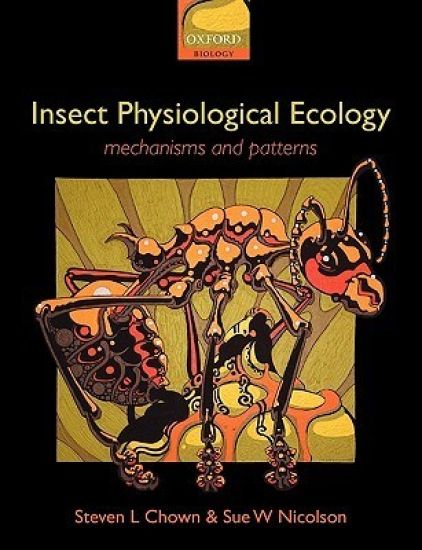
This book provides a modern, synthetic overview of interactions between insects and their environments from a physiological perspective that integrates information across a range of approaches and scales. It shows that evolved physiological responses at the individual level are translated into coherent physiological and ecological patterns at larger, even global scales. This is done by examining in detail the ways in which insects obtain resources from the environment, process these resources in various ways, and turn the results into energy which allows them to regulate their internal environment as well as cope with environmental extremes of temperature and water availability. The book demonstrates that physiological responses are not only characterized by substantial temporal variation, but also shows coherent variation across several spatial scales. At the largest, global scale, there appears to be substantial variation associated with the hemisphere in which insects are found. Such variation has profound implications for patterns of biodiversity as well as responses to climate change, and these implications are explicitly discussed. The book provides a novel integration of the understanding gained from broad-scale field studies of many species and the more narrowly focused laboratory investigations of model organisms. In so doing it reflects the growing realization that an integration of mechanistic and large-scale comparative physiology can result in unexpected insights into the diversity of insects.
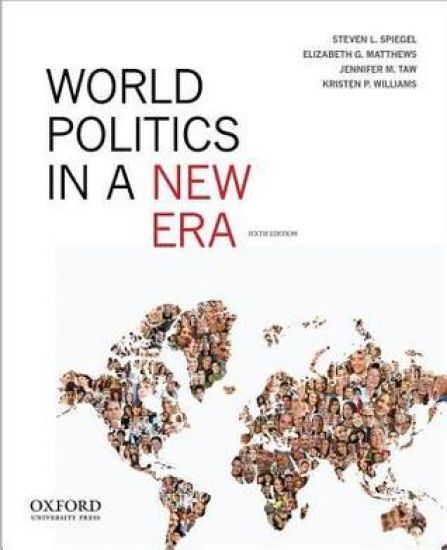
World Politics in a New Era
Steven L. Spiegel; Elizabeth G. Matthews; Jennifer M. Taw; Kristen P. Williams
Oxford University Press Inc
2014
nidottu
World Politics in a New Era is a comprehensive and thought-provoking text for introductory courses on world politics. Reflecting the changes that have occurred worldwide - from the collapse of the Berlin Wall to recent upheavals in the global financial sphere - the book integrates coverage of the competing threads of globalization and fragmentation, examining how they tangle and weave through studies of global politics, economics, and culture. World Politics in a New Era, 6e, provides an in-depth treatment of the field by introducing key contemporary issues along with theory; supporting these issues with historical context; and giving students the analytical tools to apply the theories to current issues. It introduces the major theories used to explain international relations - realism, liberalism, constructivism, and a few select alternatives. Discussions of these theories are then incorporated into the narrative throughout the text, creating a useful framework for analysis. Extensive historical coverage in four chapters (3-6) reviews key events in world politics from the Peace of Westphalia in 1648 to the present, offering students the best context to fully comprehend the modern political stage. Chapters 7-14 cover key topics in contemporary world politics: security, trade and investment, development, human and resource issues, global governance, and ethics.
This book includes an excellent analysis of the material and demographic foundations of patriarchal society, which will force historians to reevaluate the profitability of the estate economy and the standard of living among Russian serfs....This is an important book which should be read by anyone interested in peasant studies and servile systems of production.
Discusses the history of and analyzes the factors shaping American policies in the Middle East
Basic principles of image processing and programming explained without college-level mathematics. This book explores image processing from several perspectives: the creative, the theoretical (mainly mathematical), and the programmatical. It explains the basic principles of image processing, drawing on key concepts and techniques from mathematics, psychology of perception, computer science, and art, and introduces computer programming as a way to get more control over image processing operations. It does so without requiring college-level mathematics or prior programming experience. The content is supported by PixelMath, a freely available software program that helps the reader understand images as both visual and mathematical objects. The first part of the book covers such topics as digital image representation, sampling, brightness and contrast, color models, geometric transformations, synthesizing images, stereograms, photomosaics, and fractals. The second part of the book introduces computer programming using an open-source version of the easy-to-learn Python language. It covers the basics of image analysis and pattern recognition, including edge detection, convolution, thresholding, contour representation, and K-nearest-neighbor classification. A chapter on computational photography explores such subjects as high-dynamic-range imaging, autofocusing, and methods for automatically inpainting to fill gaps or remove unwanted objects in a scene. Applications described include the design and implementation of an image-based game. The PixelMath software provides a "transparent" view of digital images by allowing the user to view the RGB values of pixels by zooming in on an image. PixelMath provides three interfaces: the pixel calculator; the formula page, an advanced extension of the calculator; and the Python window.
A Different Democracy
Steven L. Taylor; Matthew Soberg Shugart; Arend Lijphart; Bernard Grofman
Yale University Press
2015
pokkari
American democracy differs greatly from other democracies around the world. But is the American way more or less efficacious than comparable democracies in Asia, Latin America, or Europe? What if the United States had a prime minister instead of (or in addition to) a president, or if it had three or more parties in Congress instead of two? Would there be more partisan animosity and legislative gridlock or less? These are the kinds of questions that thinking about U.S. government in comparative perspective helps us to analyze. This valuable contribution to political studies takes a unique approach to a much-studied subject, looking at the U.S. government from a comparative point of view. Four distinguished scholars in the field examine the Constitution, the two-party system, the division of power between state and federal governments, and other major features of the American political system in terms of how they differ from other democracies, and they explore what those differences ultimately mean for democratic performance. By merging two important fields of study, American government and comparative political systems, this essential text offers a new and refreshingly insightful view of American exceptionalism.