Kirjojen hintavertailu. Mukana 11 244 527 kirjaa ja 12 kauppaa.

Kirjahaku

Etsi kirjoja tekijän nimen, kirjan nimen tai ISBN:n perusteella.

1000 tulosta hakusanalla Steven Nadler

The Good Cartesian

The Good Cartesian

Steven Nadler

OXFORD UNIVERSITY PRESS INC
2024
sidottu
Steven Nadler presents a biographical and philosophical study of Louis de La Forge (1632-1666), a medical doctor who was an extremely important, but for a long time relatively neglected, follower of Descartes in the seventeenth century. His sophisticated contributions to the metaphysics, philosophy of mind, and physiology of Cartesianism in the decades after Descartes' death in 1650 were instrumental in making that philosophy the dominant philosophical paradigm of the period; it would be supplanted by Newtonianism only in the eighteenth century. La Forge began his Cartesian career by providing wood-cut illustrations and an extensive commentary for the 1664 edition of Descartes' Traité de l'homme, the first original-language publication of part of the larger, groundbreaking treatise Le Monde that was left unpublished in Descartes' lifetime. In his commentary, La Forge is a devoted and faithful but not uncritical disciple who defends, supplements, updates and even corrects Descartes' account of the human body, which treats it as a “machine” that operates on the principles of the mechanical philosophy. In 1666, La Forge published his own Traité de l'esprit de l'homme, a treatise on the human mind. Explaining the mind and its union with the body was something that Descartes had long planned to do but never really carried out in a systematic manner. La Forge's most innovative and influential philosophical contribution in the Traité--one which goes beyond anything Descartes envisioned--is his limited version of the doctrine of occasionalism, which accords God an active and ongoing causal role in the world and reduces natural substances to being “occasions” for God's efficacious activity. La Forge thereby set the stage for later, even more unorthodox developments in Cartesianism.
Occasionalism

Occasionalism

Steven Nadler

Oxford University Press
2010
sidottu
Steven Nadler presents a collection of essays on the problem of causation in seventeenth-century philosophy. Occasionalism is the doctrine, held by a number of early modern Cartesian thinkers, that created substances are devoid of any true causal powers, and that God is the only real causal agent in the universe. All natural phenomena have God as their direct and immediate cause, with natural things and their states serving only as "occasions" for God to act. Rather than being merely an ad hoc, deus ex machina response to the mind-body problem bequeathed by Descartes to his followers, as it has often been portrayed in the past, occasionalism is in fact a full-blooded, complex and philosophically interesting account of causal relations. These essays examine the philosophical, scientific, theological and religious themes and arguments of occasionalism, as well as its roots in medieval views on God and causality.
Géraud de Cordemoy: Six Discourses on the Distinction between the Body and the Soul
Steven Nadler presents the first English translation of a seminal work in the history of early modern philosophy. Géraud de Cordemoy's Six Discourses on the Distinction Between the Soul and the Body (originally published in French in 1666) offers an account of the mind and the body in a human being. Cordemoy is an unorthodox Cartesian who opts for an atomist conception of body and matter. In this groundbreaking treatise, he also presents one of the earliest arguments for an occasionalist account of causation, with God serving as the true cause of bodily motions in the world and of ideas in the mind. Nadler also includes the first English translation of Cordemoy's short Treatises on Metaphysics, which were probably written soon after the Discourses, and extend his discussion of mind-body union with consideration of human freedom and happiness. The introduction provides a biographical and historical context for Cordemoy's work and a study of his main philosophical doctrines, including his influence on later thinkers (such as Leibniz and Malebranche).
Spinoza's Heresy

Spinoza's Heresy

Steven Nadler

Clarendon Press
2001
sidottu
At the heart of Spinoza's Heresy is a mystery: why was Baruch Spinoza so harshly excommunicated from the Amsterdam Jewish community at the age of twenty-four? In this philosophical sequel to his acclaimed, award-winning biography of the seventeenth-century thinker, Steven Nadler argues that Spinoza's main offence was a denial of the immortality of the soul. But this only deepens the mystery. For there is no specific Jewish dogma regarding immortality: there is nothing that a Jew is required to believe about the soul and the afterlife. It was, however, for various religious, historical and political reasons, simply the wrong issue to pick on in Amsterdam in the 1650s. After considering the nature of the ban, or cherem, as a disciplinary tool in the Sephardic community, and a number of possible explanations for Spinoza's ban, Nadler turns to the variety of traditions in Jewish religious thought on the postmortem fate of a person's soul. This is followed by an examination of Spinoza's own views on the eternity of the mind and the role that that the denial of personal immortality plays in his overall philosophical project. Nadler argues that Spinoza's beliefs were not only an outgrowth of his own metaphysical principles, but also a culmination of an intellectualist trend in Jewish rationalism.
Spinoza's Heresy

Spinoza's Heresy

Steven Nadler

Clarendon Press
2004
nidottu
At the heart of Spinoza's Heresy is a mystery: why was Baruch Spinoza so harshly excommunicated from the Amsterdam Jewish community at the age of twenty-four? In this philosophical sequel to his acclaimed, award-winning biography of the seventeenth-century thinker, Steven Nadler argues that Spinoza's main offence was a denial of the immortality of the soul. But this only deepens the mystery. For there is no specific Jewish dogma regarding immortality: there is nothing that a Jew is required to believe about the soul and the afterlife. It was, however, for various religious, historical and political reasons, simply the wrong issue to pick on in Amsterdam in the 1650s. After considering the nature of the ban, or cherem, as a disciplinary tool in the Sephardic community, and a number of possible explanations for Spinoza's ban, Nadler turns to the variety of traditions in Jewish religious thought on the postmortem fate of a person's soul. This is followed by an examination of Spinoza's own views on the eternity of the mind and the role that that the denial of personal immortality plays in his overall philosophical project. Nadler argues that Spinoza's beliefs were not only an outgrowth of his own metaphysical principles, but also a culmination of an intellectualist trend in Jewish rationalism.
Rembrandt's Jews

Rembrandt's Jews

Steven Nadler

University of Chicago Press
2003
nidottu
There is a popular and romantic myth about Rembrandt and the Jewish people. One of history's greatest artists, we are often told, had a special affinity for Judaism. With so many of Rembrandt's works devoted to stories of the Hebrew Bible, and with his apparent penchant for Jewish themes and the sympathetic portrayal of Jewish faces, it is no wonder that the myth has endured for centuries.Rembrandt's Jews puts this myth to the test as it examines both the legend and the reality of Rembrandt's relationship to Jews and Judaism. In his elegantly written and engrossing tour of Jewish Amsterdam—which begins in 1653 as workers are repairing Rembrandt's Portuguese-Jewish neighbor's house and completely disrupting the artist's life and livelihood—Steven Nadler tells us the stories of the artist's portraits of Jewish sitters, of his mundane and often contentious dealings with his neighbors in the Jewish quarter of Amsterdam, and of the tolerant setting that city provided for Sephardic and Ashkenazic Jews fleeing persecution in other parts of Europe. As Nadler shows, Rembrandt was only one of a number of prominent seventeenth-century Dutch painters and draftsmen who found inspiration in Jewish subjects. Looking at other artists, such as the landscape painter Jacob van Ruisdael and Emmanuel de Witte, a celebrated painter of architectural interiors, Nadler is able to build a deep and complex account of the remarkable relationship between Dutch and Jewish cultures in the period, evidenced in the dispassionate, even ordinary ways in which Jews and their religion are represented—far from the demonization and grotesque caricatures, the iconography of the outsider, so often found in depictions of Jews during the Middle Ages and the Renaissance.Through his close look at paintings, etchings, and drawings; in his discussion of intellectual and social life during the Dutch Golden Age; and even through his own travels in pursuit of his subject, Nadler takes the reader through Jewish Amsterdam then and now—a trip that, under ever-threatening Dutch skies, is full of colorful and eccentric personalities, fiery debates, and magnificent art.
The Portraitist

The Portraitist

Steven Nadler

THE UNIVERSITY OF CHICAGO PRESS
2022
sidottu
A biography of the great portraitist Frans Hals that takes the reader into the turbulent world of the Dutch Golden Age. Frans Hals was one of the greatest portrait painters in history, and his style transformed ideas and expectations about what portraiture can do and what a painting should look like. Hals was a member of the great trifecta of Dutch Baroque painters alongside Rembrandt and Vermeer, and he was the portraitist of choice for entrepreneurs, merchants, professionals, theologians, intellectuals, militiamen, and even his fellow artists in the Dutch Golden Age. His works, with their visible brush strokes and bold execution, lacked the fine detail and smooth finish common among his peers, and some dismissed his works as sloppy and unfinished. But for others, they were fresh and exciting, filled with a sense of the sitter's animated presence captured with energy and immediacy. Steven Nadler gives us the first full-length biography of Hals in many years and offers a view into seventeenth-century Haarlem and this culturally rich era of the Dutch Republic. He tells the story not only of Hals's life, but also of the artistic, social, political, and religious worlds in which he lived and worked.
Menasseh ben Israel

Menasseh ben Israel

Steven Nadler

Yale University Press
2018
sidottu
From the prizewinning Jewish Lives series, an illuminating biography of the great Amsterdam rabbi and celebrated popularizer of Judaism in the seventeenth century Menasseh ben Israel (1604–1657) was among the most accomplished and cosmopolitan rabbis of his time, and a pivotal intellectual figure in early modern Jewish history. He was one of the three rabbis of the “Portuguese Nation” in Amsterdam, a community that quickly earned renown worldwide for its mercantile and scholarly vitality. Born in Lisbon, Menasseh and his family were forcibly converted to Catholicism but suspected of insincerity in their new faith. To avoid the horrors of the Inquisition, they fled first to southwestern France, and then to Amsterdam, where they finally settled. Menasseh played an important role during the formative decades of one of the most vital Jewish communities of early modern Europe, and was influential through his extraordinary work as a printer and his efforts on behalf of the readmission of Jews to England. In this lively biography, Steven Nadler provides a fresh perspective on this seminal figure.About Jewish Lives: Jewish Lives is a prizewinning series of interpretative biography designed to explore the many facets of Jewish identity. Individual volumes illuminate the imprint of Jewish figures upon literature, religion, philosophy, politics, cultural and economic life, and the arts and sciences. Subjects are paired with authors to elicit lively, deeply informed books that explore the range and depth of the Jewish experience from antiquity to the present. In 2014, the Jewish Book Council named Jewish Lives the winner of its Jewish Book of the Year Award, the first series ever to receive this award.More praise for Jewish Lives: "Excellent." –New York Times "Exemplary." –Wall Street Journal "Distinguished." –New Yorker "Superb." –The Guardian
The Best of All Possible Worlds

The Best of All Possible Worlds

Steven Nadler

Princeton University Press
2010
pokkari
In the spring of 1672, German philosopher and mathematician Gottfried Wilhelm Leibniz arrived in Paris, home of France's two greatest philosopher-theologians of the period, Antoine Arnauld and Nicolas de Malebranche. The meeting of these three men represents a profoundly important moment in the history of philosophical and religious thought. In The Best of All Possible Worlds, Steven Nadler tells the story of a clash between radically divergent worldviews. At its heart are the dramatic--and often turbulent--relationships between these brilliant and resolute individuals. Despite their wildly different views and personalities, the three philosophers shared a single, passionate concern: resolving the problem of evil. Why is it that, in a world created by an all-powerful, all-wise, and infinitely just God, there is sin and suffering? Why do bad things happen to good people, and good things to bad people? The Best of All Possible Worlds brings to life a debate that obsessed its participants, captivated European intellectuals, and continues to inform our ways of thinking about God, morality, and the world.
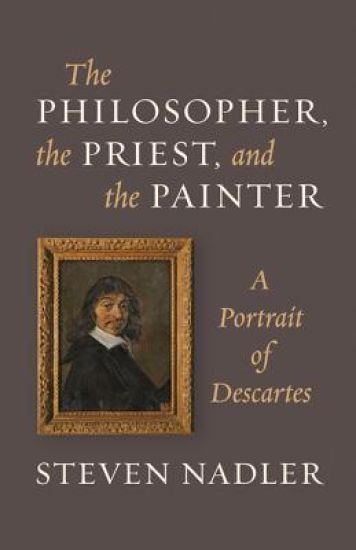
The Philosopher, the Priest, and the Painter

The Philosopher, the Priest, and the Painter

Steven Nadler

Princeton University Press
2013
sidottu
In the Louvre museum hangs a portrait that is considered the iconic image of Rene Descartes, the great seventeenth-century French philosopher. And the painter of the work? The Dutch master Frans Hals--or so it was long believed, until the work was downgraded to a copy of an original. But where is the authentic version, and who painted it? Is the man in the painting--and in its original--really Descartes? A unique combination of philosophy, biography, and art history, The Philosopher, the Priest, and the Painter investigates the remarkable individuals and circumstances behind a small portrait. Through this image--and the intersecting lives of a brilliant philosopher, a Catholic priest, and a gifted painter--Steven Nadler opens a fascinating portal into Descartes's life and times, skillfully presenting an accessible introduction to Descartes's philosophical and scientific ideas, and an illuminating tour of the volatile political and religious environment of the Dutch Golden Age. As Nadler shows, Descartes's innovative ideas about the world, about human nature and knowledge, and about philosophy itself, stirred great controversy. Philosophical and theological critics vigorously opposed his views, and civil and ecclesiastic authorities condemned his writings. Nevertheless, Descartes's thought came to dominate the philosophical world of the period, and can rightly be called the philosophy of the seventeenth century. Shedding light on a well-known image, The Philosopher, the Priest, and the Painter offers an engaging exploration of a celebrated philosopher's world and work.
A Book Forged in Hell

A Book Forged in Hell

Steven Nadler

Princeton University Press
2013
pokkari
When it appeared in 1670, Baruch Spinoza's Theological-Political Treatise was denounced as the most dangerous book ever published - "godless," "full of abominations," "a book forged in hell ...by the devil himself." Religious and secular authorities saw it as a threat to faith, social and political harmony, and everyday morality, and its author was almost universally regarded as a religious subversive and political radical who sought to spread atheism throughout Europe. Yet Spinoza's book has contributed as much as the Declaration of Independence or Thomas Paine's Common Sense to modern liberal, secular, and democratic thinking. In A Book Forged in Hell, Steven Nadler tells the fascinating story of this extraordinary book: its radical claims and their background in the philosophical, religious, and political tensions of the Dutch Golden Age, as well as the vitriolic reaction these ideas inspired. It is not hard to see why Spinoza's Treatise was so important or so controversial, or why the uproar it caused is one of the most significant events in European intellectual history. In the book, Spinoza became the first to argue that the Bible is not literally the word of God but rather a work of human literature; that true religion has nothing to do with theology, liturgical ceremonies, or sectarian dogma; and that religious authorities should have no role in governing a modern state. He also denied the reality of miracles and divine providence, reinterpreted the nature of prophecy, and made an eloquent plea for toleration and democracy. A vivid story of incendiary ideas and vicious backlash, A Book Forged in Hell will interest anyone who is curious about the origin of some of our most cherished modern beliefs.
The Philosopher, the Priest, and the Painter

The Philosopher, the Priest, and the Painter

Steven Nadler

Princeton University Press
2015
pokkari
In the Louvre museum hangs a portrait that is considered the iconic image of Rene Descartes, the great seventeenth-century French philosopher. And the painter of the work? The Dutch master Frans Hals--or so it was long believed, until the work was downgraded to a copy of an original. But where is the authentic version, and who painted it? Is the man in the painting--and in its original--really Descartes? A unique combination of philosophy, biography, and art history, The Philosopher, the Priest, and the Painter investigates the remarkable individuals and circumstances behind a small portrait. Through this image--and the intersecting lives of a brilliant philosopher, a Catholic priest, and a gifted painter--Steven Nadler opens a fascinating portal into Descartes's life and times, skillfully presenting an accessible introduction to Descartes's philosophical and scientific ideas, and an illuminating tour of the volatile political and religious environment of the Dutch Golden Age. As Nadler shows, Descartes's innovative ideas about the world, about human nature and knowledge, and about philosophy itself, stirred great controversy. Philosophical and theological critics vigorously opposed his views, and civil and ecclesiastic authorities condemned his writings. Nevertheless, Descartes's thought came to dominate the philosophical world of the period, and can rightly be called the philosophy of the seventeenth century. Shedding light on a well-known image, The Philosopher, the Priest, and the Painter offers an engaging exploration of a celebrated philosopher's world and work.
Think Least of Death

Think Least of Death

Steven Nadler

PRINCETON UNIVERSITY PRESS
2020
sidottu
From Pulitzer Prize-finalist Steven Nadler, an engaging guide to what Spinoza can teach us about life’s big questionsIn 1656, after being excommunicated from Amsterdam’s Portuguese-Jewish community for “abominable heresies” and “monstrous deeds,” the young Baruch Spinoza abandoned his family’s import business to dedicate his life to philosophy. He quickly became notorious across Europe for his views on God, the Bible, and miracles, as well as for his uncompromising defense of free thought. Yet the radicalism of Spinoza’s views has long obscured that his primary reason for turning to philosophy was to answer one of humanity’s most urgent questions: How can we lead a good life and enjoy happiness in a world without a providential God? In Think Least of Death, Pulitzer Prize–finalist Steven Nadler connects Spinoza’s ideas with his life and times to offer a compelling account of how the philosopher can provide a guide to living one’s best life.In the Ethics, Spinoza presents his vision of the ideal human being, the “free person” who, motivated by reason, lives a life of joy devoted to what is most important—improving oneself and others. Untroubled by passions such as hate, greed, and envy, free people treat others with benevolence, justice, and charity. Focusing on the rewards of goodness, they enjoy the pleasures of this world, but in moderation. “The free person thinks least of all of death,” Spinoza writes, “and his wisdom is a meditation not on death but on life."An unmatched introduction to Spinoza’s moral philosophy, Think Least of Death shows how his ideas still provide valuable insights about how to live today.
Think Least of Death

Think Least of Death

Steven Nadler

PRINCETON UNIVERSITY PRESS
2022
pokkari
From Pulitzer Prize-finalist Steven Nadler, an engaging guide to what Spinoza can teach us about life’s big questionsIn 1656, after being excommunicated from Amsterdam’s Portuguese-Jewish community for “abominable heresies” and “monstrous deeds,” the young Baruch Spinoza abandoned his family’s import business to dedicate his life to philosophy. He quickly became notorious across Europe for his views on God, the Bible, and miracles, as well as for his uncompromising defense of free thought. Yet the radicalism of Spinoza’s views has long obscured that his primary reason for turning to philosophy was to answer one of humanity’s most urgent questions: How can we lead a good life and enjoy happiness in a world without a providential God? In Think Least of Death, Pulitzer Prize–finalist Steven Nadler connects Spinoza’s ideas with his life and times to offer a compelling account of how the philosopher can provide a guide to living one’s best life.In the Ethics, Spinoza presents his vision of the ideal human being, the “free person” who, motivated by reason, lives a life of joy devoted to what is most important—improving oneself and others. Untroubled by passions such as hate, greed, and envy, free people treat others with benevolence, justice, and charity. Focusing on the rewards of goodness, they enjoy the pleasures of this world, but in moderation. “The free person thinks least of all of death,” Spinoza writes, “and his wisdom is a meditation not on death but on life."An unmatched introduction to Spinoza’s moral philosophy, Think Least of Death shows how his ideas still provide valuable insights about how to live today.
Spinoza, Atheist

Spinoza, Atheist

Steven Nadler

PRINCETON UNIVERSITY PRESS
2026
sidottu
From Pulitzer Prize finalist Steven Nadler, a fascinating historical and philosophical narrative that unravels the mystery of whether Spinoza was an atheist In 1656, a young Amsterdam merchant was excommunicated by his Portuguese-Jewish community in the harshest terms it had ever used. Baruch Spinoza was accused of unspecified “horrifying heresies,” but the precise reasons for his expulsion remain a mystery. When he published his Theological-Political Treatise in 1670, which was condemned as “the most atheistic book ever written,” he began to reveal to the world what his heresies may have been. Yet ever since the eighteenth century, most readers and scholars have assumed that Spinoza was a pantheist—even a “God-intoxicated man,” as the poet Novalis put it. After all, how could a person whose books are suffused with talk of God be an atheist? In Spinoza, Atheist, Steven Nadler, one of the world’s leading authorities on the philosopher, aims to settle the question and show that that’s exactly what he was. Nadler makes a powerful case that there is no real divinity for Spinoza. God is Nature, and isn’t an object of worshipful awe or religious reverence but can only be understood through philosophy and science. There is nothing supernatural—no mystery, ineffability, or sublimity. Spinoza does speak of “blessedness” and “salvation,” but these, too, are to be understood in natural and rational terms, as the peace of mind and happiness that come from understanding ourselves and the world. Whether Spinoza believed in God is a fascinating and enduring controversy. Spinoza, Atheist promises to transform our understanding of his views and to make clear just how radical a thinker he was and remains.
Spinoza

Spinoza

Steven Nadler

Cambridge University Press
2018
sidottu
Baruch Spinoza (1632–1677) was one of the most important philosophers of all time; he was also one of the most radical and controversial. The story of Spinoza's life takes the reader into the heart of Jewish Amsterdam in the seventeenth century and, with Spinoza's exile from Judaism, into the midst of the tumultuous political, social, intellectual, and religious world of the young Dutch Republic. This new edition of Steven Nadler's biography, winner of the Koret Jewish Book Award for biography and translated into a dozen languages, is enhanced by exciting new archival discoveries about his family background, his youth, and the various philosophical, political, and religious contexts of his life and works. There is more detail about his family's business and communal activities, about his relationships with friends and correspondents, and about the development of his writings, which were so scandalous to his contemporaries.
Spinoza

Spinoza

Steven Nadler

Cambridge University Press
2022
pokkari
Baruch Spinoza (1632–1677) was one of the most important philosophers of all time; he was also one of the most radical and controversial. The story of Spinoza's life takes the reader into the heart of Jewish Amsterdam in the seventeenth century and, with Spinoza's exile from Judaism, into the midst of the tumultuous political, social, intellectual, and religious world of the young Dutch Republic. This new edition of Steven Nadler's biography, winner of the Koret Jewish Book Award for biography and translated into a dozen languages, is enhanced by exciting new archival discoveries about his family background, his youth, and the various philosophical, political, and religious contexts of his life and works. There is more detail about his family's business and communal activities, about his relationships with friends and correspondents, and about the development of his writings, which were so scandalous to his contemporaries.
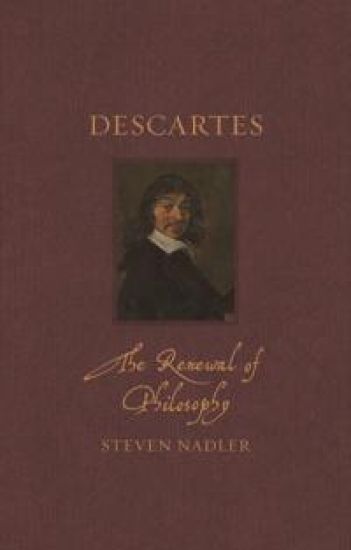
Descartes

Descartes

Steven Nadler

REAKTION BOOKS
2023
sidottu
Often called ‘the father of modern philosophy’, René Descartes’ contributions to philosophy, mathematics and natural science set the intellectual agenda for the seventeenth century. In this biography and assessment of his works, based on the most up-to-date research, Steven Nadler follows Descartes from his early years and education in France to the Dutch Republic, where he lived most of his adult life, to his final months as tutor to Queen Christina of Sweden.Nadler shows how Descartes’ ‘renewal’ of philosophy involved a transformation in both the way in which philosophy is done and the fundamental understanding of the cosmos, the natural world and human nature. His work was a springboard for many of the metaphysical and epistemological problems that continue to engage philosophers today.