Kirjojen hintavertailu. Mukana 11 244 527 kirjaa ja 12 kauppaa.

Kirjahaku

Etsi kirjoja tekijän nimen, kirjan nimen tai ISBN:n perusteella.

1000 tulosta hakusanalla Steven S. Smith

Party Influence in Congress

Party Influence in Congress

Steven S. Smith

Cambridge University Press
2007
pokkari
Party Influence in Congress challenges current arguments and evidence about the influence of political parties in the US Congress. Steven S. Smith argues that theory must reflect policy, electoral, and collective party goals. These goals call for flexible party organizations and leadership strategies. They demand that majority party leaders control the flow of legislation; package legislation and time action to build winning majorities and attract public support; work closely with a president of their party; and influence the vote choices for legislators. Smith observes that the circumstantial evidence of party influence is strong, multiple collective goals remain active ingredients after parties are created, party size is an important factor in party strategy, both negative and positive forms of influence are important to congressional parties, and the needle-in-the-haystack search for direct influence continues to prove frustrating.
Party Influence in Congress

Party Influence in Congress

Steven S. Smith

Cambridge University Press
2007
sidottu
Party Influence in Congress challenges current arguments and evidence about the influence of political parties in the US Congress. Steven S. Smith argues that theory must reflect policy, electoral, and collective party goals. These goals call for flexible party organizations and leadership strategies. They demand that majority party leaders control the flow of legislation; package legislation and time action to build winning majorities and attract public support; work closely with a president of their party; and influence the vote choices for legislators. Smith observes that the circumstantial evidence of party influence is strong, multiple collective goals remain active ingredients after parties are created, party size is an important factor in party strategy, both negative and positive forms of influence are important to congressional parties, and the needle-in-the-haystack search for direct influence continues to prove frustrating.
The Senate Syndrome

The Senate Syndrome

Steven S. Smith

University of Oklahoma Press
2014
sidottu
With its rock-bottom approval ratings, acrimonious partisan battles, and apparent inability to do its legislative business, the U.S. Senate might easily be deemed unworthy of attention, if not downright irrelevant. This book tells us that would be a mistake. Because the Senate has become the place where the policy-making process most frequently stalls, any effective resolution to our polarized politics demands a clear understanding of how the formerly august legislative body once worked and how it came to the present crisis. Steven S. Smith provides that understanding in The Senate Syndrome.Like the Senate itself, Smith's account is grounded in history. Countering a cacophony of inexpert opinion and a widespread misunderstanding of political and legislative history, the book fills in a world of missing information - about debates among senators concerning fundamental democratic processes and the workings of institutional rules, procedures, and norms. And Smith does so in a clear and engaging manner. He puts the present problems of the Senate - the ""Senate syndrome,"" as he calls them - into historical context by explaining how particular ideas and procedures were first framed and how they transformed with the times. Along the way he debunks a number of myths about the Senate, many perpetuated by senators themselves, and makes some pointed observations about the media's coverage of Congress.The Senate Syndrome goes beyond explaining such seeming technicalities as the difference between regular filibusters and post-cloture filibusters, the importance of chair rulings, the changing role of the parliamentarian, and the debate over whether appeals of points of order should be subject to cloture margins, to show why understanding them matters. At stake is resolution of the Senate syndrome, and the critical underlying struggle between majority rule and minority rights in American policy making.
The Senate Syndrome Volume 12

The Senate Syndrome Volume 12

Steven S. Smith

UNIVERSITY OF OKLAHOMA PRESS
2024
nidottu
With its rock-bottom approval ratings, acrimonious partisan battles, and apparent inability to do its legislative business, the U.S. Senate might easily be deemed unworthy of attention, if not downright irrelevant. This book tells us that would be a mistake. Because the Senate has become the place where the policy-making process most frequently stalls, any effective resolution to our polarized politics demands a clear understanding of how the formerly august legislative body once worked and how it came to the present crisis. Steven S. Smith provides that understanding in The Senate Syndrome. Like the Senate itself, Smith’s account is grounded in history. Countering a cacophony of inexpert opinion and a widespread misunderstanding of political and legislative history, the book fills in a world of missing information—about debates among senators concerning fundamental democratic processes and the workings of institutional rules, procedures, and norms. And Smith does so in a clear and engaging manner. He puts the present problems of the Senate—the “Senate syndrome,” as he calls them—into historical context by explaining how particular ideas and procedures were first framed and how they transformed with the times. Along the way he debunks a number of myths about the Senate, many perpetuated by senators themselves, and makes some pointed observations about the media’s coverage of Congress.The Senate Syndrome goes beyond explaining such seeming technicalities as the difference between regular filibusters and post-cloture filibusters, the importance of chair rulings, the changing role of the parliamentarian, and the debate over whether appeals of points of order should be subject to cloture margins, to show why understanding them matters. At stake is resolution of the Senate syndrome, and the critical underlying struggle between majority rule and minority rights in American policy making.
Call to Order

Call to Order

Steven S. Smith

Brookings Institution
1989
nidottu
"Congress is playing by new rules--a changing distribution of power in Congress, a more complex interplay of rules and procedures and policy, and a new role for floor politics in the legislative process. In Call to Order, Smith outlines how a fairly stable period of reform in the 1950s and the early 1960s erupted into a turbulent period of reform in the 1970s. New issues spawned a variety of organized interest groups, and these, coupled with growing constituency pressures, increased the demand for members to champion causes. But floor politics in the 1980s took on a distinct character, particularly in the House. Budget politics, new procedural innovations, leadership tactics, and other developments made these years quite different from the unsettled seventies. Smith carefully considers these changes, their relationships to one another, the new role of floor activity in both houses of Congress, and the overall implications for congressional policy making."
The American Congress Reader

The American Congress Reader

Steven S. Smith; Jason M. Roberts; Ryan J. Vander Wielen

Cambridge University Press
2008
pokkari
The American Congress Reader provides a supplement to the popular and updated American Congress undergraduate textbook. By the same authors who drew upon Capitol Hill experience and nationally recognized scholarship to present a crisp introduction and analysis of Congress's inner mechanics, the Reader compiles the best relevant scholarship on party and committee systems, leadership, voting, and floor activity to broaden and illuminate the key features of the text.
The Politics of Institutional Choice

The Politics of Institutional Choice

Steven S. Smith; Thomas F. Remington

Princeton University Press
2000
pokkari
Events in Russia since the late 1980s have created a rare opportunity to watch the birth of democratic institutions close at hand. Here Steven Smith and Thomas Remington provide the first intensive, theoretically grounded examination of the early development of the State Duma, the lower house of the Russian Federation's parliament created by the 1993 constitution. They offer an integrated account of the choices made by the newly elected members of the Duma in establishing basic operating arrangements: an agenda-setting governing body, a standing committee system, an electoral law, and a party system. Not only do these decisions promise to have lasting consequences for the post-communist Russian regime, but they also enable the authors to test assumptions about politicians' goals from the standpoint of institutional theory. Smith and Remington challenge in particular the notion, derived from American contexts, that politicians pursue a single, overarching goal in the creation of institutions. They argue that politicians have multiple political goals--career, policy, and partisan--that drive their choices. Among Duma members, the authors detect many cross currents of interests, generated by the mixed electoral system, which combines both single-member districts and proportional representation, and by sharp policy divisions and an emerging party system. Elected officials may shift from concentrating on one goal to emphasizing another, but political contexts can help determine their behavior. This book brings a fresh perspective to numerous theories by incorporating first-hand accounts of major institutional choices and placing developments in their actual context.
The American Congress

The American Congress

Steven S. Smith; Jason M. Roberts; Ryan J. Vander Wielen

Cambridge University Press
2015
pokkari
The ninth edition of this respected textbook provides a fresh perspective and a crisp introduction to congressional politics. Informed by the authors' Capitol Hill experience and scholarship, the new edition reflects changes resulting from the November 2014 elections and such developments as (a) a new majority party in the Senate, (b) new campaign spending numbers and election outcomes, rules, committees, leaders, and budget developments, and (c) recent political science literature that provides new perspectives on the institution. The text emphasizes the importance of a strong legislature and has discussion questions and further reading. Alongside clear explanations of congressional rules and the law-making process, there are examples from contemporary events and debates that highlight Congress as a group of politicians as well as a law-making body. These recent developments are presented within the context of congressional political history.
The American Congress

The American Congress

Steven S. Smith; Jason M. Roberts; Ryan J. Vander Wielen

Cambridge University Press
2011
pokkari
The American Congress provides the most current treatment of congressional politics available in an undergraduate text. Informed by the authors' Capitol Hill experience and scholarship, this book presents a crisp introduction to major features of Congress: parties and committee systems, leadership, voting and floor activity. This text contains discussions of the importance of presidents, courts and interest groups in congressional policy making. Recent developments are also discussed within the context of congressional political history. The seventh edition includes complete coverage of the first Congress of the Obama presidency, the 2010 midterm elections, healthcare reform and an early perspective on the 112th Congress with a Republican majority.
The American Congress

The American Congress

Steven S. Smith; Jason M. Roberts; Ryan J. Vander Wielen

Rowman Littlefield
2019
nidottu
The tenth edition of this respected textbook provides a fresh perspective and a crisp introduction to congressional politics. Informed by the authors’ Capitol Hill experience and scholarship, the new edition reflects changes in Congress resulting from the 2018 elections and such developments as (a) a new majority party in the House; (b) new campaign spending numbers and election outcomes, rules, committees, leaders, and budget developments; and (c) recent political science literature that provides new perspectives on the institution. The text emphasizes the recent developments and includes important learning aids, including lists of key term, discussion questions and suggested further reading. Alongside clear explanations of congressional rules and the lawmaking process there are examples from contemporary events and debates that highlight Congress as a group of politicians as well as a lawmaking body.
Politics Over Process

Politics Over Process

Hong Min Park; Steven S. Smith; Ryan J. Vander Wielen

The University of Michigan Press
2018
nidottu
Although the U.S. Constitution requires that the House of Representatives and the Senate pass legislation in identical form before it can be sent to the president for final approval, the process of resolving differences between the chambers has received surprisingly little scholarly attention. Hong Min Park, Steven S. Smith, and Ryan J. Vander Wielen document the dramatic changes in intercameral resolution that have occurred over recent decades, and examine the various considerations made by the chambers when determining the manner in which the House and Senate pursue conciliation. Politics Over Process demonstrates that partisan competition, increasing party polarization, and institutional reforms have encouraged the majority party to more creatively restructure post-passage processes, often avoiding the traditional standing committee and conference processes altogether.
Politics Over Process

Politics Over Process

Hong Min Park; Steven S. Smith; Ryan J. Vander Wielen

The University of Michigan Press
2017
sidottu
Although the U.S. Constitution requires that the House of Representatives and the Senate pass legislation in identical form before it can be sent to the president for final approval, the process of resolving differences between the chambers has received surprisingly little scholarly attention. Hong Min Park, Steven S. Smith, and Ryan J. Vander Wielen document the dramatic changes in intercameral resolution that have occurred over recent decades, and examine the various considerations made by the chambers when determining the manner in which the House and Senate pursue conciliation. Politics Over Process demonstrates that partisan competition, increasing party polarization, and institutional reforms have encouraged the majority party to more creatively restructure post-passage processes, often avoiding the traditional standing committee and conference processes altogether.
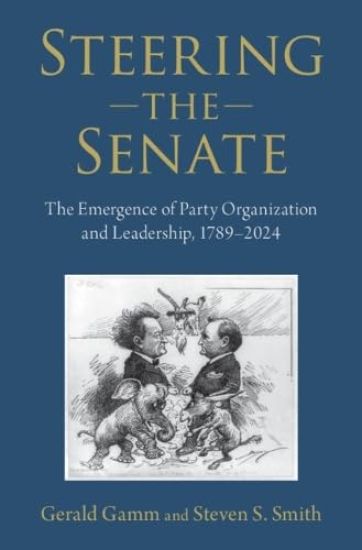
Steering the Senate

Steering the Senate

Gerald Gamm; Steven S. Smith

Cambridge University Press
2025
pokkari
The Senate majority and minority leaders stand at the pinnacle of American national government – as important to Congress as the speaker of the House. However, the invention of Senate floor leadership has, until now, been entirely unknown. Providing a sweeping account of the emergence of party organization and leadership in the US Senate, Steering the Senate is the first-ever study to examine the development of the Senate's main governing institutions. It argues that three forces – party competition, intraparty factionalism, and entrepreneurship – have driven innovation in the Senate. The book details how the position of floor leader was invented in 1890 and then strengthened through the twentieth and twenty-first centuries. Drawing on the full history of the Senate, this book immediately becomes the authoritative source for understanding the institutional development of the Senate – uncovering the origins of the Senate party caucuses, steering committees, and floor leadership.
Steering the Senate

Steering the Senate

Gerald Gamm; Steven S. Smith

Cambridge University Press
2025
sidottu
The Senate majority and minority leaders stand at the pinnacle of American national government – as important to Congress as the speaker of the House. However, the invention of Senate floor leadership has, until now, been entirely unknown. Providing a sweeping account of the emergence of party organization and leadership in the US Senate, Steering the Senate is the first-ever study to examine the development of the Senate's main governing institutions. It argues that three forces – party competition, intraparty factionalism, and entrepreneurship – have driven innovation in the Senate. The book details how the position of floor leader was invented in 1890 and then strengthened through the twentieth and twenty-first centuries. Drawing on the full history of the Senate, this book immediately becomes the authoritative source for understanding the institutional development of the Senate – uncovering the origins of the Senate party caucuses, steering committees, and floor leadership.
Managing Uncertainty in the House of Representatives

Managing Uncertainty in the House of Representatives

Stanley Bach; Steven S. Smith

Brookings Institution
1988
nidottu
"The ""postreform"" House of Representatives of the 1980's is strikingly different from the House of the 1970s. A most important change is the increasingly creative use of special rules, which structure floor debate on major legislation. The new trade of special rule craftsmanship now plays a pivotal role in managing the uncertainties of decisionmaking in the House. During the 1970s new issues and new members disrupted old ways of doing business, while organizational and procedural reforms redistributed influence and resources in ways not always anticipated. These combined to produce a much less stable, predictable environment for the Rules Committee and the entire House.In response, the Rules Committee and the Democratic leadership devised new strategies in the form of special rules. These special rules are more complex and varied in their provisions and more likely to be restrictive in their effect on amending activity. Special rules have altered members' political calculations and strategies, changed the ways committees can protect themselves from attack on the floor, and presented the minority party with new constraints on proposing legislative alternatives.Stanley Bach and Steven Smith examine these dramatic changes in the character of special rules and their use to shape debate and decisions in the House."
Committees in Congress

Committees in Congress

Deering Christopher J.; Steven S. Smith

SAGE PUBLICATIONS INC
1997
nidottu
Providing a comprehensive examination of the origins, development, and status of committees and committee systems in both the House and Senate, this edition carries on the book's tradition of comprehensive coverage, empirical richness, and theoretical relevance in its discussion of these essential and distinguishing features of our national legislature. While the second edition focused on the &BAD:quot;post-reform&BAD:quot; committee systems, addressed the shifts in the internal distribution of power, and hinted at the forces that had already begun to undermine the power of committees, this edition updates that analysis and looks at the reforms that evolvied under the Republicans. It offers complete coverage of the rules and structural changes to the House and Senate committee systems. It extends its discussion of committee power and influence in the context of the &BAD:quot;Contract with America,&BAD:quot; Republican reforms, and the inter-party warfare on Capitol Hill.
Politics or Principle?

Politics or Principle?

Sarah A. Binder; Steven S. Smith

Brookings Institution
1996
nidottu
"Is American democracy being derailed by the United States Senate filibuster? Is the filibuster an important right that improves the political process or an increasingly partisan tool that delays legislation and thwarts the will of the majority? Are century-old procedures in the Senate hampering the institution from fulfilling its role on the eve of the 21st century?The filibuster has achieved almost mythic proportions in the history of American politics, but it has escaped a careful, critical assessment for more than 50 years. In this book, Sarah Binder and Steven Smith provide such an assessment as they address the problems and conventional wisdom associated with the Senate's long-standing tradition of extended debate.The authors examine the evolution of the rules governing Senate debate, analyze the consequences of these rules, and evaluate reform proposals. They argue that in an era of unprecedented filibustering and related obstructionism, old habits are indeed undermining the Senate's ability to meet its responsibilities. Binder and Smith scrutinize conventional wisdom about the filibuster—and show that very little of it is true. They focus on five major myths: that unlimited debate is a fundamental right to differentiate the Senate from the House of Representatives; that the Senate's tradition as a deliberative body requires unlimited debate; that the filibuster is reserved for a few issues of the utmost national importance; that few measures are actually killed by the filibuster; and that senators resist changing the rules because of a principled commitment to deliberation. In revising conventional wisdom about the filibuster, Binder and Smith contribute to ongoing debates about the dynamics of institutional change in the American political system. The authors conclude by suggesting reforms intended to enhance the power of determined majorities while preserving the rights of chamber minorities. They advocate, for example, lowering the number of votes required to end debate while increasing the amount of time for senators to debate controversial bills. Reform is possible, they suggest, that is consistent with the Senate's unique size and responsibilities."
The Science and Technology of Silicones and Silicone-Modified Materials

The Science and Technology of Silicones and Silicone-Modified Materials

Stephen J. Clarson; John J. Fitzgerald; Micheal J. Owen; Steven S. Smith; Mark E. Van Dyke

Oxford University Press Inc
2007
sidottu
The world-wide sales of polysiloxanes or silicones at the beginning of this new millennium is approximately $10 billion per year. Commercial products range from those entirely composed of silicone to products where the silicone is a low level but key component. This symposium covered the recent academic and technological developments behind silicones and silicone-modified materials and the sessions were well attended of wide interest to both the academic and industrial communities. The papers from our two highly successful symposia in this important area were published in the books Silicones and Silicone-Modified Materials, (Eds. S. J. Clarson, J. J. Fitzgerald, M. J. Owen and S. D. Smith), ACS Symposium Series Vol. 729 / Oxford University Press, 2000, ISBN 0-8412-3613-5 and Synthesis and Properties of Silicones and Silicone-Modified Materials, (Eds. S. J. Clarson, J. J. Fitzgerald, M. J. Owen, S. D. Smith and M. E. Van Dyke), ACS Symposium Series Vol 838 / Oxford University Press, 2003, ISBN 0-8412-3804-9
Run Healthy, Run Strong: Dr. Steve Smith's guide to injury prevention and treatment for runners
THE SADDEST THING for arunner to hear is a health practitionersaying, "You have an injury. You haveto stop running."Although running is a non-aggressivesport, it has a surprisingly high rate ofinjury, as high as 79%. And the risk ismost serious for newcomers, peoplewho have recently discovered runningand are excited about the benefits.The fact is, if you are a runner, the way things are today, you willprobably be injured. This book canchange that.Dr. Steve Smith is a chiropractor with33 years of experience focusing onrunners. A lifetime runner and theco-founder of the Pasadena Pacers, he offers common-sense advice aswell as easy-to-do stretches andexercises that will prepare your bodyto run better, stronger and with lesschance of injur