The buying habits of baby boomers really do differ from those of their parents. The authors show how marketers can use each group's consumption patterns to reach both markets most effectively. Another insight: buying habits of these groups differ according to the product or service offered. By analyzing each cohort's buying habits in various purchasing situations, the book dramatizes the need for customized marketing strategies. Based on two national surveys conducted by the Center for Mature Studies, Georgia State University, the book will be essential for marketing professionals and their academic colleagues. Moschis and his coauthors concentrate on food products, apparel, footwear, drugs and cosmetics, housing, technology products and telecommunications services, health care, travel and leisure, and financial and insurance services. They cover preferences for selected products and services, patronage habits, methods of purchasing, motives for preferences for specific brands and services and for payment methods, and reasons for buying direct. Each chapter addresses a specific product or service category and includes analyses of survey respondents by demographic and lifestyle characteristics and media use habits. The book concludes with a discussion of the implications of their research and the ways in which it will lead marketers to design more effective strategies, not only today but in the future.
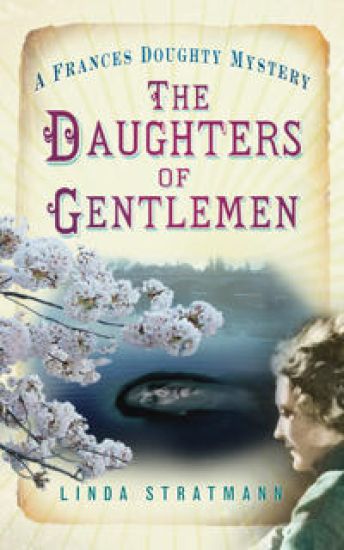
Frances Doughty is a young sleuth on her first professional case, trying to discover who distributed dangerously feminist pamphlets to the girls of the Bayswater Academy for the Education of Young Ladies. Armed with only her wits, courage and determination, she finds that even the most respectable denizens of Bayswater have something to hide, and what begins as a simple task soon becomes a case of murder. As election fever erupts and the formidable ladies of the Bayswater Women's Suffrage Society swing into action, Frances' enquiries expose lies, more murders and a long-concealed scandal, and she makes a powerful new friend. The second book in the popular Frances Doughty Mystery series.
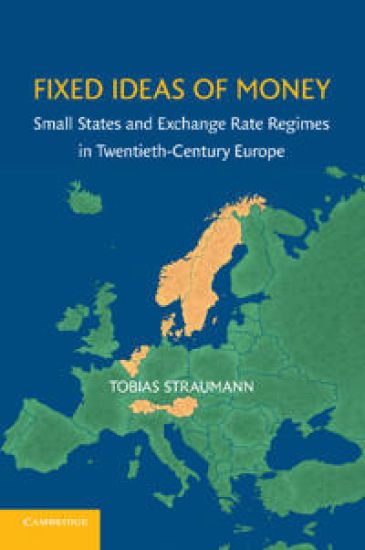
Most European countries are rather small, yet we know little about their monetary history. This book analyses for the first time the experience of seven small states (Austria, Belgium, Denmark, The Netherlands, Norway, Sweden, and Switzerland) during the last hundred years, starting with the restoration of the gold standard after World War I and ending with Sweden's rejection of the Euro in 2003. The comparative analysis shows that for the most part of the twentieth century the options of policy makers were seriously constrained by a distinct fear of floating exchange rates. Only with the crisis of the European Monetary System (EMS) in 1992–3 did the idea that a flexible exchange rate regime was suited for a small open economy gain currency. The book also analyses the differences among small states and concludes that economic structures or foreign policy orientations were far more important for the timing of regime changes than domestic institutions and policies.
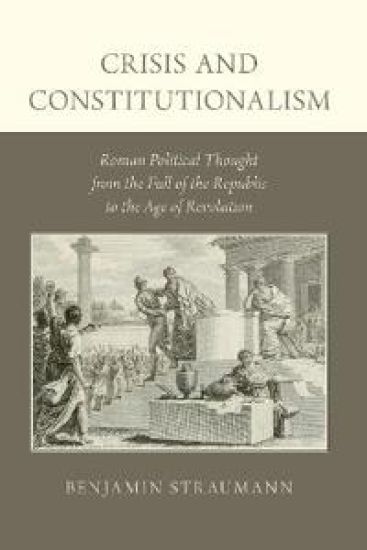
Crisis and Constitutionalism argues that the late Roman Republic saw, for the first time in the history of political thought, the development of a normative concept of constitution--the concept of a set of constitutional norms designed to guarantee and achieve certain interests of the individual. Benjamin Straumann first explores how a Roman concept of constitution emerged out of the crisis and fall of the Roman Republic. The increasing use of emergency measures and extraordinary powers in the late Republic provoked Cicero and some of his contemporaries to turn a hitherto implicit, inchoate constitutionalism into explicit constitutional argument and theory. The crisis of the Republic thus brought about a powerful constitutionalism and convinced Cicero to articulate the norms and rights that would provide its substance; this typically Roman constitutional theory is described in the second part of the study. Straumann then discusses the reception of Roman constitutional thought up to the late eighteenth century and the American Founding, which gave rise to a new, constitutional republicanism. This tradition was characterized by a keen interest in the Roman Republic's decline and fall, and an insistence on the limits of virtue. The crisis of the Republic was interpreted as a constitutional crisis, and the only remedy to escape the Republic's fate--military despotism--was thought to lie, not in republican virtue, but in Roman constitutionalism. By tracing Roman constitutional thought from antiquity to the modern era, this unique study makes a substantial contribution to our understanding of Roman political thought and its reception.
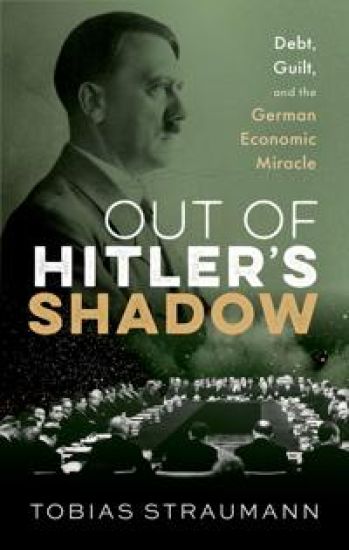
Why were the United States and its Western Allies so lenient after the most atrocious war of all times? Out of Hitler's Shadow answers this question, and considers why the Allies concluded that imposing unrealistic financial conditions on a defeated country would do more harm than good. The destruction left by Nazi Germany was horrendous. The occupied countries had been ravaged and plundered, millions of people murdered, cities laid in ashes. There was every reason to make the defeated Germans pay for 'Hitler's debt' as The New York Times called the gigantic damage inflicted. But whereas the Soviet Union punished East Germany, the Western Allies, at the London Debt Conference (1952) decided to forgo all war-related debts. The Federal Republic of Germany - the Western successor state of Nazi Germany - had to settle no more than half of all outstanding debts stemming from pre-war obligations and post-war assistance. Only Israel and private Jewish organisations received reparations from the Federal Republic, but it was a modest amount. Why were the United States and its Western Allies so lenient after the most atrocious war of all times? Out of Hitler's Shadow answers this question, and considers why the Allies concluded that imposing unrealistic financial conditions on a defeated country would do more harm than good. These actions challenged widely held notions of justice. People who had suffered most from the atrocities committed by Nazi Germany were not compensated. The deal was unfair in many ways, but diplomats and politicians had to make hard choices. Five statesmen were particularly bold: U.S. Secretary of State Acheson, German Chancellor Adenauer, French Foreign Minister Schuman as well as Israeli Prime Minister Ben-Gurion and Foreign Minister Sharett. Tobias Straumann explains why the personalities involved deserve to be remembered for their strategic clarity in the face of enormous resistance.
Germany's financial collapse in the summer of 1931 was one of the biggest economic catastrophes of modern history. It led to a global panic, brought down the international monetary system, and turned a worldwide recession into a prolonged depression. The crisis also contributed decisively to the rise of Hitler. Within little more than a year of its onset, the Nazis were Germany's largest political party at both the regional and national level, paving the way for Hitler's eventual seizure of power in January 1933. The origins of the collapse lay in Germany's large pile of foreign debt denominated in gold-backed currencies, which condemned the German government to cut spending, raise taxes, and lower wages in the middle of a worldwide recession. As political resistance to this policy of austerity grew, the German government began to question its debt obligations, prompting foreign investors to panic and sell their German assets. The resulting currency crisis led to the failure of the already weakened banking system and a partial sovereign default. Hitler managed to profit from the crisis because he had been the most vocal critic of the reparation regime responsible for the lion's share of German debts. As the financial system collapsed, his relentless attacks against foreign creditors and the alleged complicity of the German government resonated more than ever with the electorate. The ruling parties that were responsible for the situation lost their credibility and became defenceless in the face of his onslaught against an establishment allegedly selling the country out to her foreign creditors. Meanwhile, these creditors hesitated too long to take the wind out of Hitler's sails by offering debt relief. In this way, a financial crisis soon developed into a political catastrophe for both Europe and the world.
Crisis and Constitutionalism argues that the late Roman Republic saw, for the first time in the history of political thought, the development of a normative concept of constitutionthe concept of a set of constitutional norms designed to guarantee and achieve certain interests of the individual. Benjamin Straumann first explores how a Roman concept of constitution emerged out of the crisis and fall of the Roman Republic. The increasing use of emergency measures and extraordinary powers in the late Republic provoked Cicero and some of his contemporaries to turn a hitherto implicit, inchoate constitutionalism into explicit constitutional argument and theory. The crisis of the Republic thus brought about a powerful constitutionalism and convinced Cicero to articulate the norms and rights that would provide its substance; this typically Roman constitutional theory is described in the second part of the study. Straumann then discusses the reception of Roman constitutional thought up to the late eighteenth century and the American Founding, which gave rise to a new, constitutional republicanism. This tradition was characterized by a keen interest in the Roman Republics decline and fall, and an insistence on the limits of virtue. The crisis of the Republic was interpreted as a constitutional crisis, and the only remedy to escape the Republic's fate -- military despotism -- was thought to lie, not in republican virtue, but in Roman constitutionalism. By tracing Roman constitutional thought from antiquity to the modern era, this unique study makes a substantial contribution to our understanding of Roman political thought and its reception.
The Marquess of Queensberry is as famous for his role in the downfall of one of our greatest literary geniuses as he was for helping establish the rules for modern-day boxing. The trial and two-year imprisonment of Oscar Wilde, lover of Queensberry’s son, Lord Alfred Douglas, remains one of literary history’s great tragedies. However, Linda Stratmann's riveting biography of the Marquess paints a far more complex picture by drawing on new sources and unpublished letters. Throughout his life, Queensberry was emotionally damaged by a series of tragedies, and the events of the Wilde affair—told for the first time from the Marquess’s perspective—were directly linked to Queensberry’s personal crises. Through the retelling of pivotal events from Queensberry’s life—the death of his brother on the Matterhorn and his fruitless search for the body; the suicides of his father, brother, and eldest son—the book reveals a well-meaning man often stricken with a grief he found hard to express, who deserves our compassion.
Murder by poison alarmed, enthralled, and in many ways encapsulated the Victorian age. Linda Stratmann’s dark and splendid social history reveals the nineteenth century as a gruesome battleground where poisoners went head-to-head with authorities who strove to detect poisons, control their availability, and bring the guilty to justice. She corrects many misconceptions about particular poisons and documents how the evolution of issues such as marital rights and the legal protection of children impacted poisonings. Combining archival research with a novelist’s eye, Stratmann charts the era’s inexorable rise of poison cases both shocking and sad.
This book is a scholarly work of forensic linguistics that demonstrates how the principles of Gricean pragmatics and their recent elaboration in Information Manipulation Theory (IMT) can be of use to courts faced with deciding cases of allegedly fraudulent disclosure documents. The usual goal of legal rules for disclosure documents is not merely to prevent lying but other forms of deception as well. In particular, the goal of these rules is to force the communicator to reveal information that could cause material harm to certain receivers, harms that the communicator, for various reasons of self-interest, might prefer to keep secret or hidden. Because IMT and the Gricean framework have seldom been used in published studies to investigate legally mandated disclosure documents aimed at laypersons, this book seeks to enrich current explications of the rhetorical "workings" of deceptive disclosures within the broader Gricean tradition of pragmatics. The book questions the fundamental relationships among Grice’s maxims as well as the much circulated notion that violation of some maxims is more deceptive and more immoral than violations of others. In addition, the book also attempts to show how various other theories and research in discourse linguistics and reading comprehension can be used to support IMT analyses in addressing the discourse processing issues unique to legally required disclosure texts. In this way the book contributes to the larger dual mission of the field of forensic linguistics, which is both to understand and to improve courts’ impact on social justice.
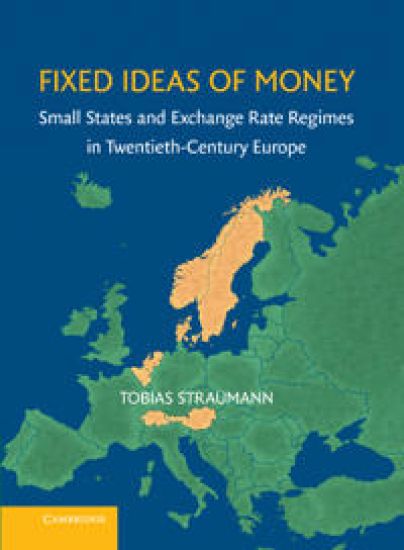
Most European countries are rather small, yet we know little about their monetary history. This book analyses for the first time the experience of seven small states (Austria, Belgium, Denmark, The Netherlands, Norway, Sweden, and Switzerland) during the last hundred years, starting with the restoration of the gold standard after World War I and ending with Sweden's rejection of the Euro in 2003. The comparative analysis shows that for the most part of the twentieth century the options of policy makers were seriously constrained by a distinct fear of floating exchange rates. Only with the crisis of the European Monetary System (EMS) in 1992–3 did the idea that a flexible exchange rate regime was suited for a small open economy gain currency. The book also analyses the differences among small states and concludes that economic structures or foreign policy orientations were far more important for the timing of regime changes than domestic institutions and policies.
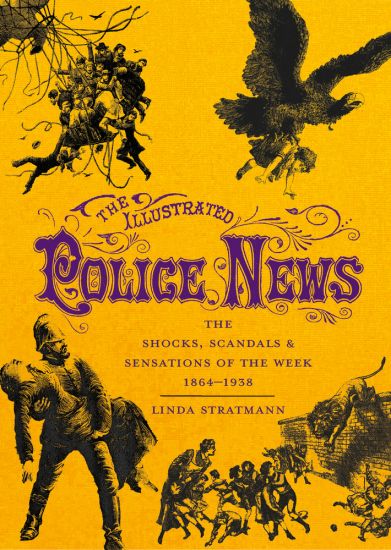
The Illustrated Police News cost just a penny, providing an affordable illustrated roundup of `all the startling events of the week' from its first issue published on 20th February 1864. Promising to educate the people with fantastic features such as `BURGLARIES OF THE WEEK' and its bountiful, often outlandish, illustrations, the paper was also a-perhaps unexpected- champion of social change. With crime historian Linda Stratmann as guide, the articles and special reports of the newspaper provide a fascinating view into the reading tastes and daily lives of its readership throughout the decades. Led by the newspaper's bombastic imagery sourced from the Library's extensive archive, this new book revels in the infamy and social significance behind the exuberant headlines of this extraordinary periodical.
This comparative study of Alfred Hitchcock and Vladimir Nabokov makes an important contribution to cultural analysis by opening up the work of two canonical authors to issues of exile and migration. Questions about the contingencies of history and the rupture of the real are hardly ever brought to bear on their highly self-reflexive texts. Barbara Straumann counters this critical gap by reading real-life exile as the 'absent cause' of Alfred Hitchcock's and Vladimir Nabokov's brilliant virtuosity. Her 'cross-mapping' of the two seemingly disparate authors takes as its point of departure the conditions of exile in which they found themselves and goes on to show how the relentless playfulness of their language and irony points to the creation of a new home in the world of signs. Straumann's close reading of selected films and literary texts focuses on Speak, Memory, Lolita, The Real Life of Sebastian Knight, Suspicion, North by Northwest and Shadow of a Doubt and explores the connections between language, imagination and exile. This book is aimed at those with an interest in Nabokov, Hitchcock, Freud, Lacan, cultural theory, media and/or exile. Key Features o Brings an entirely new perspective to the work of Hitchcock and Nabokov o Discusses psychoanalysis both as a critical approach and as a crucial reference point for the cinematic and literary texts themselves o Analyses figurations of exile in different aesthetic media
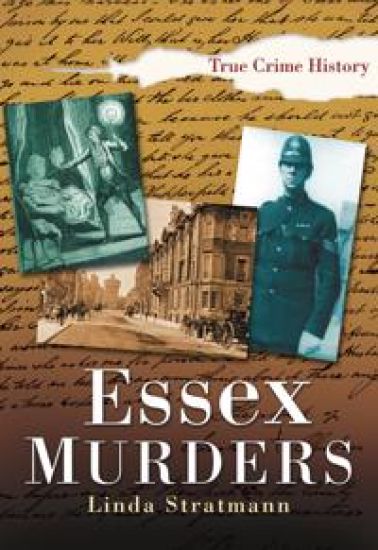
The county of Essex has rolling arable farmland, Epping Forest, sleepy villages, busy market towns and secluded backwaters - a wide variety of settings for murder. This selection of crimes uncovers not only famous cases, but also previously unpublished dramatic and tragic tales. The accounts included here come from a time when murder was a capital offence, carrying the ultimate penalty for the perpetrator, and when the difference between a verdict of innocence or guilt rested on a single piece of evidence, or the skill of the barrister in defence. Linda Stratmann has used original trial transcripts, material from local and national archives, contemporary accounts and the memoirs of pathologists, police and those in the legal profession in the course of her extensive research into crimes that have shocked the county. The killings explored date from as far back as the eighteenth century when the smuggler 'Colchester Jack' shot a confederate in the stomach in a row over stolen goods. They also include the case of a nineteenth-century female poisoner from Clavering and the brutal murder of a taxi driver in 1943 by two US servicemen at Birch. Supported by contemporary illustrations, Essex Murders reveals that behind the county's peaceful facade lies a murky criminal heritage.