Abingdon Pillars of Theology is a series for the college and seminary classroom designed to help students grasp the basic and necessary facts, influence, and significance of major theologians. Written by noted scholars, these books outline the context, methodology, organizing principles, primary contributions, and key writings of people who have shaped theology as we know it today. John Calvin (1509-1564) continues to be read and discussed because he illumines our human experience. Although inseparable from his context, Calvin's theology speaks for itself, thus identifying ways Calvin remains a living voice for those who struggle with the meaning of Christian faith.
Perhaps no topic is more central to Christianity than the fundamental study of who Jesus Christ is and what he has done. This illuminating and necessary book on Christology considers "why Jesus matters." It offers a thoroughly accessible discussion of central issues about Jesus Christ.The author takes into account important issues from the last three decades, incorporating new and diverse voices of theologians and thinkers from around the globe who all consider from their own unique perspectives: does Jesus matter?
Discover the power of mixed models with SAS. Mixed models-now the mainstream vehicle for analyzing most research data-are part of the core curriculum in most master's degree programs in statistics and data science. In a single volume, this book updates both SAS(R) for Linear Models, Fourth Edition, and SAS(R) for Mixed Models, Second Edition, covering the latest capabilities for a variety of applications featuring the SAS GLIMMIX and MIXED procedures. Written for instructors of statistics, graduate students, scientists, statisticians in business or government, and other decision makers, SAS(R) for Mixed Models is the perfect entry for those with a background in two-way analysis of variance, regression, and intermediate-level use of SAS. This book expands coverage of mixed models for non-normal data and mixed-model-based precision and power analysis, including the following topics: Random-effect-only and random-coefficients models Multilevel, split-plot, multilocation, and repeated measures models Hierarchical models with nested random effects Analysis of covariance models Generalized linear mixed models This book is part of the SAS Press program.
Dave Cole; Viet Thanh Nguyen; Jacqueline woodson; Ann Patchett; Brit Bennett; Steven Okazaki; David Handler; Geraldine Brooks; Yaa Gyasi; Sergio De La Pava; Dave Eggers; Timothy Egan; Li Yiyun; Meg Wolitzer; Hector Tobar; Aleksandar Hemon; Elizabeth Strout; Rabih Alameddine; Moriel Rothman-Zecher; Jonathan Lethem; Salman Rushdie; Lauren Groff; Jennifer Egan; Scott Turow; Morgan Parker; Victor Lavalle; Michael Cunningham; Neil Gaiman; Jesmyn Ward; Moses Sumney; George Saunders; Marlon James; William Finnegan; Anthony Doerr
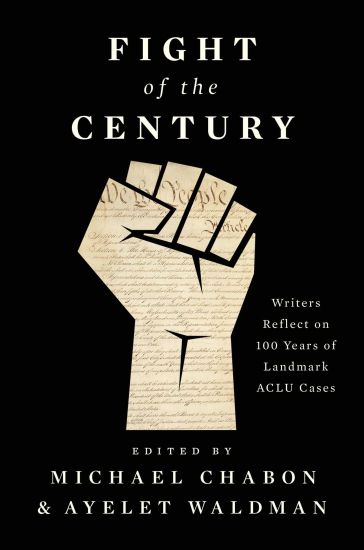
To mark its 100-year anniversary, the American Civil Liberties Union partners with award-winning authors Michael Chabon and Ayelet Waldman to bring together many of our greatest living writers, each contributing an original piece inspired by a historic ACLU case.On January 19, 1920, a small group of idealists and visionaries, including Helen Keller, Jane Addams, Roger Baldwin, and Crystal Eastman, founded the American Civil Liberties Union. A century after its creation, the ACLU remains the nation’s premier defender of the rights and freedoms guaranteed by the Constitution. In collaboration with the ACLU, authors Michael Chabon and Ayelet Waldman have curated an anthology of essays about landmark cases in the organization’s one-hundred-year history. Fight of the Century takes you inside the trials and the stories that have shaped modern life. Some of the most prominent cases that the ACLU has been involved in—Brown v. Board of Education, Roe v. Wade, Miranda v. Arizona—need little introduction. Others you may never even have heard of, yet their outcomes quietly defined the world we live in now. Familiar or little-known, each case springs to vivid life in the hands of the acclaimed writers who dive into the history, narrate their personal experiences, and debate the questions at the heart of each issue. Hector Tobar introduces us to Ernesto Miranda, the felon whose wrongful conviction inspired the now-iconic Miranda rights—which the police would later read to the man suspected of killing him. Yaa Gyasi confronts the legacy of Brown v. Board of Education, in which the ACLU submitted a friend of- the-court brief questioning why a nation that has sent men to the moon still has public schools so unequal that they may as well be on different planets. True to the ACLU’s spirit of principled dissent, Scott Turow offers a blistering critique of the ACLU’s stance on campaign finance. These powerful stories, along with essays from Neil Gaiman, Meg Wolitzer, Salman Rushdie, Ann Patchett, Viet Thanh Nguyen, Louise Erdrich, George Saunders, and many more, remind us that the issues the ACLU has engaged over the past one hundred years remain as vital as ever today, and that we can never take our liberties for granted. Chabon and Waldman are donating their advance to the ACLU and the contributors are forgoing payment.
Dave Cole; Viet Thanh Nguyen; Jacqueline woodson; Ann Patchett; Brit Bennett; Steven Okazaki; David Handler; Geraldine Brooks; Yaa Gyasi; Sergio De La Pava; Dave Eggers; Timothy Egan; Li Yiyun; Meg Wolitzer; Hector Tobar; Aleksandar Hemon; Elizabeth Strout; Rabih Alameddine; Moriel Rothman-Zecher; Jonathan Lethem; Salman Rushdie; Lauren Groff; Jennifer Egan; Scott Turow; Morgan Parker; Victor Lavalle; Michael Cunningham; Neil Gaiman; Jesmyn Ward; Moses Sumney; George Saunders; Marlon James; William Finnegan; Anthony Doerr
The American Civil Liberties Union partners with award-winning authors Michael Chabon and Ayelet Waldman in this “forceful, beautifully written” (Associated Press) collection that brings together many of our greatest living writers, each contributing an original piece inspired by a historic ACLU case. On January 19, 1920, a small group of idealists and visionaries, including Helen Keller, Jane Addams, Roger Baldwin, and Crystal Eastman, founded the American Civil Liberties Union. A century after its creation, the ACLU remains the nation’s premier defender of the rights and freedoms guaranteed by the Constitution. In collaboration with the ACLU, authors Michael Chabon and Ayelet Waldman have curated an anthology of essays “full of struggle, emotion, fear, resilience, hope, and triumph” (Los Angeles Review of Books) about landmark cases in the organization’s one-hundred-year history. Fight of the Century takes you inside the trials and the stories that have shaped modern life. Some of the most prominent cases that the ACLU has been involved in—Brown v. Board of Education, Roe v. Wade, Miranda v. Arizona—need little introduction. Others you may never even have heard of, yet their outcomes quietly defined the world we live in now. Familiar or little-known, each case springs to vivid life in the hands of the acclaimed writers who dive into the history, narrate their personal experiences, and debate the questions at the heart of each issue. Hector Tobar introduces us to Ernesto Miranda, the felon whose wrongful conviction inspired the now-iconic Miranda rights—which the police would later read to the man suspected of killing him. Yaa Gyasi confronts the legacy of Brown v. Board of Education, in which the ACLU submitted a friend of- the-court brief questioning why a nation that has sent men to the moon still has public schools so unequal that they may as well be on different planets. True to the ACLU’s spirit of principled dissent, Scott Turow offers a blistering critique of the ACLU’s stance on campaign finance. These powerful stories, along with essays from Neil Gaiman, Meg Wolitzer, Salman Rushdie, Ann Patchett, Viet Thanh Nguyen, Louise Erdrich, George Saunders, and many more, remind us that the issues the ACLU has engaged over the past one hundred years remain as vital as ever today, and that we can never take our liberties for granted. Chabon and Waldman are donating their advance to the ACLU and the contributors are forgoing payment.
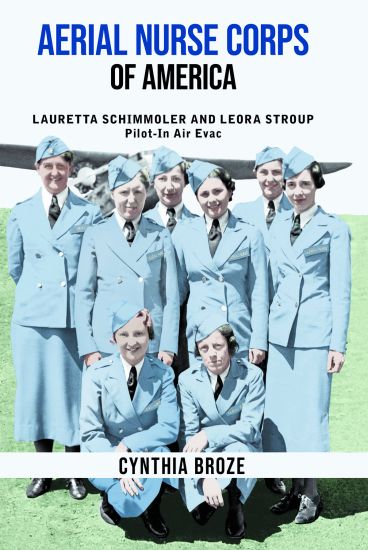
If we are sick and require air transport, we expect a skilled flight nurse will assist us. Before 1936 this was far from reality. Air transportation of critically ill patients began sporadically during World War I, but they crammed the wounded behind the pilot's area with no one to attend to them-the sick and dying patients had to fend for themselves. Lauretta Schimmoler realized this and sought to change it. She thought nurses trained in the aspects of air ambulance transport would be valuable for society. She hoped it could also benefit the military. She found nurses who believed in her cause. Some were pilots or became pilots. Dedicated nurses like Leora Stroup championed the idea when others doubted its relevance. Schimmoler understood airport management, flight school operations, aircraft manufacturing, first aid, chemical warfare, air mail transport, weather, and flight recorders. She even designed special medical equipment to fit inside small airplanes. But the various ranks scrutinized her actions because she wasn't a nurse. Schimmoler and Stroup were born, spent their childhoods, and were buried within 120 miles of each other in Ohio. Both became pilots and early members of the Ninety-Nines club. Stroup had also thought nurses should train for aerial duty even before she met Schimmoler. And Stroup had an edge on Schimmoler-she was a nurse-but Schimmoler barreled ahead despite lacking those credentials.Schimmoler expected people would see the value and appreciate what she and the nurses wanted to accomplish with this specialty they were trying to create. She was wrong. She hadn't realized one essential detail when developing her idea: nursing administration groups and the military didn't accept proposals from outsiders. Thus, she would spend her air ambulance life trying to work with them, through them, or around them.
It's 1 AM, there are 20 tabs open on your computer, you lost your flashcards for the test, and you're so tired you can't even read. It'd be nice if someone came up with a more efficient way of studying. Luckily, someone did. With a single login for MindTap Economics for Gwartney/Stroup/Sobel/Macpherson's Macroeconomics: Private and Public Choice, 16th Edition, you can connect with your instructor, organize coursework, and have access to a range of study tools, including e-book and apps all in one place Manage your time and workload without the hassle of heavy books: the MindTap Reader keeps all your notes together, lets you print the material, and will even read text out loud. Need extra practice? Find pre-populated flashcards with the MindTap Mobile App, as well as quizzes and important course alerts. Want to know where you stand? Use the Progress app to track your performance in relation to other students. Need help with graphing? Our GraphBuilder tool allows you to break down exhibits from the text step by step and also provides you the ability to create and draw your own graphs. Interested in a student directed pre-test study tool? Adaptive Test Prep gives you the ability to create practice tests that match the style and form you can expect on your upcoming exam.
This is a study of the emergence, development, and florescence of a distinctly 'late Republican' socio-textual culture as recorded in the writings of this period's two most influential authors, Catullus and Cicero. It reveals a multi-faceted textual - rather than more traditionally defined 'literary' - world that both defines the intellectual life of the late Republic, and lays the foundations for those authors of the Principate and Empire who identified this period as their literary source and inspiration. By first questioning, and then rejecting, the traditional polarisation of Catullus and Cicero, and by broadening the scope of late Republican socio-literary studies to include intersections of language, social practice, and textual materiality, this book presents a fresh picture of both the socio-textual world of the late Republic and the primary authors through whom this world would gain renown.
A fresh look at Acts of the Apostles and its depiction of Jewish identity within the larger Roman era When considering Jewish identity in Acts of the Apostles, scholars have often emphasized Jewish and Christian religious difference, an emphasis that masks the intersections of civic, ethnic, and religious identifications in antiquity. Christopher Stroup’s innovative work explores the depiction of Jewish and Christian identity by analyzing ethnicity within a broader material and epigraphic context. Examining Acts through a new lens, he shows that the text presents Jews and Jewish identity in multiple, complex ways, rather than as a simple foil for Christianity. Stroup convincingly argues that when the modern distinctions among ethnic, religious, and civic identities are suspended, the innovative ethnic rhetoric of the author of Acts comes into focus. The author of Acts leverages the power of gods, ancestry, and physical space to legitimate Christian identity as a type of Jewish identity and to present Christian non-Jews as Jewish converts through the power of the Holy Spirit.