Kirjojen hintavertailu. Mukana 11 244 527 kirjaa ja 12 kauppaa.

Kirjahaku

Etsi kirjoja tekijän nimen, kirjan nimen tai ISBN:n perusteella.

1000 tulosta hakusanalla Stuart C. Gilson; Edward I. Altman

Creating Value Through Corporate Restructuring

Creating Value Through Corporate Restructuring

Stuart C. Gilson; Edward I. Altman

John Wiley Sons Inc
2010
sidottu
An updated look at how corporate restructuring really works Stuart Gilson is one of the leading corporate restructuring experts in the United States, teaching thousands of students and consulting with numerous companies. Now, in the second edition of this bestselling book, Gilson returns to present new insight into corporate restructuring. Through real-world case studies that involve some of the most prominent restructurings of the last ten years, and highlighting the increased role of hedge funds in distressed investing, you'll develop a better sense of the restructuring process and how it can truly create value. In addition to "classic" buyout and structuring case studies, this second edition includes coverage of Delphi, General Motors, the Finova Group and Warren Buffett, Kmart and Sears, Adelphia Communications, Seagate Technology, Dupont-Conoco, and even the Eurotunnel debt restructuring. Covers corporate bankruptcy reorganization, debt workouts, "vulture" investing, equity spin-offs, asset divestitures, and much moreAddresses the effect of employee layoffs and corporate downsizingExamines how companies allocate value and when a corporation should "pull the trigger" From hedge funds to financial fraud to subprime busts, this second edition offers a rare look at some of the most innovative and controversial restructurings ever.

Partnerships the Nonprofit Way

Partnerships the Nonprofit Way

Stuart C. Mendel; Jeffrey L. Brudney

Indiana University Press
2018
sidottu
Collaboration and partnership are well-known characteristics of the nonprofit sector, as well as important tools of public policy and for creating public value. But how do nonprofits form successful partnerships? From the perspective of nonprofit practice, the conditions leading to collaboration and partnership are seldom ideal. Nonprofit executives contemplating interorganizational cooperation, collaboration, networks, partnership, and merger face a bewildering array of challenges. In Partnerships the Nonprofit Way: What Matters, What Doesn't, the authors share the success and failures of 52 nonprofit leaders. By depicting and contextualizing nonprofit organization characteristics and practices that make collaboration successful, the authors propose new theory and partnership principles that challenge conventional concepts centered on contractual fulfillment and accountability, and provide practical advice that can assist nonprofit leaders and others in creating and sustaining strategic, mutually beneficial partnerships of their own.
Partnerships the Nonprofit Way

Partnerships the Nonprofit Way

Stuart C. Mendel; Jeffrey L. Brudney

Indiana University Press
2018
pokkari
Collaboration and partnership are well-known characteristics of the nonprofit sector, as well as important tools of public policy and for creating public value. But how do nonprofits form successful partnerships? From the perspective of nonprofit practice, the conditions leading to collaboration and partnership are seldom ideal. Nonprofit executives contemplating interorganizational cooperation, collaboration, networks, partnership, and merger face a bewildering array of challenges. In Partnerships the Nonprofit Way: What Matters, What Doesn't, the authors share the success and failures of 52 nonprofit leaders. By depicting and contextualizing nonprofit organization characteristics and practices that make collaboration successful, the authors propose new theory and partnership principles that challenge conventional concepts centered on contractual fulfillment and accountability, and provide practical advice that can assist nonprofit leaders and others in creating and sustaining strategic, mutually beneficial partnerships of their own.
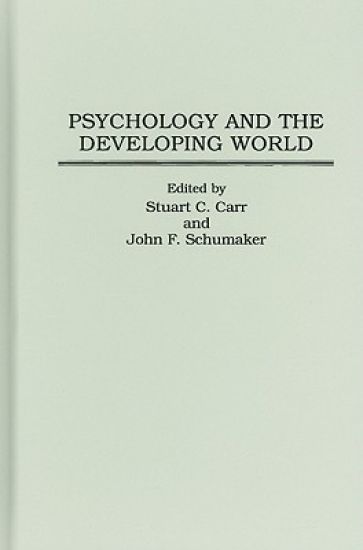
Psychology and the Developing World

Psychology and the Developing World

Stuart C. Carr; John F. Schumaker

Praeger Publishers Inc
1996
sidottu
Previous leading commentators on the development of psychology in the Third World have conceived of three major stages: an attempt to assimilate Western psychology, with predictably negative results; the study of indigenous constructs, with more relevant applications; and, finally, transcending stage one and stage two to choose theories and methods on their applied merit alone. Psychology and the Developing World has been assembled to document how close psychology has come to researching that stage. Contributors were carefully selected to provide a unique overview of the latest applications of the discipline as a whole. Their work reveals how psychology is being applied to educational needs, management needs, and health needs. This book shows how development studies and allied disciplines cannot ignore psychology's potential for the Third World.
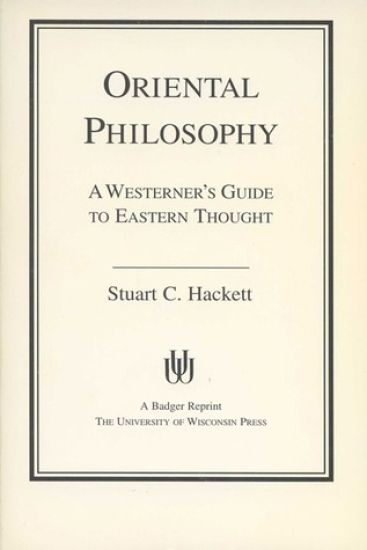
Oriental Philosophy

Oriental Philosophy

Stuart C. Hackett

University of Wisconsin Press
1979
nidottu
This insightful explication of oriental philosophy meets a long felt need for a critical introduction to four systems of eastern thought—Confucianism, Taoism, Buddhism, and Hinduism—presented in familiar western terms. Students of comparative religion, eastern philosophy and civilization, and the philosophy of religion who have been trained in traditional western modes of thought often find the intuitive and aphorisic quality of eastern writing a major stumbling block to understanding. This is eastern philosophy presented to westerners by a westerner, a practical and understandable guide for students and for others who wish to expand their understanding in this important area.
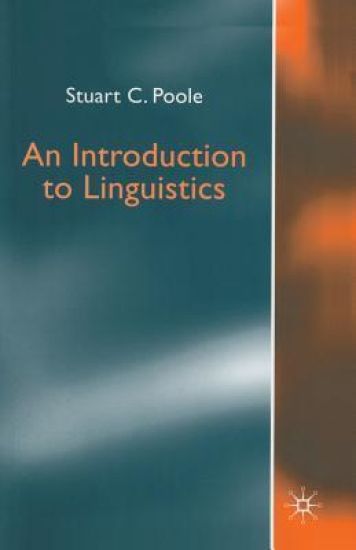
An Introduction to Linguistics

An Introduction to Linguistics

Stuart C Poole

Red Globe Press
1999
nidottu
This lively and wide-ranging textbook provides an invaluable guide to the very nature of language. By covering all major aspects of linguistics - with chapters on semantics (the study of meaning), phonology (the sound systems of languages) and morphology (the structure of words), as well as syntax and social variation - it gives a thorough grounding in the fundamental concepts of language and a practical analysis of its use.Concise summaries of the areas covered, a variety of texts and topic-related exercises, as well as a helpful glossary, provide further aids to study and revision.
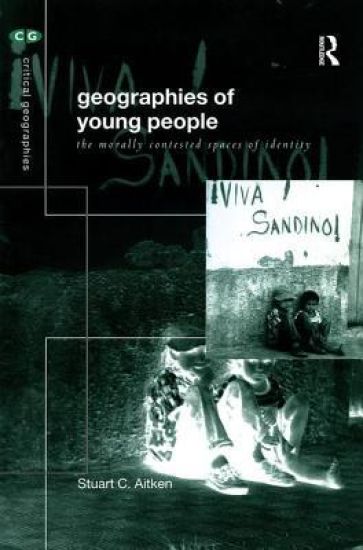
The Geography of Young People

The Geography of Young People

Stuart C Aitken

Routledge
2001
sidottu
The Geographies of Young People traces the changing scientific and societal notions of what it is to be a young person, and argues that there is a need to rethink how we view childhood spaces, child development and the politics of growing up.This book brings coherency to the growing field of children's geographies by arguing that although most of it does not prescribe solutions to the moral assault against young people, it nonetheless offers appropriate insights into difference and diversity, and how young people are constructed.Other books in the series:Culture/Place/Health (forthcoming)Seduction of Place (forthcoming)Celtic Geographies (forthcoming) TimespaceBodiesMind and Body SpacesChildren's GeographiesLeisure/Tourism GeographiesThinking SpaceGeopolitical TraditionsEmbodied GeographiesAnimal Spaces, Beastly PlacesCloset SpaceClubbingDe-centering SexualitiesEntanglements of Power.
The Geography of Young People

The Geography of Young People

Stuart C Aitken

Routledge
2001
nidottu
This book traces some of the changing scientific and societal notions of what it is to be a young person, and argues that there is a need to rethink how we view childhood spaces, child development and the politics of growing up. The book challenges popular myths that evoke general notions of childhood as a natural stage in the development towards adulthood. In addition, the book argues that new theories need to articulate the interdependent relations between material societal transformations and the social constructions of childhood.
No Solution

No Solution

Stuart C. Aveyard

Manchester University Press
2016
sidottu
Utilising a wide range of archival correspondence and diaries, this monograph reconstructs the 1974-79 Labour government's policies in Northern Ireland. It covers the collapse of power-sharing in May 1974, the secret dialogue with the Provisional IRA during the 1975 ceasefire, the acquiescence of Labour ministers in continuing indefinite direct rule from Westminster, efforts to mitigate conflict through industrial investment, a major shift in security policy emphasizing the police over the army, the adaptation of republicans to the threat of these new measures and their own adoption of a 'Long War' strategy. In so doing, it sheds light on the challenges faced by British ministers, civil servants, soldiers and policemen and the reasons why the conflict lasted so long. It will be a key text for researchers and students of both British and Northern Irish politics.
The Awkward Spaces of Fathering

The Awkward Spaces of Fathering

Stuart C. Aitken

Ashgate Publishing Limited
2009
sidottu
Societal notions of fathers have evolved from the distant breadwinner through genial dad and masculine role model to today's equal co-parent. This book seeks to explore the spaces and movements of men-as-fathers. Weaving together theories of space, sexuality and political identity with the stories of fathers from a range of sources, including popular culture, it discusses the way in which geographies of space can disconnect and disempower fathers, while societal notions marginalize and disassociate them from raising children. It explores how fathering identities are shaped by family and community spaces and aims to move the definition of 'fathering' beyond its definition in opposition to 'mothering'. In doing so, it provides insights into the contradictory nature of father's lives and argues that, rather than moving away from the traditional notions of masculine roles, that the emotional work of fathering in itself is an heroic act.
George Whitefield: Wayfaring Witness. --

George Whitefield: Wayfaring Witness. --

Stuart C. (Stuart Clark) Henry

Hassell Street Press
2021
sidottu
This work has been selected by scholars as being culturally important and is part of the knowledge base of civilization as we know it.This work is in the public domain in the United States of America, and possibly other nations. Within the United States, you may freely copy and distribute this work, as no entity (individual or corporate) has a copyright on the body of the work.Scholars believe, and we concur, that this work is important enough to be preserved, reproduced, and made generally available to the public. To ensure a quality reading experience, this work has been proofread and republished using a format that seamlessly blends the original graphical elements with text in an easy-to-read typeface.We appreciate your support of the preservation process, and thank you for being an important part of keeping this knowledge alive and relevant.
That Other World

That Other World

Stuart C. Cumberland

Cambridge University Press
2011
pokkari
Although Stuart Cumberland (1857–1922) was renowned for his mind-reading skills, he was a staunch critic of related spiritualist practices. He claimed that many séances and other events that he had seen confirmed his suspicions that 'the chief basis of the movement was money-making'. So he decided to launch his own campaign to uncover the truth about the methods of spirit-mediums, and in this work, published in 1918, he explains many mediums' tricks, such as making tables move using special silk thread, not spiritual aid. He lectured about the subject in places ranging from Cambridge University to Lambeth Palace, and attributed his own success to his ability to read muscle movement, rather than any supernatural communication. Providing a fascinating picture of the changing spiritualist movement, this work illustrates the extent of the social and political influence of some spiritualists, but also how credibility about their practices was being challenged.
The Ethnopoetics of Space and Transformation
Change is inevitable, we are told. A job is lost, a couple falls in love, children leave home, an addict joins Narcotics Anonymous, two nations go to war, a family member's health deteriorates, a baby is born, a universal health care bill is voted into law. Life comprises events over which we have considerable, partial, or little or no control. The distance between the event and our daily lives suggests a quirky spatial politics. Our lives move forward depending upon how events play out in concert with our reactions to them. Drawing on nearly three decades of geographic projects that involve ethnographies and interviews with, and stories about, young people in North and South American, Europe and Asia and using the innovative technique of ethnopoetry, Aitken examines key life-changing events to look at the interconnections between space, politics, change and emotions. Analysing the intricate spatial complexities of these events, he explores the emotions that undergird the ways change takes place, and the perplexing spatial politics that almost always accompany transformations. Aitken positions young people as effective agents of change without romanticizing their political involvement as fantasy and unrealistic dreaming. Going further, he suggests that it is the emotional palpability of youth engagement and activism that makes it so potent and productive. Pulling on the spatial theories of de Certeau, Deleuze, Massey, Agamben, Rancière, Zizek and Grosz amongst others, Aitken argues that spaces are transformative to the degree that they open the political and he highlights the complexly interwoven political, economic, social and cultural practices that simultaneously embed and embolden people in places. If we think of spaces as events and events encourage change, then spaces and people become other through complex relations. Taking poetry to be an emotive construction of language, Aitken re-visualizes, contorts and arranges people's words and gestures to
The Awkward Spaces of Fathering

The Awkward Spaces of Fathering

Stuart C. Aitken

Routledge
2016
nidottu
Societal notions of fathers have evolved from the distant breadwinner through genial dad and masculine role model to today's equal co-parent. This book seeks to explore the spaces and movements of men-as-fathers. Weaving together theories of space, sexuality and political identity with the stories of fathers from a range of sources, including popular culture, it discusses the way in which geographies of space can disconnect and disempower fathers, while societal notions marginalize and disassociate them from raising children. It explores how fathering identities are shaped by family and community spaces and aims to move the definition of 'fathering' beyond its definition in opposition to 'mothering'. In doing so, it provides insights into the contradictory nature of father's lives and argues that, rather than moving away from the traditional notions of masculine roles, that the emotional work of fathering in itself is an heroic act.