

Kirjahaku
Etsi kirjoja tekijän nimen, kirjan nimen tai ISBN:n perusteella.
1000 tulosta hakusanalla Stuart Hall; Bill Schwarz


Stuart Hall
Routledge
1996
sidottu
Stuart Hall's work has been central to the formation and development of cultural studies as an international discipline. Stuart Hall: Critical Dialogues in Cultural Studies is an invaluable collection of writings by and about Stuart Hall. The book provides a representative selection of Hall's enormously influential writings on cultural studies and its concerns: the relationship with Marxism; postmodernism and 'New Times' in cultural and political thought; the development of cultural studies as an international and postcolonial phenomenon, and Hall's engagement with urgent and abiding questions of 'race', ethnicity and identity.In addition to presenting classic writings by Hall and new interviews with Hall in dialogue with Kuan-Hsing Chen, the collection, which includes work by Angela McRobbie, Kobena Mercer, John Fiske, Charlotte Brunsdon, Ien Ang and Isaac Julien, provides a detailed analysis of Hall's work and his contribution to the development of cultural studies by leading cultural critics and cultural practitioners. The book also includes a comprehensive bibliography of Stuart Hall's writings.

Stuart Hall
Routledge
1996
nidottu
Stuart Hall's work has been central to the formation and development of cultural studies as an international discipline. Stuart Hall: Critical Dialogues in Cultural Studies is an invaluable collection of writings by and about Stuart Hall. The book provides a representative selection of Hall's enormously influential writings on cultural studies and its concerns: the relationship with Marxism; postmodernism and 'New Times' in cultural and political thought; the development of cultural studies as an international and postcolonial phenomenon, and Hall's engagement with urgent and abiding questions of 'race', ethnicity and identity.In addition to presenting classic writings by Hall and new interviews with Hall in dialogue with Kuan-Hsing Chen, the collection, which includes work by Angela McRobbie, Kobena Mercer, John Fiske, Charlotte Brunsdon, Ien Ang and Isaac Julien, provides a detailed analysis of Hall's work and his contribution to the development of cultural studies by leading cultural critics and cultural practitioners. The book also includes a comprehensive bibliography of Stuart Hall's writings.

James Procter's introduction places Hall's work within its historical contexts, providing a clear guide to his key ideas and influences, as well as to his critics and his intellectual legacy.Stuart Hall has been pivotal to the development of cultural studies during the past forty years. Whether as director of the Centre for Contemporary Cultural Studies, or as one of the leading public intellectuals of the postwar period, he has helped transform our understanding of culture as both a theoretical catagory and a political practice. Topics include:* popular culture and youth subcultures* the CCCS and cultural studies* media and communication* racism and resistance* postmodernism and the postcolonial* Thatcherism* identity, ethnicity, diasporaStuart Hall is the ideal gateway to the work of a critic described by Terry Eagleton as 'a walking chronicle of everything from the New Left to New Times, Leavis to Lyotard, Aldermaston to ethnicity'

James Procter's introduction places Hall's work within its historical contexts, providing a clear guide to his key ideas and influences, as well as to his critics and his intellectual legacy.Stuart Hall has been pivotal to the development of cultural studies during the past forty years. Whether as director of the Centre for Contemporary Cultural Studies, or as one of the leading public intellectuals of the postwar period, he has helped transform our understanding of culture as both a theoretical catagory and a political practice. Topics include:* popular culture and youth subcultures* the CCCS and cultural studies* media and communication* racism and resistance* postmodernism and the postcolonial* Thatcherism* identity, ethnicity, diasporaStuart Hall is the ideal gateway to the work of a critic described by Terry Eagleton as 'a walking chronicle of everything from the New Left to New Times, Leavis to Lyotard, Aldermaston to ethnicity'

Stuart Hall is the leading figure in cultural studies today – no one else has had the same influence in the shaping of the field. This book is the first full-length study of Hall's work. It examines every aspect of his work and constitutes a major critical introduction and appraisal of Hall's contribution. The book guides the reader through Hall's formative experience in Jamaica and Oxford. It examines the increasing politicization of his thought and his identification with emancipatory, socialist politics. In Birmingham, during his Directorship of the seminal Centre for Contemporary Cultural Studies, Hall created a genuinely collaborative approach to the study of culture. In a series of dazzling publications in the 1970s, the Birmingham Centre changed the way in which social scientists think about culture. The book provides a complete guide to the debates and contribution of the Birmingham School. It explores Hall's relation with Marx, Gramsci, Althusser and a variety of traditions in continental sociology and philosophy. In the 1980s Hall occupied the vanguard of criticism against Thatcherism and Reaganism. His passionate, principled attack on the New Right and his critique of authoritarian populism reached a readership well beyond the confines of the academy. His later work has moved on to the terrain of hybridity, identity, Occidentalism, race relations. multiculturalism and the politics of difference. All of these areas are methodically explored in the book, making it the most complete study of Hall's work and significance. It will be required reading by students and lecturers in cultural studies, media studies and sociology.

Stuart Hall is the leading figure in cultural studies today, no one else has had the same influence in the shaping of the field. This book is a full-length study of Hall's work. It examines every aspect of his work and is critical introduction and appraisal of Hall's contribution.

Stuart Hall
MIT Press
2017
sidottu
A contemporary look at one of the founding figures in the field of cultural studies.This volume from Goldsmiths Press examines the career of the cultural studies pioneer Stuart Hall, investigating his influence and revealing lesser-known facets of his work. These essays evaluate the legacies of his particular brand of cultural studies and demonstrate how other scholars and activists have utilized his thinking in their own research. Throughout, Hall's colleagues and collaborators assess his theoretical and methodological standpoints, his commitment to the development of a flexible form of revisionist Marxism, and the contributions of his specific mode of analysis to public debates on Thatcherism, neoliberalism, and multiculturalism. In her contribution, Angela Davis argues that the model of politics, ideology, and race initially developed by Hall and his colleagues in England continues to resonate when applied to America's racialized policing. Other essays focus on Hall's contributions to contemporary political debate and questions of race, ethnicity, identity, migrancy, and diaspora, and discuss Hall's continuing involvement in issues of representation and aesthetics in the visual arts, particularly photography and film.With contributions from Britain, Europe, East Asia, and North and Latin America, the book provides a comprehensive look at how, under Hall's intellectual leadership, British cultural studies transformed itself from a form of "local" knowledge to the international field of study we know today.ContributorsJohn Akomfrah, Avtar Brah, Charlotte Brunsdon, Iain Chambers, Kuan-Hsing Chen, John Clarke, James Curran, Angela Davis, David Edgar, Lawrence Grossberg, Catherine Hall, Dick Hebdige, Tony Jefferson, Robert Lumley, Mahasiddhi (Roy Peters), Doreen Massey, Angela McRobbie, Caspar Melville, Frank Mort, Michael Rustin, Bill Schwarz, Mark Sealy, Liv Sovik, Lola Young


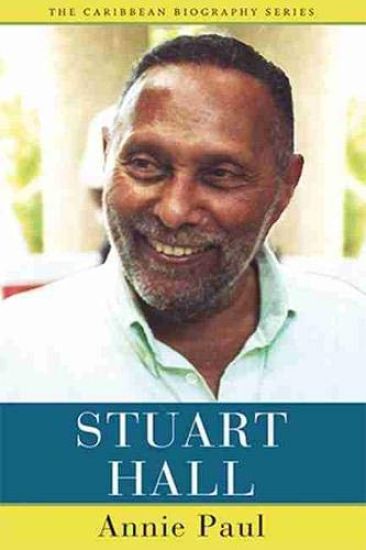
A pioneer in the field of cultural studies, Stuart Hall produced an impressive body of work on the relationship between culture and power. His contributions to critical theory and the study of politics, culture, communication, media, race, diaspora and postcolonialism made him one of the great public intellectuals of the late twentieth century. For much of his career, Hall was better known outside the Caribbean than in the region. He made his mark most notably in the United Kingdom as head of the Birmingham Centre for Contemporary Cultural Studies and at the Open University, where his popular lecture series was broadcast on BBC2. His influence expanded from the late 1980s onwards as the field of cultural studies gained traction in universities worldwide. Hall’s middle-class upbringing in colonial Jamaica and his subsequent experience of immigrant life in the United Kingdom afforded him a unique perspective that informed his groundbreaking work on the complex power dynamics of race, class and empire.This accessible, lively biography provides glimpses into Hall’s formative Jamaican years and includes segments from his hitherto unpublished early writing. Annie Paul gives us an engaging introduction to a globally renowned Caribbean intellectual.

A pioneer in the field of cultural studies, Stuart Hall produced an impressive body of work on the relationship between culture and power. His contributions to critical theory and the study of politics, culture, communication, media, race, diaspora and postcolonialism made him one of the great public intellectuals of the late twentieth century. For much of his career, Hall was better known outside the Caribbean than in the region. He made his mark most notably in the United Kingdom as head of the Birmingham Centre for Contemporary Cultural Studies and at the Open University, where his popular lecture series was broadcast on BBC2. His influence expanded from the late 1980s onwards as the field of cultural studies gained traction in universities worldwide. Hall's middle-class upbringing in colonial Jamaica and his subsequent experience of immigrant life in the United Kingdom afforded him a unique perspective that informed his groundbreaking work on the complex power dynamics of race, class and empire.This accessible, lively biography provides glimpses into Hall's formative Jamaican years and includes segments from his hitherto unpublished early writing. Annie Paul gives us an engaging introduction to a globally renowned Caribbean intellectual.

Stuart Hall Lives: Cultural Studies in an Age of Digital Media
Routledge
2019
nidottu
The work of cultural and political theorist Stuart Hall, a pioneer of Cultural Studies who passed away in 2014, remains more relevant than ever. In Stuart Hall Lives, scholars engage with Hall’s most enduring essays, including "Encoding/Decoding" and "Notes on Deconstructing the Popular," bringing them into the context of the 21st century. Different chapters consider resistant media consumers, online journalism, debates around the American Confederate flag and rainbow flags, the #OscarsSoWhite controversy, and contemporary moral panics. The book also includes Hall’s important essay on French theorist Louis Althusser, which is introduced here by Lawrence Grossberg and Jennifer Slack. Finally, two reminiscences by one of Hall’s former colleagues and one of his former students offer wide-ranging reflections on his years as director of Centre for Contemporary Cultural Studies at the University of Birmingham, UK, and as head of the Department of Sociology at The Open University. Together, the contributions paint a picture of a brilliant theorist whose work and legacy is as vital as ever. This book was originally published as a special issue of Critical Studies in Media Communication.
Stuart Hall and 'Race'
Routledge
2011
sidottu
It is impossible to overestimate the importance of Stuart Hall’s work in shaping the field of racial and ethnic studies for nearly five decades. From his groundbreaking work Policing the Crisis through to his paradigm shattering ‘New Ethnicities’, Hall’s writing has redefined how race research is thought and done, while Hall himself stands as an exemplar of the public and politically engaged intellectual. This collection of essays, from established and emerging scholars, critically engages with Hall’s legacy across this body of work, from the foundations of cultural studies as a field of enquiry, through his work on race and articulation, to his insights into ‘the politics of difference’ and diaspora identities. These essays both reflect back on Hall’s interventions and locate them within some of the key spaces and questions of our time – from the ‘political theology’ of race in South Africa to the terrain of the contemporary city, from reflections on memory, nationhood and belonging to new ethnicities online and the formation of postcolonial subjectivities. The collection includes an in-depth conversation between Les Back and Stuart Hall, in which Hall reflects on his career and explores the challenges facing contemporary multicultural, multifaith societies in a globalised world. This book was published as a special issue of Cultural Studies.
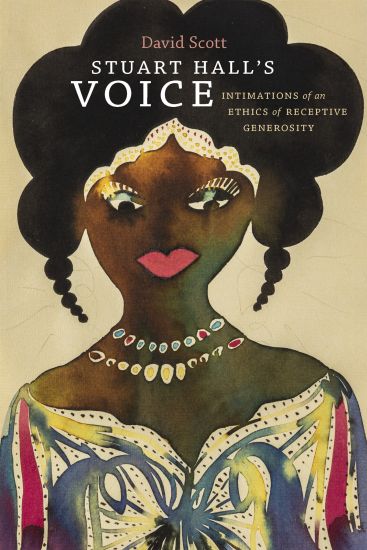
Stuart Hall’s Voice explores the ethos of style that characterized Stuart Hall’s intellectual vocation. David Scott frames the book-which he wrote as a series of letters to Hall in the wake of his death-as an evocation of friendship understood as the moral and intellectual medium in which his dialogical hermeneutic relationship with Hall’s work unfolded. In this respect, the book asks: what do we owe intellectually to the work of those whom we know well, admire, and honor? Reflecting one of the lessons of Hall’s style, the book responds: what we owe should be conceived less in terms of criticism than in terms of listening. Hall’s intellectual life was animated by voice in literal and extended senses: not only was his voice distinctive in the materiality of its sound, but his thinking and writing were fundamentally shaped by a dialogical and reciprocal practice of speaking and listening. Voice, Scott suggests, is the central axis of the ethos of Hall’s style. Against the backdrop of the consideration of the voice’s aspects, Scott specifically engages Hall’s relationship to the concepts of "contingency" and "identity," concepts that were dimensions less of a method as such than of an attuned and responsive attitude to the world. This attitude, moreover, constituted an ethical orientation of Hall’s that should be thought of as a special kind of generosity, namely a "receptive generosity," a generosity oriented as much around giving as receiving, as much around listening as speaking.

Stuart Hall and 'Race'
TAYLOR FRANCIS LTD
2024
nidottu
It is impossible to overestimate the importance of Stuart Hall’s work in shaping the field of racial and ethnic studies for nearly five decades. From his groundbreaking work Policing the Crisis through to his paradigm shattering ‘New Ethnicities’, Hall’s writing has redefined how race research is thought and done, while Hall himself stands as an exemplar of the public and politically engaged intellectual. This collection of essays, from established and emerging scholars, critically engages with Hall’s legacy across this body of work, from the foundations of cultural studies as a field of enquiry, through his work on race and articulation, to his insights into ‘the politics of difference’ and diaspora identities. These essays both reflect back on Hall’s interventions and locate them within some of the key spaces and questions of our time – from the ‘political theology’ of race in South Africa to the terrain of the contemporary city, from reflections on memory, nationhood and belonging to new ethnicities online and the formation of postcolonial subjectivities. The collection includes an in-depth conversation between Les Back and Stuart Hall, in which Hall reflects on his career and explores the challenges facing contemporary multicultural, multifaith societies in a globalised world. This book was published as a special issue of Cultural Studies.

Stuart Hall Lives: Cultural Studies in an Age of Digital Media
Routledge
2017
sidottu
The work of cultural and political theorist Stuart Hall, a pioneer of Cultural Studies who passed away in 2014, remains more relevant than ever. In Stuart Hall Lives, scholars engage with Hall’s most enduring essays, including "Encoding/Decoding" and "Notes on Deconstructing the Popular," bringing them into the context of the 21st century. Different chapters consider resistant media consumers, online journalism, debates around the American Confederate flag and rainbow flags, the #OscarsSoWhite controversy, and contemporary moral panics. The book also includes Hall’s important essay on French theorist Louis Althusser, which is introduced here by Lawrence Grossberg and Jennifer Slack. Finally, two reminiscences by one of Hall’s former colleagues and one of his former students offer wide-ranging reflections on his years as director of Centre for Contemporary Cultural Studies at the University of Birmingham, UK, and as head of the Department of Sociology at The Open University. Together, the contributions paint a picture of a brilliant theorist whose work and legacy is as vital as ever. This book was originally published as a special issue of Critical Studies in Media Communication.

Stuart Hall, Conjunctural Analysis and Cultural Criminology
Tony Jefferson
Springer Nature Switzerland AG
2021
sidottu
This book discusses Stuart Hall's unique contribution to criminology. It suggests that this is captured best in Hall’s commitment to understanding a given historical moment, or conjuncture, in its full complexity, and his continuous deployment of an appropriate methodology, conjunctural analysis, to do so. This provides a running thread linking Hall’s early work on youth subcultures, the media, the state and hegemony to his later work on racial identities, racism and the politics of difference. This is contrasted with more theoretically-driven work in cultural criminology. Its failure to adopt a conjunctural approach constitutes, for the author, something of a missed moment. To demonstrate the continuing relevance of this form of analysis, the book provides a conjunctural analysis of Brexit, including its psychosocial dimension and concludes with a brief analysis of Trump’s failure to get re-elected. The book is intended for students of criminology and cultural studies.

Stuart Hall und die Cultural Studies zur Einführung
Juha Koivisto; Sauli Havu
JUNIUS VERLAG GMBH
2024
pokkari